

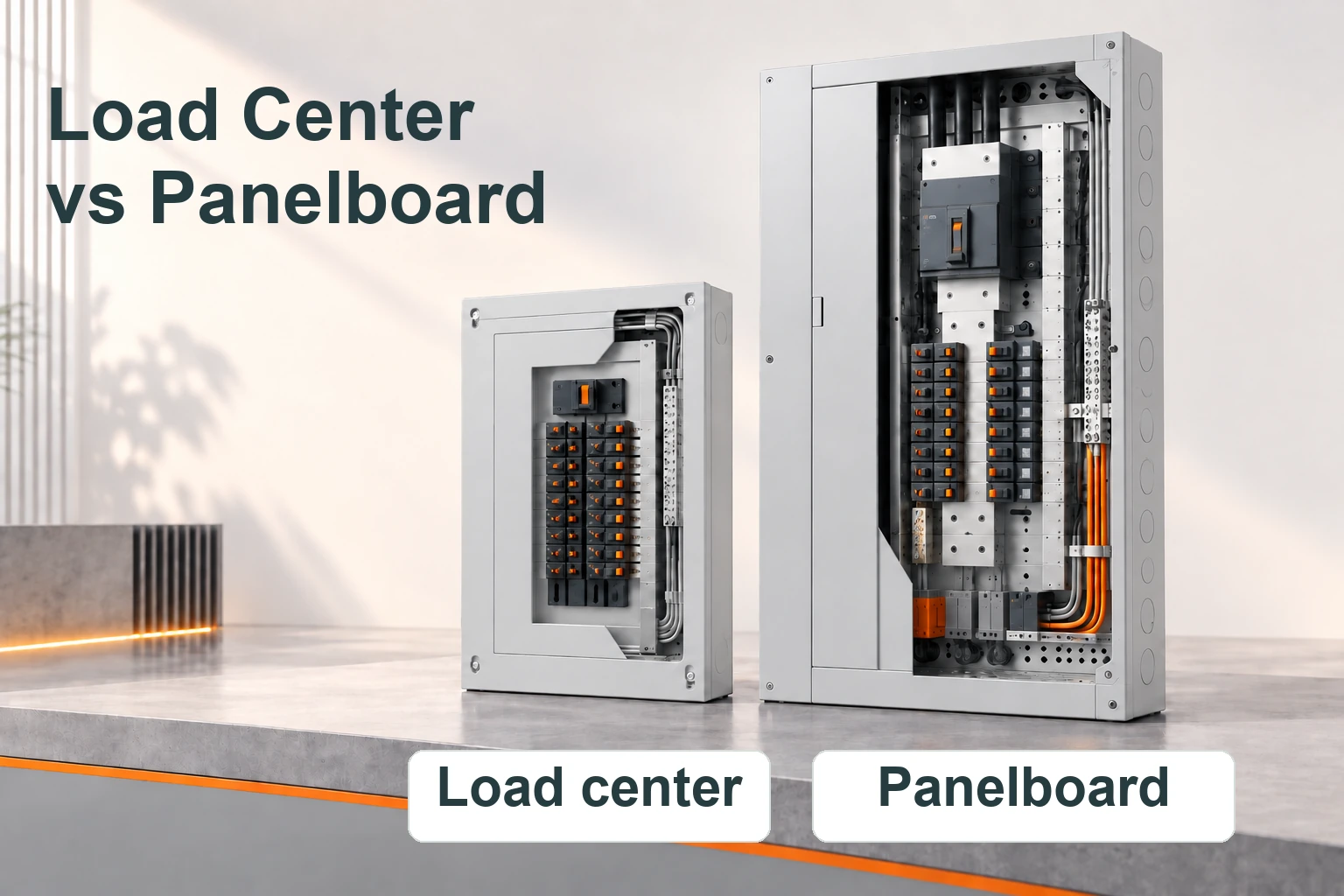
If you are comparing a load center vs panelboard, do not choose by the label alone. Start with the electrical duty, approved breaker system, fault-current requirement, enclosure layout and documentation that the project needs.
Here is the short answer: a load center and a panelboard can overlap, but they are not automatically interchangeable. A standard load center is often the efficient choice for a straightforward residential or light-commercial installation. A configurable panelboard makes more sense when the project needs a defined bus arrangement, special feeder method, larger termination space, unusual accessories or a complete project package.
The name gets you into the catalog. The configuration decides whether the equipment works.
Load center: usually a more standardized distribution product with a defined interior and breaker system. Panelboard: a broader product category that may be configured around a project-specific interior, feeder arrangement, accessories and documentation.
Is a load center a type of panelboard?
Sometimes, yes. Schneider Electric states that its QO load center is a panelboard and that QO load centers and NQ panelboards are tested to the same UL 67 test parameters. Eaton’s panelboard overview also presents load centers and panelboards as related low-voltage distribution products, while showing that their typical configurations and applications differ.
That is why the shortcut “load centers are residential, panelboards are commercial” is useful only as a rough market description. Residential and light-commercial projects often use load centers. Commercial, institutional and industrial projects often use more configurable panelboards. The actual decision still rests on the specific product series and the project requirements.
If your comparison also includes upstream distribution equipment, check how switchboards differ from panelboards before combining them in one RFQ.
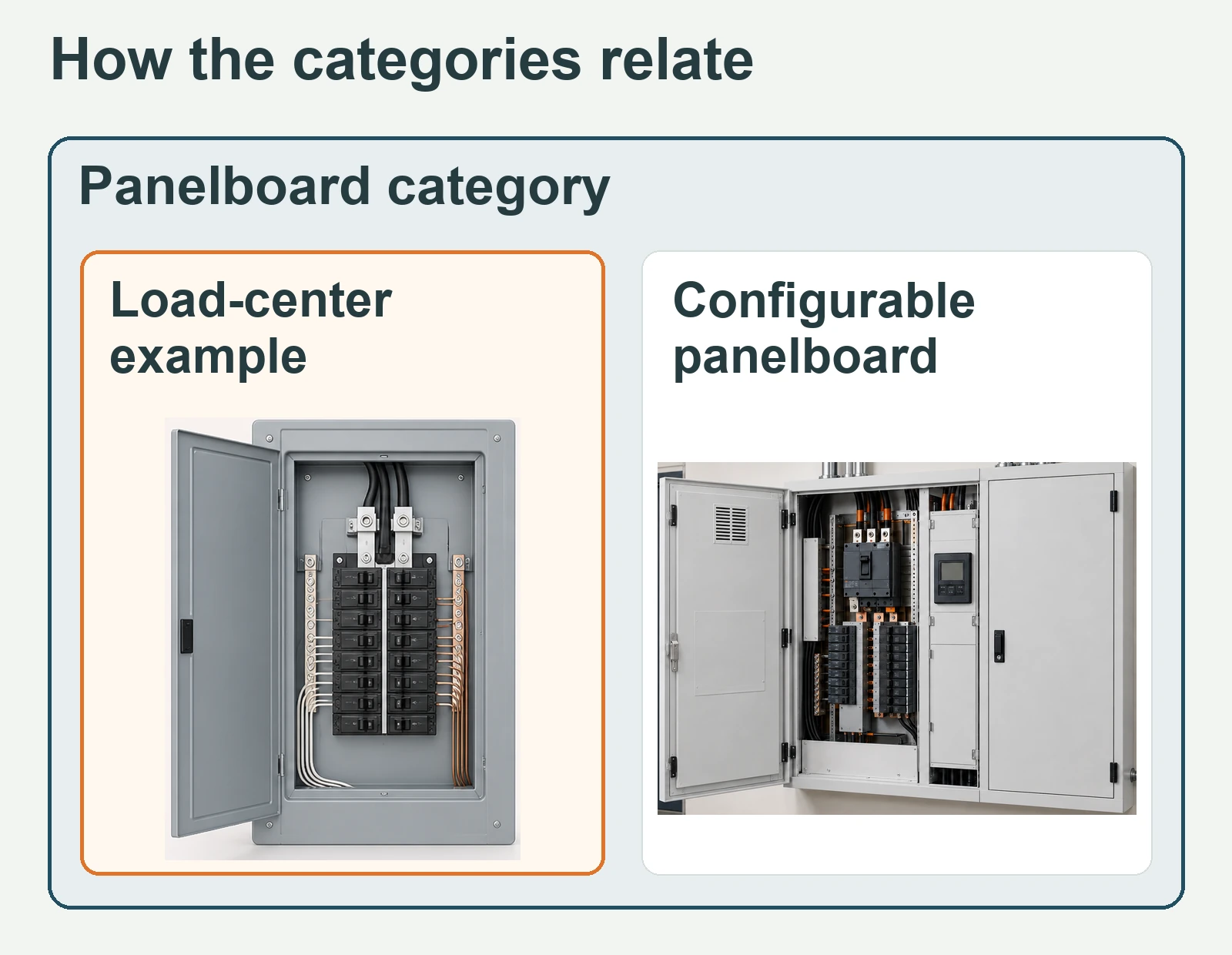
A load-center example can belong to the broader panelboard category. Confirm the specific product series.
Load Center vs Panelboard: What should you compare?
| Selection factor | Load center | Panelboard | Buyer’s question |
|---|---|---|---|
| Typical use | Residential, light commercial and some light-industrial work | Commercial, institutional, industrial and other configured applications | Is this exact series listed for the installation? |
| Configuration | Usually standardized and sold as a defined package | Often available with more factory options and layouts | Do we need a configured interior or special accessories? |
| Breakers | Common residential examples use plug-on breakers | Series may use plug-on, bolt-on or other specified systems | Which breaker family is approved for this panel? |
| Voltage and phase | Many common models are single-phase; three-phase load centers also exist | Single-phase and three-phase options are available | What are the system voltage, phase and wire requirements? |
| Enclosure | Often compact and standardized | More choices may be available for size, depth, trim and materials | Will the equipment, conductors and service access fit? |
| Main arrangement | Main-breaker and main-lug-only versions may be available | Main breaker, main lug, feed-through and sub-feed arrangements may be available | Where is the disconnect and upstream protection? |
| Expansion | May offer fewer layout and accessory choices | Often supports broader layouts and project-specific options | Are we adding spaces, circuits, capacity or all three? |
| Documentation | Usually centered on catalog and installation documents | May include layouts, schedules, labels and configured records | What has to arrive with the equipment? |
Use this table to frame the conversation, not to replace the manufacturer’s catalog, label, listing information or installation instructions.
Need a custom enclosure around approved distribution equipment? Send the drawing, dimensions, material, device layout and cable-entry requirements for a scope review.
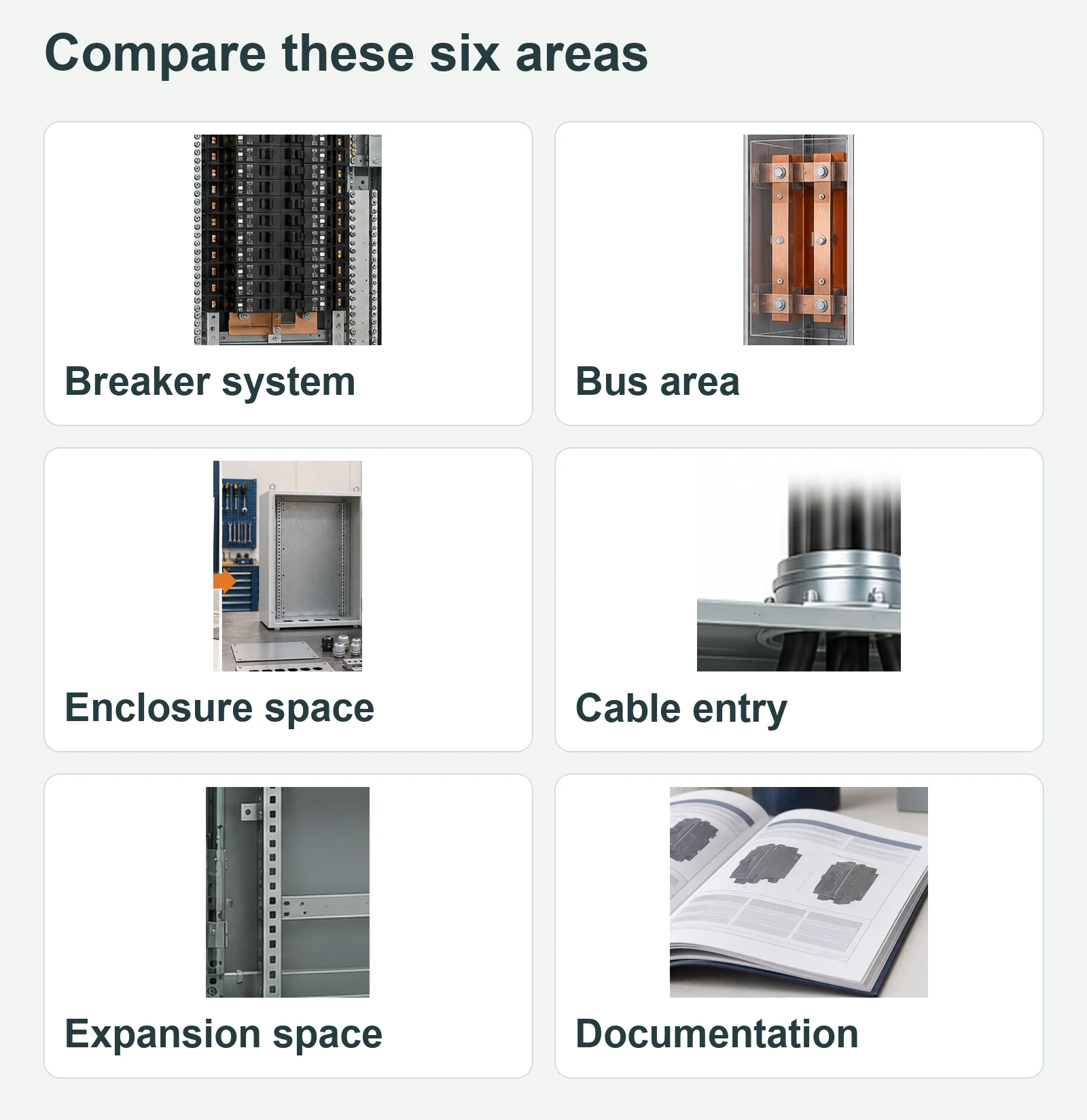
Check these six areas against the proposed series and project documentation.
The differences that actually change the purchase
1. Standard product or configured assembly?
A load center is often sold as a defined, ready-to-install package. A panelboard may be assembled around a project layout that includes the incoming device, bus arrangement, feeder breakers, metering, barriers, trim, doors, lugs and other accessories.
Schneider’s QO/NQ comparison describes QO as a merchandised product and NQ as a product that can also be factory assembled to custom specifications. That difference is visible in a quote. Two products may both be marked “200 A” yet include different interiors, hardware, drawings, accessories and exclusions.
Before comparing prices, decide what you are actually buying:
- a standard distribution panel;
- an enclosure with a specified interior;
- a wired and configured panel; or
- a complete, tested assembly with project records.
Those are four different scopes. Treating them as one product is how quote comparisons go wrong.
If only the housing needs changes, compare standard versus custom enclosure options separately from the electrical assembly.
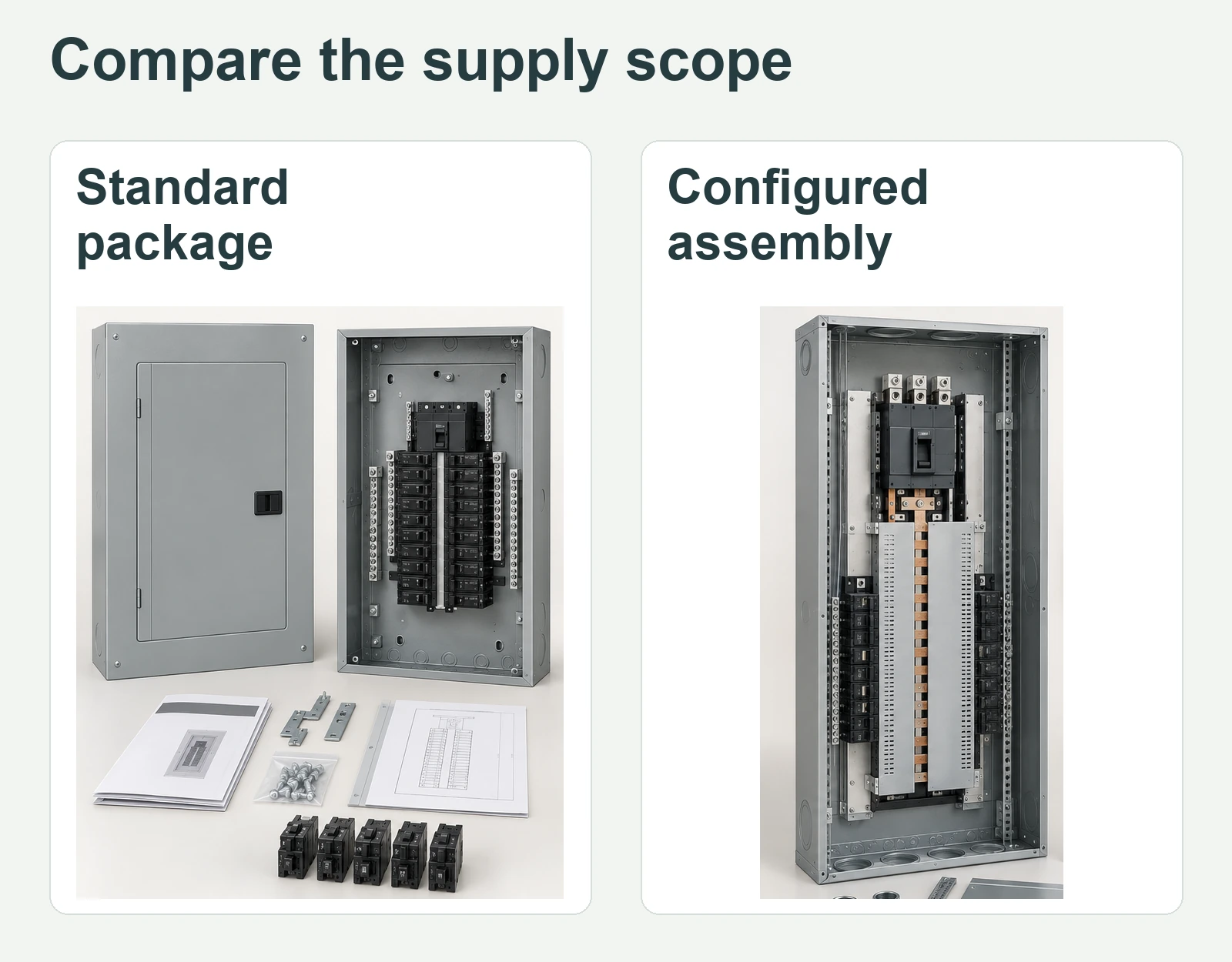
Same nominal current rating does not mean the same supply scope. Confirm what each quotation includes.
2. Breaker compatibility is a system question
A breaker that fits the opening is not automatically an approved breaker for the panel.
In Schneider’s comparison, QO accepts plug-on breakers while NQ accepts both plug-on and bolt-on breakers. Other manufacturers and series use their own mounting systems, accessories and compatibility rules. Eaton’s classified-breaker documentation makes the same point: a substitute breaker must be supported by documented compatibility, not just by a matching ampere number or a breaker that appears to fit.
For a new installation, identify the breaker family before you finalize the panel. For a replacement, photograph the panel label, record the existing breaker types and check the manufacturer’s compatibility documentation before requesting alternatives.
Review the circuit breaker types and protection functions you need, then verify the approved breaker family for the selected panel series.
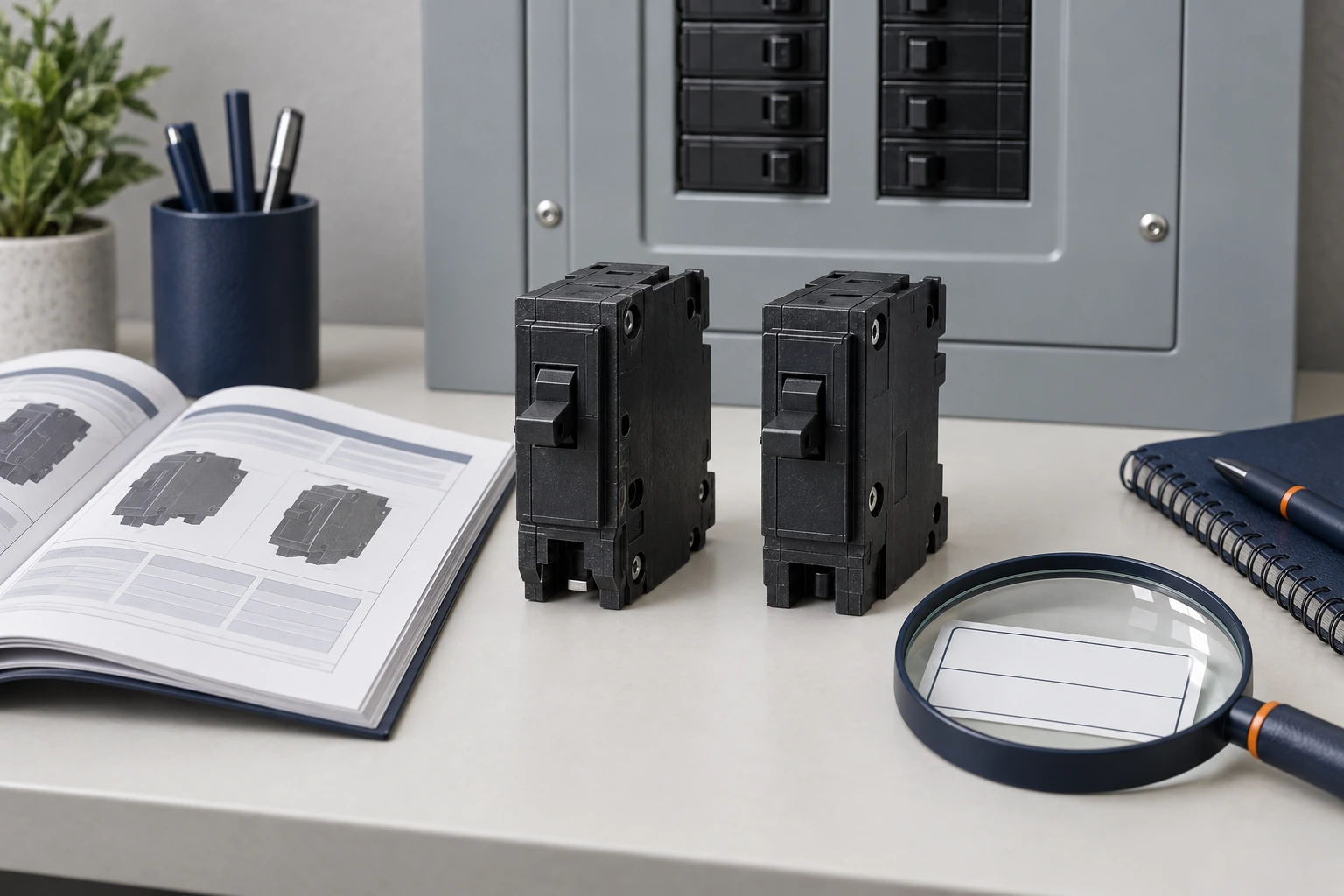
Physical fit alone does not establish approved compatibility.
3. Ampere rating does not answer the fault-current question
“200 A panelboard” tells you one part of the specification. It does not, by itself, show that the assembly is suitable for the available fault current.
Short-circuit current rating is an application and assembly question. UL guidance addresses short-circuit ratings for panelboards and switchboards, while Schneider separately explains panelboard short-circuit ratings and bus bracing.
A useful RFQ should therefore identify:
- the available fault current at the installation point;
- the required short-circuit current rating;
- the protective-device combination;
- any series-rated or tested combination being used; and
- the documents that support the proposed rating.
A larger main breaker is not a substitute for that review. Neither is a larger enclosure.
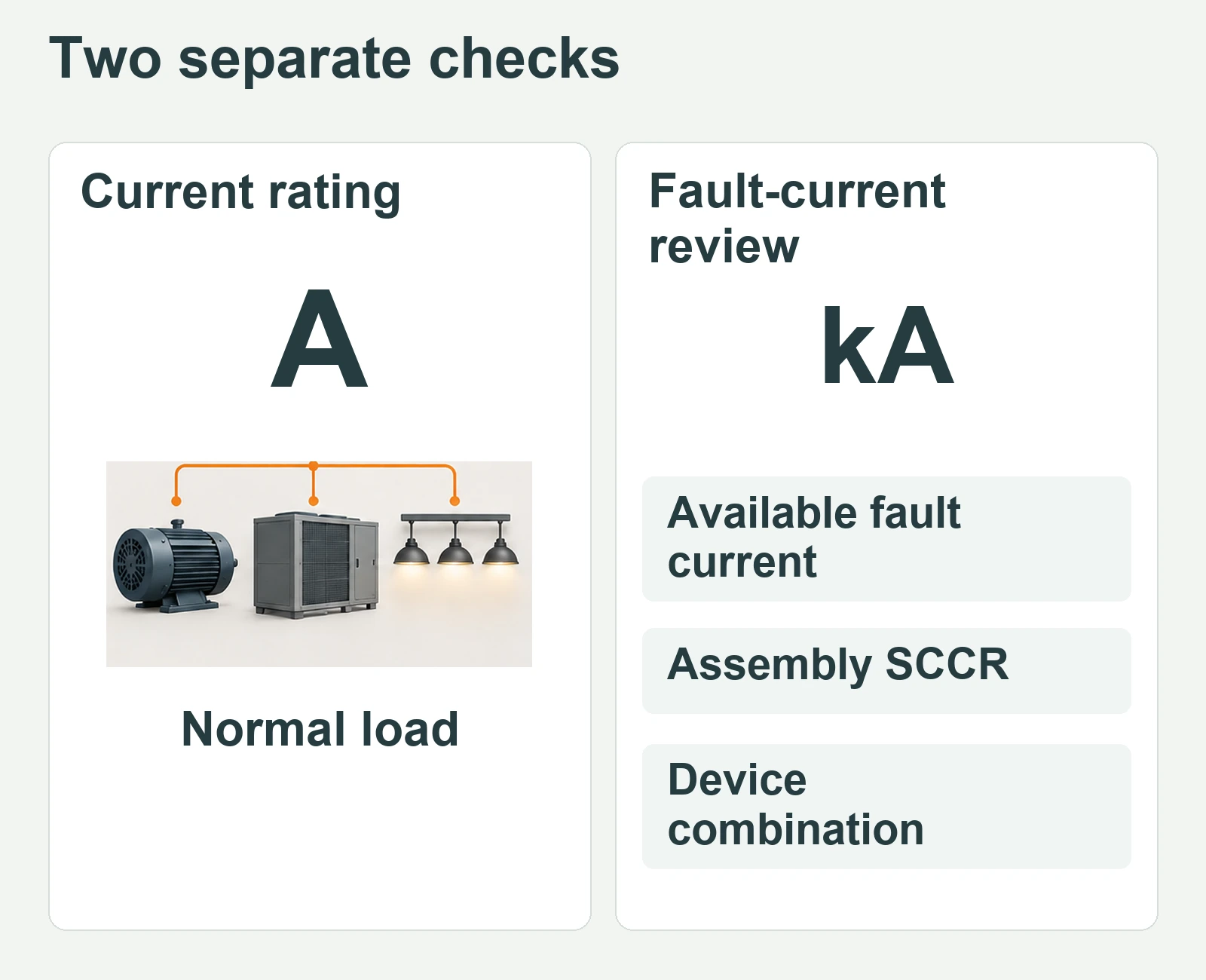
Review normal current duty separately from available fault current, assembly SCCR and the documented protective-device combination.
4. Spaces, circuits and capacity are different
“The panel has two spaces left” sounds like a complete answer. It is not.
A physical breaker position answers a space question. It does not answer whether the proposed breaker arrangement is permitted, whether the service or feeder can support the new load, or whether the resulting system still meets its protection requirements.
This distinction matters when adding EV chargers, solar, battery storage, heat pumps, generators, tandem breakers or subpanels:
- Spaces: Is there a physical position for the device?
- Circuits: Does the product series permit the proposed breaker arrangement?
- Capacity: Can the service, feeder and conductors support the load?
- Protection: Does the completed system meet its fault and overcurrent requirements?
- Scope: Will the change require a new feeder, disconnect, permit or inspection?
“Just buy a larger panel” solves only one possible problem. It can create more physical room while leaving the load, feeder or protection issue untouched.
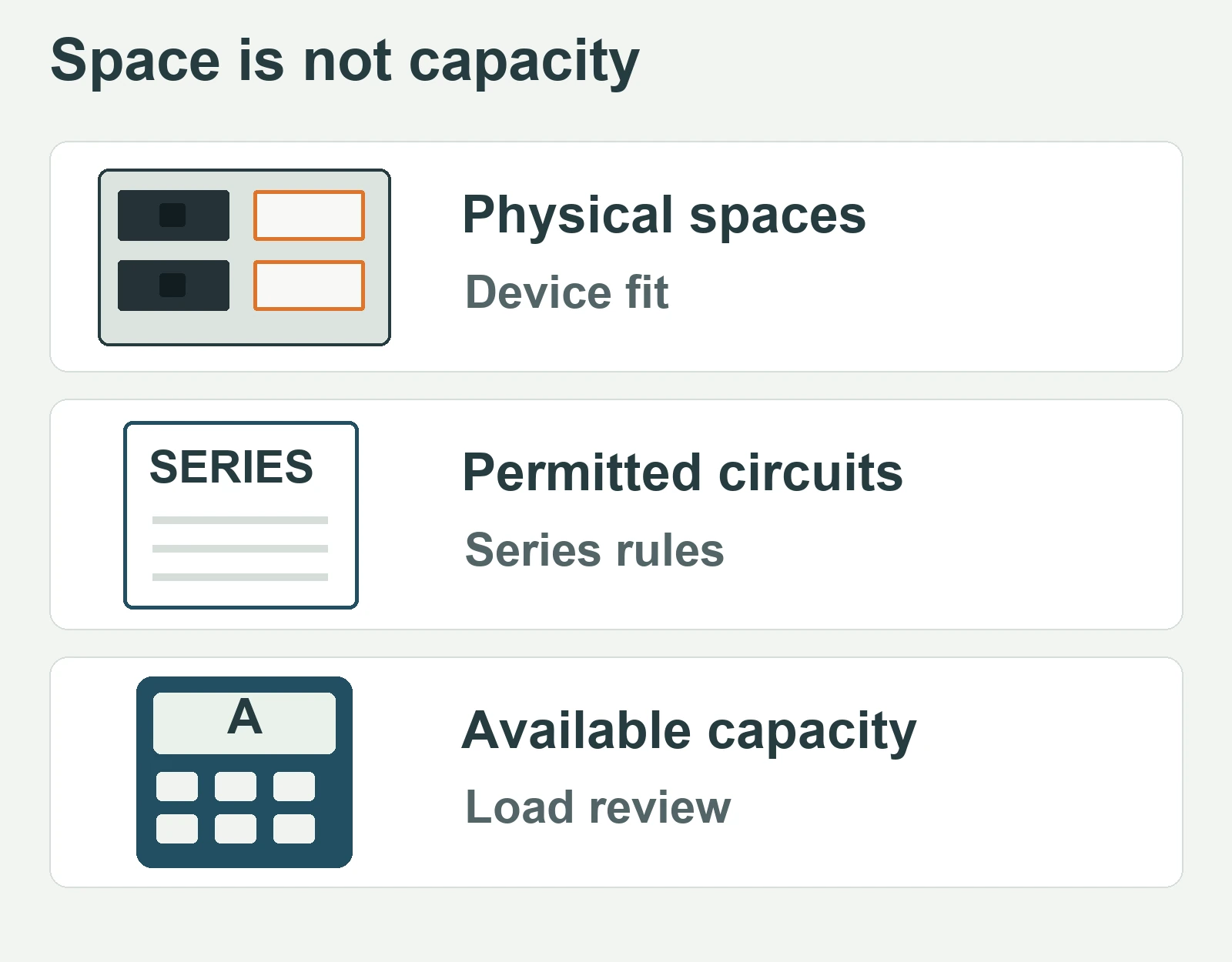
Physical space, permitted circuit arrangements and usable electrical capacity are separate checks.
5. Main breaker, main lug, feed-through or sub-feed?
A main-breaker panel has its main disconnect within the panel. A main-lug-only panel may rely on an upstream disconnect or protection arrangement. Feed-through and sub-feed options connect the panel to downstream equipment and change how the feeder path is organized.
The right question is not “which arrangement is better?” It is:
1. Where does this equipment sit in the distribution system? 2. Which device provides the required disconnect? 3. Which device provides overcurrent protection? 4. What does the one-line diagram show? 5. Who is responsible for conductor sizing and protection coordination? 6. Is downstream equipment included in the same supply scope?
If those answers are missing, the quotations are not describing the same equipment.
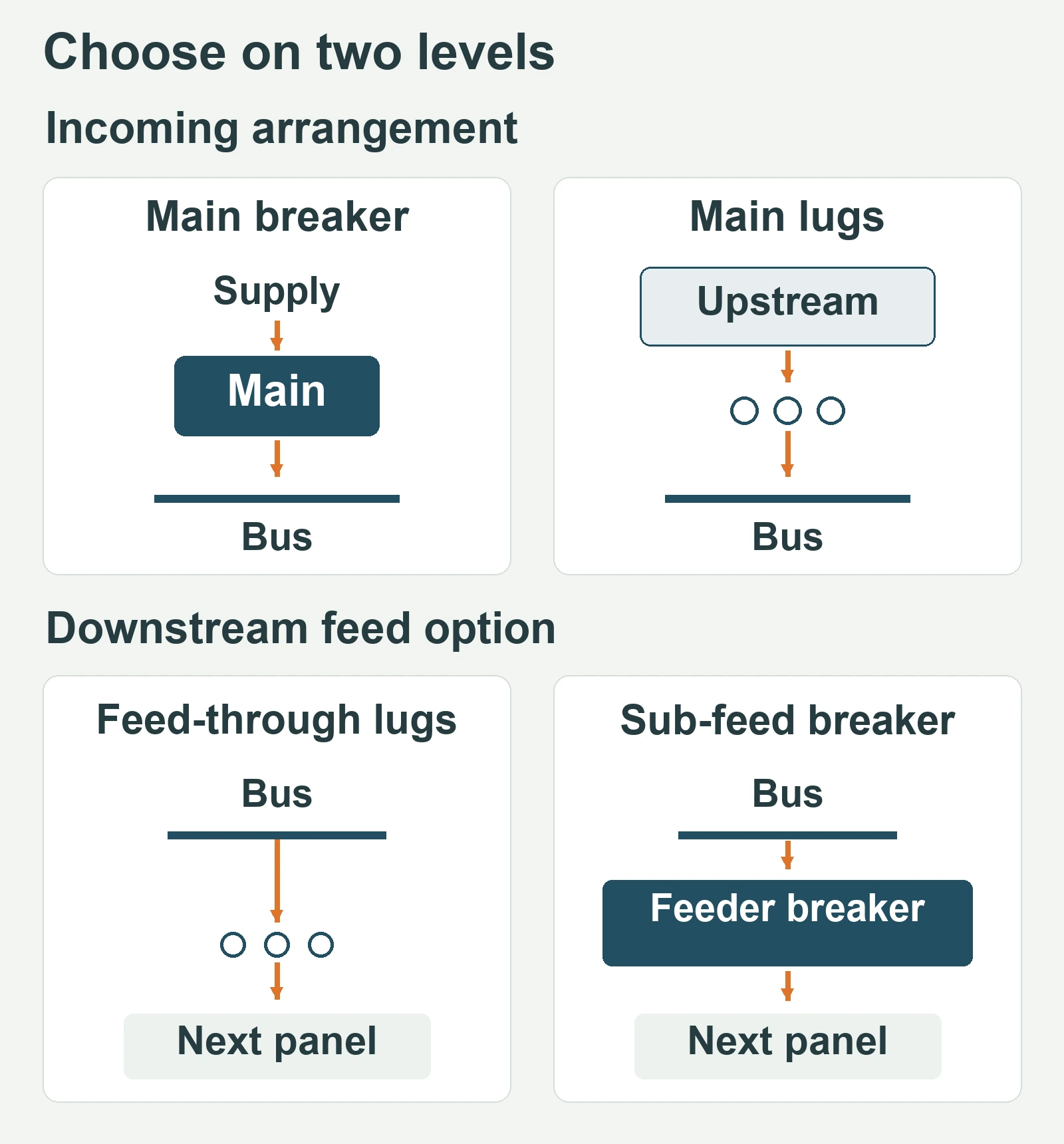
Choose the incoming arrangement separately from the downstream feed option. Here, sub-feed specifically means a sub-feed breaker.
6. The enclosure can make or break the layout
The enclosure must give the approved equipment enough room to mount, terminate, open, inspect and maintain. Depth, door swing, trim, mounting plates, partitions, barriers, cable-entry plates, conductor bend space and interlock interfaces all affect the final layout.
Use these enclosure sizing and clearance checks to review the device layout, cable routes, door access and usable depth together.
This is also where the handoff between a mechanical enclosure supplier and a panel builder must be explicit. FN’s power distribution enclosure scope describes the enclosure as a mechanical platform built around approved devices, busbars, compartments, doors, interlocks, cable terminals and site-mounting interfaces. Complete electrical assembly and verification remain with the responsible panel builder or system manufacturer.
For an RFQ, separate these deliverables:
- empty enclosure or modified enclosure;
- enclosure with mounting hardware and cutouts;
- enclosure with a configured electrical interior;
- wired panel; and
- fully tested and documented panelboard.
They are not interchangeable deliverables, and they should not be priced as if they were.
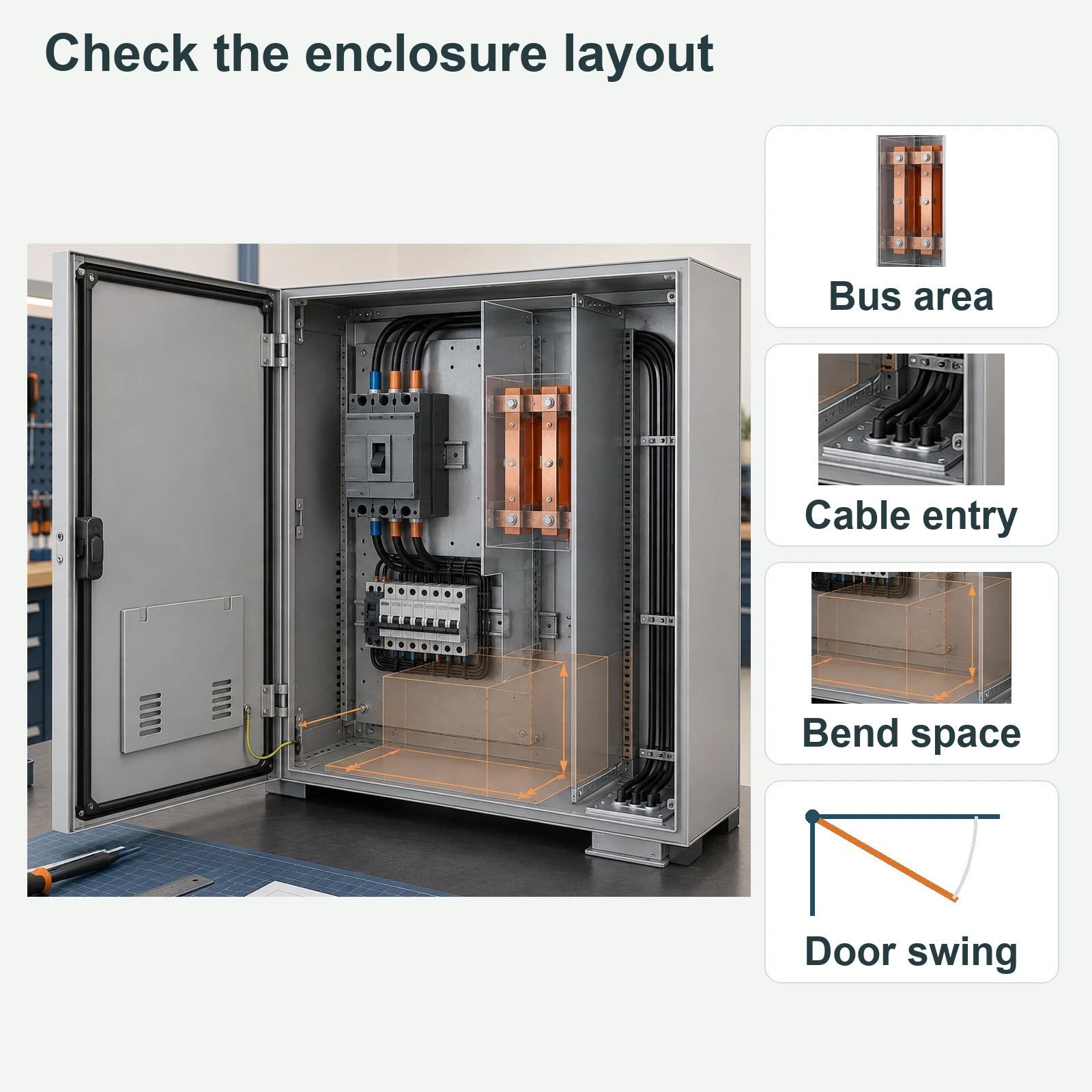
Review the bus area, cable-entry zone, usable bending space and door access as parts of one enclosure layout.
When should you choose a load center?
A load center is a good fit when a documented standard series covers the whole job:
- the voltage, phase and wire system are supported;
- the breaker family and accessories are confirmed;
- the available fault current matches the assembly rating;
- the required circuits fit the approved configuration;
- the enclosure accommodates the equipment and conductors; and
- the service, feeder and installation responsibilities are clear.
That can describe a residential, light-commercial or light-industrial project. The point is not that a load center is “basic.” The point is that a standardized product works well when the job stays inside its documented configuration.
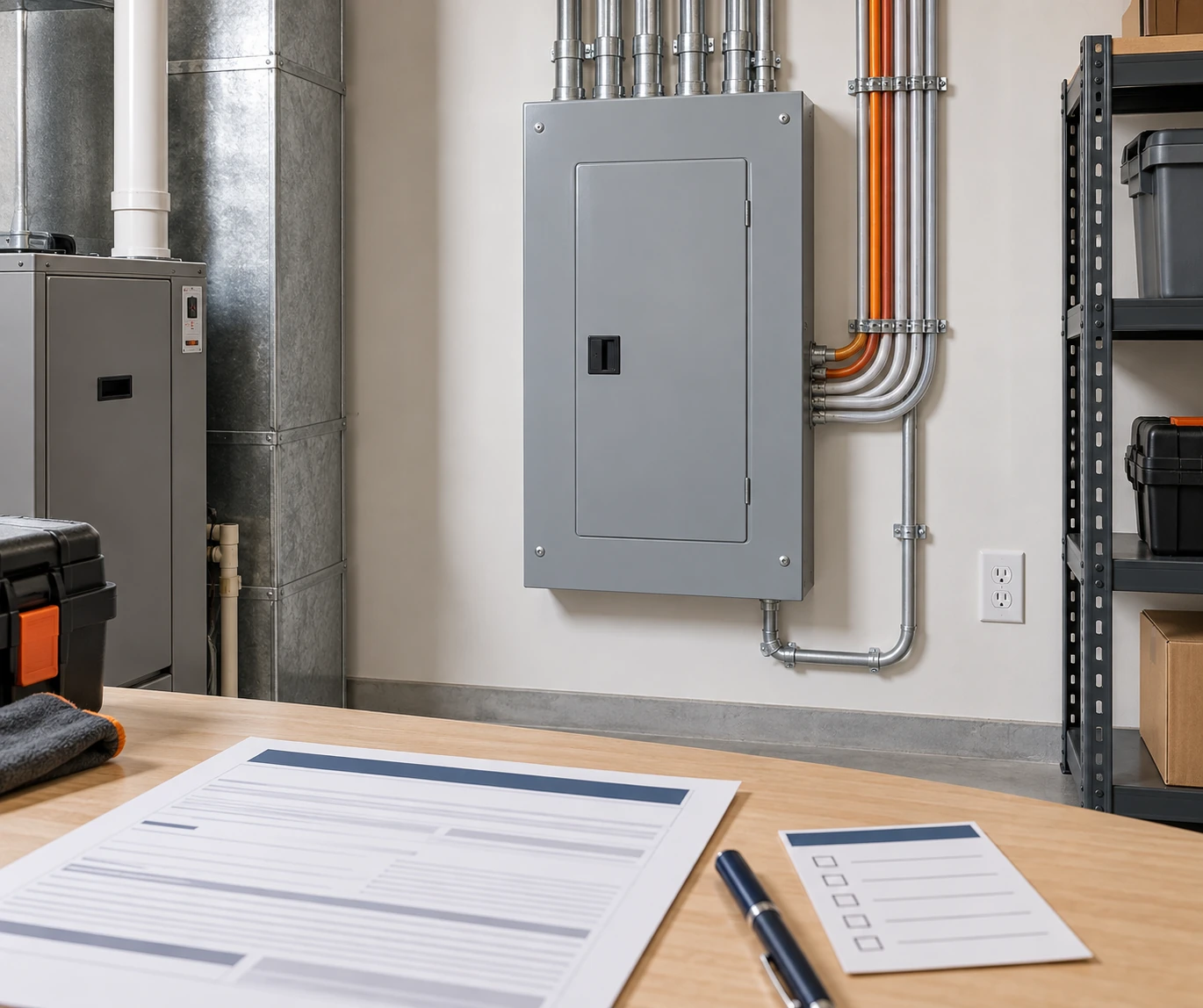
Choose a documented series that covers the installation requirements.
When does a configurable panelboard make more sense?
Look at a configurable panelboard when the project calls for:
- a defined commercial, institutional or industrial layout;
- a particular breaker mounting system or protective-device combination;
- feed-through, sub-feed, metering or special accessory arrangements;
- larger conductor termination or cable-bending zones;
- special enclosure dimensions, materials, trim or compartments;
- coordinated busbar, barrier, door and interlock interfaces; or
- drawings, schedules, labels, inspection records or other project documents.
These are selection signals, not a universal code boundary. Product families differ, so check the exact series before turning a category label into a specification.
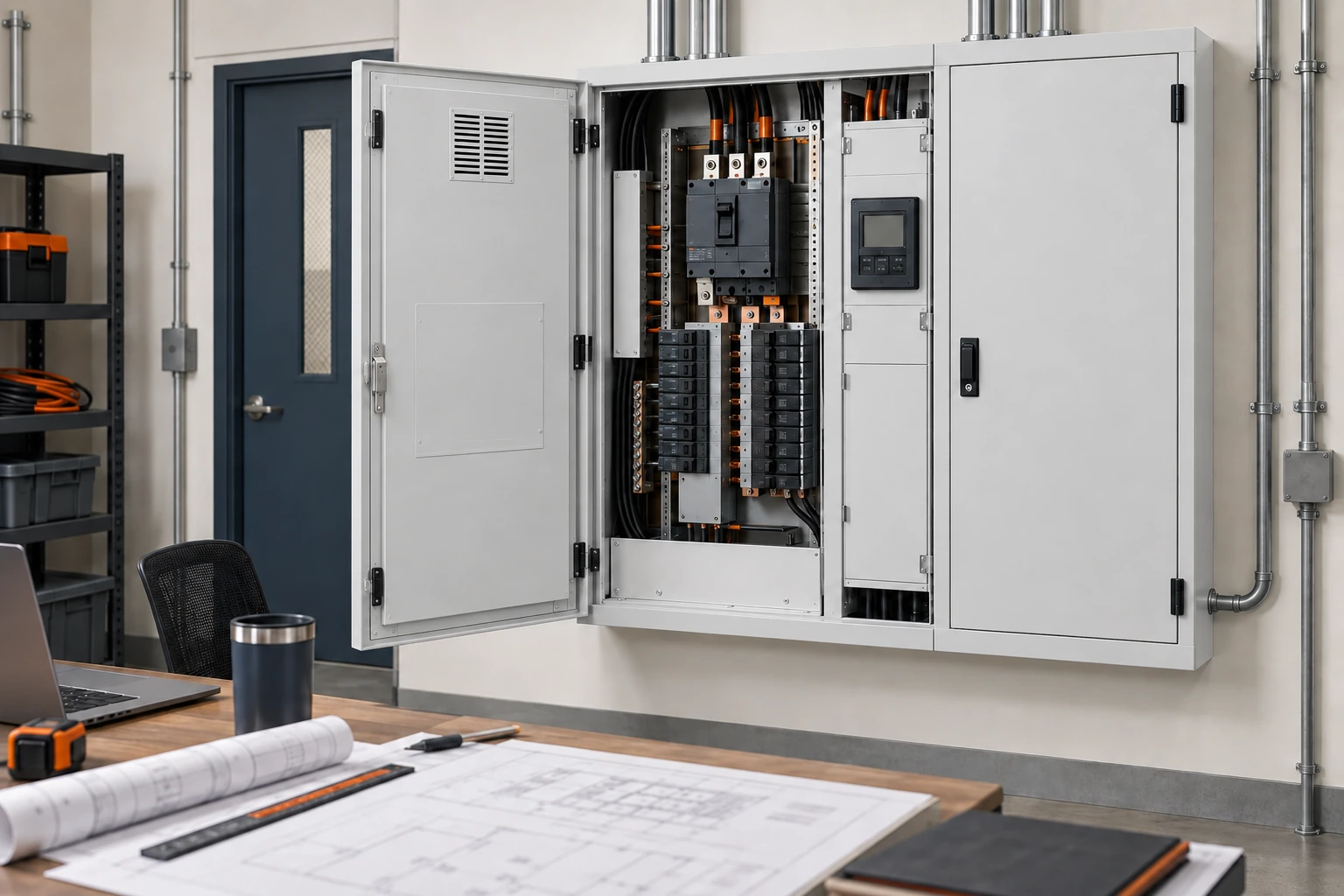
Specify the interior, accessories, feeder arrangement and project records.
Selection Questions for Buyers
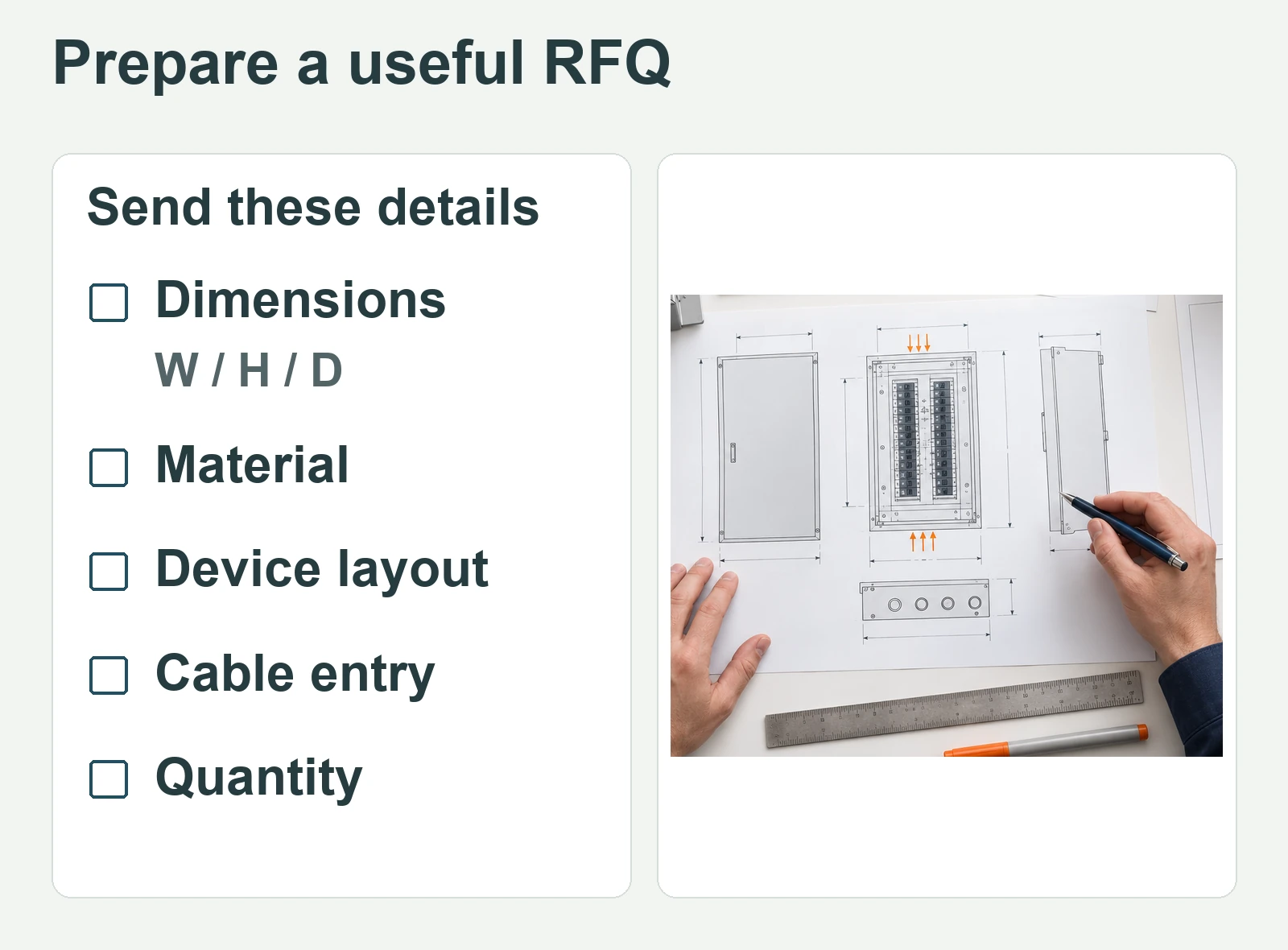
Send dimensions, material, device layout, cable-entry requirements and quantity so quotations cover the same scope.
Before requesting a quote, put these answers in the RFQ. For the mechanical enclosure portion, use the custom enclosure RFQ checklist to organize drawings, dimensions, materials, openings and quantities.
Where will the equipment sit?
Is it service equipment, a feeder panel, a subpanel or part of a larger lineup? That determines how the disconnect, upstream protection and downstream responsibility should be reviewed.
What are the voltage, phase and wire-system requirements?
Write them down instead of inferring them from the enclosure’s appearance. Common residential products are often single-phase, but three-phase load-center products exist.
What is the load today, and what will be added later?
List EV chargers, solar, battery storage, heat pumps, generators and other large loads. Open breaker positions do not prove that the service, bus, feeder or interconnection can support them.
How many spaces and circuits are required?
Separate physical positions from permitted circuit arrangements. If tandem breakers, sub-feed breakers or special accessories are involved, identify the exact product series first.
Which breakers and protection functions are required?
List the breaker family, poles, trip functions and accessories. For a replacement, use the panel label and compatibility documents—not a visual match.
What fault-current information is available?
Include the available fault current and proposed short-circuit rating. Do not let “200 A” stand in for the entire rating review.
Which main arrangement is required?
Specify main breaker, main lug, feed-through or sub-feed, and tie the choice to the single-line diagram.
What must the enclosure accommodate?
Confirm the installation environment, dimensions, depth, cable-entry direction, conductor bend space, door access, mounting method, service clearance, corrosion exposure and any barriers or interlocks.
If the specification uses both rating systems, review the NEMA and IP rating differences before accepting a proposed enclosure.
For cable entry, review cable glands and gland-plate sealing, then state which plates, glands, seals and blanking parts belong in the quote.
Who supplies the complete electrical assembly?
Name the party responsible for device selection, busbars, wiring, protection coordination, testing, commissioning and required certification. The word “panelboard” in a quote does not define those responsibilities.
The distinction between enclosure and control-panel supply scopes is useful when assigning fabrication, component fitting, wiring and testing responsibilities.
What exactly is included in the price?
Request the BOM, layout drawings, enclosure dimensions, labels, inspection points, packaging, exclusions and revision basis. Two quotes become comparable only after their scopes are comparable.
| Supply scope | Typical contents |
|---|---|
| Empty enclosure | Body, door, mounting features and defined openings. |
| Modified enclosure | Cutouts, mounting plates, cable-entry features and specified hardware interfaces. |
| Configured interior | Approved devices, busbars and layout supplied by the responsible panel builder. |
| Wired panel | Electrical connections and assembly work included in the defined scope. |
| Tested assembly | Testing, records and certification only when explicitly assigned and documented. |
If the quote does not state which scope applies, the prices are not directly comparable.
What Published Project Evidence Shows
The case research points to a practical conclusion: buyers often struggle less with the product name than with the boundary around the product.
A Leviton custom-home case describes multiple load centers used in a large residential project, with attention to installation workflow and product availability. The useful lesson is simple: the size of the building does not decide the product category by itself.
Another Leviton case describes a smart load-center approach in a net-zero home, where circuit-level information supported solar and battery planning. That is a functional requirement. It is not a reason to add “smart” to every panel specification.
In the New Times Square multifamily EV retrofit, the project materials describe networked charging and dynamic load management as ways to work within existing capacity constraints. For buyers, the takeaway is to ask how new loads will be managed—not merely how many breaker spaces remain.
CPSC recall notices for specific Schneider and Siemens/Murray products also show why model numbers and date codes belong in replacement discussions. A recall notice applies to the products and batches named in the notice; it is not evidence that every product from a brand has the same issue.
Where an enclosure supplier fits
A panelboard project often contains three separate scopes:
1. Electrical design and protection: load calculations, device selection, busbar design, wiring, protection coordination, testing and required certification. 2. Mechanical enclosure platform: body, doors, mounting plates, partitions, supports, cutouts, cable-entry plates and defined hardware interfaces. 3. Site installation and acceptance: mounting, conductor termination, commissioning, inspection and handover.
FN’s published scope fits the second category when a project needs a custom mechanical platform around approved panel-builder inputs. It does not replace the panel builder or system manufacturer responsible for the complete electrical assembly.
If you need a custom enclosure around approved distribution equipment, send your enclosure and distribution requirements for review. Include the drawing or sample, dimensions, material, quantity, installation environment, device layout, cable-entry direction, door or interlock requirements, inspection points and packaging expectations.
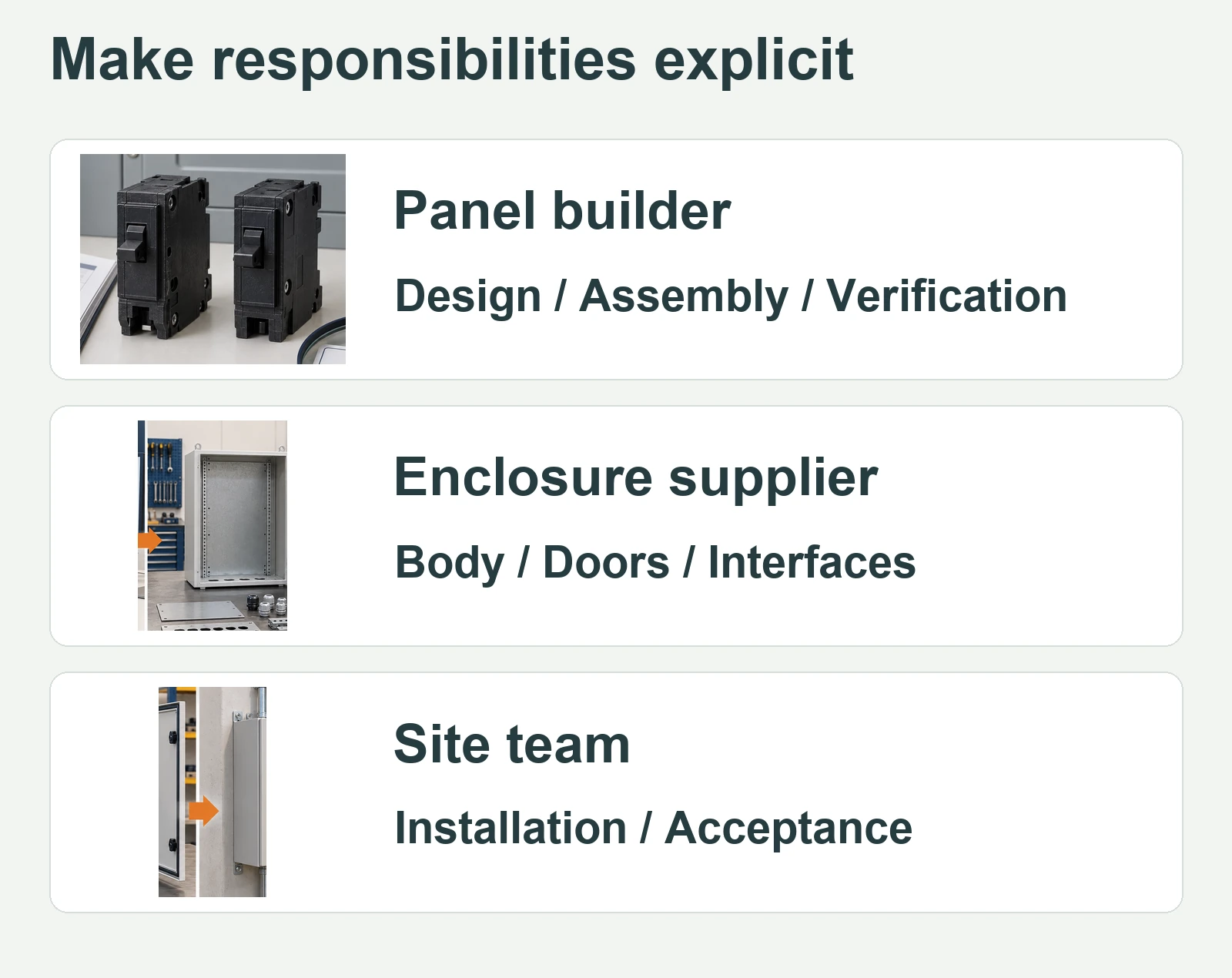
Assign electrical design, assembly and verification; enclosure fabrication; and site installation to the responsible parties.
The practical answer
Choose a load center when a documented standardized series covers the electrical duty, breaker system, enclosure and foreseeable expansion.
Choose a configurable panelboard when the project needs more control over the layout, accessories, ratings, interfaces or project records.
In either case, put the scope in writing. State who supplies the enclosure, who supplies the electrical interior, who verifies the complete assembly and what arrives with the shipment.
That is the difference between a quote that looks inexpensive and a package that is actually ready to install.
FAQ
Is a load center the same as a panelboard?
The terms overlap, but they are not interchangeable for every product. Schneider states that its QO load center is a panelboard and that QO load centers and NQ panelboards are tested to the same UL 67 test parameters. The specific series, listing and configuration still control the decision.
Are load centers only for residential use?
No. Residential is a common load-center market, but three-phase load-center products exist and some light-commercial or light-industrial applications may use them. Check the product documentation and project requirements.
Is a panelboard always more powerful than a load center?
No. “More powerful” is not a useful specification. Compare voltage, phase, load, fault-current rating, breaker compatibility, spaces, enclosure, accessories and documentation.
Is a bolt-on breaker better than a plug-in breaker?
Neither label settles the question. Use the breaker system specified for the panel series and confirm compatibility, interrupting rating, accessories and installation instructions.
Do I need a panel upgrade for an EV charger or solar system?
Not automatically. Review the proposed equipment, existing load, service, bus, feeder, interconnection and protection requirements. Open breaker positions alone do not answer that question.

Review existing capacity and load management before choosing equipment.
Can an enclosure supplier provide the complete panelboard?
It depends on the supplier’s confirmed scope. FN’s published power-distribution scope separates the mechanical enclosure platform from complete electrical assembly and verification, which remain with the responsible panel builder or system manufacturer. Ask whether the quote covers an empty enclosure, modified enclosure, assembled interior, wired panel or fully tested assembly.