
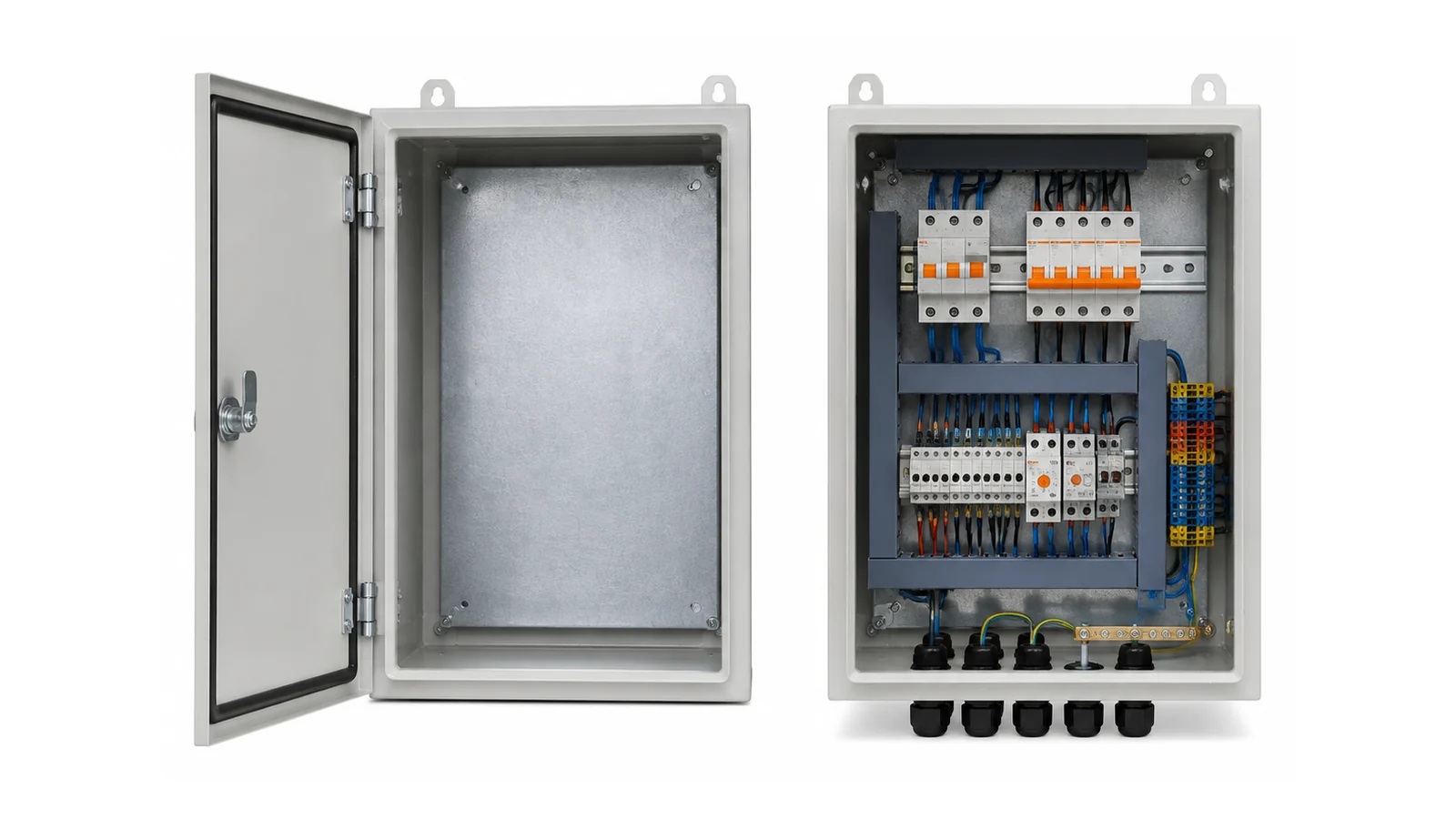

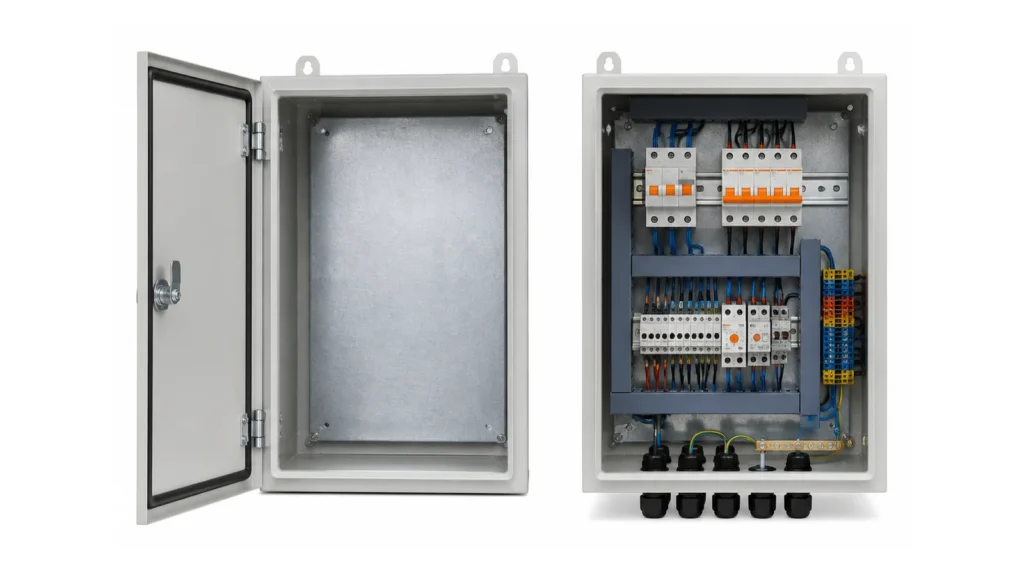
What do you actually need delivered?
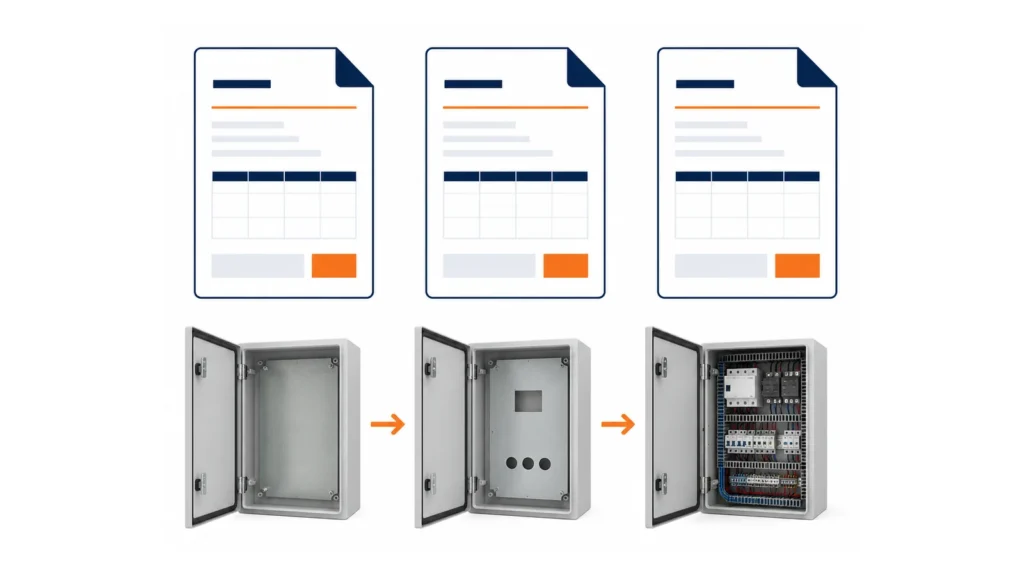
If you need a metal housing, ask for an enclosure. If you need cutouts, brackets, a mounting plate, or installed hardware, list them. If you need components wired and tested, say so.
Our position is simple: a product name is not a scope. The quotation must state what arrives and what remains with the buyer, panel builder, or system integrator.
| Deliverable | What arrives | Usually separate |
|---|---|---|
| Empty enclosure | Body, door, gasket, lock, and listed accessories | Cutouts, components, wiring, and testing |
| Modified enclosure | Approved openings, brackets, gland-plate work, hardware, and finish | Electrical design and internal wiring |
| Mechanical assembly | Agreed mounting plate, rails, wire duct, brackets, or listed devices | Wiring, programming, FAT, and commissioning unless quoted |
| Wired control panel | Only the components, wiring, tests, and documents listed in the contract | Any unassigned electrical, software, site, or certification work |
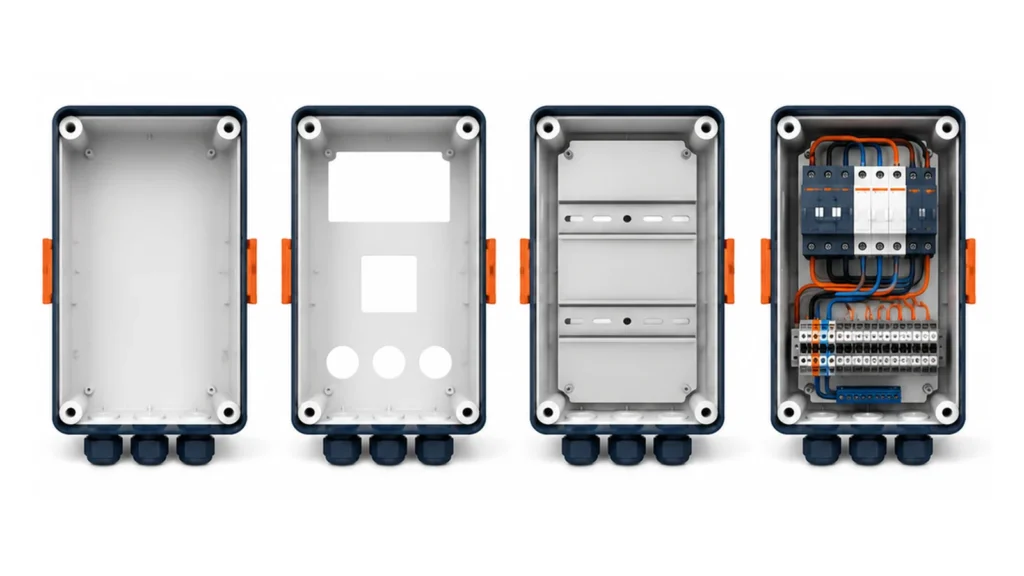
What is our quote based on?
The quote is based on the work required to produce and deliver the agreed scope—not on height, width, and depth alone.
| We need to know | Because it changes |
|---|---|
| Size, mounting, doors, removable panels, plinth, lifting, and access | Structure, material use, fabrication, and packing |
| Carbon steel, stainless steel, or aluminum; thickness and finish | Material cost, processing, corrosion strategy, and appearance |
| Cutouts, welded parts, brackets, windows, and custom hardware | Programming, machining, welding, inspection, and rework risk |
| Mounting plate, rails, wire duct, accessories, and installed devices | Purchased parts, assembly time, and layout responsibility |
| Quantity, variants, prototype stage, and first-article approval | Engineering setup, repeatability, and production planning |
| Inspection records, drawings, labels, packaging, and delivery terms | Quality work, documentation, packing, and logistics |
“One 800 × 600 × 300 mm enclosure” is not enough for a firm price. A stainless-steel body, door-mounted HMI, side-wall cooling unit, twenty cable entries, welded brackets, and export packing turn the same outside dimensions into a different job.
A useful quote makes four things visible: included work, buyer-supplied items, temporary assumptions, and changes that require a new price.
No complete drawings? Send these five things
- Application and installation environment
- Available space or approximate enclosure size
- Component list, model numbers, photos, or largest component dimensions
- Required delivery scope: empty, modified, mechanically assembled, or wired
- Prototype quantity and expected production quantity
This is enough to start a requirements review. It may not be enough for a firm price. If cable entry, heat load, cutouts, inspection, or packing details are still unknown, we will list them as open items instead of asking you to finish the whole design first.
Can FN help if you do not have drawings?
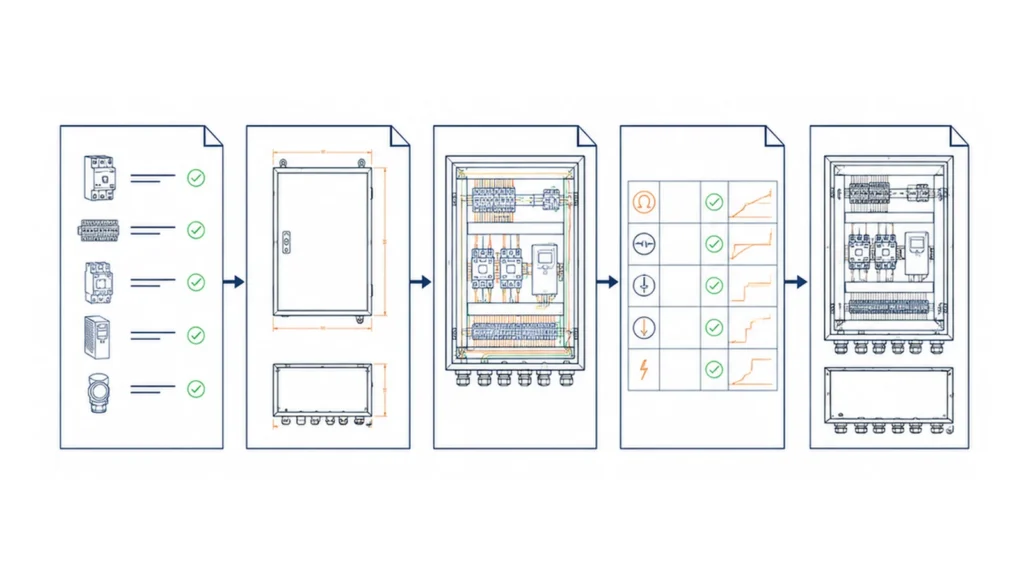
Yes. FN can help develop the enclosure mechanical design from photos, a rough sketch, a component list, an existing enclosure, or application requirements.
The agreed scope may cover the enclosure body, doors, mounting plate, brackets, cutouts, cable-entry provisions, cooling-equipment openings, and manufacturability review.
| What you have now | What FN can do now | What must be confirmed later |
|---|---|---|
| Approved enclosure drawings | Check manufacturability and prepare the quotation | Open manufacturing questions and the final controlled revision |
| Component list, but no layout | Develop the body, doors, mounting plate, brackets, cutouts, and cable-entry provisions | Exact component data, clearances, heat inputs, and approved layout |
| Photos, an old enclosure, or a rough sketch | Set an initial envelope and identify missing mechanical inputs | Measured interfaces, environment, cable entry, and selected components |
| Only an application | Clarify the environment and delivery scope, then define the next data needed | Enough information to create and approve a production drawing |
A rough application can start a design review. It cannot release fabrication.
When is FN design support safe?
FN can help when the mechanical boundary is clear and the buyer has someone who can approve the final interfaces. Four controls matter.
- Define the object. State whether FN is designing the body, mounting plate, cutouts, brackets, cable entry, cooling provisions, or another agreed mechanical assembly.
- Name the input owner. Someone must confirm component data, environment, heat loss, cable schedule, and installation limits.
- Expose assumptions. A temporary HMI model, estimated heat load, or provisional cable count belongs in the quotation—not in an informal email thread.
- Control the release. A quotation drawing supports pricing. Fabrication starts only from the approved revision.
Enclosure design support does not automatically include electrical architecture, protection coordination, SCCR, electrical schematics, internal wiring, PLC/HMI software, FAT/SAT, site commissioning, or complete-system certification.
If the project also involves hazardous-area requirements, purge equipment, door interlocks, or FAT, list them separately and name the responsible design and test owner.
Environment comes before material and rating
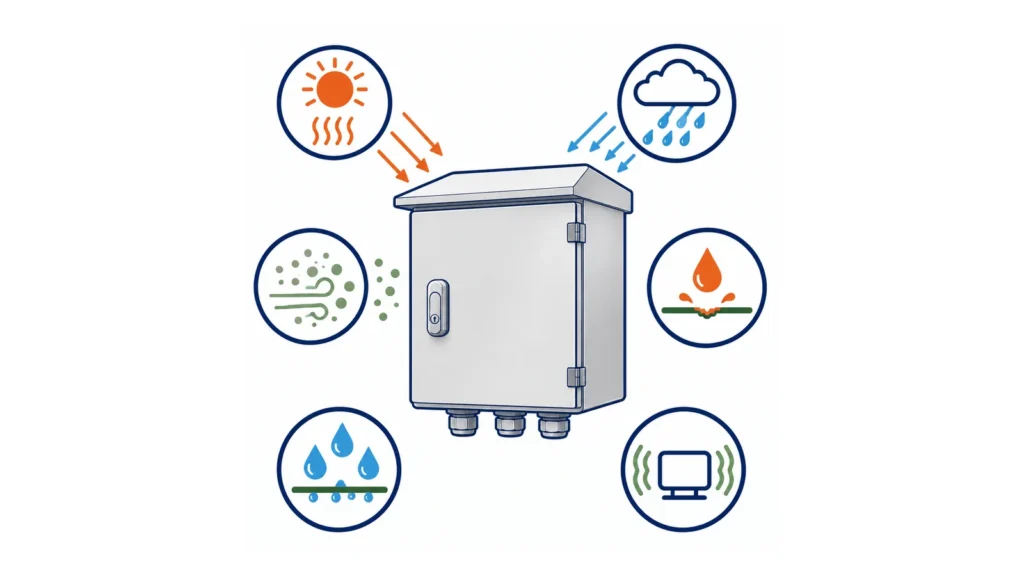
Start with the installation, not a rating label. “IP66” or “stainless steel” does not tell us whether the enclosure faces rain, washdown, salt, chemicals, solar heat, condensation, or vibration.
| Tell us | It affects |
|---|---|
| Indoor or outdoor location | Weather protection, drainage, sealing, finish, and accessories |
| Minimum and maximum ambient temperature | Gasket, condensation, ventilation, and cooling decisions |
| Rain, dust, or washdown | Door, seam, cable entry, hardware, and installation details |
| Salt, humidity, or chemicals | Material, finish, fasteners, and corrosion strategy |
| Sun, altitude, vibration, or impact | Heat load, reinforcement, mounting, and component support |
| Hazardous-area or market requirement | Specialist design, component, evidence, and approval responsibilities |
An IP or NEMA target can be part of the specification. It cannot replace the environmental data that drives the design.
If you need assembly, send more than a BOM
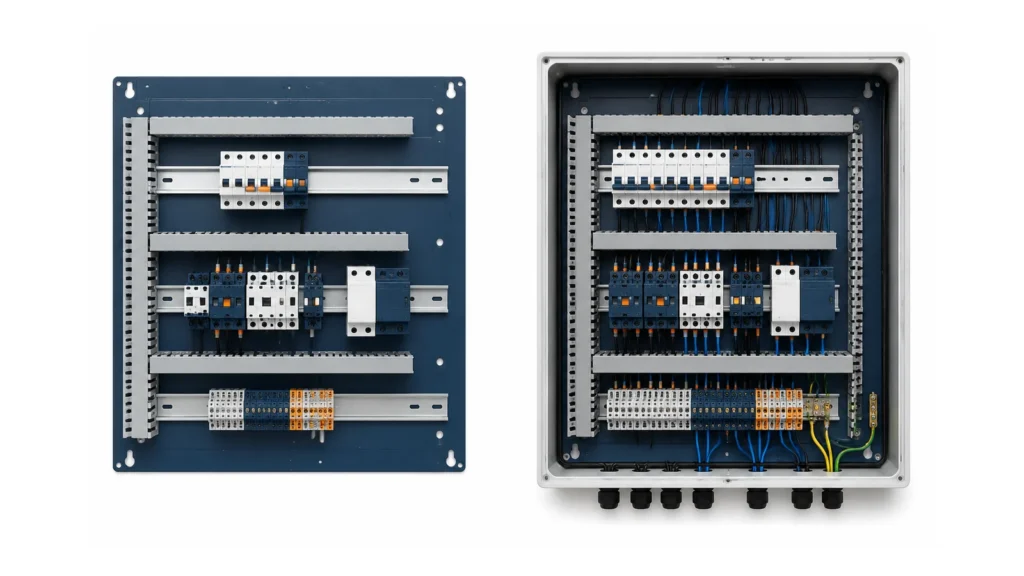
A BOM tells us what the parts are. It does not tell us where they go, who supplies them, or what “assembled” includes.
| Requested work | Provide |
|---|---|
| DIN rail and wire duct | Approved layout, datums, dimensions, fixing method, and quantity |
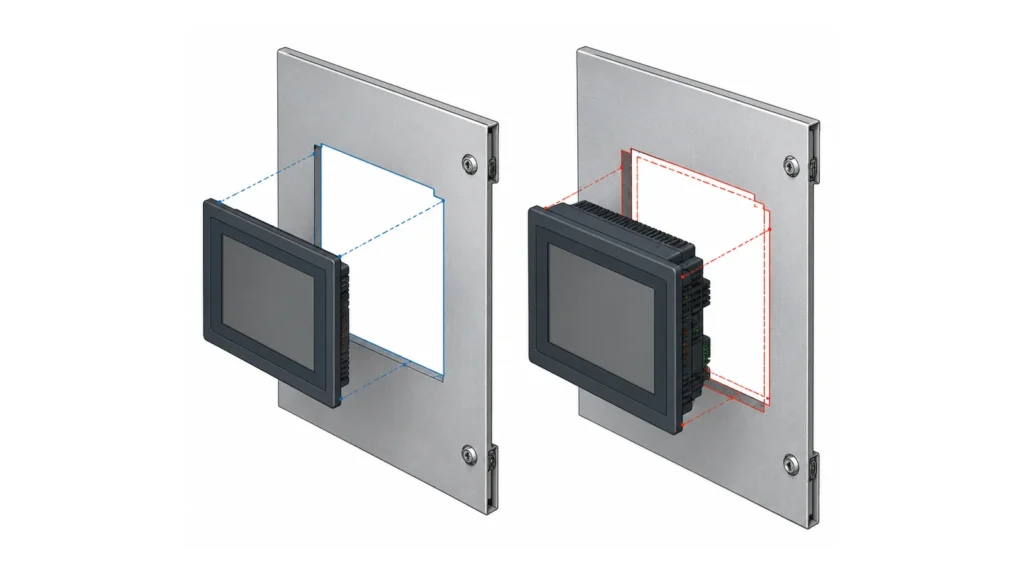
| Door-mounted HMI, buttons, or disconnect | Exact model, cutout drawing, fixing pattern, orientation, seal, and rear clearance |
| Internal component mounting | BOM, data sheets, spacing, supports, heat data, and maintenance clearance |
| Buyer-supplied components | Packing list, arrival date, quantity, condition, and replacement rule |
| Cable entry | Cable count, diameters, entry zone, bending space, sealing method, and spare capacity |
| Internal wiring, if quoted | Approved schematics, wire specification, terminal plan, labels, and test requirements |
Mechanical assembly is not shorthand for a wired control panel. If you need wiring, labels, inspection, or testing, put each item on its own scope line.
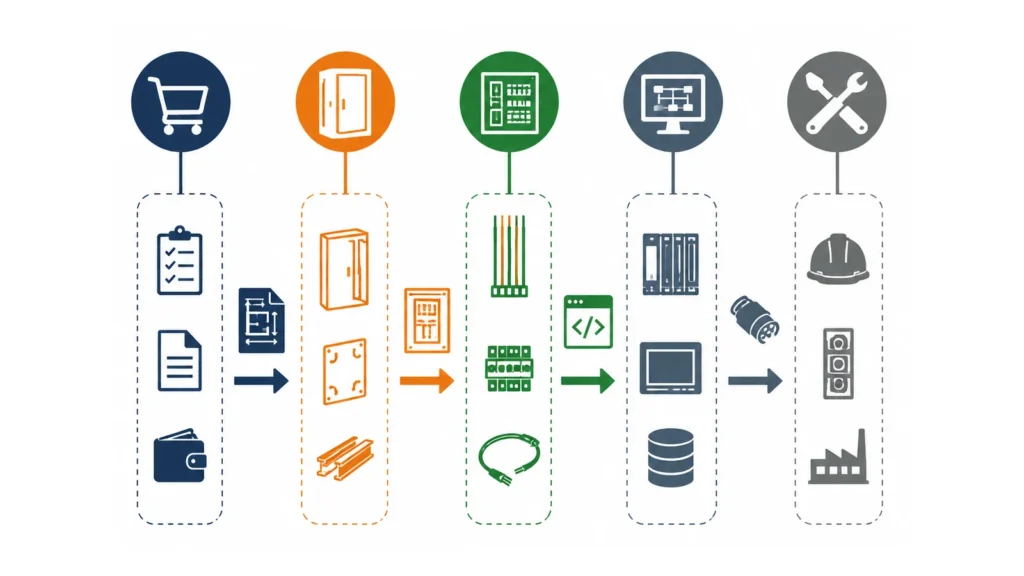
Control panel drawings need a release status
“Drawing attached” is not enough. The title block should tell the factory what it may do.
| Status | Use it for |
|---|---|
| Issued for quotation | Scope review, assumptions, and pricing—not fabrication |
| Issued for approval | Checking layout, interfaces, components, and clearances |
| Approved for fabrication | Cutting, drilling, welding, and agreed assembly |
| As-built | Recording the delivered configuration and approved changes |
Change the HMI model after approval and the old door cutout may no longer fit. Change the cooling unit and both the wall opening and internal layout may move. The drawing revision and quotation assumptions must change together.
Thermal and cable-entry data cannot wait
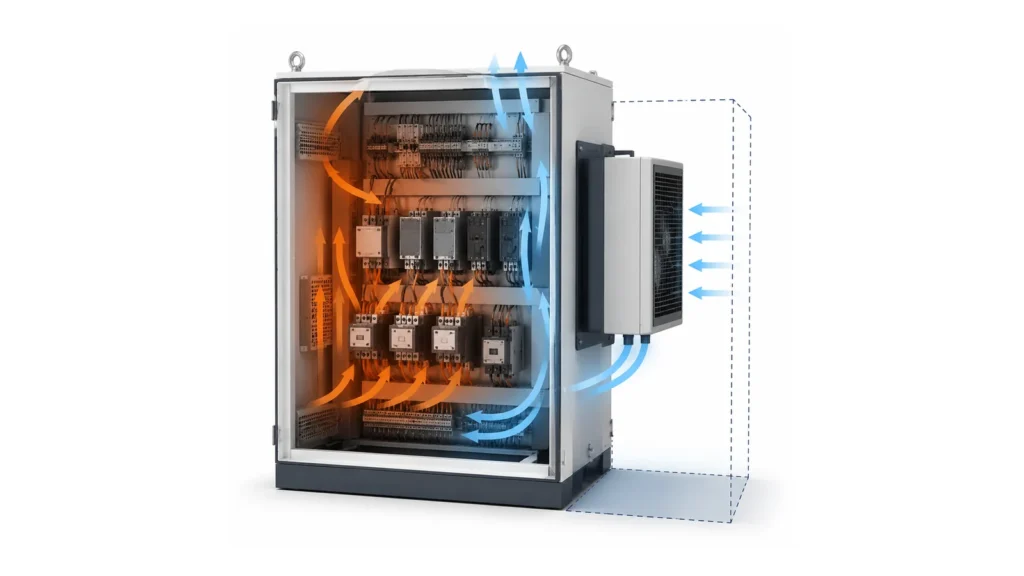
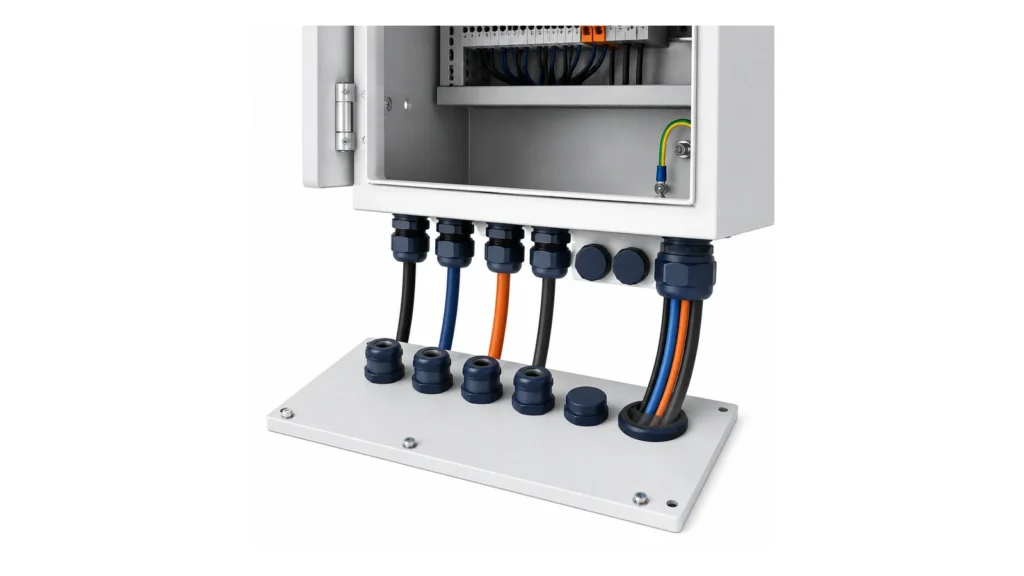
Cooling equipment and cable entries compete for the same wall area and internal space. Decide them before the enclosure layout is frozen.
For cooling provisions, send the component heat loss, ambient range, allowable internal temperature, solar exposure, and ventilation limits. For cable entry, send the cable count, diameter range, direction, bending space, sealing method, and spare capacity.
If those inputs arrive late, the gland plate, mounting plate, cooling opening, or complete enclosure may need to change.
Panel builder responsibilities are separate
FN can help develop the agreed enclosure body, doors, mounting plate, brackets, cutouts, cable-entry provisions, and cooling-equipment interfaces.
Electrical architecture, protection, schematics, component suitability, internal wiring, PLC/HMI software, FAT, commissioning, and complete-system certification need a named owner. That may be the buyer, OEM, electrical designer, panel builder, or system integrator.
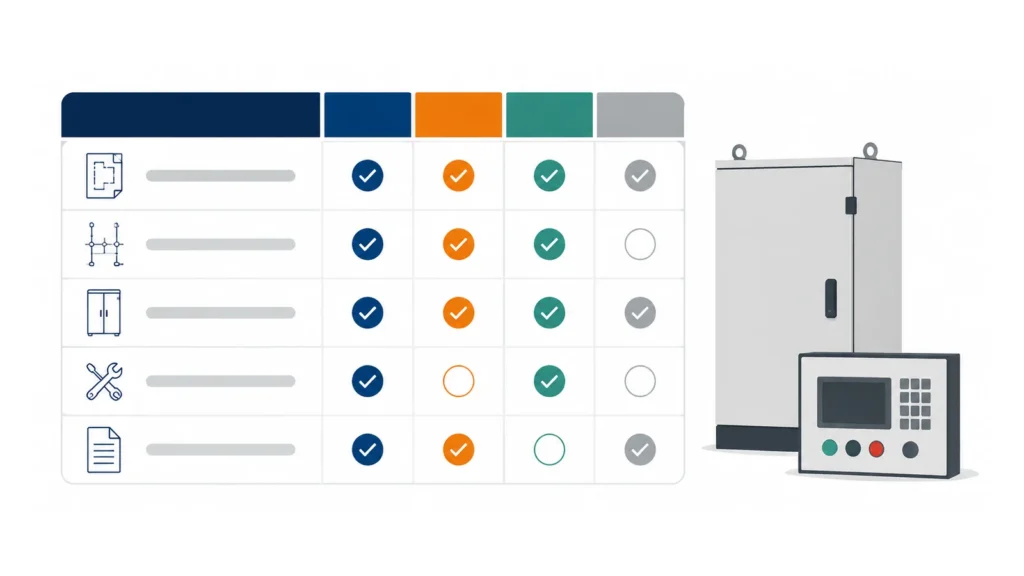
Do not leave this boundary to interpretation. Mark every line as Included, Optional, Excluded, or Buyer-supplied.
Use the guide that matches your next question
Custom Electrical Enclosures
For project-specific dimensions, materials, cutouts, brackets, and mechanical interfaces.
Applications Hub
For outdoor, washdown, corrosion, thermal, retrofit, and machine-integration projects.
Electrical Enclosure Sizing Guide
For component space, wiring room, door clearance, cooling space, and expansion.
Cutouts, Inserts, and Hardware Guide
For HMI, connector, fan, filter, lock, hinge, and mounting details.
Outdoor Electrical Enclosures
For rain, sun, condensation, drainage, and outdoor installation.
Stainless Steel Electrical Enclosures
For washdown, humidity, salt, and chemical exposure.
Send what you have
A photo, sketch, BOM, old drawing, or component list can start the conversation. Add the application, environment, available space, delivery scope, and quantity if you know them.
We will return the missing-input list and proposed next step. A firm quotation follows when price-changing assumptions are closed. Fabrication follows only from approved drawings.Send Your Enclosure RequirementsDownload the RFQ Scope Matrix
Frequently asked questions
Can FN help if I only have photos or a rough sketch?
Yes. We can use them to clarify the application, set an initial enclosure envelope, and list the missing mechanical inputs. Exact interfaces still need approval before fabrication.
Do I need to complete the RFQ matrix before contacting FN?
No. Use it to organize known information or compare bidders. If fields are blank, send what you have and we will identify which missing items affect the enclosure, price, or production release.
What is required for a firm quote?
A firm quote needs the deliverable, environment, material and finish, component interfaces, modifications, assembly scope, quantity, inspection, documents, packing, and delivery terms. Any remaining price driver must be closed or written as a quotation condition.
Does component mounting include wiring?
No. Mounting and wiring are separate scope lines. Wiring also needs approved schematics, terminals, labels, wire specifications, and test requirements.
Can provisional component data be used?
It can support a concept or conditional quote. Before fabrication, freeze every model that controls a cutout, mounting pattern, clearance, cable interface, or heat input.