
OEM Electrical Enclosure Manufacturer
Custom Electrical Enclosures From Your Drawings
Projects can start from a CAD/PDF drawing, sample, photo, sketch, or specification. Before production release, FN reviews cut-outs, mounting plates, cable entry, door and gasket fit, material, finish, inspection points, and packaging.
Six Checks Before Cutting, Sealing, Approval, and Shipment
Review each risk at the stage when it can still be corrected. The checks cover opening coordinates, batch dimensions, door and gasket fit, outdoor interfaces, thermal ownership, and packing.
Before Cutting
Wrong cut-outs or mounting holes can force field modification
Check: Opening coordinates, hole sizes, cable direction, gland-plate position, mounting interfaces, component clearance, and service access.
Before First Article Approval
Unstable dimensions can repeat across the production batch
Check: Critical dimensions, bend references, hole positions, door gaps, hardware fit, and the approved measurement record.
Before Sealing Release
Door or gasket mismatch can undermine closure and repeatability
Check: Door movement, hinge and lock position, compression path, gasket continuity, corners, openings, and removable-panel interfaces.
Before Outdoor Release
Water can enter around cable and ventilation openings
Check: Glands, gland plates, louvers, fans, filters, windows, breathers, drainage, orientation, sealing details, and any later field drilling.
Before Thermal Review
Condensation or heat buildup can be missed when only the shell is reviewed
Check: Heat sources, ambient range, humidity, solar exposure, ventilation limits, condensation controls, and who owns thermal verification.
Before Shipment
Weak packing can turn a correct enclosure into a damaged delivery
Check: Surface protection, corners, doors, loose parts, cartons or crates, the pallet plan, labels, shipment method, and destination risk.
Separate Enclosure-Body Work From Electrical-System Responsibility
Use this boundary to compare quotations and state which responsibilities must be priced, excluded, or handled through another supply route.
Usually Discussed With the Enclosure Body
- Cabinet bodies, doors, covers, frames, bases, brackets, and sheet-metal structures
- Mounting plates, back panels, DIN-rail or accessory preparation
- Holes, cut-outs, gland plates, cable-entry and ventilation interfaces
- Hinges, locks, handles, gaskets, grounding studs, labels, and nameplates
- Material, surface finish, project-specific inspection, and export packaging
Confirm as a Separate Scope
- Electrical component fitting beyond the stated mechanical scope
- Wiring, electrical testing, complete panel assembly, or system integration
- PLC programming, controls engineering, or thermal-design ownership
- Third-party certification, laboratory testing, or certification ownership
- Site installation, commissioning, or field electrical responsibility
RFQ rule: list these separately so FN can confirm whether they are included, excluded, or need another supply route.
Eight Inputs for a Quotation-Ready Enclosure RFQ
Complete what you know and mark unknown items for review. Include the drawing revision and destination so missing decisions can be identified before quotation.
01 / Drawing or reference
CAD/PDF drawing, sample, photo, sketch, or specification—and the revision to quote.
02 / Size and structure
Overall dimensions, door/cover arrangement, mounting method, bases, frames, and internal clearances.
03 / Material and finish
Material grade, sheet thickness, coating or stainless finish, color, marking, and appearance requirements.
04 / Openings and cable entry
Cut-outs, holes, gland plates, fans, filters, windows, louvers, cable direction, and field-access needs.
05 / Mounting and accessories
Mounting plate, DIN rail, brackets, locks, hinges, handles, gasket, grounding points, and loose accessories.
06 / Environment and protection target
Indoor/outdoor use, dust, rain, humidity, corrosion, washdown, heat, condensation, and requested IP target.
07 / Quantity and approval route
Prototype or first article, initial quantity, repeat-order expectation, and buyer approval checkpoints.
08 / Inspection and delivery
Critical dimensions, labels, packing method, destination country, shipment mode, and protection for finished surfaces.
Contact-form action: Paste the checklist summary and name the available files. FN can then confirm the appropriate route for sharing large drawings.
What FN Checks Before Quoting a Custom Enclosure
The review connects the enclosure design to the internal layout, installation environment, fabrication route, inspection plan, and shipment method.
Structure & Fit
Overall dimensions, sheet thickness, bend direction, frame strength, door gap, hinge and lock position, gasket path, mounting-plate clearance, grounding points, and accessory space.
Openings & Cable Entry
Cut-out size and location, gland plates, cable direction, fan/filter/louver/window openings, bend radius, field access, and whether later drilling could affect finish or sealing.
Material & Environment
Cold-rolled or galvanized steel, SS304, SS316, or aluminum; coating/finish; humidity, chloride, washdown, heat, condensation, and outdoor exposure.
Production, QC & Shipping
Welding and grinding access, coating coverage, prototype checkpoints, batch inspection references, surface protection, loose parts, cartons, crates, pallets, labels, and destination risk.
Six Decision Gates and the Output From Each Stage
Use the outputs to keep the quotation, drawing revision, first article, batch production, inspection, and export release aligned to one confirmed scope.
01 / Requirements Input
Collect available drawings or references plus size, material, quantity, environment, interfaces, inspection needs, and destination.
Deliverable: A reviewable project brief
02 / Engineering Review
Check manufacturability, structure, openings, access, hardware, finish, sealing interfaces, thermal questions, and packing risks.
Deliverable: Questions and drawing comments
03 / Quotation & Drawing Confirmation
Confirm the quoted supply boundary, drawing revision, material, quantity, production route, approval points, packing, and lead-time basis.
Deliverable: A comparable quotation scope
04 / Prototype or First Article
For new or higher-risk work, verify dimensions, openings, door and hardware fit, gasket, finish, accessories, labels, and packaging.
Deliverable: An approved production reference
05 / Batch Production
Manufacture against the approved revision and check agreed dimensions, operations, finish, accessories, labels, and repeat-order controls.
Deliverable: A controlled batch record
06 / Final Inspection & Export Release
Confirm quantity, inspection points, surface protection, loose parts, labels, packing, and shipment preparation before release.
Deliverable: A shipment-ready handoff
Sixteen Visible Manufacturing and Delivery Stages
The route groups engineering, fabrication, finishing, fitting, inspection, and delivery. Actual steps depend on material, design, quantity, and the confirmed supply scope.
01 Engineering
Drawing confirmation and release inputs
02–09 Fabrication
Cut, form, join, smooth, and fasten
10–12 Finish & Seal
Pretreatment, coating, and gasket route
13–16 Fit, QC & Delivery
Confirmed fitting, inspection, packaging, and shipment
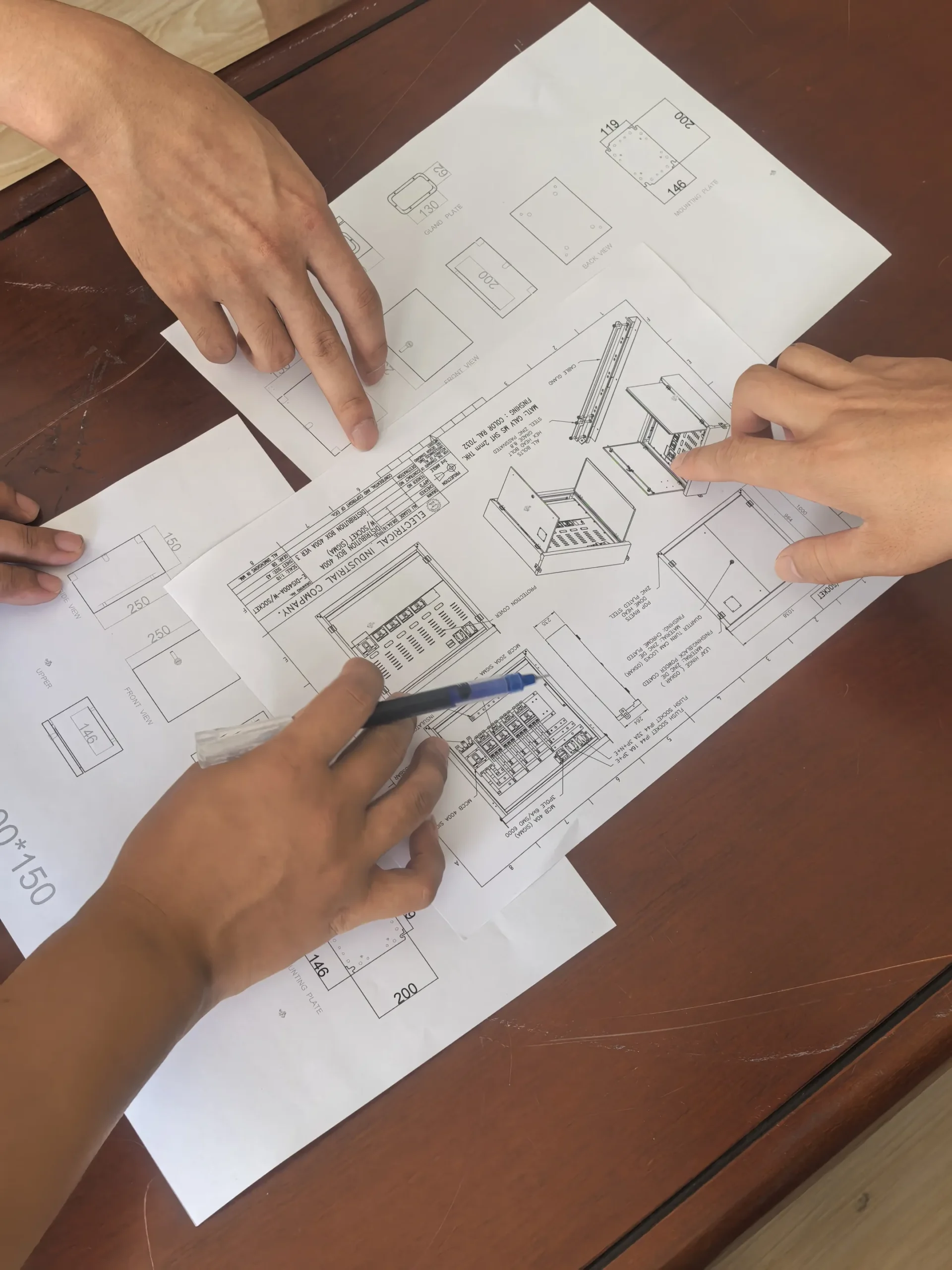
01 / Engineering
CAD Drawing Confirmation
Lock the revision, material, interfaces, door direction, and inspection points that production will follow.
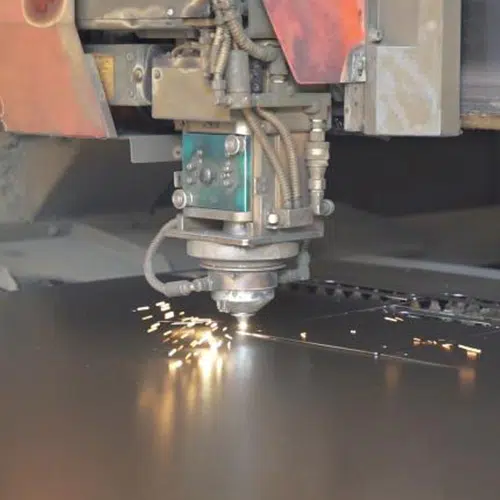
02 / Fabrication
Laser Cutting
Transfer the approved outer profile and cut-out coordinates to flat sheet before forming.
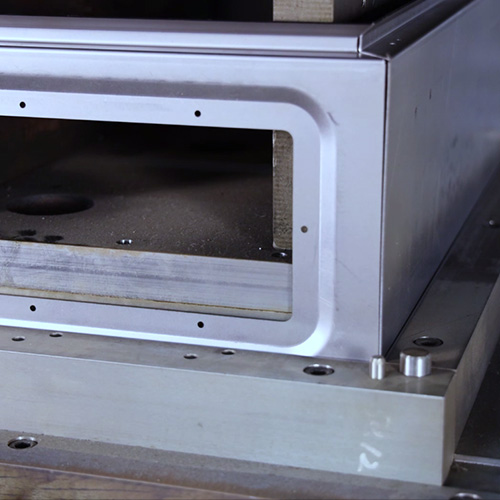
03 / Fabrication
CNC Punching / Stamping
Produce repeated ventilation, mounting, and accessory openings when punching or tooling suits the quantity and geometry.
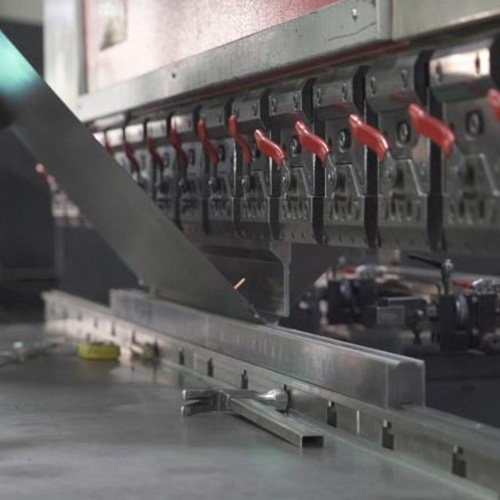
04 / Fabrication
Press Brake Bending
Control bend locations, angles, and internal clearances against the approved geometry.
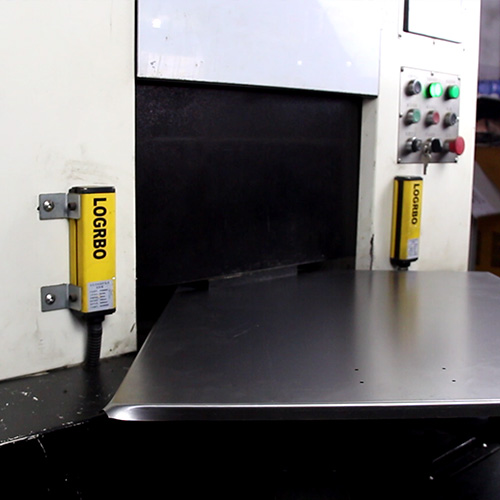
05 / Fabrication
Corner Forming
Create the corner and edge geometry required for joining, sealing, and finishing.

06 / Fabrication
Robotic Welding
Use controlled automated seams where the design and quantity justify a repeatable welding route.
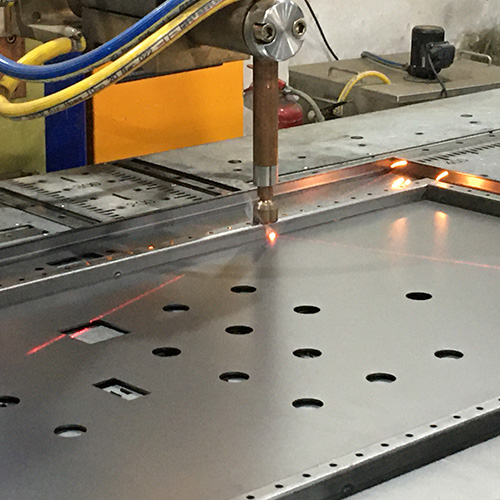
07 / Fabrication
Spot Welding
Locate panels, brackets, and structural parts at the joining points defined in the drawing.
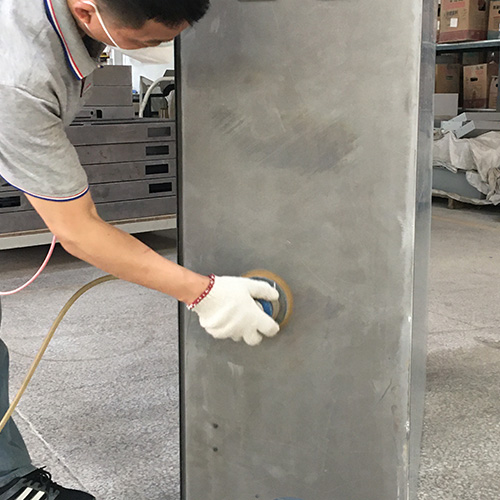
08 / Fabrication
Grinding & Deburring
Smooth welds, edges, and burrs that could affect fit, finishing, or safe handling.
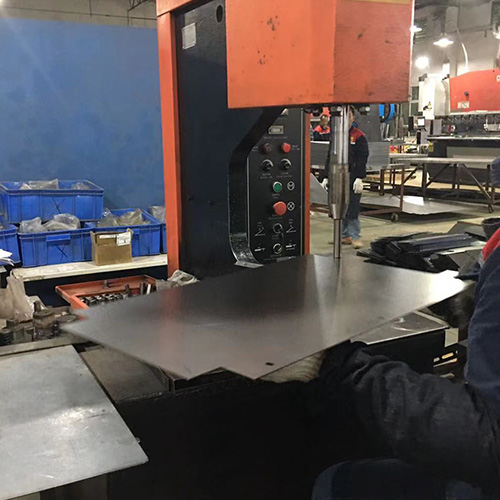
09 / Fabrication
Press Riveting
Install threaded fasteners and hardware interfaces for later fitting and assembly.
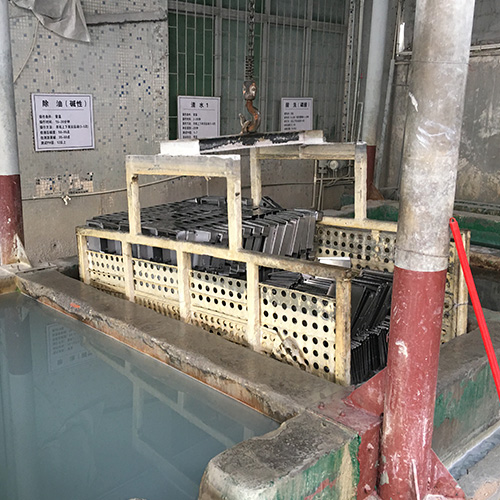
10 / Finish & Seal
Surface Pretreatment
Prepare surfaces for the specified finish when the material and process route require pretreatment.
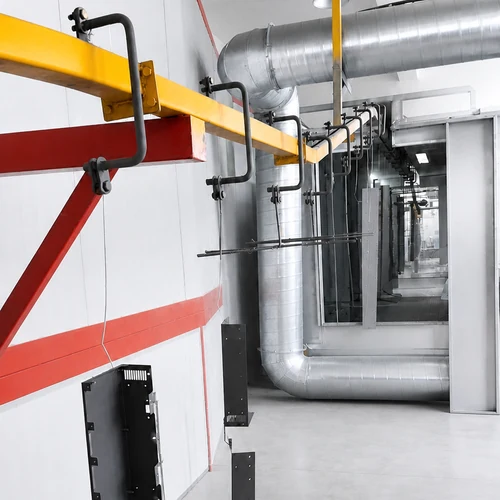
11 / Finish & Seal
Powder Coating
Match the specified color and coverage on prepared steel surfaces.
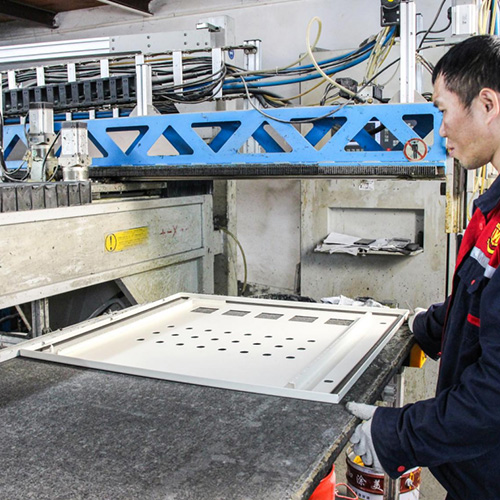
12 / Finish & Seal
Foam Gasket Application
Follow the confirmed sealing path so corners, joints, and panel interfaces can be inspected.
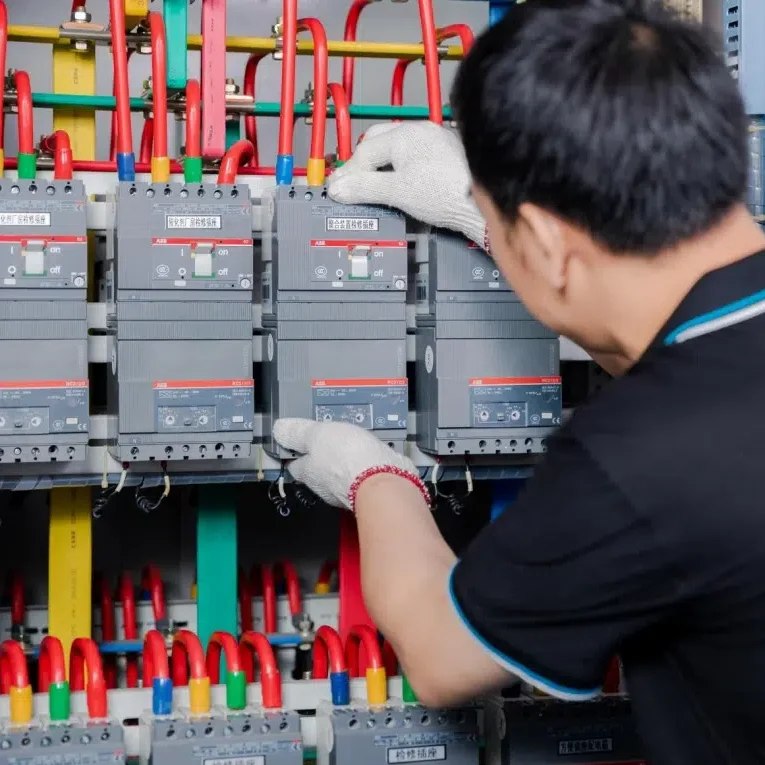
13 / Fit, QC & Delivery
Specified Component Fitting
Fit project-specified components or accessories only when they are included in the confirmed manufacturing scope.
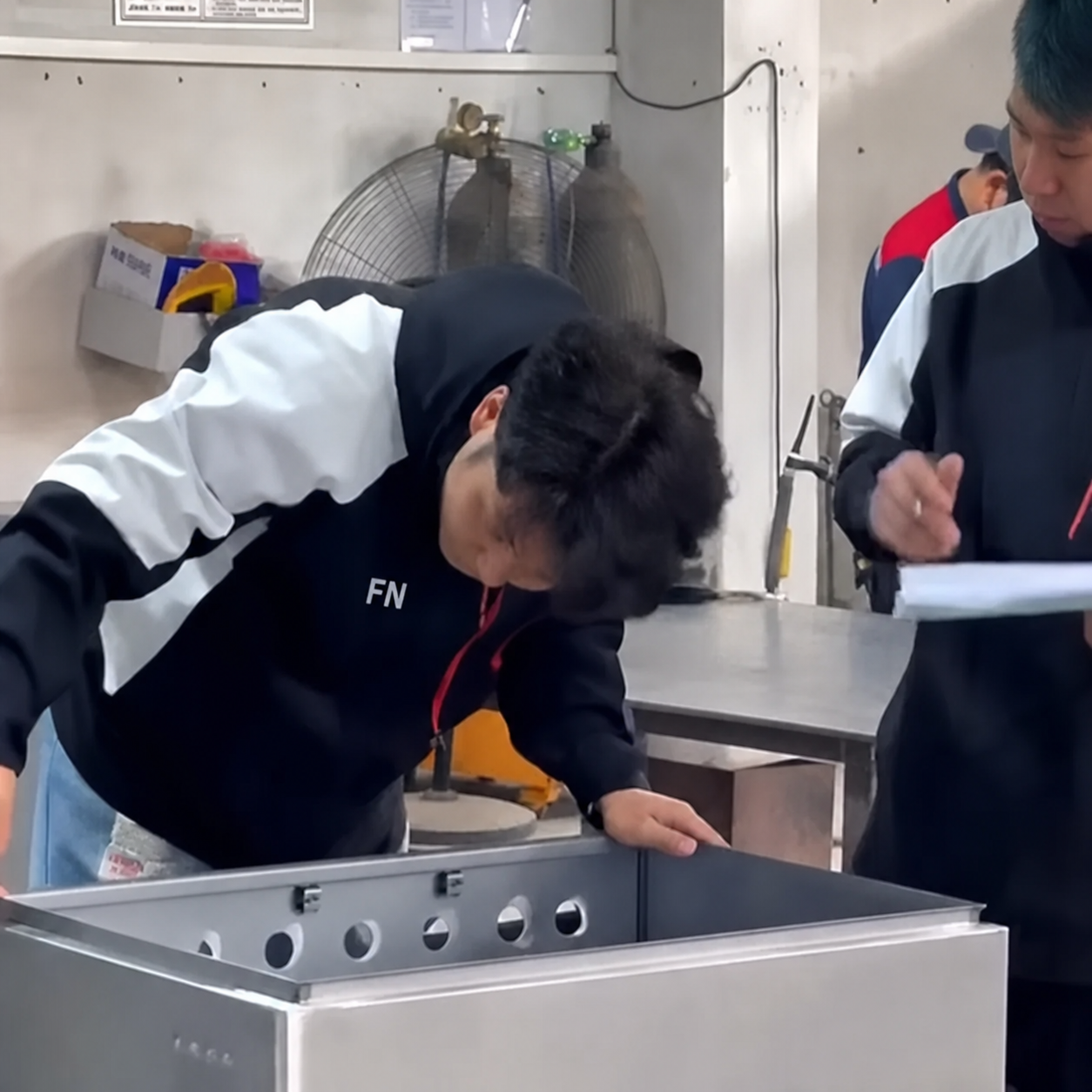
14 / Fit, QC & Delivery
Quality Inspection
Check dimensions, door alignment, hardware fit, finish, gasket, and project-specific checkpoints against approved references.
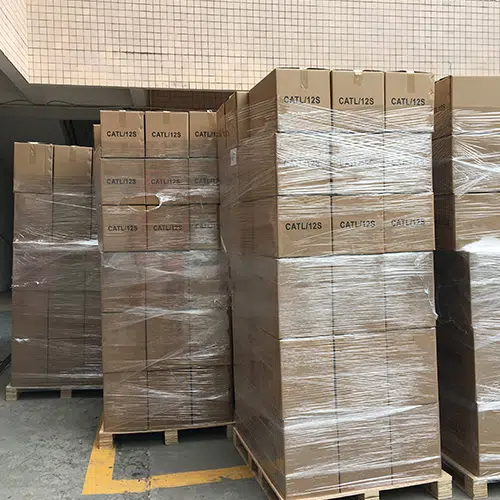
15 / Fit, QC & Delivery
Export Packaging
Protect finished surfaces, corners, doors, and loose accessories for the agreed shipment method.
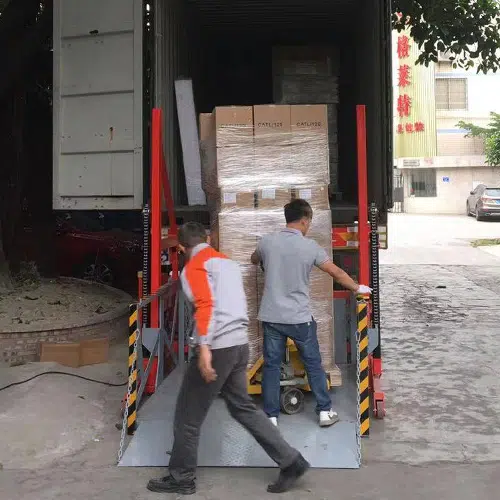
16 / Fit, QC & Delivery
Container Loading & Shipment
Secure the packages to the confirmed freight plan and destination requirements.
Choose Materials Around the Real Installation Environment
Outdoor exposure, dust, water, humidity, corrosion, heat, condensation, washdown, cable entry, and ventilation all affect the material, coating, gasket, hardware, and structure that should be reviewed.
| Project Requirement | Options to Discuss | Common Use |
|---|---|---|
| Indoor Control Cabinet | Cold rolled steel, powder coating | Factory automation, machine control, panel assembly |
| Outdoor Cabinet Body | Galvanized steel, stainless steel, aluminum, canopy, sealing | Solar, telecom, EV charging, utility, infrastructure |
| Corrosion Resistance | SS304, SS316, coating, hardware selection | Coastal, humid, chemical, washdown, outdoor environments |
| Dust and Water Protection | IP54, IP55, IP65, IP66 project goals | Outdoor cabinets, junction boxes, control enclosures |
| Heat and Condensation | Fan, filter, louver, heater, ventilation layout | Telecom, automation, power, equipment cabinets |
Use the Approved First Article to Control the Batch and Shipment
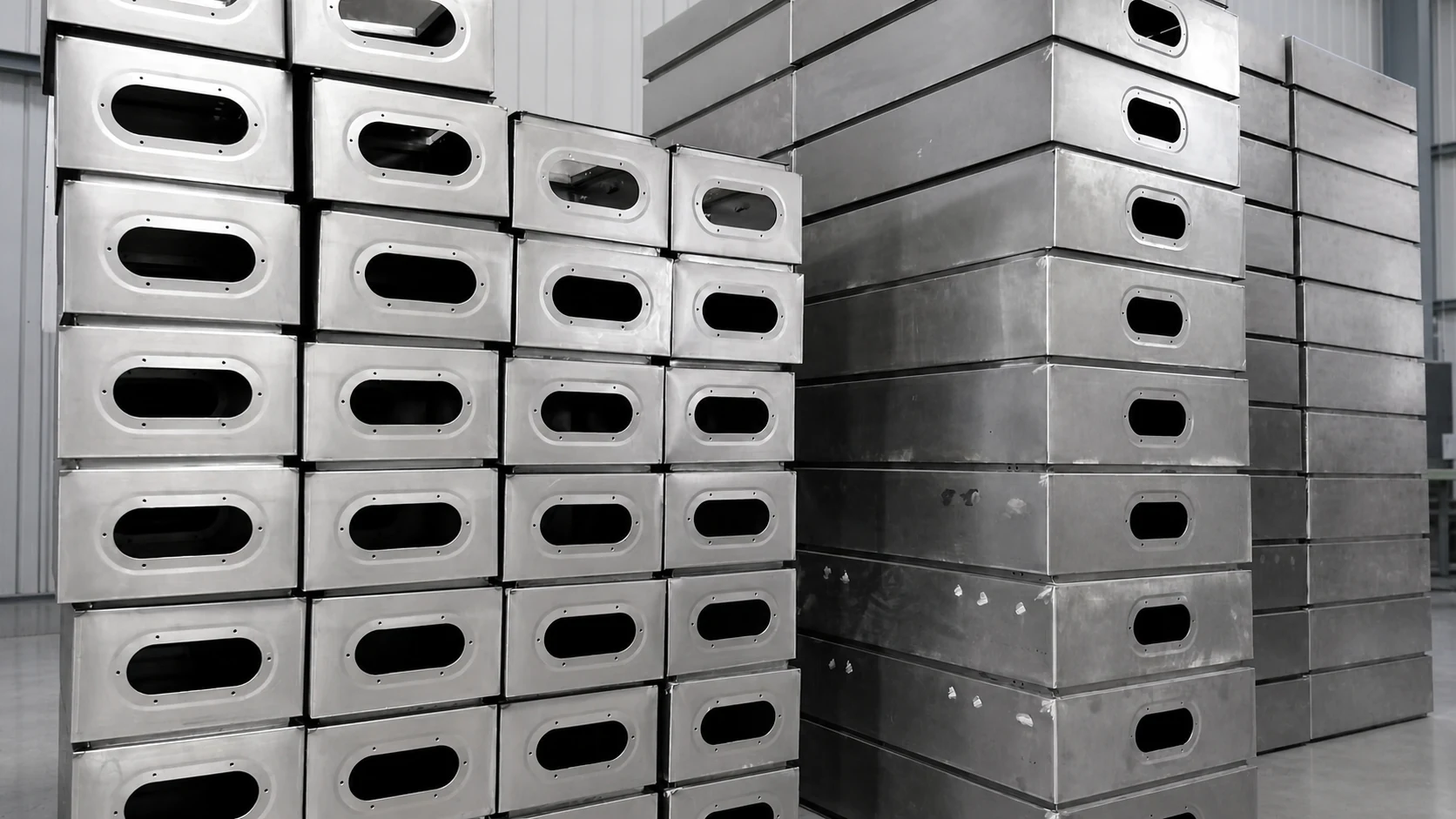
Record the approved dimensions, interfaces, finish, accessories, labels, and packing method so later units can be checked against the same reference.
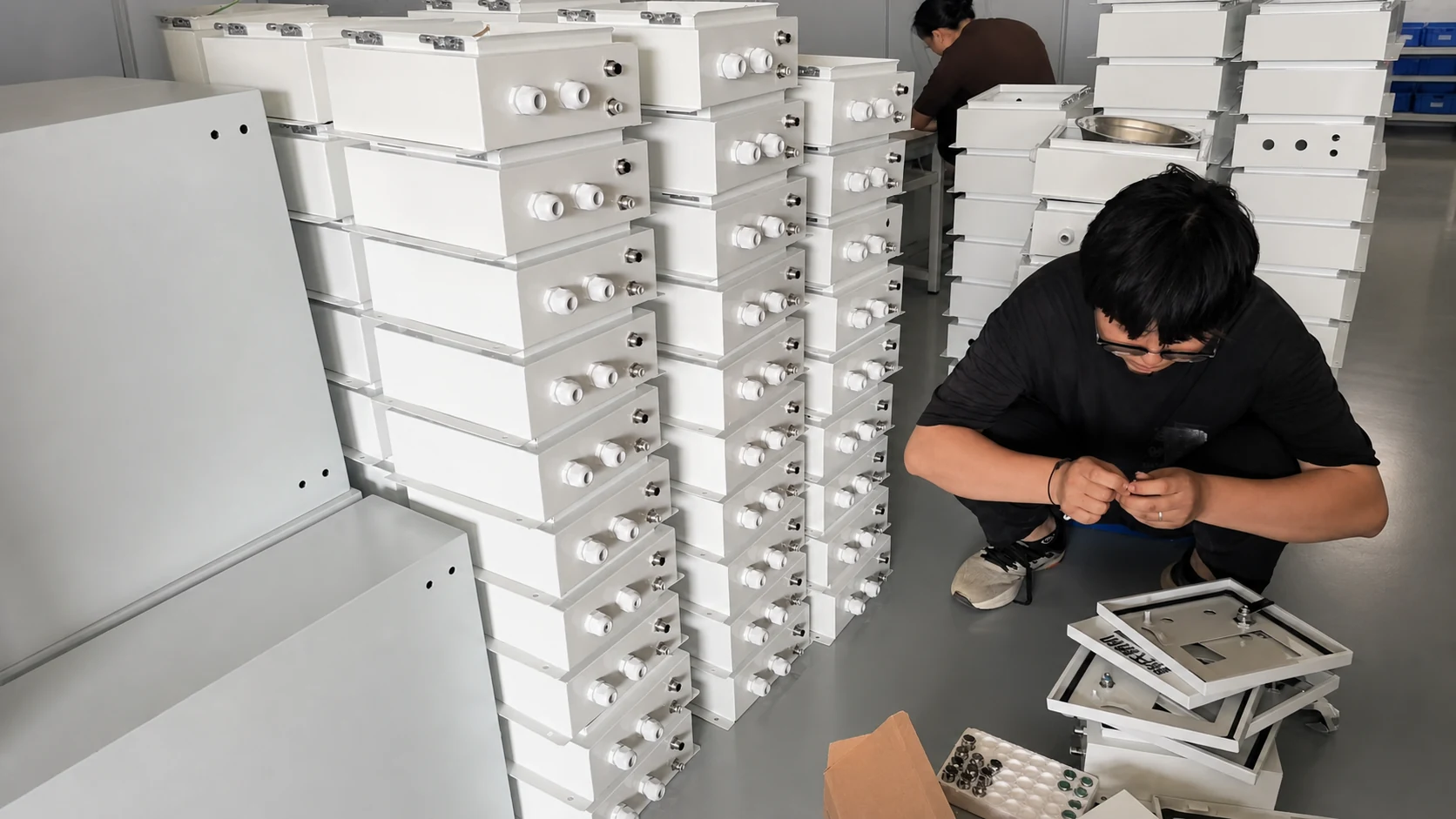
First Article Checkpoints
- Dimensions, holes, cut-outs, door movement, lock and hinge fit
- Coating, surface finish, gasket, accessories, and labels
- Packaging method before batch approval
Batch Consistency
- Confirmed drawing revision, process notes, and inspection points
- Bending, welding, opening position, hardware fit, and finish
- Buyer feedback connected to the next production run
Export Delivery Readiness
- Painted or stainless surfaces, corners, doors, and loose parts
- Cartons, crates, pallets, labels, and accessory packing
- Protection route matched to shipment and destination risk
What Each Buying Team Needs From the Enclosure Review
Use the same approved drawing and scope record, but emphasize the interfaces, checks, and handoff details owned by each team.
Panel Builders
Cabinet bodies, mounting plates, cut-outs, back panels, hinges, locks, gaskets, and repeatable mechanical supply.
Equipment OEMs
Enclosure housings aligned with machine design, internal layout, service access, appearance, and repeat production.
System Integrators
Project-specific cable entry, mounting layout, ventilation interfaces, grounding points, and field-installation details.
EPC & Project Buyers
Clear inspection points, export packaging, project handoff, and reduced damage or missing-part risk during delivery.
Continue by Environment, Material, or Enclosure Type
Browse Enclosure Products
EARLY-STAGE SELECTION
Compare enclosure families before fixing the body, installation method, or environment.
View product range ->
View Outdoor Electrical Enclosures
ENVIRONMENT ROUTE
Review rain paths, sunlight, humidity, corrosion, heat, condensation, and cable entry.
Review outdoor options ->
View Stainless Steel Enclosures
MATERIAL ROUTE
Review material grade, surface expectations, cleaning exposure, hardware, and finish.
Review stainless options ->
View Distribution Box Enclosures
COMPACT ENCLOSURE ROUTE
Review cable entry, terminal space, cover access, mounting interfaces, and usable depth.
Review junction boxes ->
Frequently Asked Questions
Every custom enclosure project is reviewed against its drawings, installation environment, production requirements, inspection needs, and shipping method. The questions below explain what to prepare before requesting a quotation.
Can FN manufacture custom electrical enclosures from our drawings?
- Yes. FN manufactures custom electrical enclosure bodies from engineering drawings, samples, photos, sketches, or project specifications. Before quotation, FN can review the required dimensions, material, thickness, cut-outs, mounting points, accessories, inspection requirements, and packaging scope.
What if our electrical enclosure drawing is not final?
- You can start with an available sample, photo, sketch, or project specification. Please provide the information already available, such as dimensions, component layout, cable-entry direction, installation environment, quantity, surface finish, and destination country. The final production scope should be confirmed before quotation.
What information should we send for a custom enclosure quotation?
- Please include the overall dimensions, material and sheet thickness, required quantity, application, installation environment, destination country, door or cover arrangement, cut-outs, cable entries, mounting requirements, accessories, surface finish, prototype or first-article requirements, inspection requirements, and export packaging expectations. Complete project information helps clarify the quotation scope and production requirements.
What parts of an electrical enclosure can be customized?
- FN can discuss customization of enclosure bodies, doors, covers, frames, bases, brackets, mounting plates, back panels, holes, cut-outs, cable entries, hinges, locks, handles, gaskets, fans, filters, louvers, heaters, grounding studs, labels, nameplates, logos, and surface finishes. The required details should be confirmed against the approved drawing before production.
Which materials and finishes can FN support?
- Depending on the application and installation environment, material options may include cold rolled steel, galvanized steel, stainless steel such as SS201, SS304, or SS316, and aluminum.
Finish options can include powder coating, specified RAL colors, stainless steel finishes, logos, labels, nameplates, and silk-screen marking. The final material and finish should be selected according to corrosion, humidity, heat, washdown, outdoor exposure, and other project conditions.
Can FN support outdoor, corrosion-resistant, IP65, or IP66 enclosure projects?
- FN can review custom enclosure projects with outdoor, corrosion-resistant, or IP protection requirements. The review should consider rain, dust, humidity, corrosion, washdown, heat, condensation, material, coating, hardware, gaskets, cable entries, ventilation, and sealing.
IP54, IP55, IP65, and IP66 are listed as project protection goals on the page. The final protection scope must be confirmed for the complete enclosure configuration; an IP target should not be treated as an automatic certification claim without confirming the required verification.
Does FN support prototypes, first articles, small batches, and repeat production?
- Yes. FN supports project discussions involving prototypes, first articles, small batches, and repeated production.
For new or higher-risk projects, first-article review may include dimensions, cut-outs, mounting holes, door movement, lock and hinge fit, coating, gasket position, accessory installation, labels, and packaging before batch production is approved.
How does FN control consistency across repeat enclosure orders?
- Repeat production should be based on confirmed drawings, process notes, inspection points, and packaging requirements. FN’s listed fabrication and quality-control process includes laser cutting, CNC punching, CNC bending, welding, grinding, powder coating, accessory installation, production checks, and final inspection.
Repeat-order checks can include dimensions, hole positions, bending, welding, accessory fit, surface finish, quantity, labels, and packaging protection.
Does the service include complete electrical wiring and component assembly?
- This page is primarily focused on custom enclosure bodies, cabinet shells, sheet-metal structures, accessories, surface treatment, inspection, and export packaging.
If your project requires component installation, wiring, electrical testing, or a complete electrical assembly, list those requirements separately in the RFQ so the exact supply scope can be confirmed before quotation.
How are lead time and export packaging confirmed?
- Lead time is confirmed after reviewing the drawings, material, quantity, prototype or first-article requirements, accessory scope, production requirements, packaging method, and destination.
Export packaging can be planned around enclosure size, painted or stainless-steel surfaces, corners, doors, loose accessories, cartons, crates, pallets, labels, and the shipment method. The confirmed scope, lead time, packaging method, and approval points should be stated before production begins.
RFQ starting point
Send the References Needed for an Enclosure Review
Attach the best available drawing, sample photo, sketch, or specification. Include material, dimensions, cut-outs, accessories, quantity, inspection points, packaging, and destination; mark unknown items for review.