

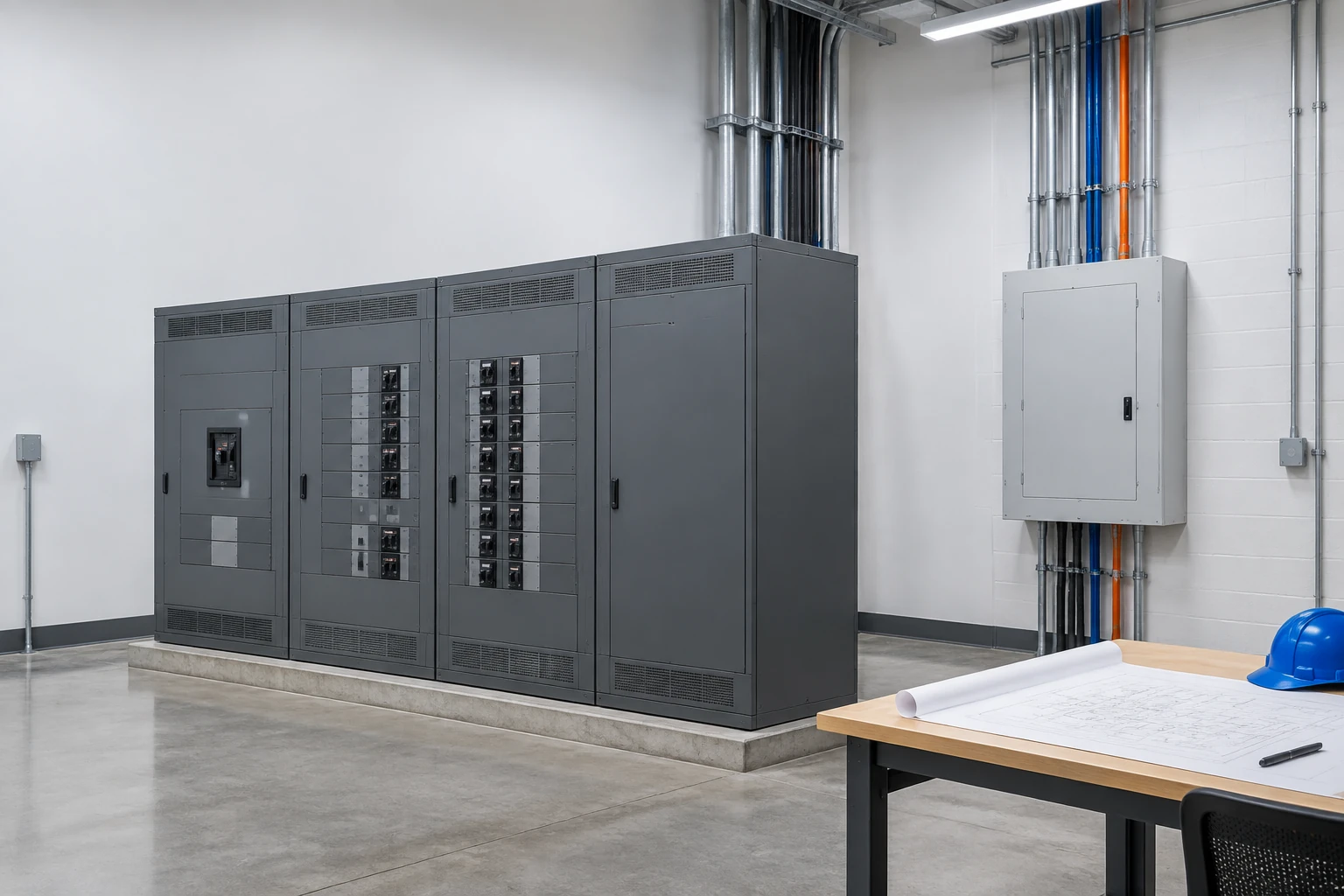
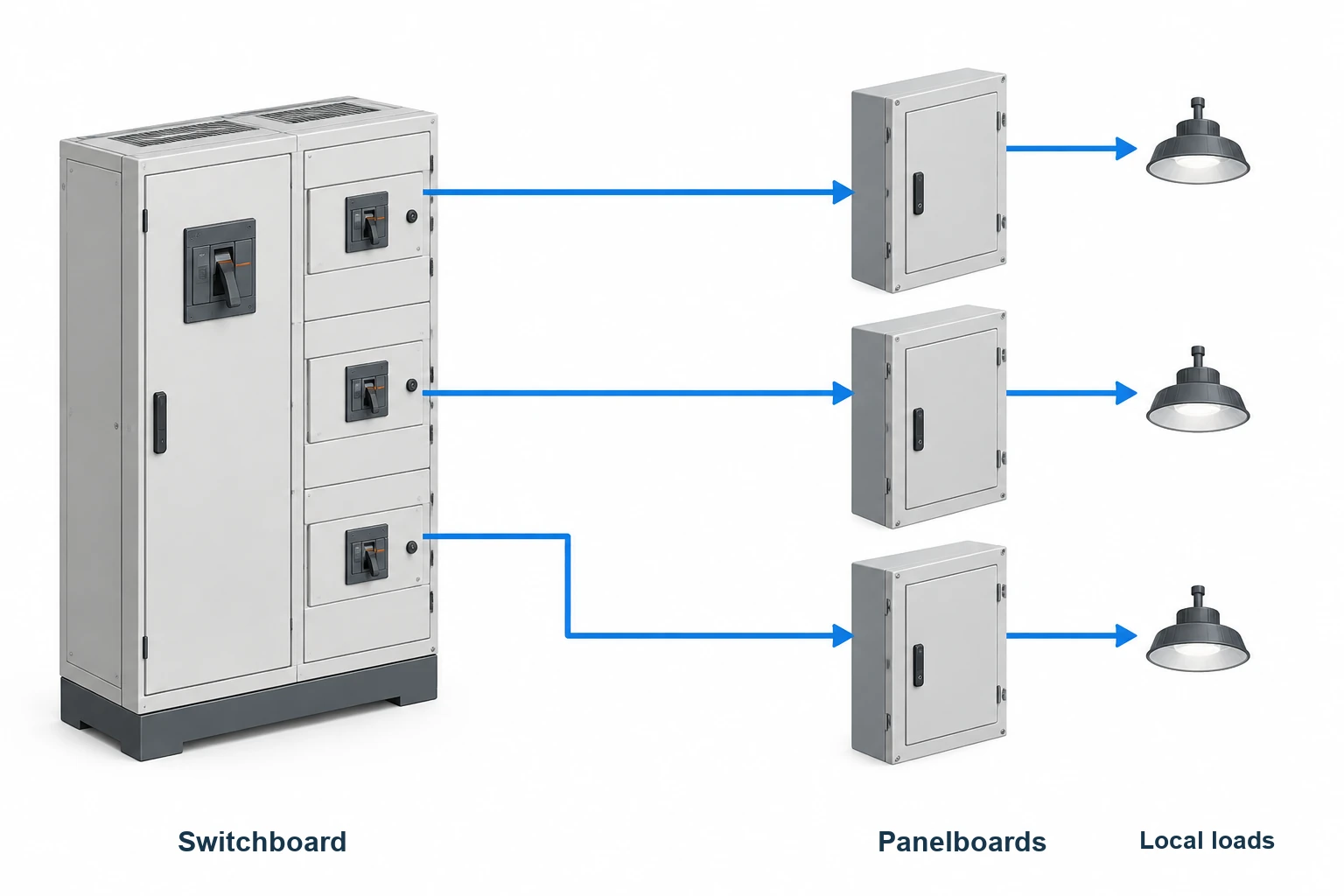
If you are comparing a switchboard vs panelboard for a power-distribution project, start with the single-line diagram—not the cabinet outline. A switchboard is usually the starting point for main distribution and larger feeders. A panelboard usually suits groups of branch circuits in a compact, wall-mounted assembly. In many buildings, you need both: the switchboard feeds panelboards, and those panelboards distribute power to local loads.
An “800 A” label tells you a current rating. It doesn’t tell you how many outgoing circuits will fit, where the cables enter, or whether the assembly meets the fault-current requirements at that location.
Switchboard vs panelboard: the practical differences
| What you’re comparing | Switchboard | Panelboard |
|---|---|---|
| Common job | Main distribution and larger feeder arrangements | Local distribution to branch circuits |
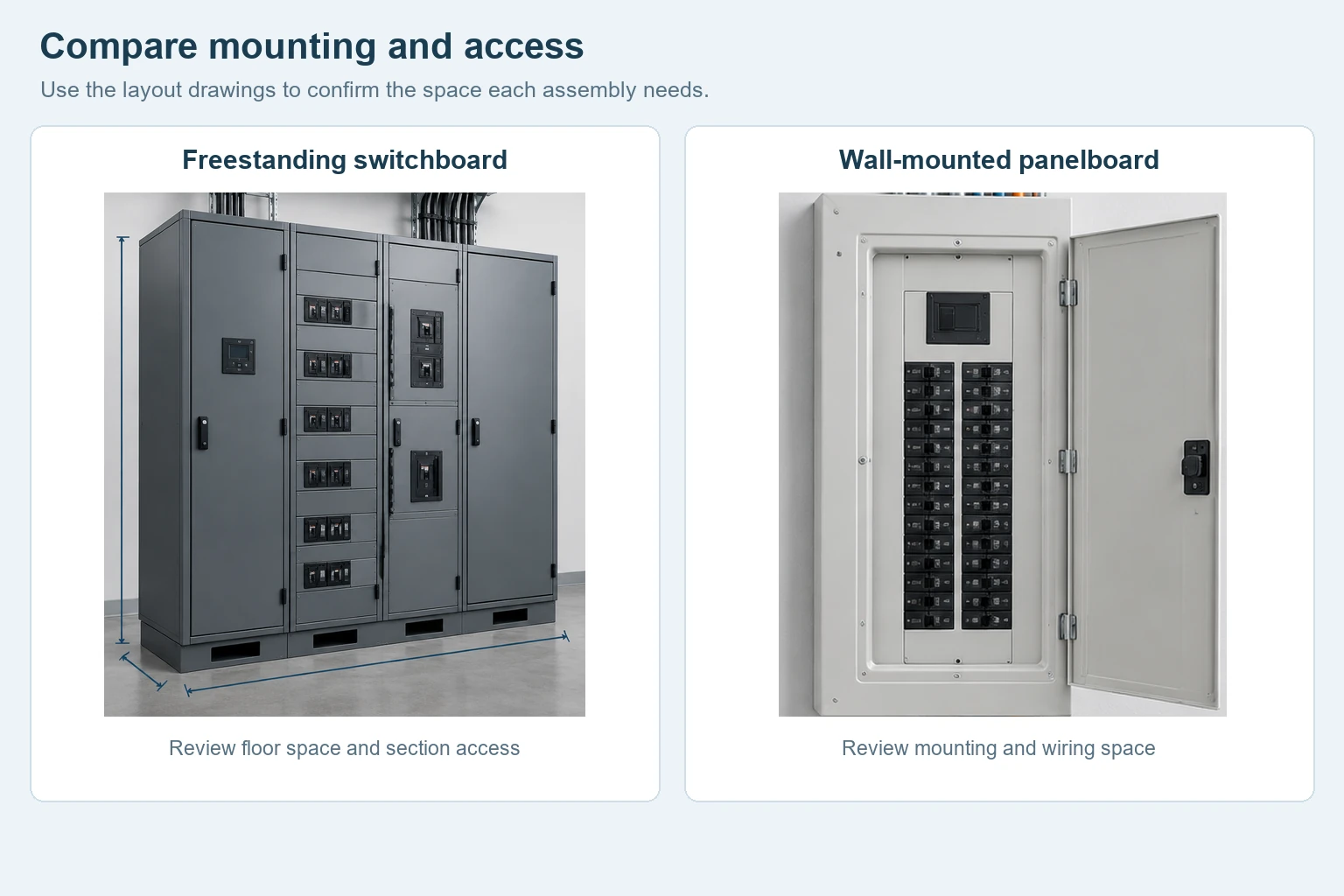
| Physical layout | Freestanding, with one or more vertical sections | Usually flush- or surface-mounted on a wall |
| What takes up space | Incoming equipment, feeder devices, bus, metering, and cable compartments | Main device or incoming lugs, branch devices, and wiring space |
| Access | Front-access designs are available; some configurations need rear access | Normally accessed from the front |
| U.S. product-standard reference | UL 891 | UL 67 |
| Expansion question | Where will additional feeder devices or sections go? | Are there enough usable circuit positions, bus capacity, and wiring space? |
These are typical arrangements, not an amperage cutoff. Check the selected manufacturer’s ratings and construction details rather than deciding that everything above a particular current must be a switchboard.
A quick way to narrow the choice
| If the project has… | Start by reviewing… |
|---|---|
| A defined group of branch circuits near the loads | Panelboard options, circuit positions, bus capacity, and wiring space |
| Service or main distribution, several substantial feeders, or future sections | Switchboard or switchgear options, incoming arrangement, access, and expansion space |
| High available fault current or strict coordination requirements | Protective-device selections, SCCR/withstand ratings, and the coordination study before approving the equipment |
| Existing openings, retained conductors, or a short outage window | A retrofit survey covering dimensions, cable reach, termination positions, and delivery route |
Also, “panelboard” doesn’t mean residential. Commercial and industrial facilities use panelboards throughout their distribution systems.
Switchboard vs switchgear: do not treat them as interchangeable
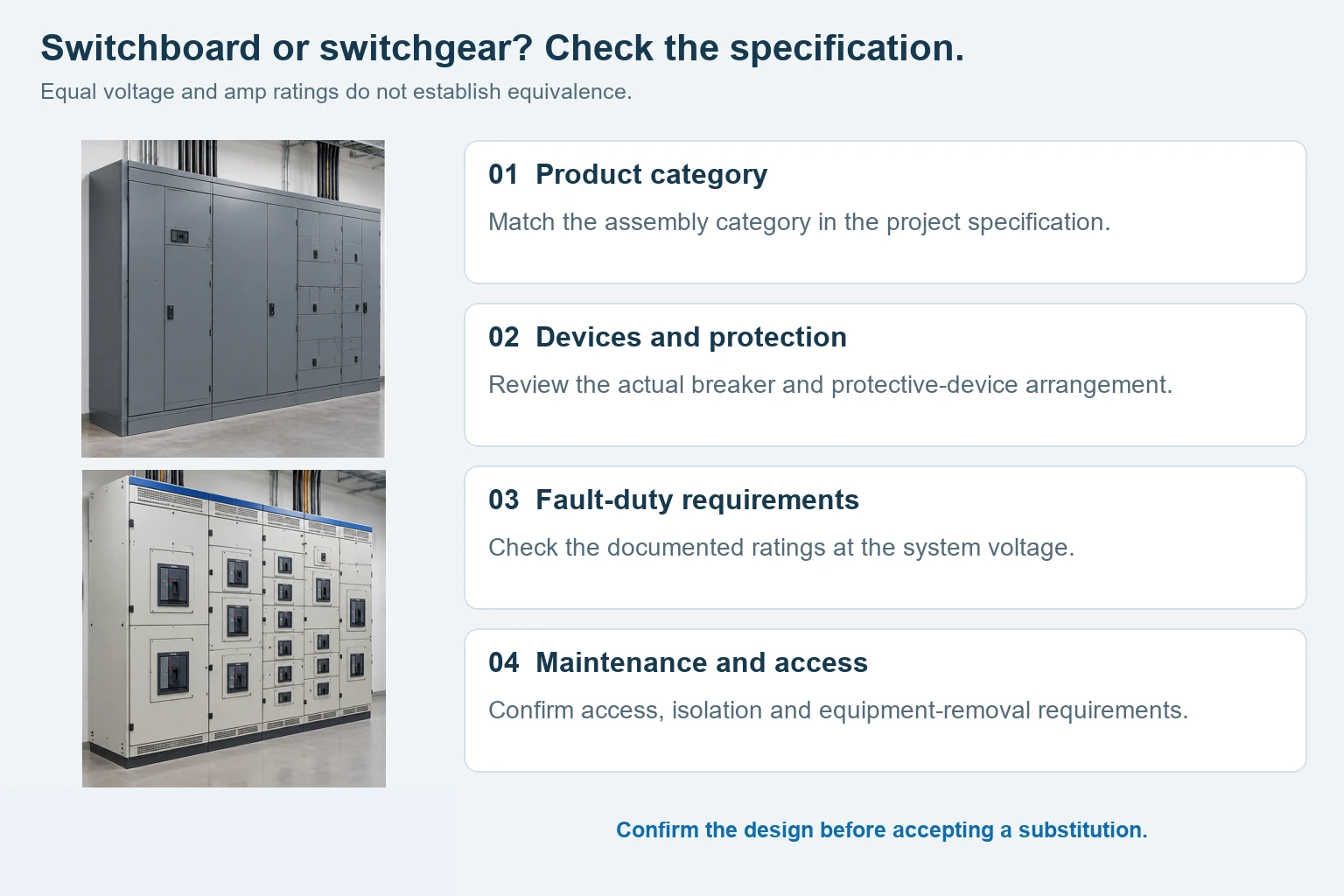
These terms overlap in casual conversation, but they point to different equipment categories in U.S. low-voltage specifications. A switchboard is commonly a dead-front distribution assembly covered by UL 891. Low-voltage metal-enclosed switchgear is a different category associated with UL 1558, power circuit breakers, internal barriers, and a design intended for more serviceable equipment.
That difference can affect selective coordination, maintenance access, short-time withstand requirements, footprint, and cost. Some switchgear designs use draw-out breakers so a device can be removed for maintenance without removing its load cables; the exact arrangement and work procedure still have to be confirmed for the selected product. Do not substitute a switchboard for specified switchgear just because the voltage and ampere ratings match. Check the project specification, product category, breaker type, access requirements, and maintenance plan before treating the two as equivalents.
Five details to settle before you request a quote
Once you’ve identified the likely equipment type, work through these five checks. They turn “we need a panel” into a specification suppliers can price on the same basis.
1. Separate the load rating from the fault rating
Keep three different questions apart:
- Continuous current: Can the assembly carry the intended load?
- Available fault current: How much fault current can the supply deliver at this location?
- Equipment ratings: Can the assembly withstand the applicable fault duty, and can its protective devices interrupt it?
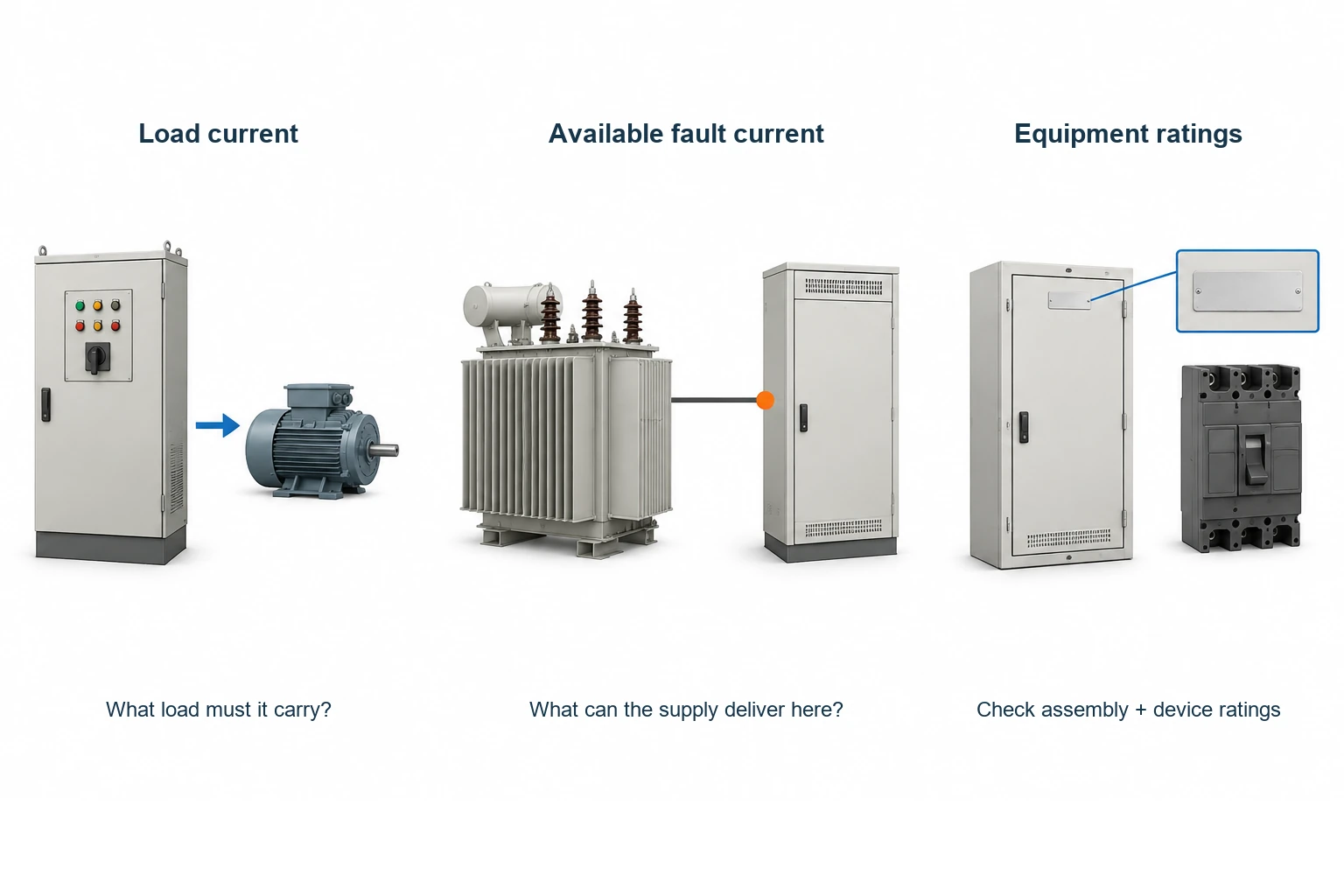
Ask for the assembly’s short-circuit current rating at your system voltage, along with the protective-device ratings. A breaker with a high interrupting rating doesn’t, by itself, establish the rating of the whole panelboard.
If a quote relies on a series-rated combination, get the documentation for the exact upstream and downstream devices. Replacing one breaker with another of the same amperage is not enough to preserve that combination.
2. Say whether it is service equipment
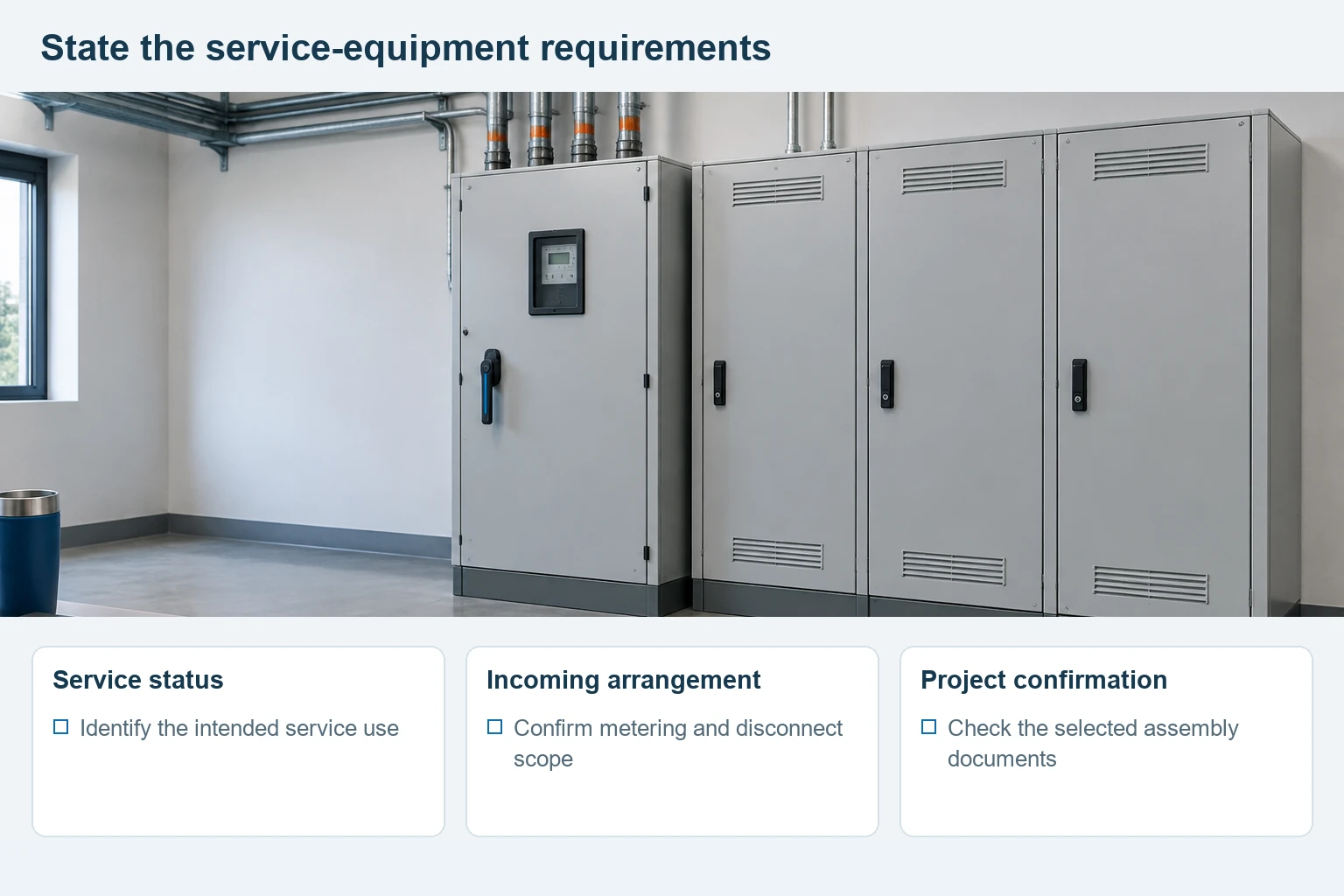
Put service-equipment status on the RFQ cover sheet. Don’t leave it for the supplier to infer from a sketch.
A service-entrance switchboard may need utility metering provisions and a particular incoming arrangement. A panelboard can also serve as service equipment when its marking and configuration support that use. The word “panelboard” does not automatically rule it out.
Confirm the disconnect arrangement, neutral and grounding provisions, and utility requirements with the project engineer. These details affect what gets built, not just what appears on the label.
3. Check the cables and doors, not just the cabinet dimensions
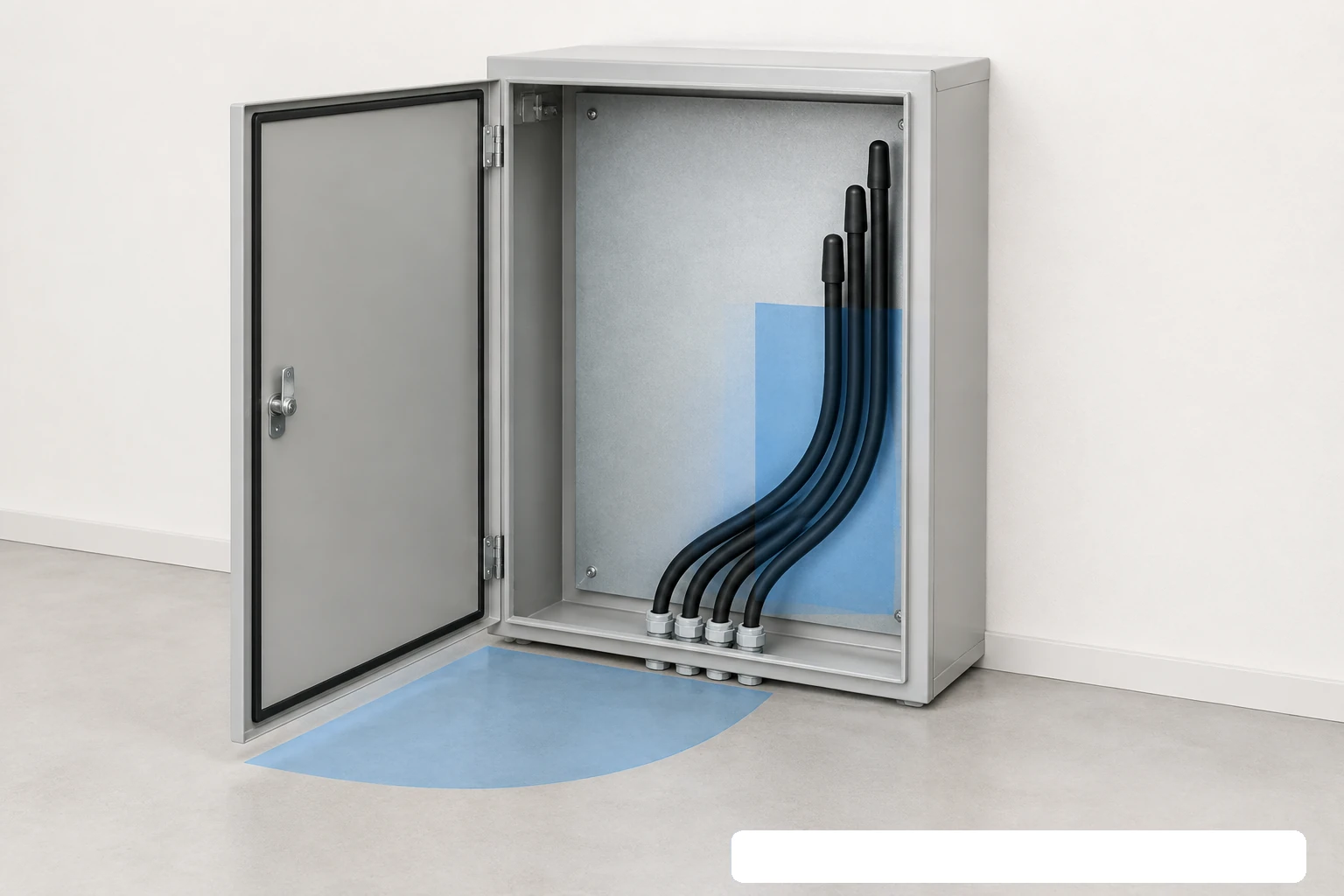
A cabinet can fit the allotted floor area while leaving too little room to bend incoming cables or open a door.
Before approving the layout, mark up:
- Cable-entry direction and conductor routing.
- Space around incoming lugs and outgoing terminals.
- Front and rear access required by the selected equipment.
- Door swing and the working area in front.
- Delivery route, including the electrical-room doorway.
- Space reserved for additional devices or sections.
For a panelboard, spare breaker positions are only one part of expansion. You’ll also need adequate bus capacity and wiring space. For a switchboard, a future section needs a physical location, not just a note saying “allow for expansion.”
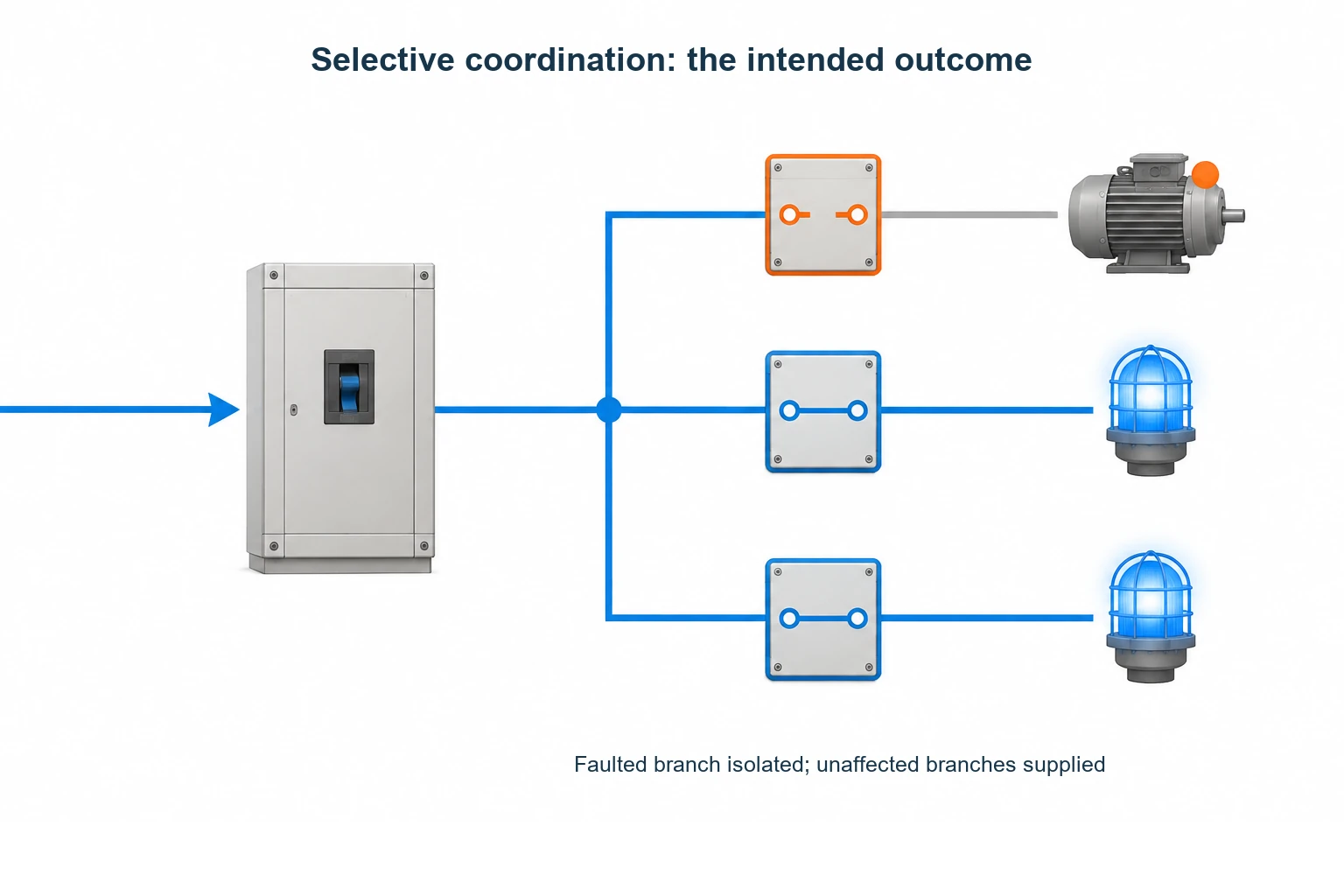
4. Decide what should happen when a circuit faults
If one branch circuit faults, do you need the rest of the installation to stay powered? Put the required coordination study and protective-device selections in the specification.
Selective coordination concerns which protective device operates and when. A sufficient SCCR answers a different question. Neither a larger enclosure nor a higher short-circuit rating proves that downstream and upstream devices will coordinate.
List any arc-flash study, protective-device setting, or maintenance-access requirements separately. That lets suppliers price the required features instead of treating them as later additions.
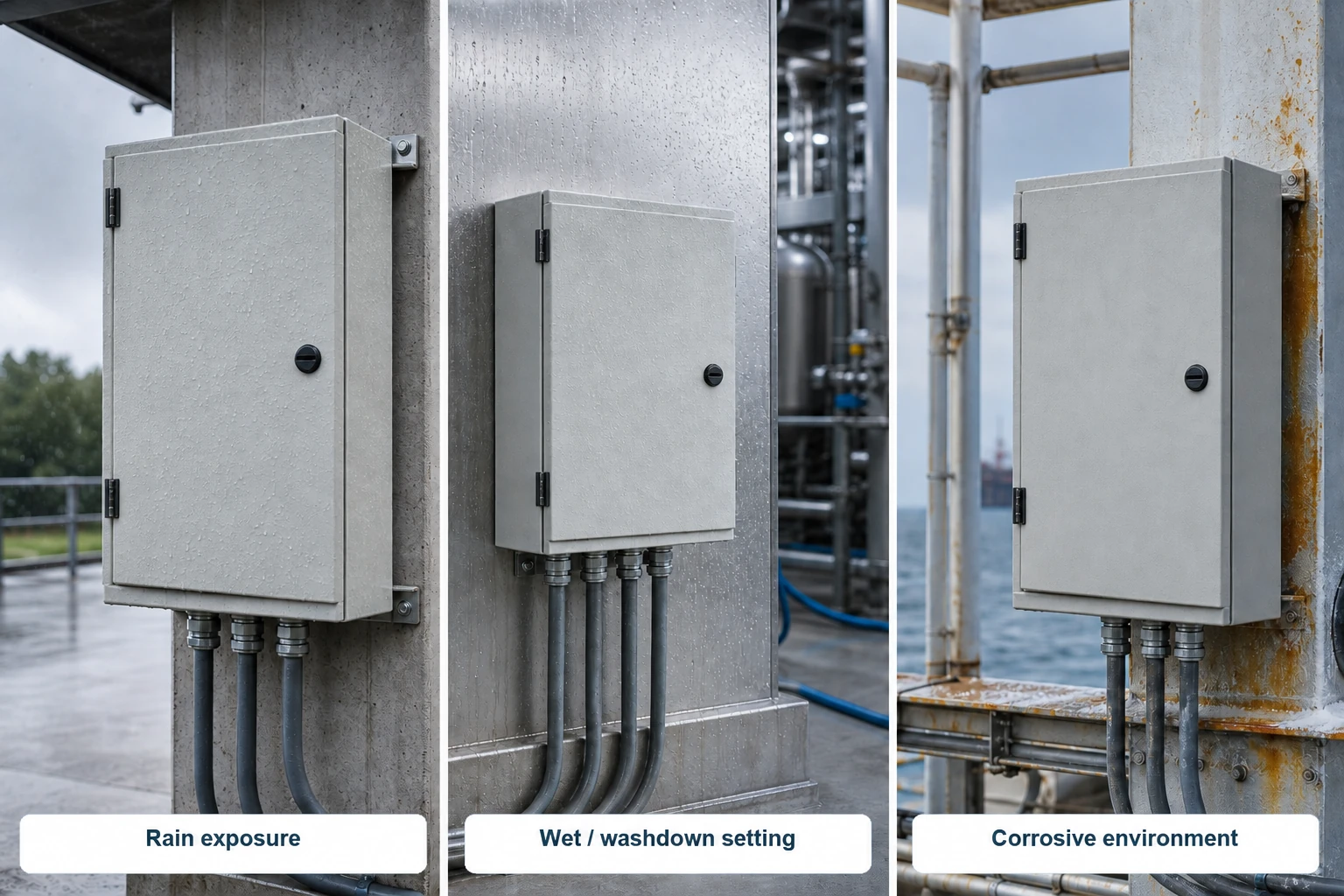
5. Describe the exposure, then specify the enclosure
“Outdoor” is too vague for an enclosure quote. Rain on a sheltered wall, direct washdown, and salt exposure are different design inputs. Add dust, temperature, and condensation conditions where relevant.
Include the required enclosure type, material, finish, cable entries, and sealing details. Where the listed equipment identifies a particular enclosure or construction requirement, carry that information into the cabinet drawing.
If you’re sourcing the cabinet body separately, keep the responsibilities clear: the assembly builder confirms the electrical arrangement and required verification; the enclosure supplier works from those approved mechanical requirements. FN’s power distribution enclosures page is a useful starting point for that cabinet-body scope.
What changes the price?
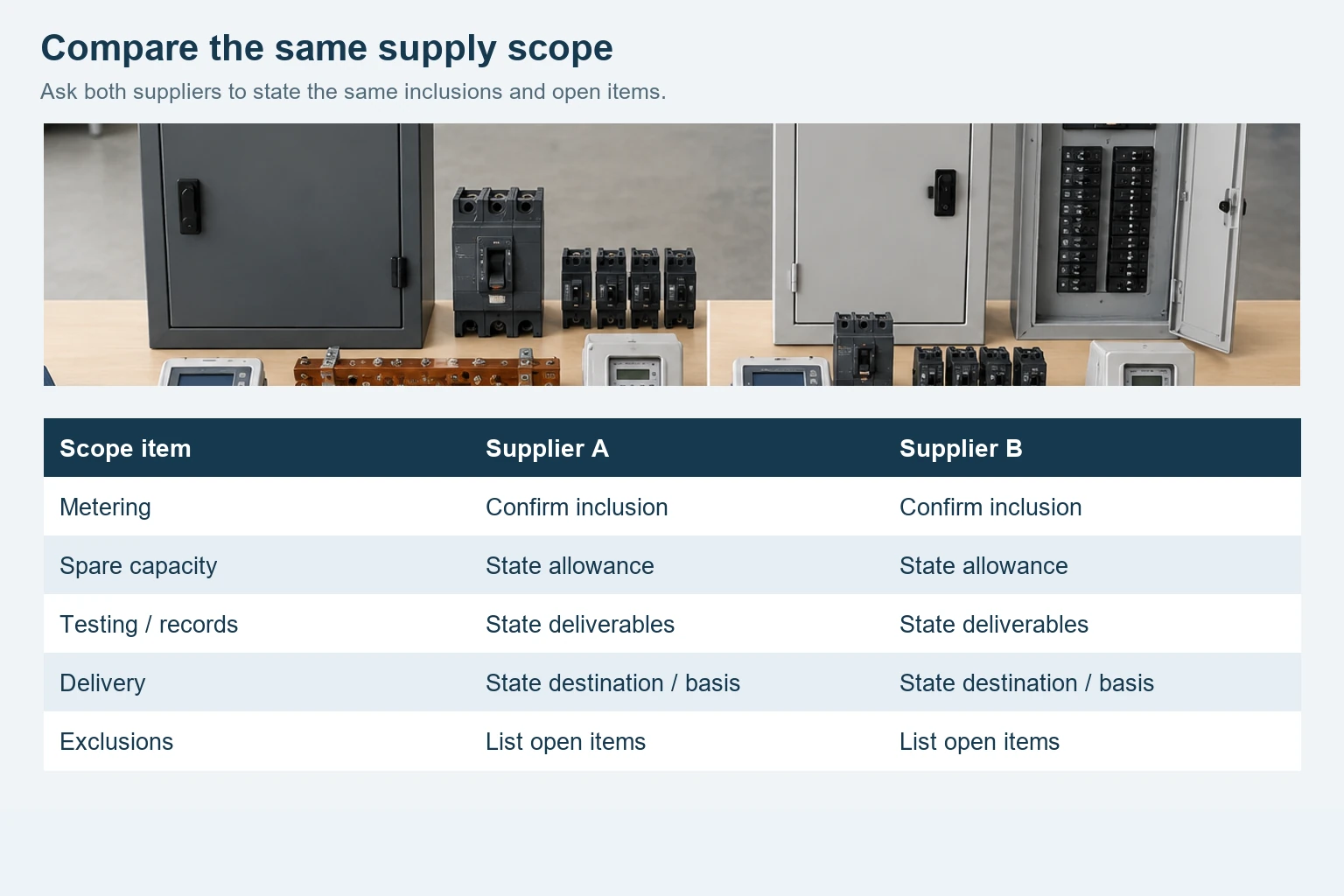
Compare the same scope before deciding which quote is cheaper. A basic panelboard and a metered, multi-section switchboard are not equivalent packages.
Ask suppliers to separate the main device, outgoing devices, bus, enclosure, metering, surge protection, accessories, testing, and delivery scope. Then compare installation requirements: cable entry, access, mounting, and any work needed to fit the existing space.
Use the same expansion allowance in each inquiry. Otherwise, one supplier may include spare positions or an additional section while another prices only today’s circuits. The totals won’t tell you why they differ.
Replacing existing equipment? Start with a site survey
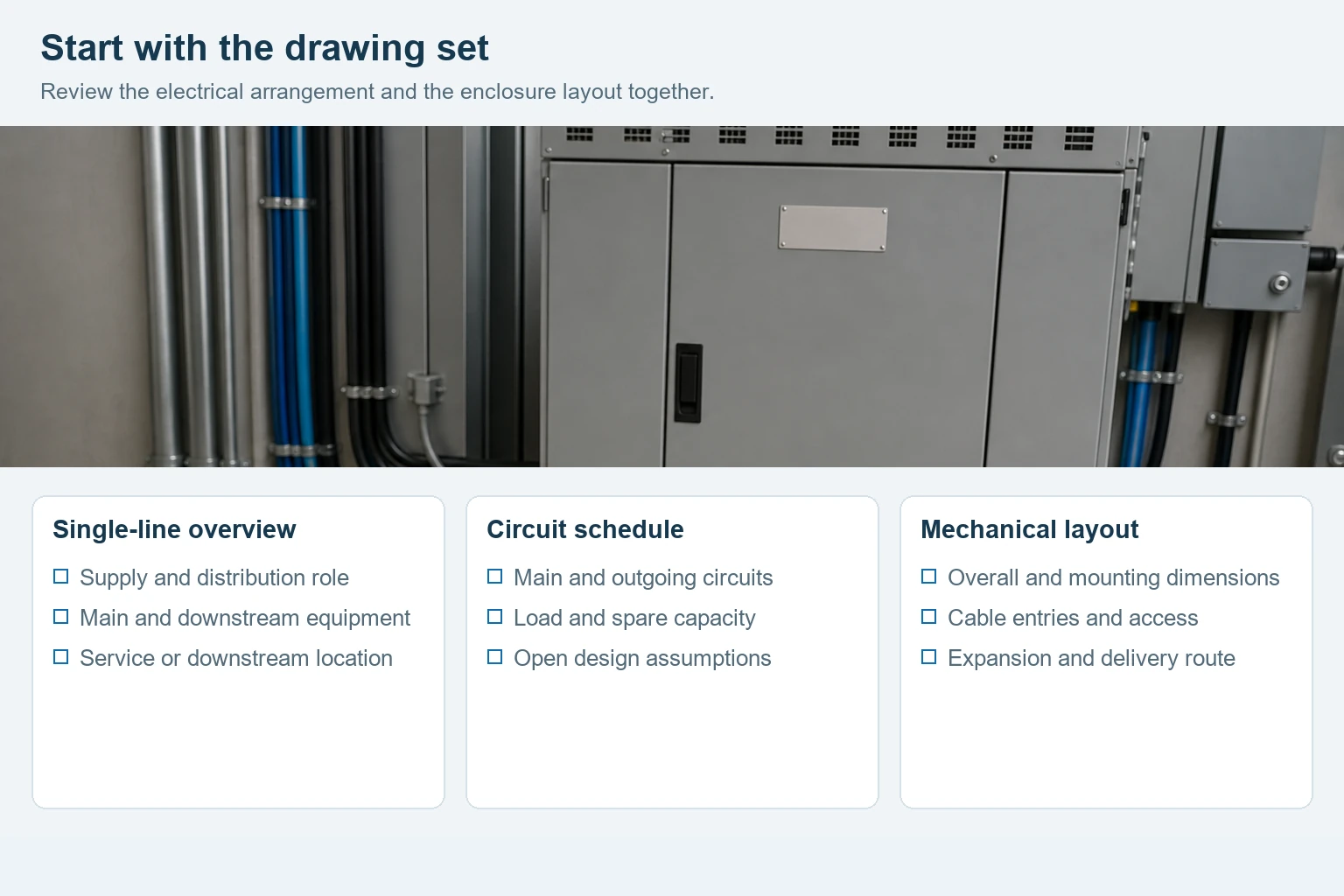
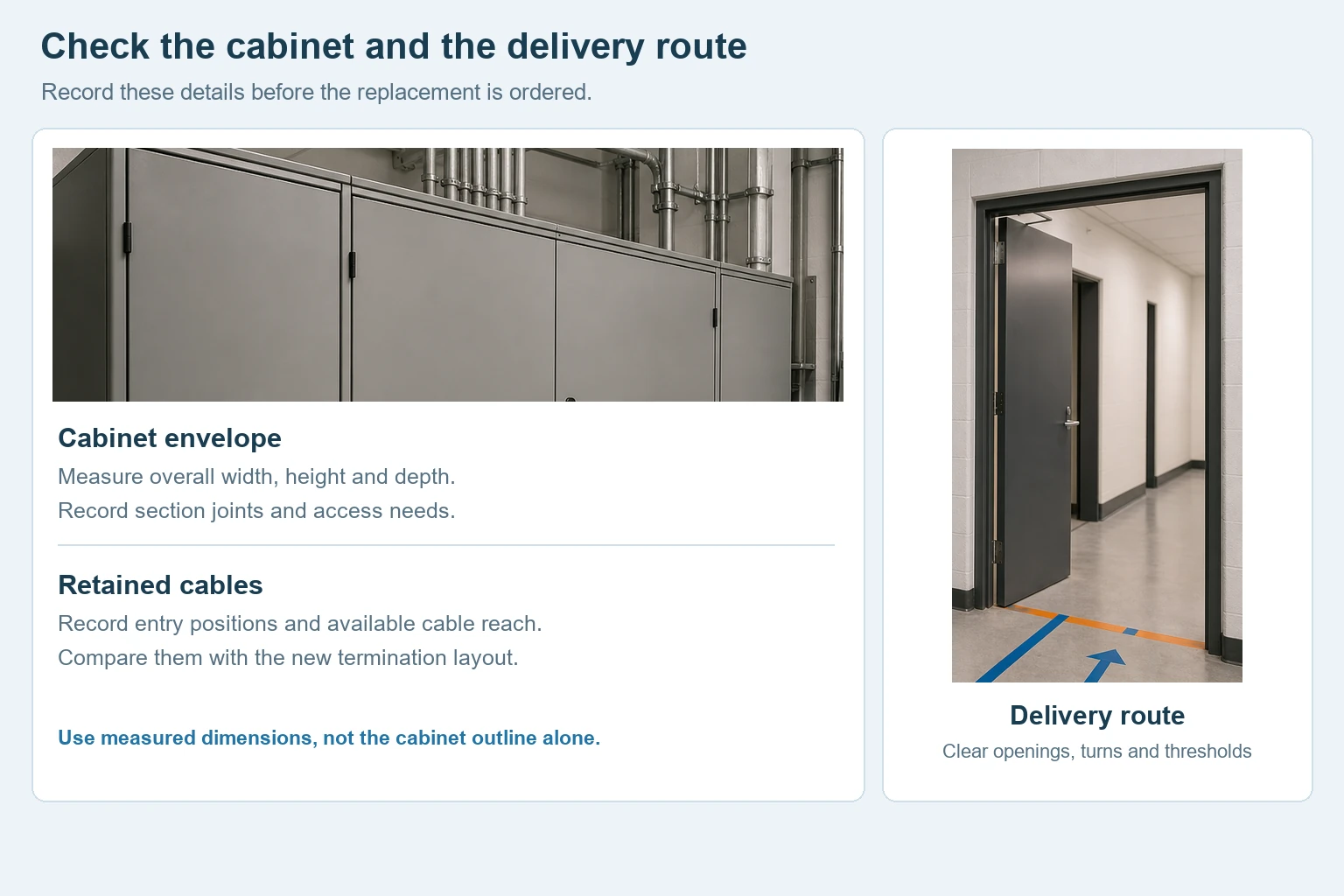
For a replacement, record what is already there before selecting the new assembly: enclosure dimensions, conduit locations, feeder entry, termination positions, mounting points, door clearance, and the route into the room.
The old cabinet may fit through the doorway in sections. The proposed replacement may not. Existing conductors may reach the old terminals but fall short of the new ones. Those are survey questions, not problems to discover during the shutdown.
A panelboard retrofit also needs a compatibility check between the replacement interior and the retained enclosure. Matching the outside dimensions alone doesn’t establish that the combination is suitable.
Include the outage window, testing, labeling, and commissioning responsibilities in the replacement plan. The goal is a defined changeover, not simply delivery of a new cabinet.
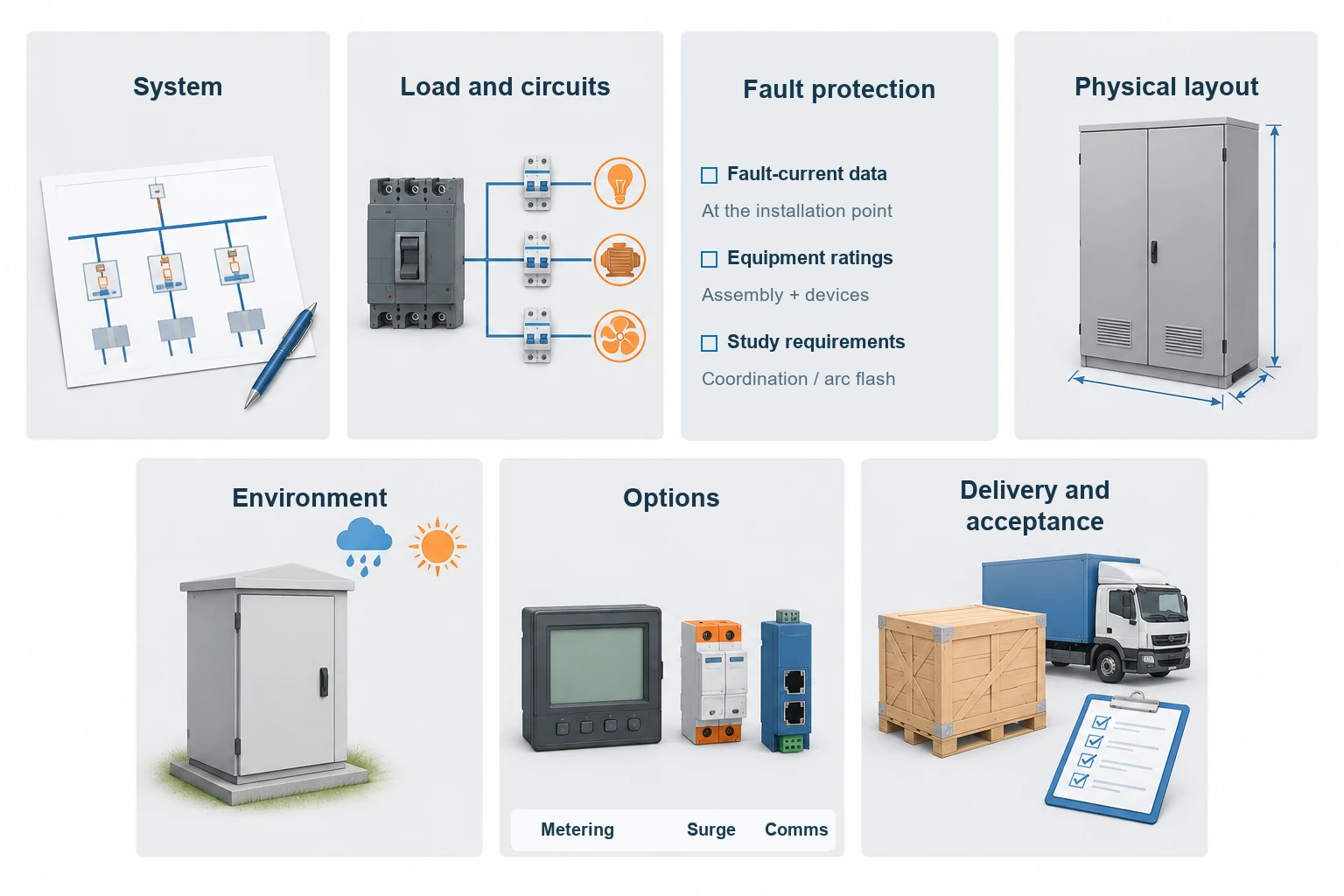
Put these details in the RFQ
Group the information so the supplier can see what’s fixed and what still needs an answer.
| RFQ section | What to include |
|---|---|
| System | Single-line diagram; voltage, phase, frequency; grounding arrangement; service or downstream status |
| Load and circuits | Load schedule; main and bus ratings; incoming and outgoing devices; circuit count; spare capacity |
| Fault protection | Available fault current; assembly SCCR; protective-device ratings; any series-rating documentation, coordination study, or arc-flash requirements |
| Physical layout | Overall dimensions; mounting; access; cable entries; termination space; delivery route; future sections |
| Environment | Indoor/outdoor location; enclosure type; material and finish; rain, washdown, dust, corrosion, temperature, or condensation exposure |
| Options | Metering, communications, surge protection, and other specified accessories |
| Delivery and acceptance | Quantity; destination; required date; drawings; inspection and test records; labels; installation and commissioning responsibilities |
If fault-current data or a final circuit schedule is still pending, identify it as an open item. Ask the supplier to state any pricing assumption beside that item. It’s easier to compare an explicit allowance than two apparently similar quotes based on different designs.
Frequently asked questions
Do I need to choose one type for the entire building?
No. A switchboard can distribute power to several panelboards, which then serve local circuits. Select the equipment for each point on the single-line diagram rather than choosing one type for the whole site.
Can a panelboard be used at the service entrance?
Yes, when the specific product is marked and configured for that use. Confirm the service disconnect, neutral and grounding arrangement, enclosure compatibility, and utility requirements.
Is switchgear just another name for a switchboard?
No. If the project specifies switchgear, don’t price a switchboard as an equivalent just because voltage and current ratings match. Have the proposed equipment checked against the specified category, protection, access, and maintenance requirements before changing the design.
Is a load center the same as a panelboard?
A load center is commonly the industry name for a smaller, typically residential panelboard. Eaton notes that UL and NEC do not distinguish the two names as separate equipment categories. For a commercial project, compare the actual ratings, device options, and construction rather than relying on the label alone.
Need a custom enclosure for the assembly?
For the cabinet-body portion of your project, send FN Enclosure the approved layout, overall dimensions, mounting-plate details, cable entries, cutouts, material, finish, and quantity. For a retrofit, add photographs and measured conduit positions.

Start with custom electrical enclosures from drawings, or send your drawings and enclosure requirements. State whether you need an enclosure body, mechanical accessories, or a broader assembly scope so the quote reflects what you actually want supplied.
Sources
Eaton: Panelboard fundamentals. Panelboard function, mounting, load-center terminology, and protection arrangements.
Eaton: Switchboard fundamentals. Switchboard construction, service-entrance applications, and downstream distribution.
UL Solutions: Panelboard Application Guide. Short-circuit ratings, service-equipment marking, and enclosure suitability.
Eaton: Low-voltage switchgear fundamentals. Switchgear and switchboard categories, construction, breaker arrangements, maintenance, and short-time withstand considerations.