Main Lug vs Main Breaker Panels: Key Differences and When to Use Each
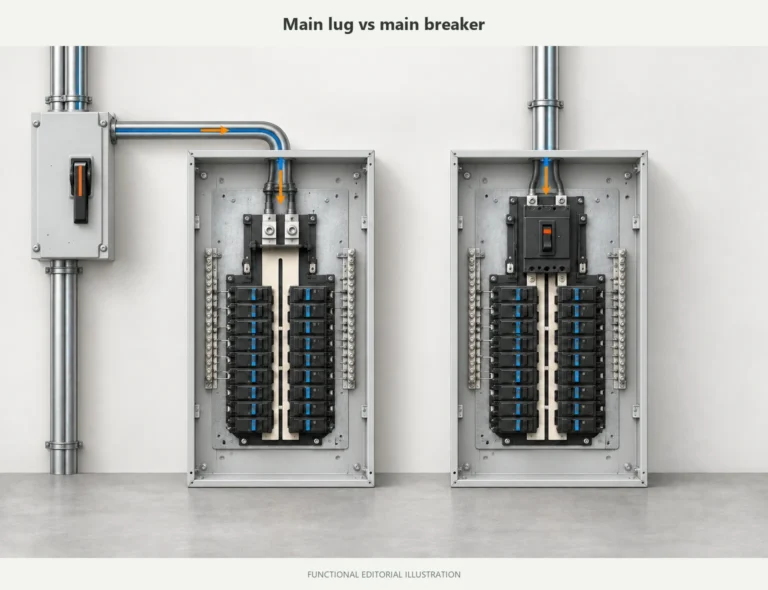
Compare main lug only and main breaker panels by protection, disconnecting, ratings, conversion limits, and the RFQ details to confirm before ordering.

Find practical electrical enclosure selection guide articles that compare enclosure types, dimensions, materials, IP ratings, cable-entry options, sealing details, and thermal requirements. The content is written for engineers, panel builders, system
Compare main lug only and main breaker panels by protection, disconnecting, ratings, conversion limits, and the RFQ details to confirm before ordering.
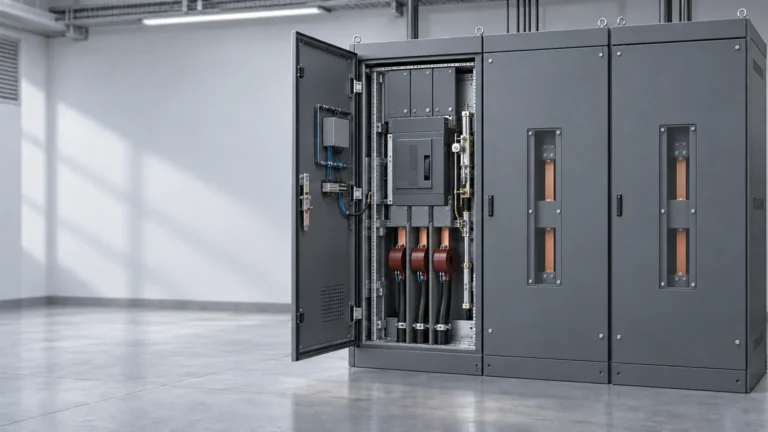
Learn the main switchgear components, their functions, and how they work together. Compare LV and MV designs and the interfaces to check before an RFQ.
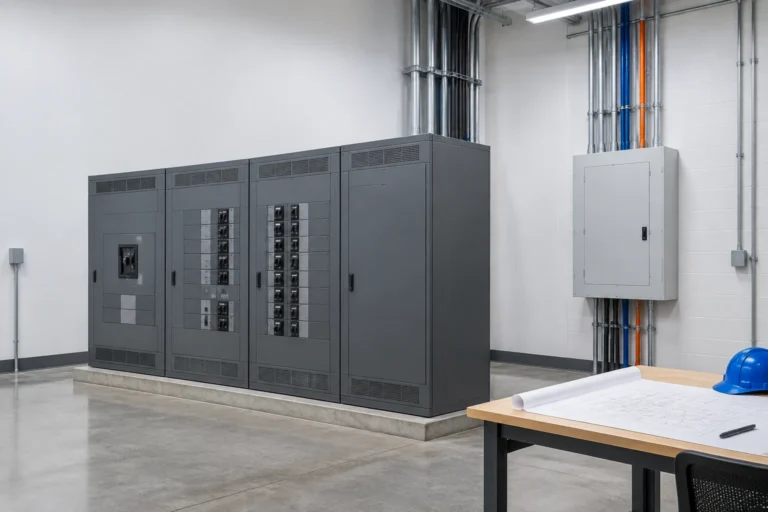
Switchboard vs panelboard explained for engineers and buyers. Compare distribution role, fault duty, enclosure, space, and RFQ requirements before specifying an assembly.
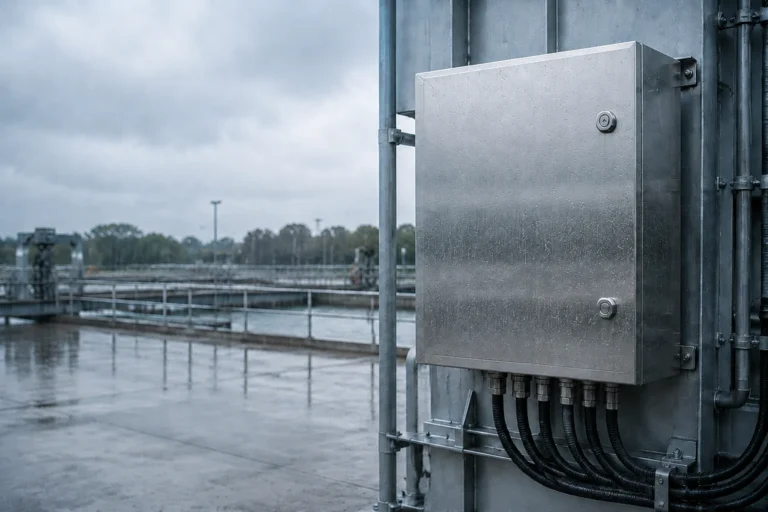
Choose a waterproof enclosure by water exposure, IP/NEMA requirements, material, cable entries, heat, mounting, and RFQ details.
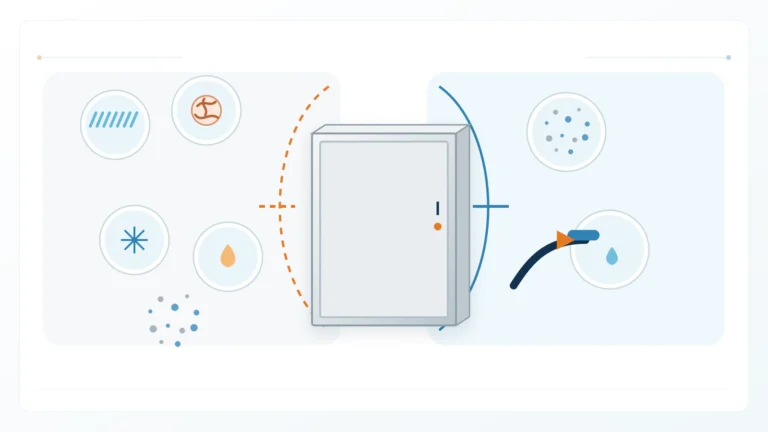
If a drawing specifies NEMA 4X but a supplier quotes IP66, do not approve the substitution by comparing the numbers. Ask three questions first: That is the practical answer to NEMA vs IP ratings: the systems overlap, but they are…
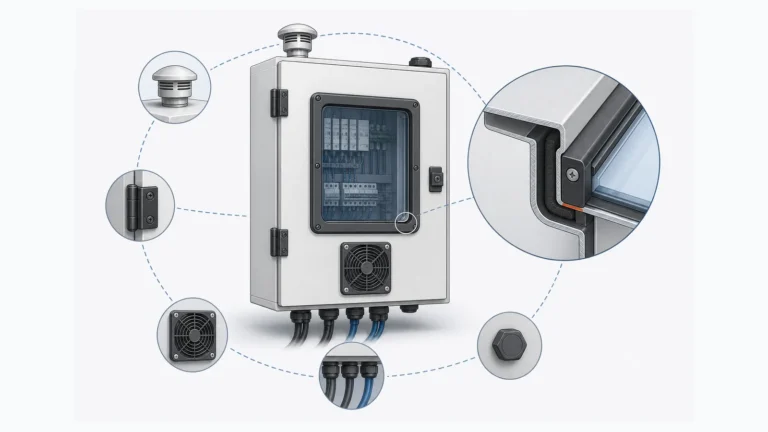
A practical review of how windows, fans, cable entries, vents, cooling units, and field holes change a finished electrical enclosure rating.
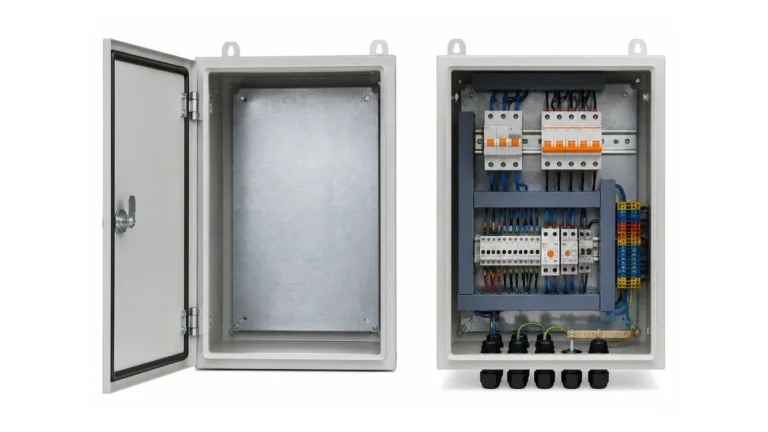
Learn what an electrical enclosure quote is based on, what to provide for assembly, when FN can help with enclosure design, and which responsibilities need another owner.
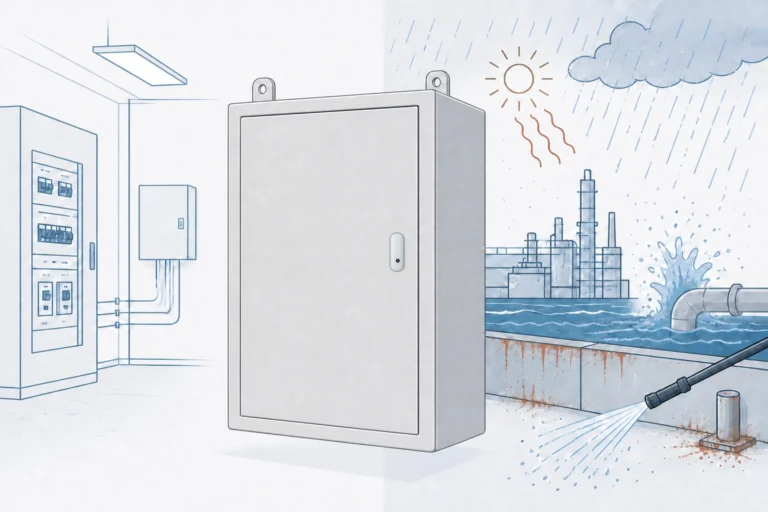
If you are comparing NEMA Type 1 vs NEMA Type 4X, start with the environment—not the number. Type 1 is a route for comparatively controlled indoor conditions. Type 4X deserves review when water, washdown, outdoor weather, or corrosion can reach…
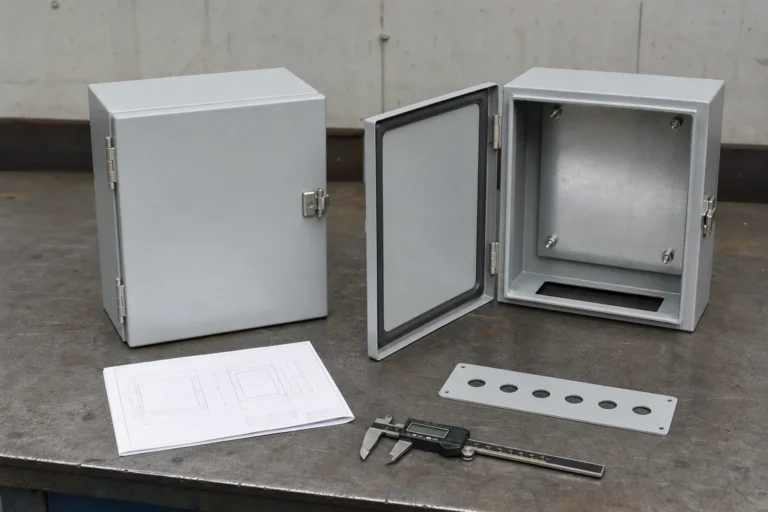
Compare standard, modified, modular, and custom electrical enclosures. See when custom fabrication reduces field rework, interface errors, and delays.
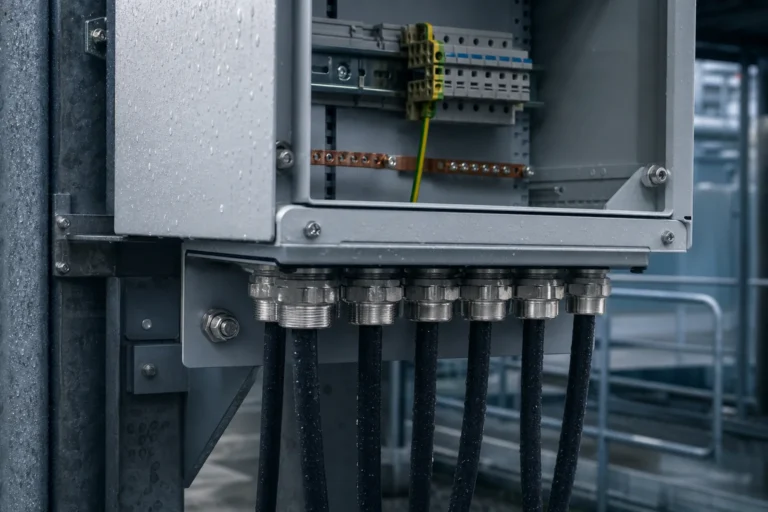
See how cable gland sizing, entry seals, gland plate flatness, gasket compression, cable routing, and condensation affect water ingress in enclosures.