

Switchgear is electrical equipment used to control, protect, and isolate circuits. It brings together switches, circuit breakers or fuses, plus the connections and controls they need to work as an assembly. You’ll find it in utility substations and commercial and industrial power systems.
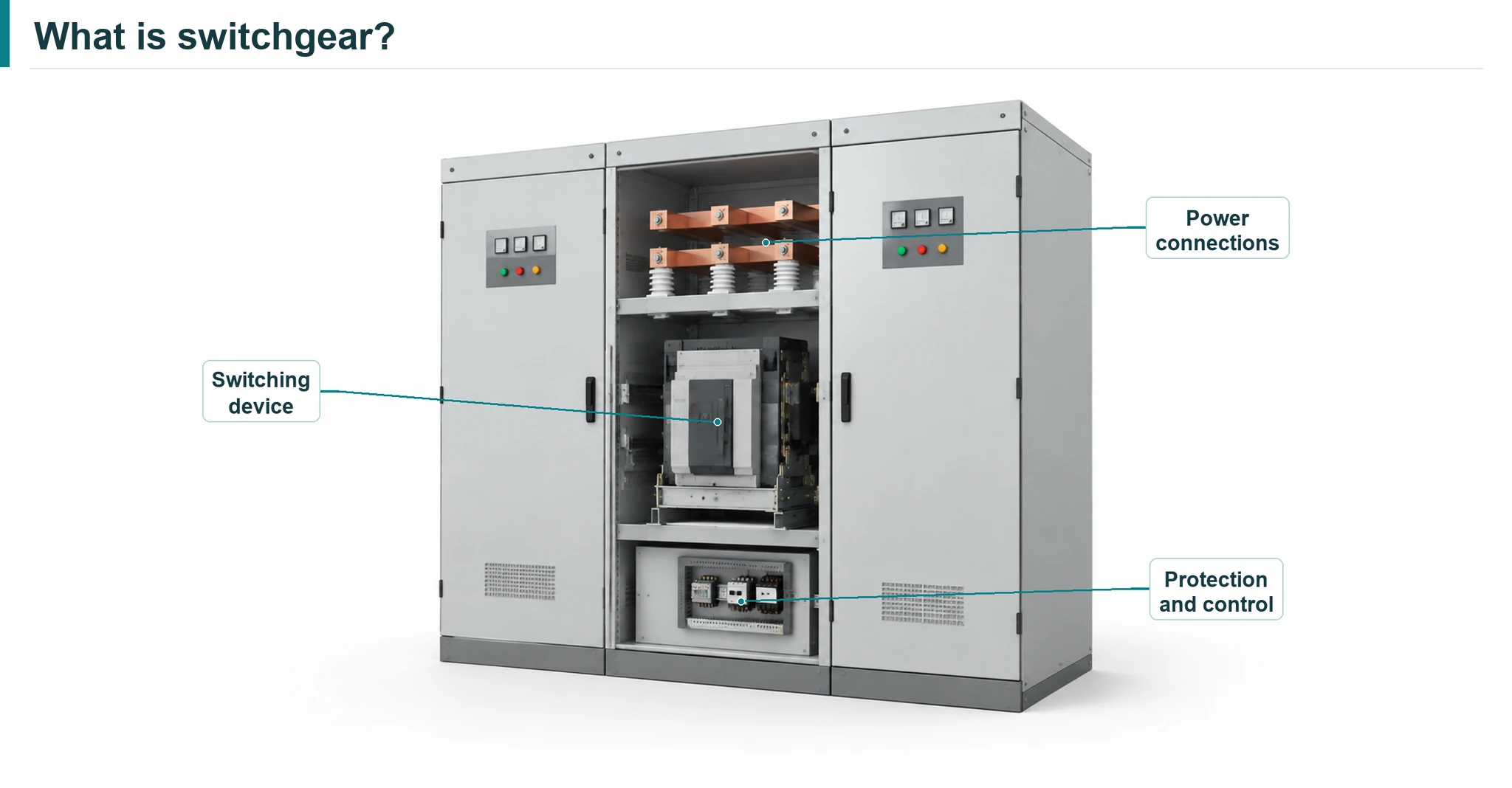
What does switchgear do?
Think about the three situations the equipment needs to handle:
- During normal operation, switching devices connect or disconnect circuits as needed.
- When a fault occurs, breakers or fuses interrupt abnormal current within their rated capability.
- When maintenance is needed, the isolation arrangement allows equipment to be separated from its supply.
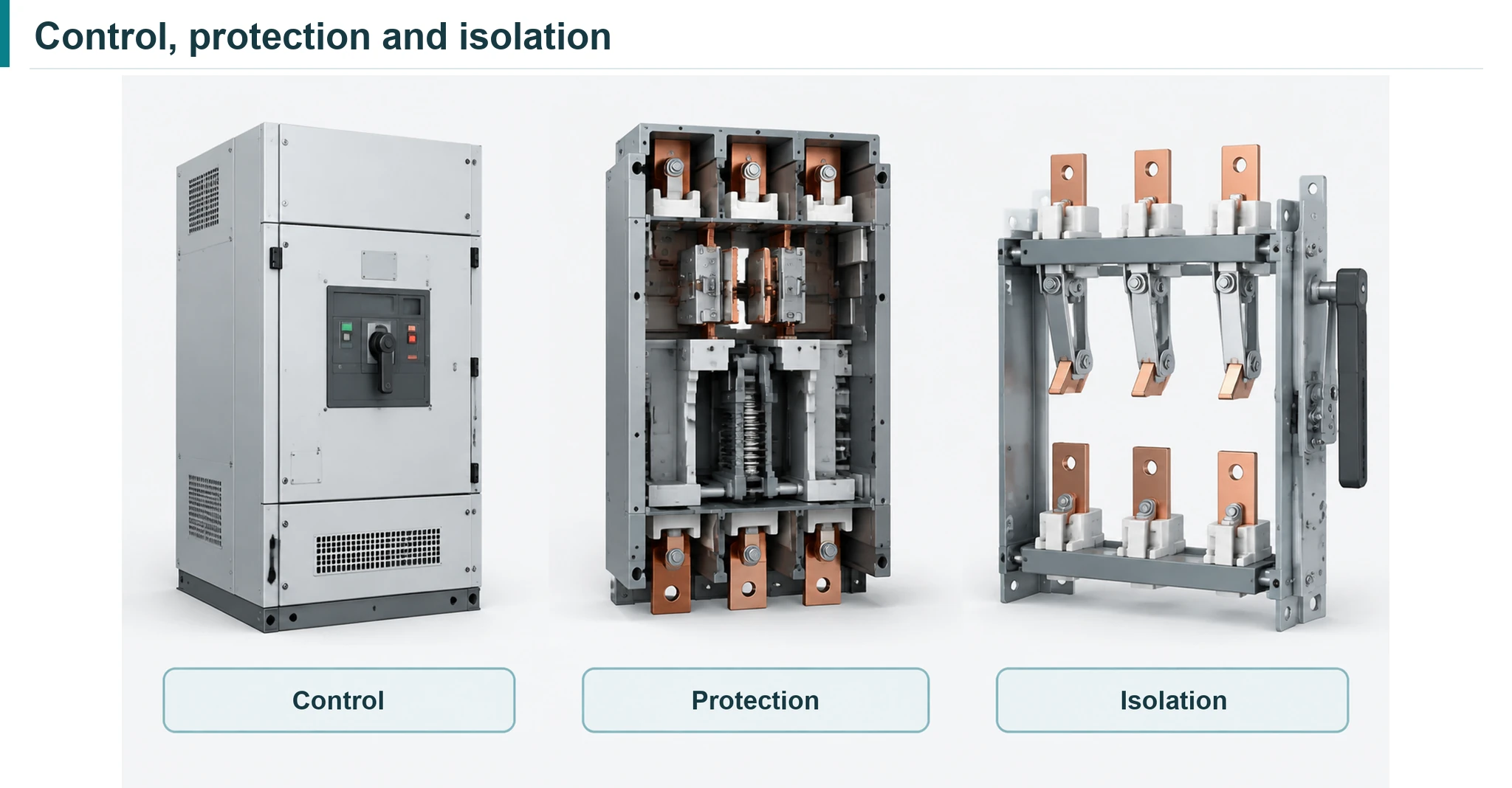
Those are the control, protection, and isolation functions of switchgear. They can involve different devices. For example, an isolating disconnect and a circuit breaker have different jobs, so you’ll need to check each device’s rating and intended duty.
How does switchgear work?
Picture a circuit supplying equipment in a building. During normal operation, current passes through the busbars, connections, and closed switching devices to the downstream circuit.
In a relay-controlled arrangement, sensors or instrument transformers send measurements to a protective relay. If those measurements meet its fault criteria, the relay sends a trip command to the circuit breaker. The breaker then opens and interrupts the current.
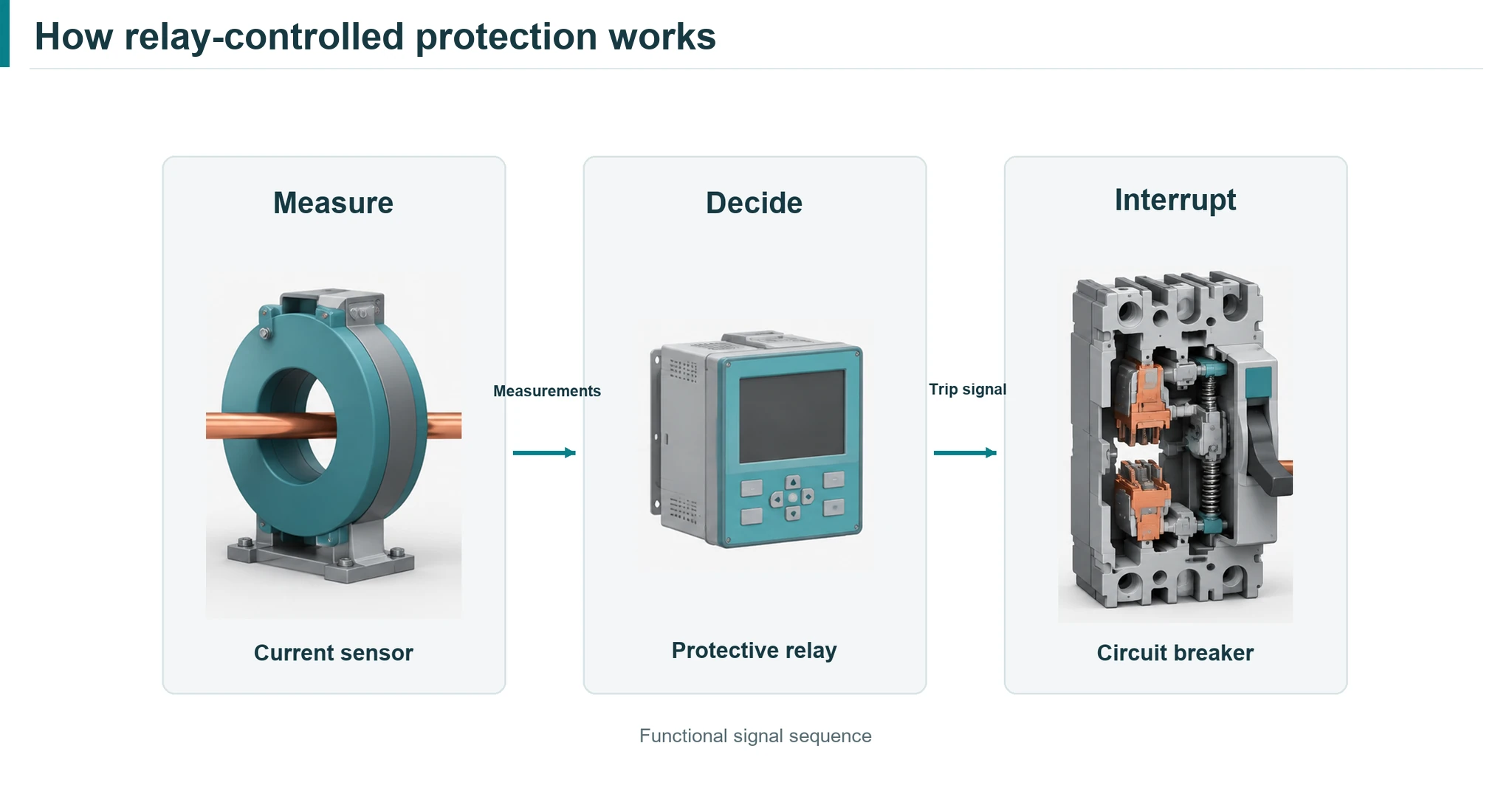
The relay detects the condition; the breaker carries out the interruption. Protection coordination determines which devices should respond to a particular fault. Other designs use fuses or integrated trip units, so a separate relay isn’t part of every assembly.
For maintenance, an open breaker alone doesn’t establish a safe working condition. Qualified personnel need to address isolation, stored energy, alternative supplies, and verification through the site’s safety procedures.
The main parts you’ll see
| Component group | What it does |
|---|---|
| Breakers, fuses, and switching devices | Switch circuits, interrupt faults, or provide isolation according to their ratings |
| Busbars and connections | Carry power between incoming and outgoing circuits |
| Sensors, relays, and trip units | Measure electrical conditions and provide protection functions |
| Control circuits, mechanisms, and interlocks | Control how devices operate and which actions the design permits |
| Insulation, barriers, and enclosure | Separate live parts and provide the physical housing and protection |
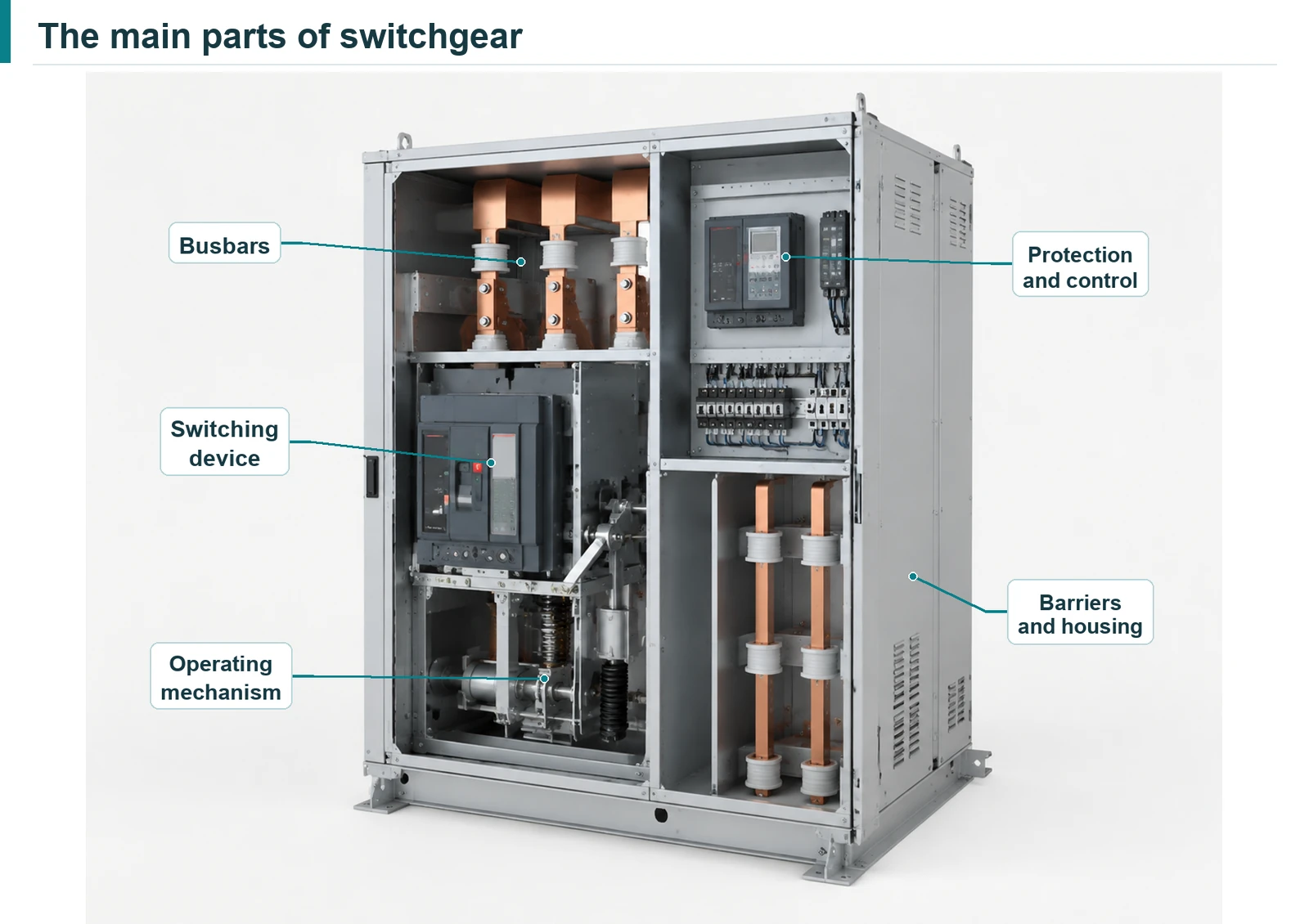
If you need to look more closely at a particular part, our switchgear components guide explains the components and their interfaces in more detail.
Types of switchgear
A datasheet might describe equipment as “medium-voltage,” “gas-insulated,” and “metal-enclosed.” Each label tells you something different: its voltage class, its insulation arrangement, or its construction. Reading them separately makes the specification easier to follow.
Voltage class: where will it be used?
| Class | Typical place in the system | What it supplies or protects |
|---|---|---|
| Low-voltage switchgear | Building and industrial distribution systems | LV feeders serving downstream distribution and equipment |
| Medium-voltage switchgear | Utility distribution and larger commercial or industrial sites | Circuits serving transformers, major loads, or separate parts of a site |
| High-voltage switchgear | Transmission networks and associated substations | Connections in the higher-voltage power network |
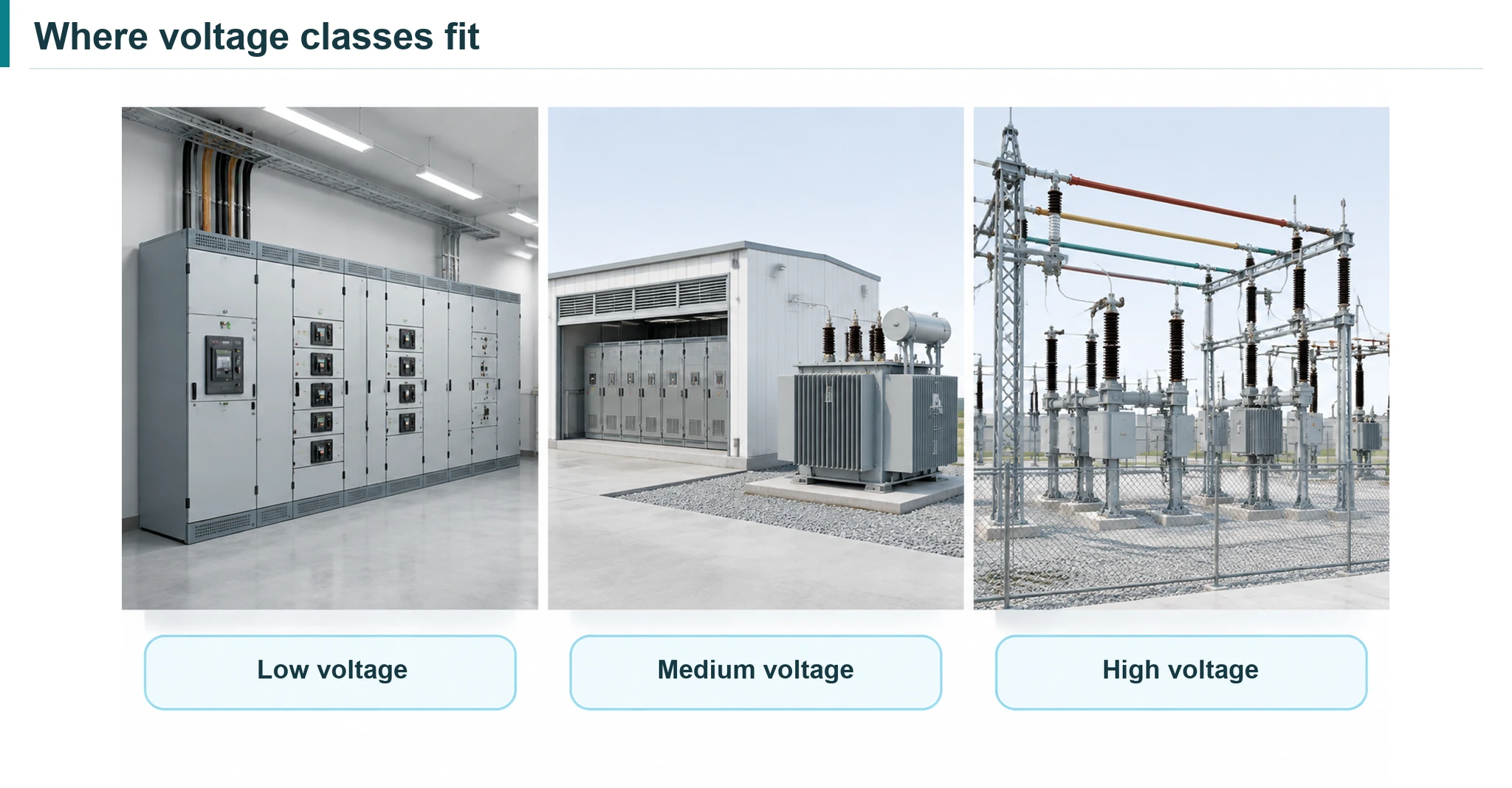
You can see these roles in low-voltage distribution equipment, medium-voltage feeder arrangements, and high-voltage transmission equipment.
When you request a quote, give the actual rated voltage and the applicable standard. The labels can vary between standards. For example, IEC 62271-200 uses “high-voltage” in its title while covering AC metal-enclosed equipment above 1 kV and up to and including 52 kV, including equipment commonly sold as medium-voltage.
Insulation: air, gas, solid, or fluid?
The insulation arrangement describes how energized parts are electrically separated.
- Air-insulated switchgear (AIS) uses air as the primary insulating medium between relevant energized parts, with solid supports or barriers where the design needs them.
- Gas-insulated switchgear (GIS) contains relevant energized parts in a gas-insulated arrangement. Its compact construction can be useful when space is tight. The choice between AIS and GIS also depends on service and maintenance requirements.
- Solid-dielectric designs use solid insulating material around selected energized parts. One example combines epoxy-resin insulation with vacuum switching.
- Fluid-insulated designs use an insulating fluid around relevant internal parts. They can also use vacuum fault interrupters inside a fluid-insulated assembly.
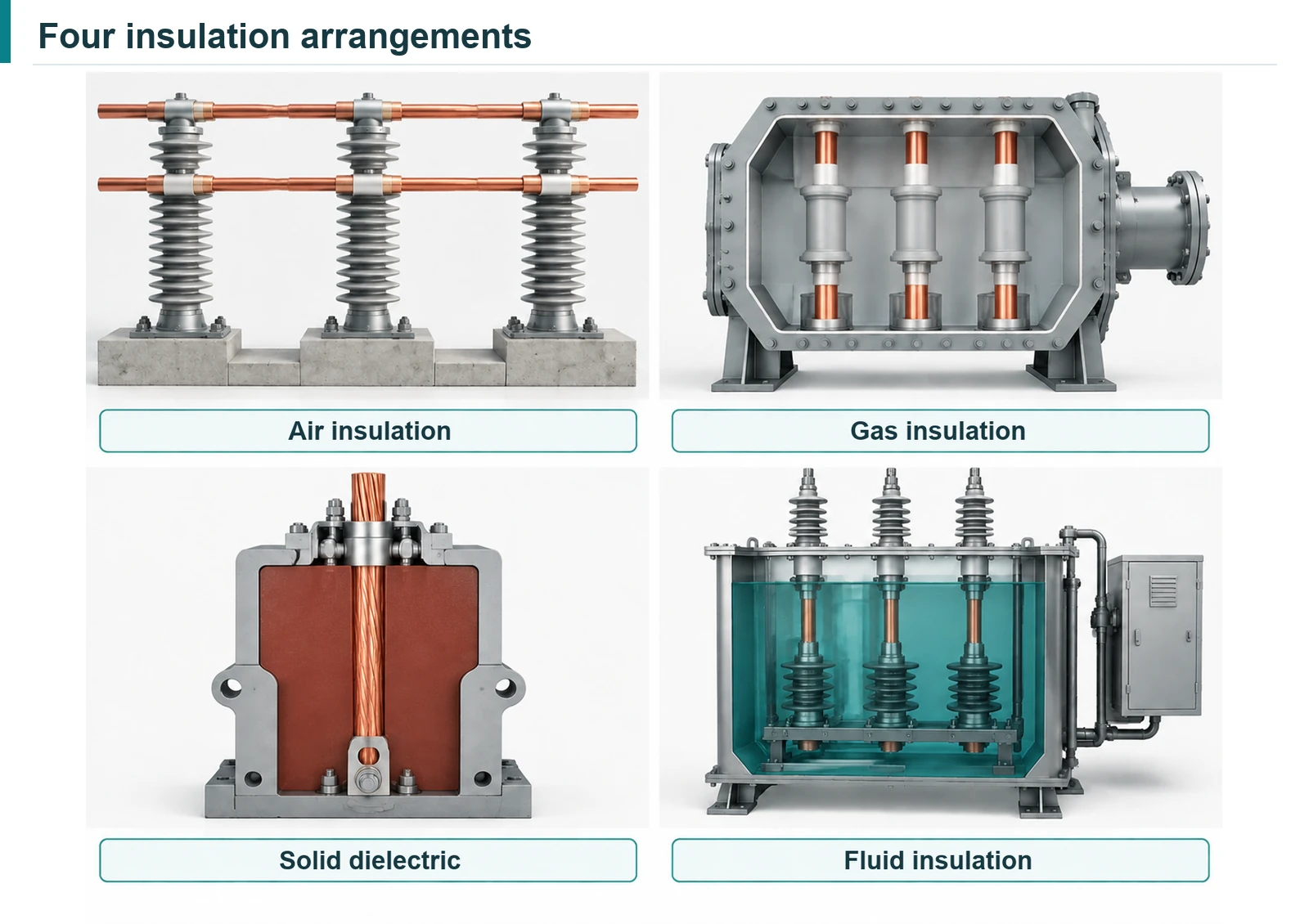
If a supplier describes equipment as “vacuum switchgear,” ask about the insulation arrangement too. Vacuum describes the medium inside the interrupter; other parts of the assembly may use a different insulating material.
Construction: how will it fit and be accessed?
Metal-clad switchgear has a defined compartmentalized construction. Other metal-enclosed designs may use a different internal arrangement. Pad-mounted and vault designs address different installation locations and access needs; Eaton’s construction overview shows examples of these formats.
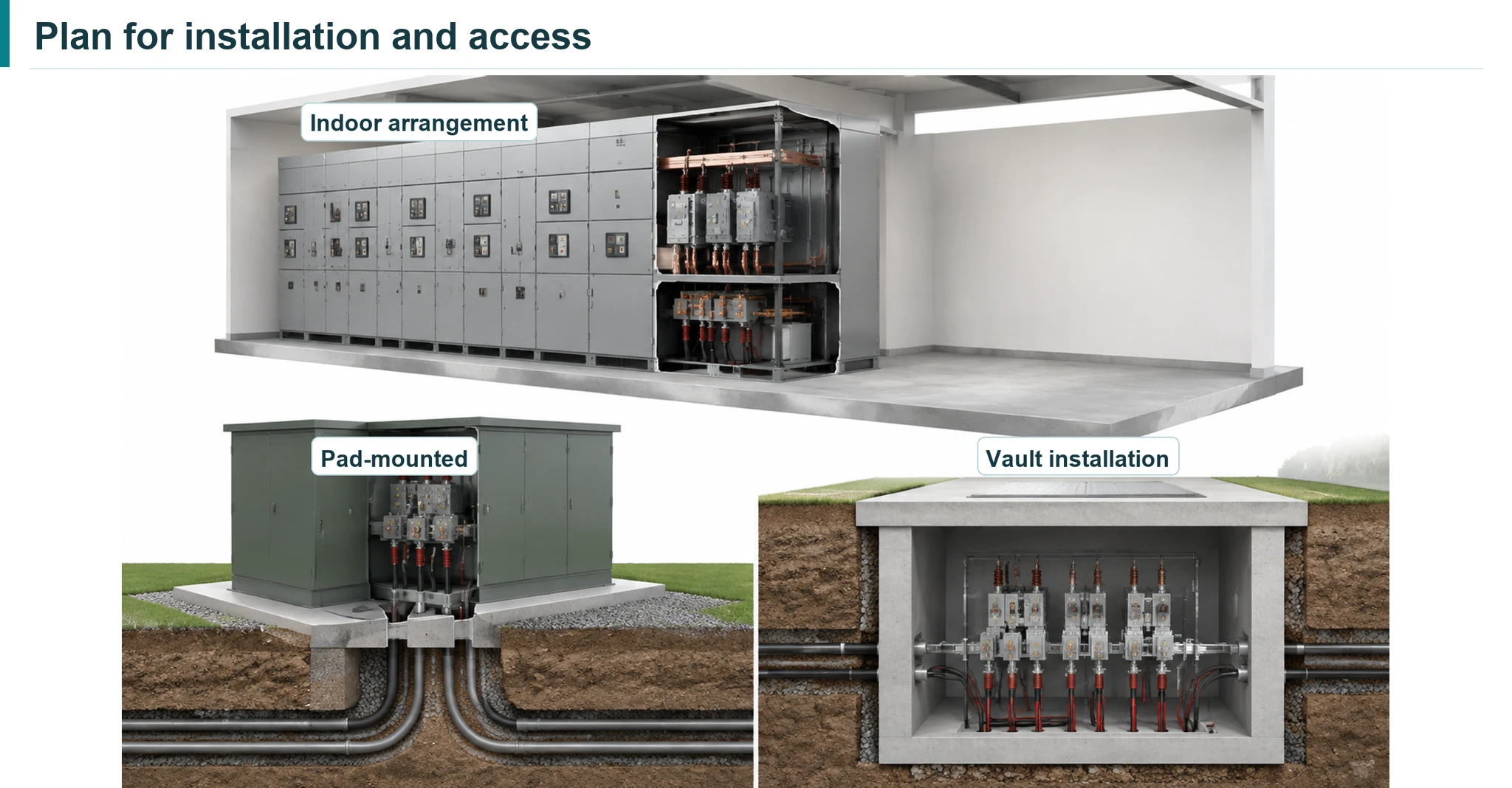
Once you’ve checked the electrical ratings, look at the layout. Where do the cables enter? Which compartments need access? Is there room for the work you expect to carry out later? Those questions help you judge whether a design fits your site.
Switchgear vs. switchboards, panelboards, and enclosures
These names can be confusing because the equipment shares some functions. In US low-voltage procurement, they identify different categories with different construction and rating requirements.
| Equipment | What you’re comparing | Common US standard context |
|---|---|---|
| Power circuit breaker switchgear | Power circuit breakers, assembly construction, and withstand characteristics suited to the protection and operating requirements | UL 1558 |
| Switchboard | A distribution assembly of buses and protective devices; check its access, breaker arrangement, and fault-duty requirements | UL 891 |
| Panelboard | A supply divided into branch circuits, each protected by a breaker or fuse, commonly in a wall-mounted arrangement | UL 67 |
| Empty electrical enclosure | The housing and mounting arrangement for equipment installed inside | Housing requirements are assessed separately from complete-assembly electrical performance |
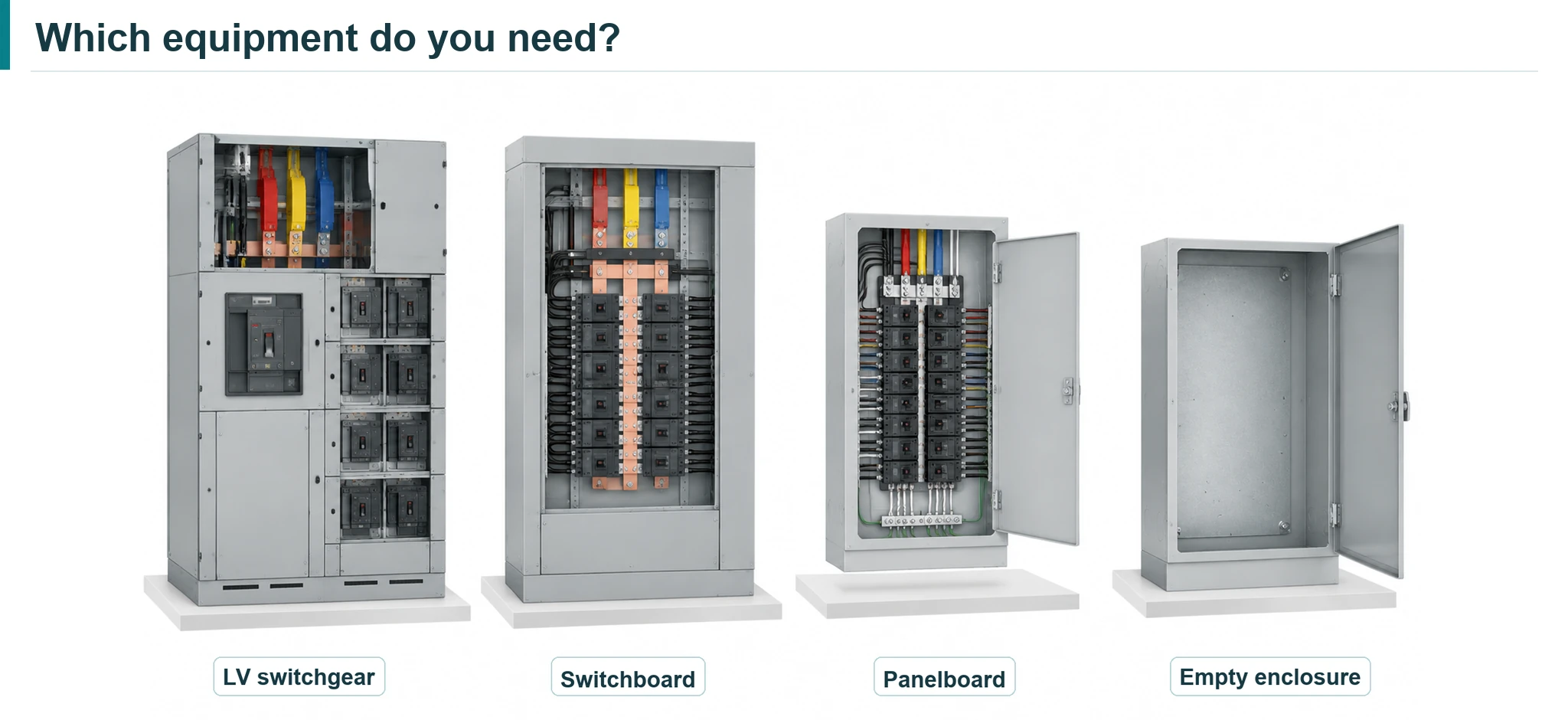
For the electrical categories, Eaton’s switchgear and switchboard comparison and panelboard guide explain the differences. Use the table as a starting point when discussing the project specification with your electrical designer.
We’ve also covered switchboards vs. panelboards and the role of an electrical enclosure in separate guides.
What real projects can help you think through
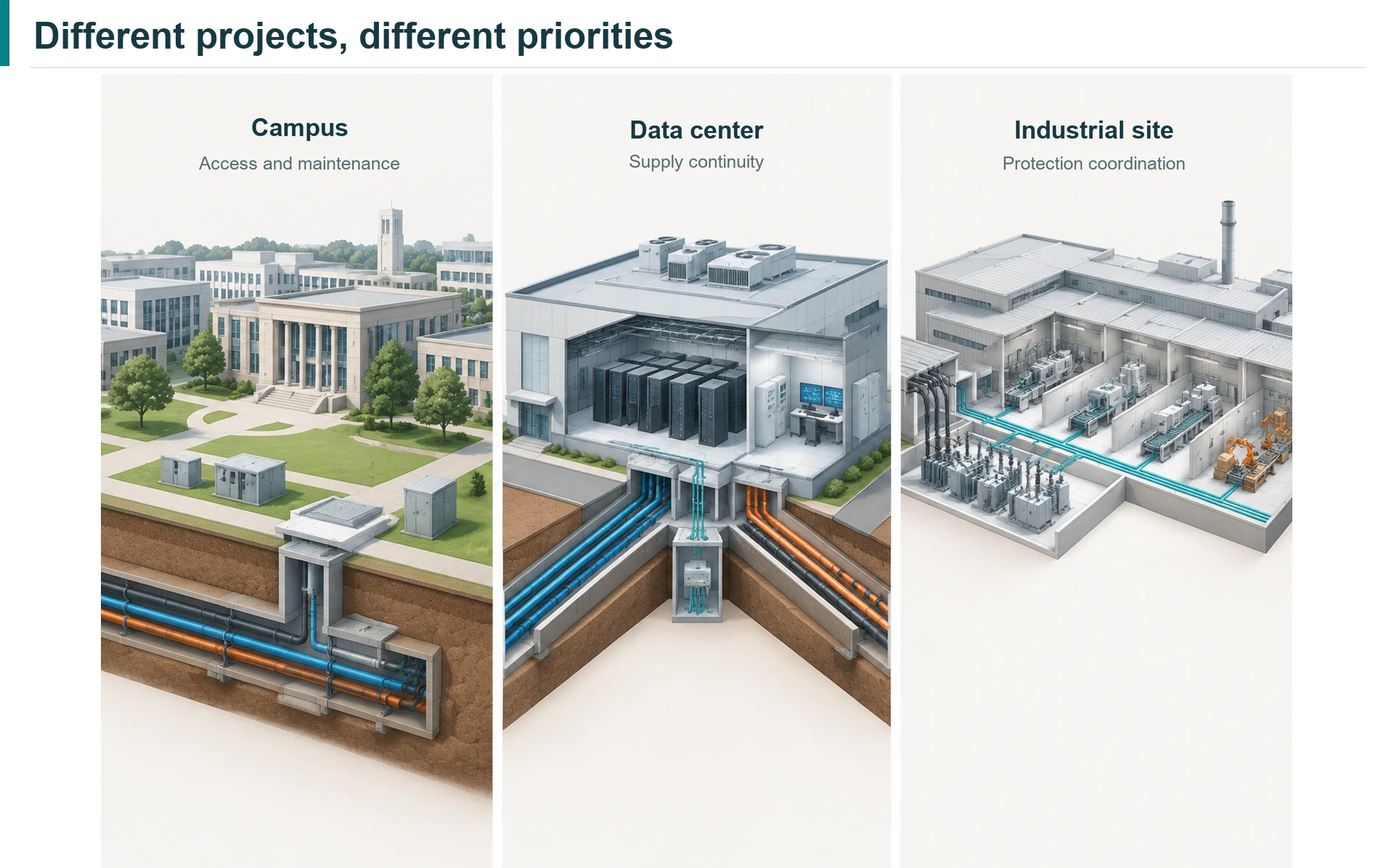
S&C and DNV have published useful examples of how site requirements affect equipment choices.
At the University of São Paulo’s São Carlos campus, S&C describes a project that needed underground distribution and discreet above-ground access. The university also had limited electrician availability, so maintenance needs and operator training mattered.
For the Digital Realty distribution project, S&C combined a loop arrangement with protection, communications, and restoration controls. Engineering and commissioning were part of the work alongside the equipment supply.
DNV’s Ma’aden Aluminium assessment shows a different tradeoff. Faster protection settings reduced arc-flash incident energy, but also increased the possibility of upstream devices operating first and disconnecting more equipment. The protection study had to consider both effects.
What should you ask before requesting a quote?
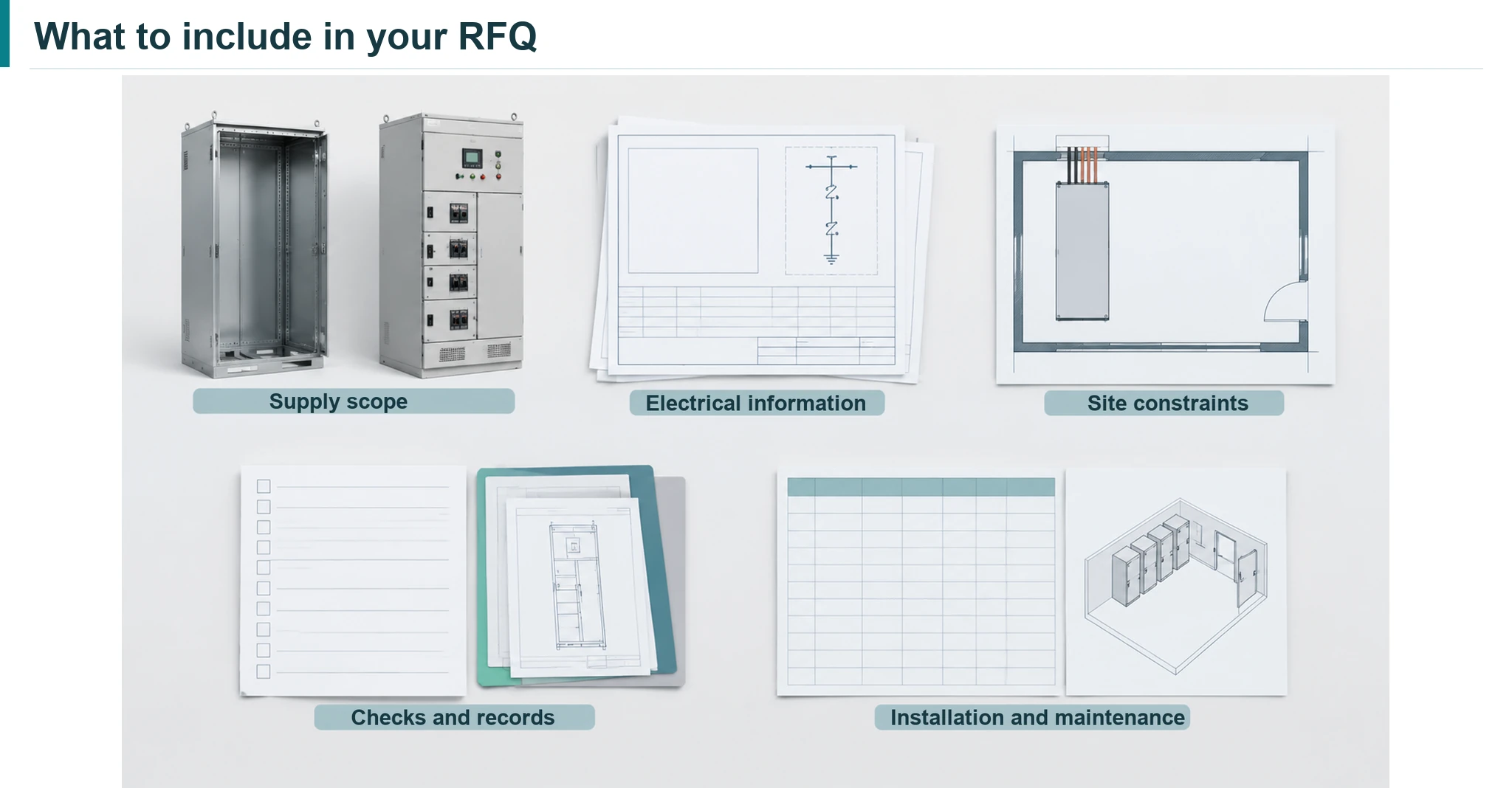
You’ll get a more useful comparison if suppliers are quoting the same scope. These five questions help you prepare it:
- What do you need supplied? An empty enclosure, replacement parts, a complete assembly, or equipment plus engineering and commissioning?
- What electrical information is available? Include the system diagram, rated voltage, load and fault information, applicable standards, and who is handling the protection study.
- What does the site allow? Share the available space, cable routes, installation environment, access needs, and details of equipment you’re keeping.
- Who handles the checks? Agree on responsibility for settings, drawings, factory tests, site tests, and acceptance records.
- How will installation and maintenance work? Include outage windows, temporary supply needs, and plans for future expansion.
Keep those answers with the quotations. It’ll be easier to see which costs cover the enclosure, which cover the electrical assembly, and which cover work at the site.
FAQ
Is a circuit breaker the same as switchgear?
A circuit breaker is one device within a switchgear arrangement. The assembly also includes the connections and other equipment needed for its job. Some designs use fused switches instead of breakers.
Does switchgear change voltage?
The transformer changes voltage. Switchgear controls, protects, and isolates the circuits around it. You’ll often encounter both in the same distribution system.
Is gas-insulated switchgear always better than air-insulated switchgear?
GIS can be useful when space is limited. To decide whether it’s the better fit for your project, also compare maintenance arrangements, service conditions, and any changes you expect to make later.
Does an enclosure rating cover the complete switchgear assembly?
An enclosure rating addresses the housing’s environmental protection. The assembly also needs electrical ratings and supporting documentation for the equipment being supplied. Ask your supplier for both.
How FN helps you get the enclosure details right
You may already have a complete CAD drawing, or you may be working from a sketch, PDF, or reference photo. Any of these can give us a starting point for your custom electrical enclosure.
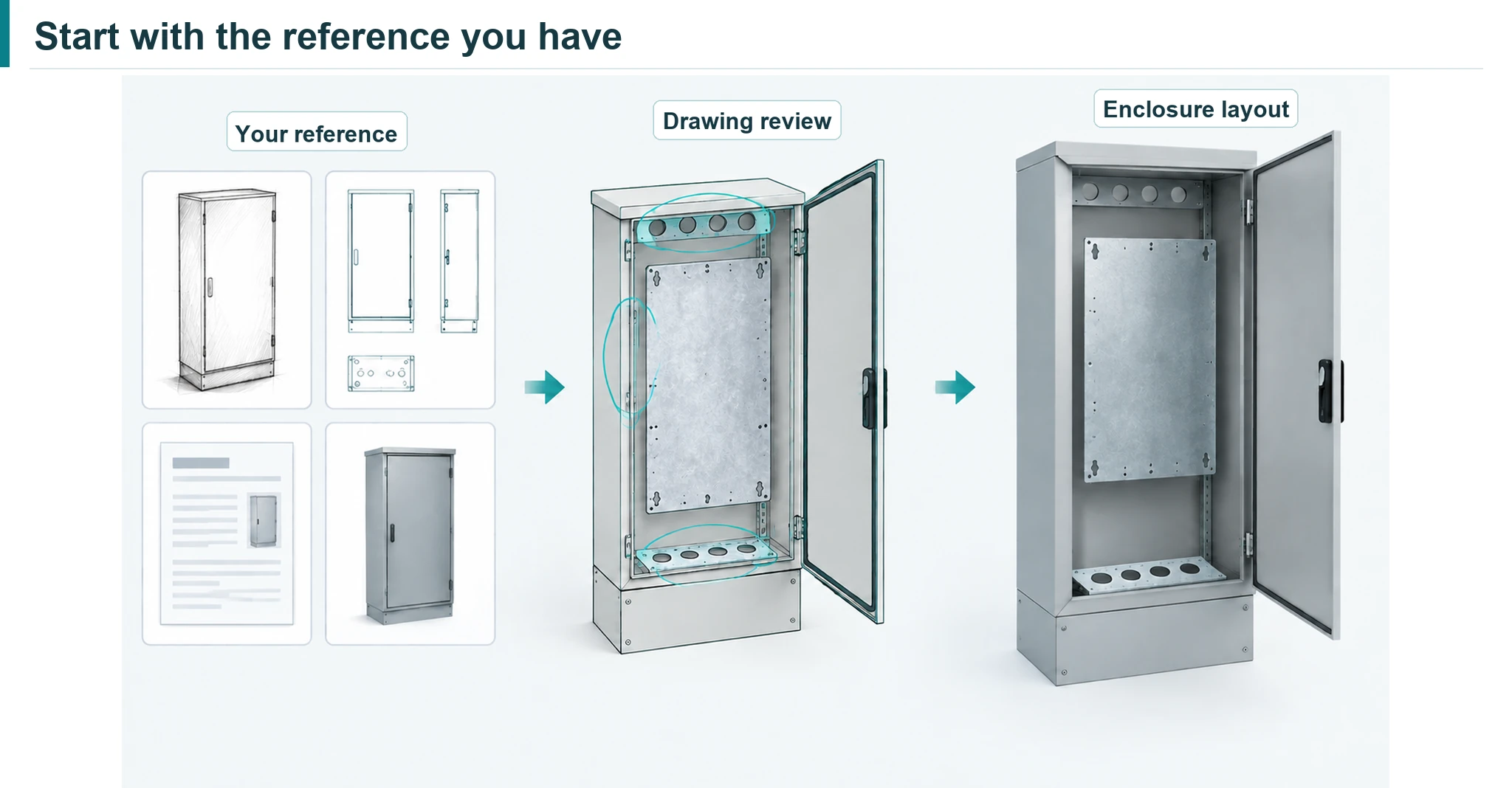
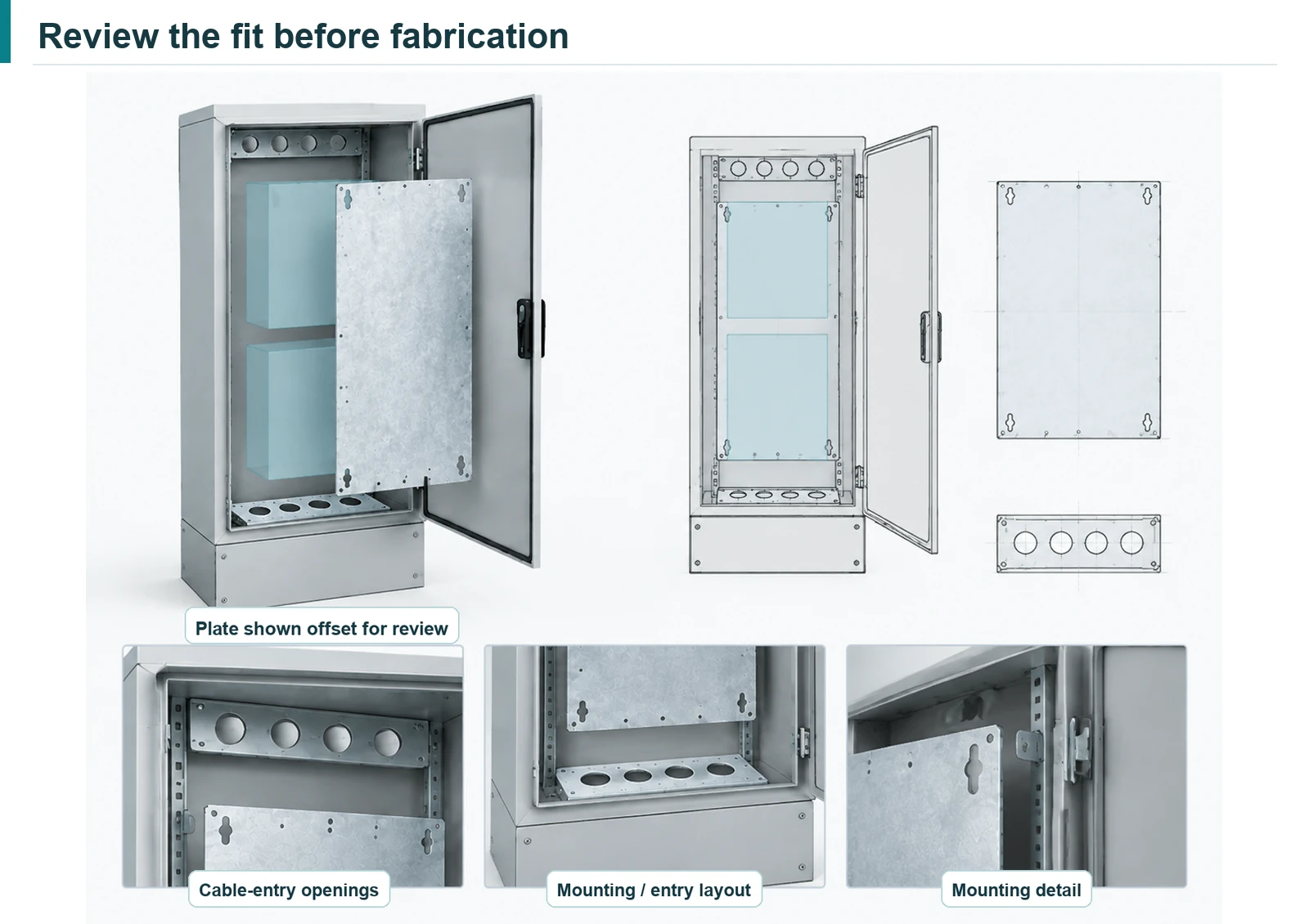
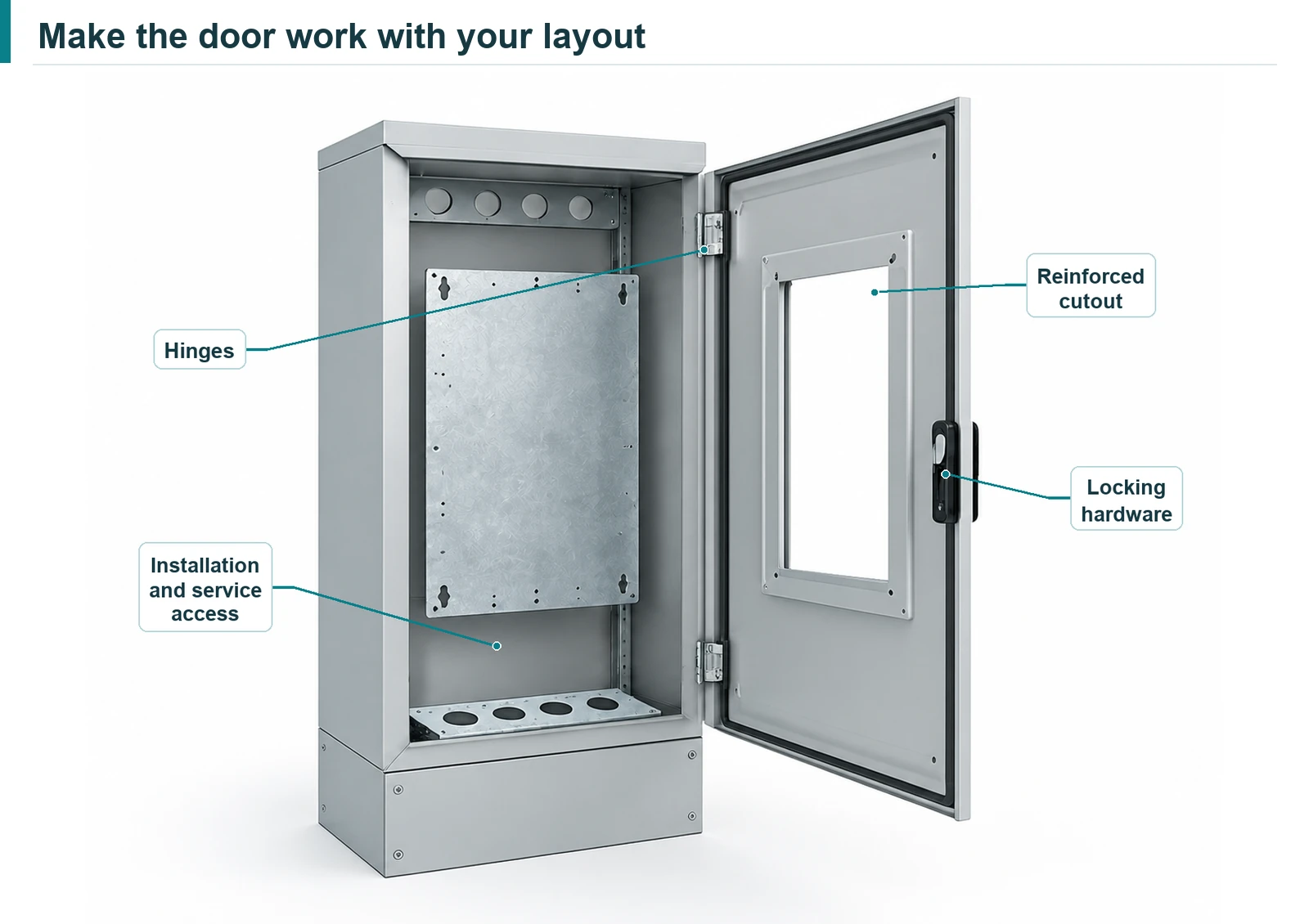
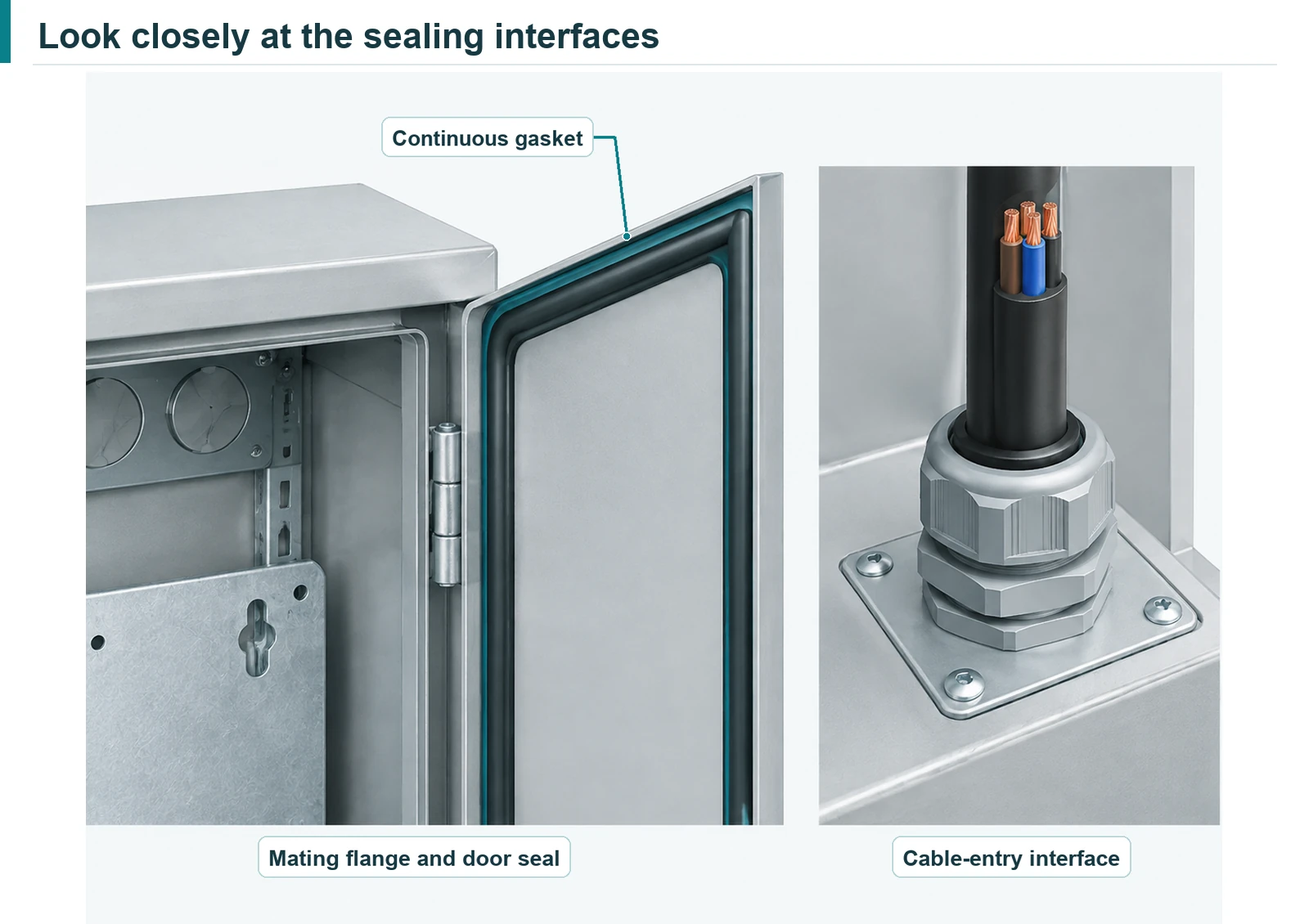
At FN, we review the cabinet layout, cutouts, mounting details, door fit, and sealing interfaces before production. That gives you a chance to settle the fitting details on the drawing, before your team has to install equipment in the finished cabinet.
| What your team needs | What we work through with you |
|---|---|
| Equipment that fits the planned layout | Cabinet dimensions, mounting plates, support locations, and the load those supports need to carry |
| Holes and cable entries in the right places | Cutout sizes, coordinates, reference points, cable direction, and the drawing revision to manufacture |
| A door that works with the installed equipment | Door cutouts, equipment weight, reinforcement, hinges, locking points, and access for installation and service |
| Sealing details suited to the installation | Gasket contact, corner continuity, and how openings and hardware meet the sealing path |
For outdoor installations, our enclosure checklist also helps you organize questions about rain, moisture, and cable-entry details.
Tell us who will install the electrical equipment and handle system verification, so we can align the enclosure interfaces with their layout. We’ll clarify the cabinet details and quoted scope before production.
Send us your drawing or project reference, together with the material, quantity, installation environment, and delivery location. If some details are still open, mark them for review.