

A fiberglass electrical enclosure is a useful candidate when the job calls for a non-metallic body, a reinforced structure and a resin system suited to the surrounding environment. Buying one requires more than specifying “fiberglass.” The resin, molding process, cover, mounting arrangement and openings determine whether the finished enclosure can protect the equipment and fit the installation.[53][56]
Start with a standard model if it provides the required space, access and mounting interfaces. A custom enclosure becomes worth investigating when those physical constraints cannot be met by a stock shell. The material description should then follow the selected design through the quotation, drawing and delivered product.
Understand FRP, GFRP, GRP and molding terms
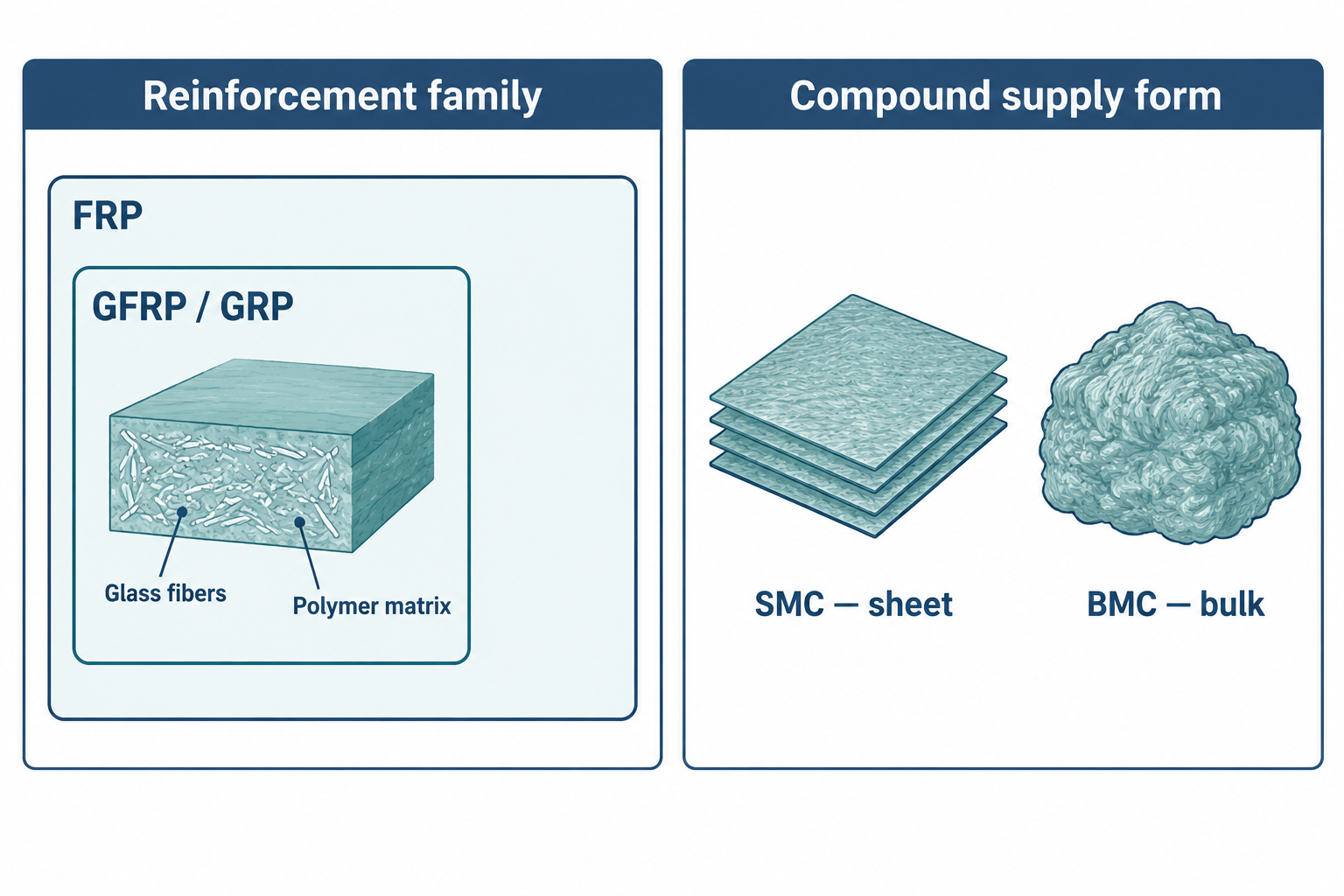
FRP means fiber-reinforced polymer. The polymer forms the matrix around the reinforcing fibers; the fibers are not necessarily glass. GRP and GFRP specify glass reinforcement. In an enclosure catalog, “fiberglass” commonly describes a glass-reinforced polymer, but it may leave the polymer itself unnamed.[53]
SMC and BMC describe molding compounds rather than a complete enclosure specification. Sheet molding compound is supplied in sheet form and is commonly compression molded. Bulk molding compound is supplied in bulk form and can be used in processes such as compression or injection molding. These compounds combine a thermosetting resin with reinforcement, fillers and other ingredients; the exact formulation is a grade-level choice.[56][55]
Thermosets and thermoplastics also behave differently during manufacture. A thermoset cures into a structure that cannot simply be melted and reshaped like a thermoplastic.[36] This distinction helps explain manufacturing and machining choices. It does not establish the finished cabinet’s allowable temperature or load.
A commercial example shows why the full name matters. Bud calls its PTQ products “fiberglass” enclosures while identifying the material as 10% fiber-filled polycarbonate.[47] That is a reinforced thermoplastic, not evidence that every product sold as fiberglass uses a thermosetting polyester SMC. A comparison that treats the two as the same material can give the buyer the wrong processing instructions or supporting data.
From an SMC catalog name to a purchasable specification
Page 37 of a YONGTONG SMC supplier catalog lists HY1112, HY1243 and other grades in separate columns, with different entries in the flammability row. The page itself therefore gives a reason to retain the grade identifier: “SMC” does not select a single set of properties. The example describes the listed compounds; the grade used in a proposed enclosure still has to be identified.[SMC37]
In a purchase specification, the compound producer and grade identify the material. The enclosure model and drawing revision identify the shape made from it. The cover, gasket, inserts and fittings identify the assembly. A test document then has to refer to the relevant material or assembly. Leaving out one of these connections allows a supplier to answer a different question from the one the buyer intended.
Match the resin system to the service environment
The polymer matrix protects the reinforcement and contributes to the composite’s environmental behavior.[53] That is why glass content alone is a poor basis for choosing a chemically exposed enclosure. More glass does not tell you whether the resin or the cover seal tolerates the liquid used on site.
Chemical resistance belongs to a combination of material and exposure. ROLEC’s GRP guidance specifically identifies resin type, concentration and exposure duration as variables.[63] Occasional splashes that are rinsed away present a different duty from a warm liquid left against the surface. A statement such as “resistant to acids” leaves out the information needed to distinguish those conditions.
For procurement, describe the contact that reaches each part. If detergent washes the door, the door material, gasket and fittings are all exposed. If vapor enters during servicing, the internal components may also be involved. An acceptable body material does not settle the choice of a transparent cover or a gasket made from another polymer.
Stahlin’s Select Technologies case describes fiberglass enclosures used for refrigeration controls and sensors in wet and corrosive environments, with some sensors outdoors. The integrator evaluated the Diamond Shield series for that work.[281] The useful lesson is the combination of environment, product series and configuration. The account does not supply a general chemical-resistance limit for all fiberglass or establish direct exposure to every substance used in a refrigeration plant.
For a fiberglass enclosure in a coastal installation, corrosion resistance includes the hardware as well as the body. Salt and moisture can collect behind hinges, under fasteners and along the gasket edge. Even if the fiberglass shell is suitable, corrosion at a hinge or latch can change door alignment or closing force and leave the gasket unevenly compressed. Hinges, brackets, cable-entry fittings and any metal backplate therefore need materials and interfaces suited to the same exposure as the enclosure.
Check load paths, mounting inserts and machining needs
A material strength value describes a specimen. The enclosure has to carry equipment through actual attachment points. A backplate transfers its load through supports or inserts; a hinged door adds load at the hinges; an external bracket transfers the whole assembly to the supporting structure. The weakest attachment may determine the usable configuration even when the wall material is strong enough.
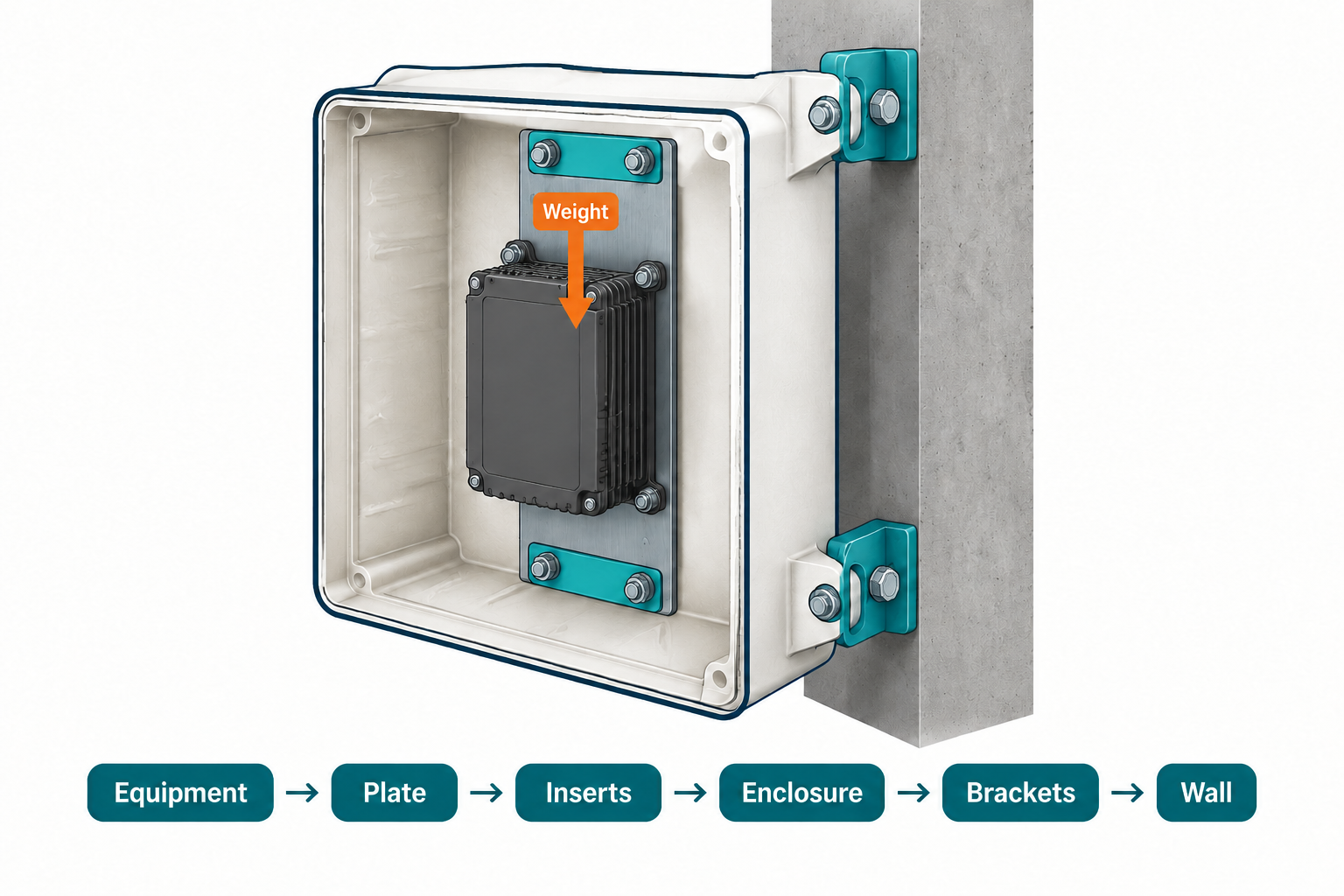
This is why equipment position belongs on the layout drawing. A deep component projecting from a mounting plate loads its supports differently from a shallow terminal strip close to the wall. Door-mounted equipment also needs cable clearance through the opening movement. Increasing wall thickness alone does not resolve every one of those interfaces.
Pillar Point provides a useful example of physical constraints driving the purchase. Openchannelflow describes a fiberglass enclosure for a composite sampler at a coastal site with limited access and a small installation footprint. Standard products did not fit the requirement, so the supplier developed a compact custom enclosure.[280] The case supports starting with the equipment envelope and site access. It does not identify an SMC grade or prove that the same fabrication route suits another cabinet.
Openings need a defined drawing and an agreed machining responsibility. Stahlin’s drilling guidance identifies edge chipping and delamination as possible consequences of unsuitable tools or methods.[51] Those defects matter where a gland washer or gasket must sit on a sound surface. A hole that accepts the fitting can still leave an unsatisfactory sealing interface.
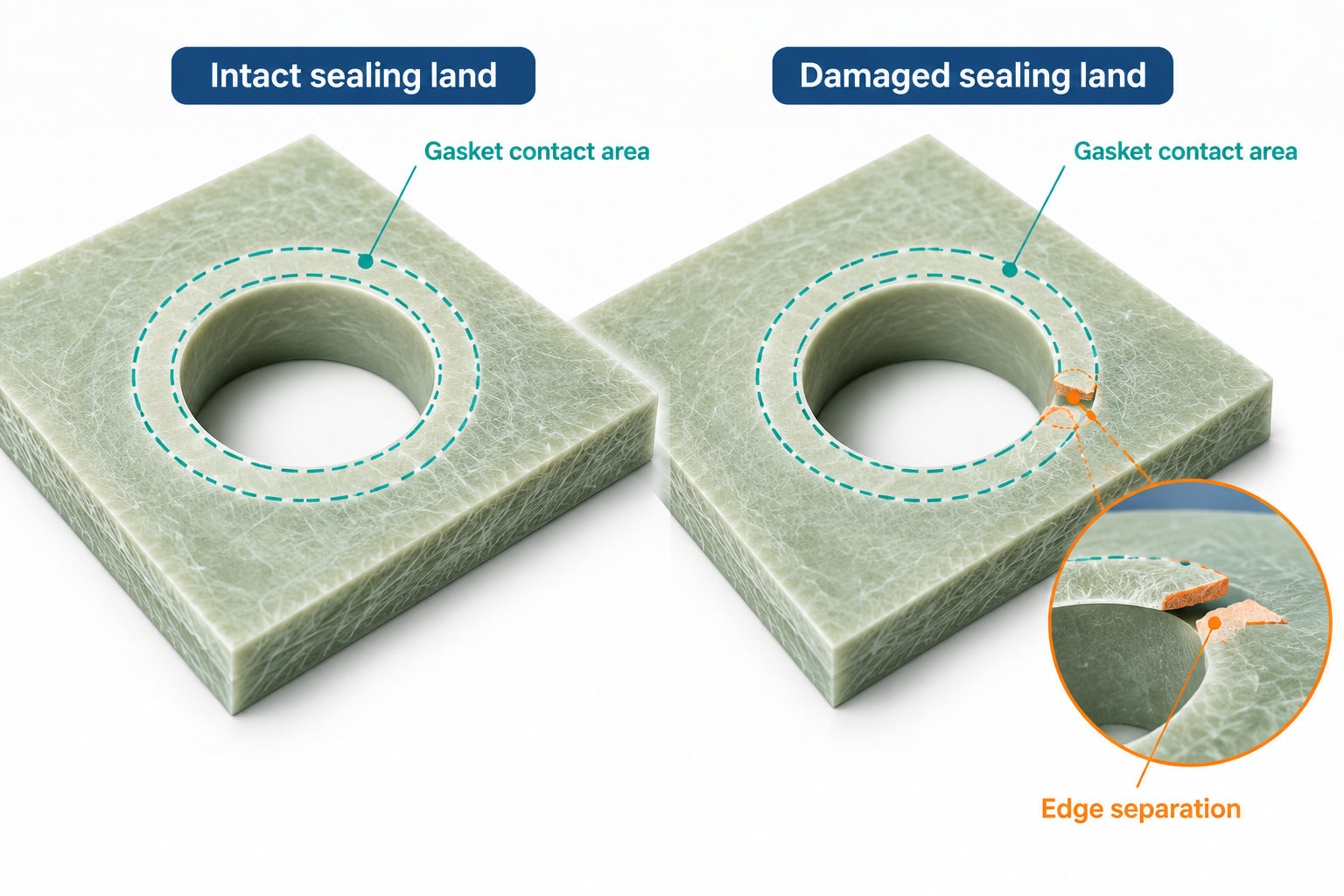
For a modified enclosure, the quotation should describe the finished opening, its position and the required edge condition. Tool choice and machining parameters belong to the material and manufacturer’s instructions; copying settings from a different fiberglass formulation is not a substitute for that process.
Verify the exact enclosure rating and configuration
An enclosure rating is useful only when the supplied assembly can be identified. The same body with a solid lid, a transparent cover or a ventilated door may involve different materials and different sealing arrangements. A rating on one version should not silently become a claim for all versions.
Separate the questions the documents answer. Material flammability evidence concerns the compound and its test conditions. An ingress or environmental rating concerns the enclosure configuration. UL’s explanation of Component Recognition makes clear that recognized components have conditions of acceptability and are not complete, standalone certified products.[172] A recognized material may support a product evaluation; it does not finish that evaluation.
A louver introduces an airflow path, while an insect screen stops insects rather than sealing out water. A drilled cable entry adds a fitting and sealing surface that must be included in the finished enclosure’s protection evidence. NEMA Type 1 and Type 4X describe different environmental duties: Type 1 is a route for comparatively controlled indoor conditions, while Type 4X addresses exposures including outdoor weather, hose-directed water and corrosion. A fiberglass body alone establishes neither type, and a louver or gland is covered only when the supporting documentation includes that configuration.
Manufacturing also matters. SMC selection guidance from JLON includes molding trials and finished-enclosure validation after the compound has been selected.[57] That sequence reflects a practical difference: a suitable formulation can still produce a part whose geometry, inserts or sealing surfaces do not satisfy the application.
Compare fiberglass with polycarbonate alternatives
Keep polycarbonate in the comparison when viewing through the cover, compact molded features or impact performance is important. Keep a particular fiberglass enclosure in the running when its resin, structure and mounting arrangement fit the exposure and equipment layout. Neither material family earns an automatic pass for sunlight, chemicals or every impact condition.
A polycarbonate and fiberglass comparison should use complete, usable assemblies. A fiberglass shell quoted without a steel mounting plate cannot be fairly compared for price or weight with a PC enclosure that includes one. A transparent PC lid is also a different purchasing requirement from an opaque lid or a fitted window. Bud’s reinforced-PC example demonstrates that the market includes combinations that do not fit a simple “plastic versus fiberglass” split.[47]
If both products satisfy the environmental duty, installation and servicing can decide the purchase. The easier plate removal, workable door opening or better cable-entry position may be worth more than a small difference in an isolated material property. If one candidate lacks evidence for the actual chemical contact, that gap takes priority over convenient features.
Request drawings, evidence and a comparable quotation
A complete buying record connects the proposed enclosure to the material and the work included in the price. This is the point at which a catalog description becomes an orderable item. FN’s fiberglass enclosure product page describes the body forms and model details needed for quotation.
| Connection in the record | What it establishes | What a mismatch changes |
|---|---|---|
| Compound producer and grade → body or door material | Which formulation the supporting data describes | A substitute grade can change the basis for temperature, flammability or exposure claims. |
| Enclosure model → drawing and revision | Which geometry and interfaces will be supplied | A dimensional or insert change can affect fit and assembly. |
| Drawing → cover, seal, hardware and openings | Which finished configuration is being compared | A different lid or entry arrangement can change sealing, visibility and maintenance. |
| Material or model → relevant report | Which object and conditions were evaluated | A report for a specimen cannot establish a finished-box result. |
| Configuration → quantity and supply scope | What each supplier has actually priced | Plates, fittings, machining and inspection can otherwise appear in only one quote. |
JLON’s custom-SMC RFQ guidance likewise separates component requirements, molding requirements and commercial information.[58] For a finished enclosure purchase, add the box-level interfaces and acceptance criteria rather than forwarding the compound data sheet alone.
The first production sample should resolve the physical uncertainties that a catalog cannot: whether the equipment fits, whether the plate can be installed and removed, whether the door clears surrounding hardware and whether the specified openings accept the fittings correctly. Performance evidence then needs to cover the final material and configuration. A sample that looks right and a report that belongs to another version are two incomplete answers.
When requesting a fiberglass-enclosure quotation, send FN the dimensions, internal layout and exposure, together with the body and cover specification and required ratings. State which plates, fittings and openings belong in the price. The response should name the offered model and material and identify differences from that scope, allowing a lower price to be traced to a configuration difference or an omitted item.
FAQ
Are all fiberglass enclosures made from SMC?
No. SMC is a sheet-form molding compound, usually based on a thermosetting resin, but the commercial label “fiberglass” does not identify one resin or process. Bud, for example, describes its PTQ enclosure material as fiber-filled polycarbonate. Specify the polymer, reinforcement and grade so that the material data and processing instructions match the proposed enclosure.[47][56]
Does chemical-resistance data for the fiberglass body cover the whole enclosure?
Body data does not establish compatibility for a transparent cover, gasket or fitting made from another material. A cleaner reaching the door can contact several of those parts. The relevant comparison includes the exposed materials and the chemical concentration, temperature and contact duration, rather than treating a suitable fiberglass shell as approval for the complete assembly.[63]
Can a ventilated fiberglass enclosure keep the rating of a sealed version?
A louver creates an airflow path, and an insect screen does not seal that path against water. A sealed version’s rating therefore cannot automatically be applied to the ventilated version. The supporting enclosure documentation must cover the actual door, ventilation arrangement and fittings being supplied.
When does a custom fiberglass enclosure make sense?
A custom design is worth investigating when a stock enclosure cannot accommodate the equipment, access route or required mounting interfaces. Openchannelflow’s Pillar Point sampler project is one documented example: limited access and a small footprint ruled out standard products. The reason for customization was the physical installation, not a general preference for a custom fiberglass cabinet.[280]
Sources
[36] Thermoplastic vs. Thermoset Injection Molding
[47] New Sizes of Bud’s Fiberglass IP67 rated boxes
[51] Cutting & Drilling
[53] FRP vs. Fiberglass
[55] BMC Injection Molding vs Compression Molding: Which Process Is Better?
[56] How to Choose Sheet Molding Compound (SMC) for Electrical Insulation Applications
[57] How to Choose SMC for Electrical Meter Boxes and Distribution Boxes
[58] How to Specify Custom SMC: Technical Requirements and RFQ Checklist
[63] WHICH GRP ENCLOSURES ARE BEST FOR YOUR INDUSTRIAL ELECTRONICS?
[172] The UL Component Recognition Classification
[280] Case Study – Custom Composite Sampler Enclosure
[SMC37] YONGTONG SMC supplier catalog, photographed page 37, supplied for this project. Edition and publication date were not provided. This is catalog evidence, not an FN test report.