


Custom electrical enclosures are the ones you have to describe, because they are not in the catalogue. A dimension that will not change. The cable entry that must sit exactly there. One door that has to open against a wall. So the real question is not whether to buy them. It is what happens after you send the drawing.
However, most pages about made-to-order shells are catalogues. They show colours and sizes and stop. This one covers the part that decides the outcome: the seven shop operations between your file and the shipped box, and who is responsible at each one.
Quick answer: custom electrical enclosures are built to your drawing, not to a tested model. The work runs nesting, cutting, forming, joining, finishing, sealing, assembly. In practice, each step can hold a stated tolerance or silently miss it. In short, what arrives carries exactly the control the drawing released.

The images on this page are explanatory illustrations of how these shells are made and where they go wrong. They are not photographs of FN shipments.
Three Kinds of Custom Electrical Enclosures, Priced Differently
First, be precise about which one you are placing. Suppliers price these very differently, and the word “custom” covers all three.
A modified standard shell. The body exists. You move holes, add a cutout, change the paint. Still, the shape does not move. Cheapest and fastest, because the forming is already proven. In fact, most buyers should take this route more often than they do — we run that decision in Standard vs Custom Electrical Enclosures.
A drawn-to-specification build. Specifically, you send a drawing or a model and the shop fabricates sheet to it. No dedicated tooling exists for your part, so dimensions, bend positions, hole coordinates and tolerances must all be legible on that drawing. The floor has nothing else to work from. This is the normal route for sheet-metal custom electrical enclosures, and it is what the rest of this page is about.
A reverse-engineered build. You send a sample, a photo, or an incumbent part with no drawing. Instead, the manufacturer measures it and matches the object in your hand. This works, but you have handed over your tolerance stack instead of specifying it. If the sample is already bent out of true, you will receive a faithful copy of that defect. Ask for a dimensioned drawing back before you approve a sample-based order.
In short, the commercial difference is one word: control. Of the three routes, route one leaves the design risk with the builder, route two makes the drawing the contract and hands it to you, and route three leaves it with nobody until something fails to fit.
What Suppliers Ask Before Quoting Custom Electrical Enclosures
Nobody reviewed a quote that arrived the same day you asked for it. These are the questions a fabrication review raises first, and if a supplier skips them the number you are comparing is not a number.
- Which datum do the dimensions hang from? Two holes can sit 100 mm apart and still land in the wrong place if each hole takes its measurement from a different edge.
- Are inside or outside dimensions controlling? For example, a 2 mm sheet turns a 400 mm outside box into a 396 mm cavity.
- What material, stated in millimetres rather than a gauge? Gauge is not a standard; see below.
- Where does the seal run, and what crosses it? Note that every gland, bushing and hinge that interrupts the gasket path is a separate decision.
- Which rating do you need as a tested configuration, and who tests the finished assembly?
- How many parts, how many colours, how many shipments? Moreover, batching moves price more than most buyers expect.
First, questions 1 and 2 decide whether the box fits. Second, questions 4 and 5 decide whether it keeps water out. Overall, asking them is the cheapest part of a custom electrical enclosure project.
The Seven Operations, and What Each One Can Hold
Nobody moulds custom electrical enclosures. Factories cut, bend, join, coat and seal them, and that sequence is where accuracy actually comes from.
Nesting and Cutting Set the Price and the Edges
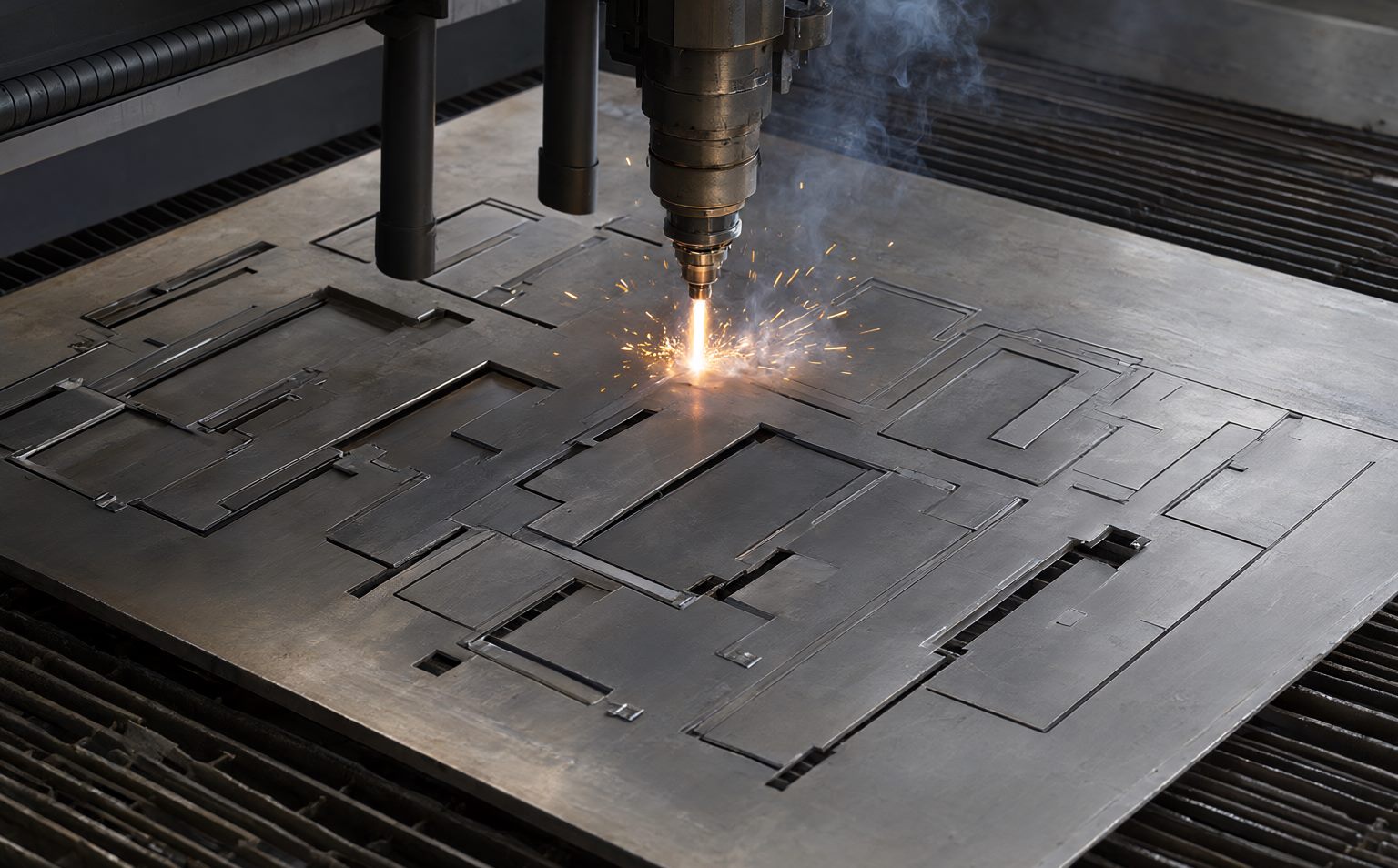
Nesting. First, this step lays your parts out on stock sheets. It is a cost step rather than an accuracy step, and it is where your money goes. One manufacturing case reports sheet utilisation near 84% for parts that nest in straight collinear rows against 61% for irregular outlines. As a result, that gap lands on the price of every box. Square corners and aligned holes are cheaper than they look on a drawing.
Forming and Joining: Where Thin Sheet Moves
Cutting. Generally, laser is the normal route. Fabricators commonly declare laser tolerance around ±0.1 to ±0.2 mm, and one large online service puts hole-to-hole and edge-to-edge at 0.13 mm for sheet under about 3.3 mm thick. In contrast, a turret punch holds similar accuracy but limits geometry to tool shapes you pay to access.
Forming. The press brake turns a drawing into a box, and it is where the honest limits show. Inside bend radius generally needs to be at least one times material thickness. A bend needs clearance: hole-to-bend should sit outside roughly 2.5 times thickness, slot-to-bend about four times, and any feature closer than four times thickness risks distortion you will see on the face. Minimum flange length is commonly set at four times thickness, because the die needs something to grip. V-die openings run near six times thickness for thin sheet and twelve to fifteen times for air bending. Fabricator design guides publish these as rules of thumb, not laws — but they explain why your 8 mm dimension next to a bend is the line someone queries.
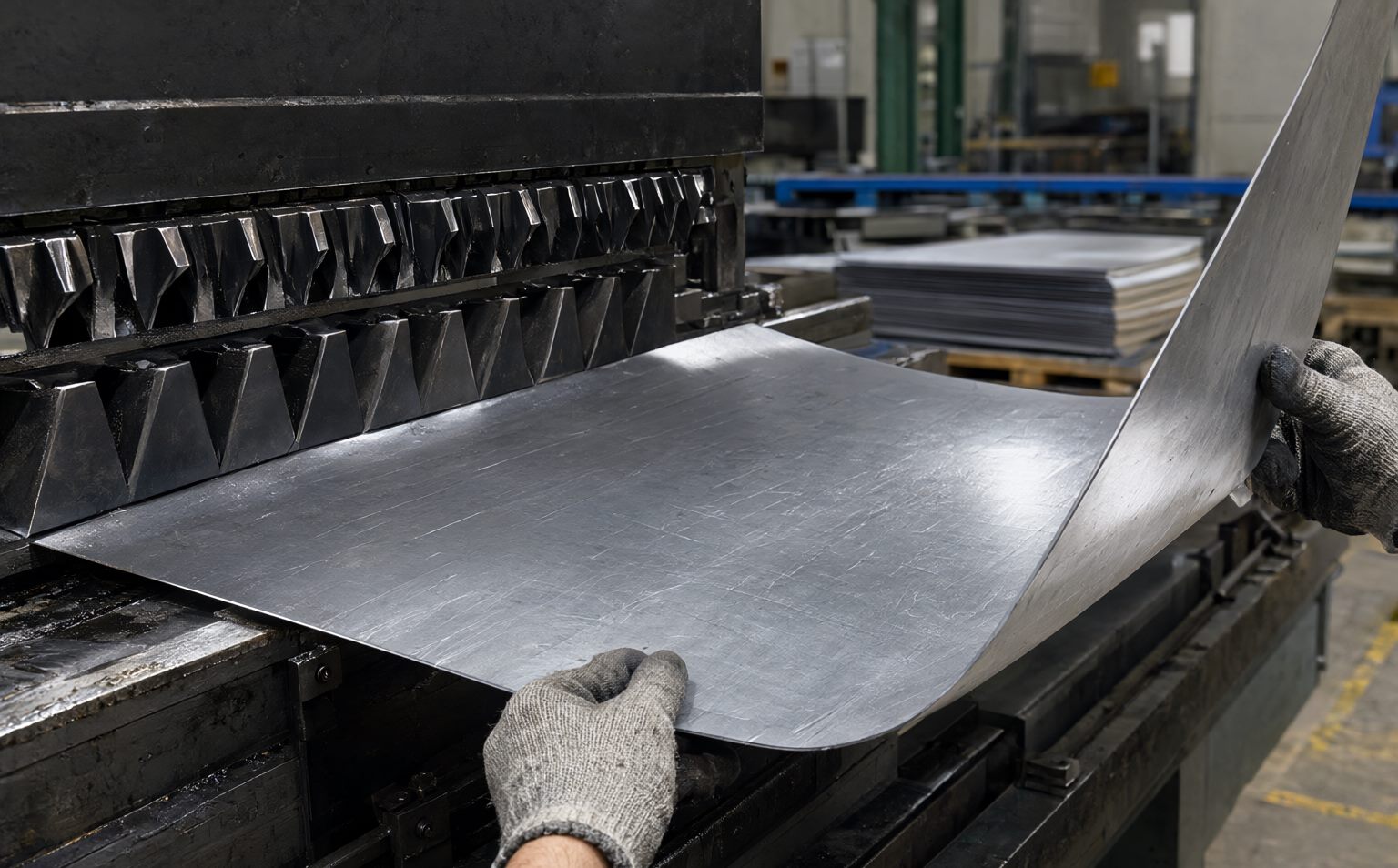
Joining. Welding puts heat into thin sheet, and thin sheet moves. Distortion appears as a door gap that will not close evenly, or a hole pattern that shifts. So that is a design conversation, not a shop-floor mistake, and our Enclosure Welding Quality page covers it. The shop sets rivet nuts, studs and weld pins before coating, so their positions are permanent by the time anyone inspects them.
Finishing Sets the Coating Number
Finishing. Degrease, pretreatment, coat, cure. For powder-coated steel, general industrial practice specifies a dry film thickness around 60 to 80 microns, with thin applications at 40 to 60 and higher builds at 80 to 120. However, no standard mandates a coating thickness for an enclosure. That means “powder coated” on a quotation is not a specification. Therefore, ask for the measured film thickness and the pretreatment used, and put both on the order.
Sealing Is a Compression Question
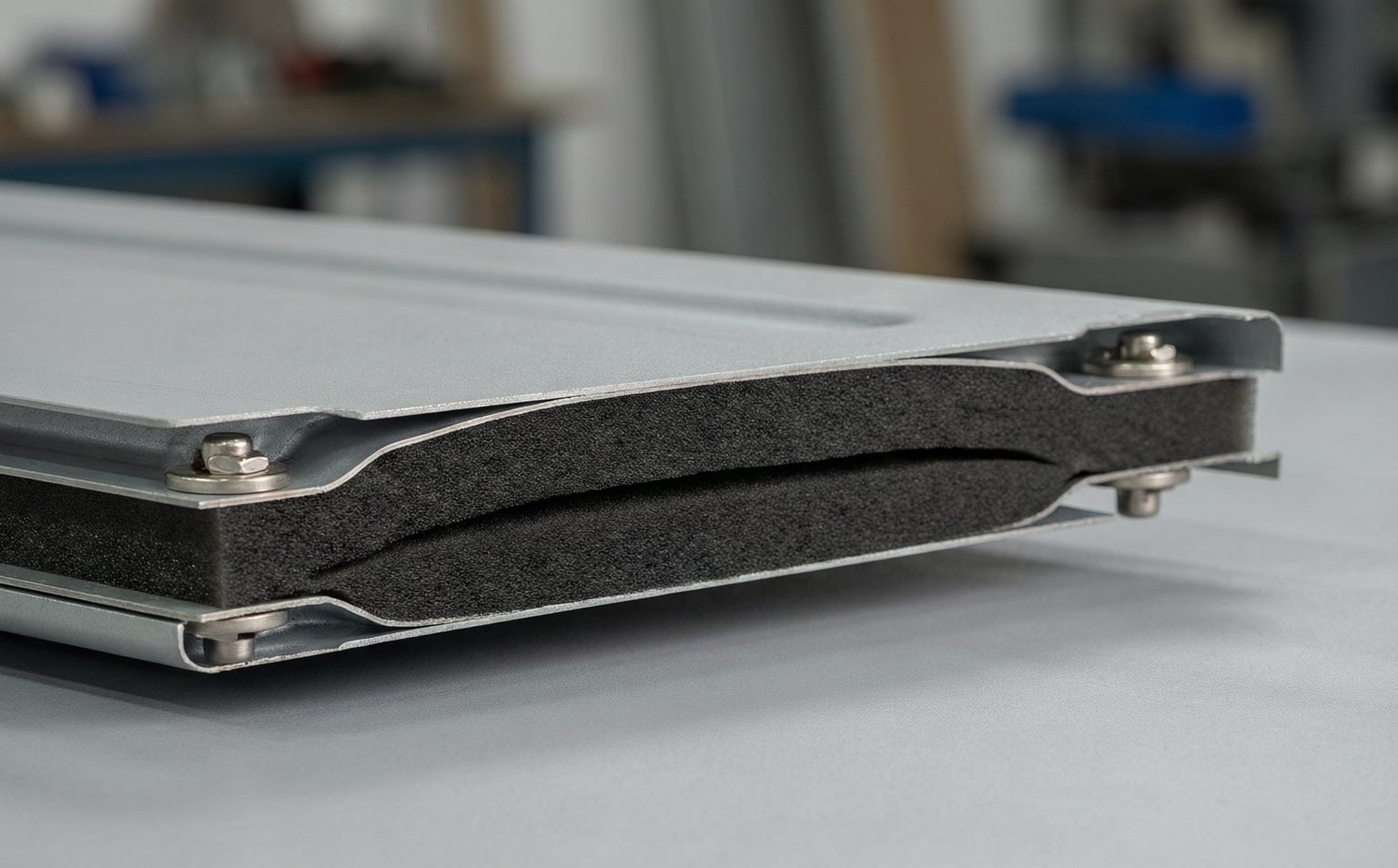
Sealing. A gasket works by compression. Foam gasket suppliers design for roughly 25 to 50% compression, and solid elastomer guidance sits nearer 25 to 40% with about 10 to 15% as the practical floor. In practice, compression needs a stopping surface. If nothing limits how far a door closes, the bolts crush the gasket where they sit and leave it barely touched in between. Door depth, latch count and latch position belong on the drawing, not in a shop decision. On a made-to-order box that is where a seal passes or fails. For clarity, FN does not state a design compression percentage on this page. That figure depends on the gasket cross-section, the door depth and where the stopping surface sits, and any of those three moves it. Ask about a specific assembly and the answer starts with those three inputs rather than one number.
Assembly and pack. Hardware, earth studs, nameplates, then protection for the voyage. Transit damages coated surfaces and threaded parts in specific, predictable places, and our Enclosure Export Packaging page details where.
When Your Drawing Says Nothing About Tolerance, Someone Else Decides
This is the most expensive silence in custom electrical enclosures.
On a custom job, a drawing with no general tolerance note is not tolerant. It hands the decision to the shop. That default then differs between factories and between countries, so you receive something accurate to a standard you never approved.
Most Drawings Cite ISO 2768 Wrong
The common convention is ISO 2768, and people write it wrong constantly. ISO 2768-1 covers linear and angular dimensions in four classes: f, m, c, v. Straightness, flatness and perpendicularity are not in that table — they live in ISO 2768-2, with classes H, K and L. So a note reading ISO 2768-L is incomplete: L is a geometric class, not a linear one. A correct note reads ISO 2768-1-m, plus ISO 2768-2-K where flatness matters, which it does on a door.
At class m the linear figures are ±0.2 mm between 6 and 30 mm, ±0.3 mm from 30 to 120, and ±0.5 mm from 120 to 400. Angular tolerance at class m for a 50 to 120 mm leg is ±0°20′. Read that against your box. A 600 mm enclosure cut to ±0.5 mm per side, with a door pattern left undimensioned and no datum note, carries enough slop in the drawing alone to close a seal gap on one side and open it on the other.
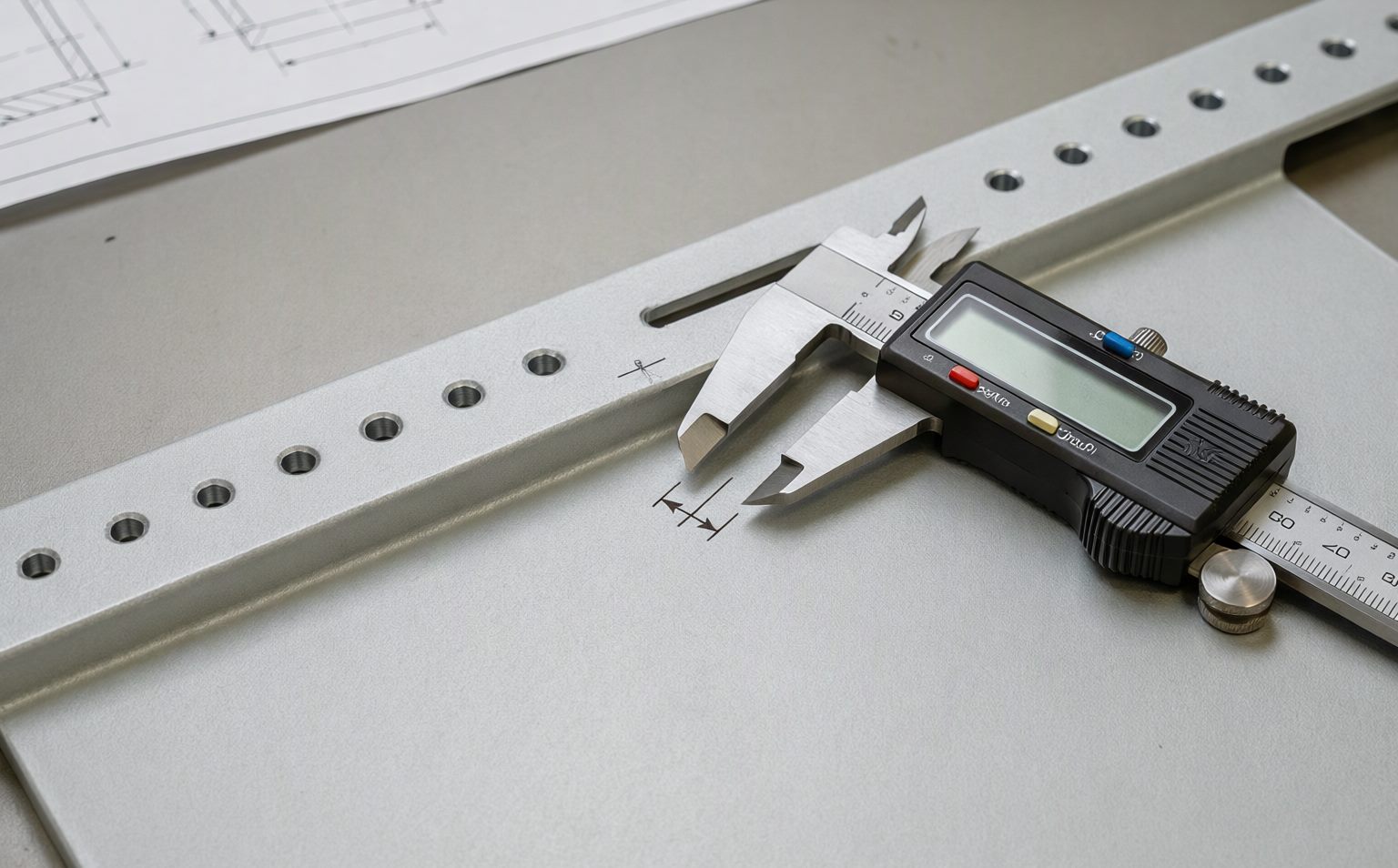
Therefore, two rules follow. Dimension the interfaces that mate — mounting holes, hinge positions, gland centres — directly from one datum, and tolerance them explicitly. Also, do not let a gap in your drawing become someone else’s decision. A fabricator who flags the missing tolerance before cutting has done the job. One who quietly picks a default has not.
Gauge Numbers Are Not Millimetres
A related trap is gauge. Gauge numbers are not millimetres. Sixteen gauge is about 1.52 mm in cold-rolled steel, 1.59 mm in stainless and 1.29 mm in aluminium. Eleven gauge is roughly 3.04, 3.18 and 2.31 mm across the same three materials. Specify thickness in millimetres and let the conversion be nobody’s problem. Our Cold-Rolled Steel, 304 and 316L page covers material choice.
Ratings on Custom Electrical Enclosures Belong to a Tested Configuration
Custom work and certification collide here, and buyers get it wrong in both directions.
IP Codes Describe a Test, Not a Material
Specifically, an IP code under IEC 60529 describes a test a specific sample passed. The digits are not properties of the steel. Digit 6 means dust-tight; 5 means dust-protected, where limited ingress must still cause no harmful effect. On the water side, X5 is a 6.3 mm nozzle at 12.5 L/min, 2.5 to 3 m from the surface, for at least three minutes. X6 is a 12.5 mm nozzle at 100 L/min — that is 6,000 L/h — same distance, again at least three minutes. X7 is 30 minutes of immersion with the lowest point at least 1 m under and the top at least 0.15 m under.
One Drilled Hole Ends the Tested Configuration
So drilling one new hole in an IP66 enclosure invalidates the IP66 claim for that enclosure. Not for the steel, not for the brand — for the tested configuration. That is the catch on custom electrical enclosures: cut a cable entry on site and you have manufactured an enclosure nobody tested. Openings deserve the care set out in Knock-Out Holes in Stainless Steel Enclosures.

NEMA 250 Types Use the Same Logic
NEMA 250 types follow the same logic with different tests. Type 1 covers indoor protection against falling dirt and solid objects. Type 3R keeps the rain, sleet, snow and icing of Type 3 and drops its windblown-dust requirement. Add hose-directed water and you have Type 4, described in one manufacturer’s guide as spraying at 65 gallons per minute from a one-inch hose. Likewise Type 4X, which adds corrosion resistance to Type 4. The X means corrosion and nothing else.
Field Evaluation and the Fee Nobody Publishes
UL states it more sharply. UL 508A covers industrial control panels at 1,000 volts or less, with an ambient range of 5 to 40 °C unless marked otherwise, and it assesses enclosure type, short-circuit current rating, wiring, spacing and marking as an assembly. A box built from UL-recognised components does not become a listed panel. For equipment already built, unmarked, modified, or made in ones and twos, the normal route is not a certification programme — it is a field evaluation by an NRTL at the installation site, ending in a Field Evaluated label and a report, and it need not be UL performing it. How to check a listing someone emails you is in Verify UL Certification for Electrical Enclosures.
Still, one caution follows. Nobody should quote you a field evaluation fee in the same email as a box price. That fee belongs to the evaluating body and to the site, and figures circulating online are usually follow-up factory inspection fees from a different programme. FN does not describe an enclosure as listed here unless the listing covers the enclosure itself. A shell listed to UL 50E and an assembly listed to UL 508A are two different facts, and the buyer who assumes one and receives the other learns it at the inspection rather than on the order. Ask which certificate applies, and ask for its number.
What Moves the Price of Custom Electrical Enclosures, and What Moves the Date
In fabricated sheet metal, cost is not driven by tooling. It is driven by operations.
Sheet Metal Has No Mould to Amortise
For one, there is no mould to amortise when a part is cut and bent, which is why drawn-to-specification custom electrical enclosures have no meaningful minimum order in the way a moulded plastic enclosure does. If a supplier quotes an MOQ of 500 for a fabricated sheet enclosure, ask what tooling justifies it. A turret-punch sequence with dedicated tool stations is an answer. “Our policy” is not. The mould logic belongs to the plastic side, in our Plastic Enclosure RFQ Checklist.
Five levers move a fabricated price:
- Operation count. A cutout with a flange, a rivet nut, a weld and a mask is four decisions, not one hole.
- Nesting loss. Irregular outlines and rotated parts waste sheet, and you pay for the waste.
- Colour count. Every colour is a separate booth cycle. Two colours in one order is rarely “a little more”.
- Coating specification, once you require a measured film thickness and a named pretreatment.
- Inspection depth. First-article dimension reports cost time, and the time is yours.
Why Dates Are Wide
Dates are wide because the work is sequential. Online laser services advertise single-day turnaround on cut parts; fabricators describing the full made-to-order path publicly cite prototype stages around 3 to 7 days and production around 7 to 15, and one staged breakdown puts a complete cabinet at 15 to 30 days from drawing review through coating. Treat those as market ranges, not promises.
Instead, your real date comes from the sequence: drawing review, material in stock, cutting, forming, welding, coating cure, gasket, assembly, pack. Coating cure is the step buyers forget to ask about, because it happens out of the building. FN does not publish stage-by-stage day counts for custom electrical enclosures on this page. A lead time that ignores coating colour, gasket availability and the month you ask in will be wrong before it reaches a project plan, so the honest answer starts with those three variables instead of a number.
One more date risk, and it is human. Change the drawing after the shop releases the nesting file and you lose more than one part. You lose the sheet, the sequence and the colour batch. Therefore, freeze the drawing before production release, and put the freeze in writing. On panelboard work the same rule bites harder, and the Custom Panelboard Enclosures RFQ Checklist explains why.
Before Custom Electrical Enclosures Ship, Say Who Checks What
Custom electrical enclosures deserve a defined acceptance step; a catalogue item can ride on its proven record. So ask for evidence, not assurances.
- First-article dimensional report, focused on the interface dimensions you toleranced. Not all sixty dimensions — the ones that mate.
- Door gap measured after coating. Coating thickness changes fits, which is why finish belongs in the tolerance conversation. Ask for a range with the measurement point named, because one figure cannot describe four sides of a welded and coated door.
- Coating adhesion and film thickness, if you specified them.
- Earth continuity at every stud and every door, on every unit rather than one. Details in Electrical Enclosure Grounding and Bonding.
- Hardware function — latch, hinge, lock — under gasket compression, not dry.
- Removable plates checked against your assembly order before they travel. A plate needing a screwdriver through a sealed door is a site problem, and Removable Mounting Plates: What Fabrication Needs First explains what to fix before it travels.
- Packing photographs of the shipped condition. If a box arrives damaged, that photo is your claim.
In short, say what you will accept and what you will reject before the first cut. A supplier nobody has challenged will tell you everything arrives perfect. A custom electrical enclosure manufacturer who has shipped a few hundred made-to-order cabinets will tell you what they measure, and what they do not.
Twelve Lines to Get a Real Quote for Custom Electrical Enclosures
Send these twelve and a catalogue price becomes a quotation for custom electrical enclosures you can compare line to line.
- Drawing or model, with the format you have (STEP, DXF, PDF) and its revision.
- Material and thickness in millimetres, plus the grade, not just “steel”.
- Controlling dimensions with a named datum, and the general tolerance note written correctly:
ISO 2768-1-m, adding-2-Kwhere flatness matters. - Quantity now, quantity per year, and whether the price must hold across releases.
- Required rating: IP code under IEC 60529 or NEMA 250 type, and who will test the finished configuration.
- Every planned opening, with size and position, including the ones you think are trivial.
- Gasket type and where the seal path runs.
- Internal mounting: back plate, mounting plate, rails, and whether any of it is removable.
- Door hardware and latch count, with the direction of opening.
- Finish system, colour, and the film thickness you want on the report.
- Marking: nameplates and labels, and whether the factory applies them.
- What evidence you require before shipment, and what the packing must survive.
Send 1 to 4 and you get a price. Send all twelve and you get the same price from a builder who cannot later say the drawing did not say.
FAQ: Custom Electrical Enclosures
Eight questions that come up on almost every made-to-order enclosure project.
What are custom electrical enclosures?
Enclosures fabricated to a buyer’s specification instead of a published catalogue item. In sheet metal that means laser cutting, forming, joining, coating and sealing from your drawing, with no dedicated tooling amortised across the order.
Are custom electrical enclosures weaker than standard ones?
No. They are less proven. Factories have built, tested and installed a standard shell many times. However, a custom build hands that proving to your drawing. With a fabrication review before release, the difference is administrative rather than physical.
Is a minimum order normal for custom electrical enclosures?
Not for fabricated sheet metal, because there is no tooling to amortise. A stated MOQ of hundreds of units needs a tooling reason behind it. Moulded plastic is the exception, because there the mould is the reason.
How many units justify going custom?
Fewer than people assume, once you count the site labour. If a modified shell saves a drilling operation on every unit on site, and that operation costs more than the modification, custom wins at a quantity of one.
Does changing custom electrical enclosures after delivery invalidate the IP rating?
Yes, if the change crosses the sealed path. An IP code describes a sample that passed a defined test. A new hole creates a new configuration, and nobody has tested it.
Can custom electrical enclosures be UL listed?
Usually the enclosure alone is not the listing subject. UL 508A assesses the panel assembly, enclosure included. For one-off or modified equipment, a site field evaluation by an NRTL is the normal route.
Why do two factories build the same drawing differently?
Because the drawing left room. Undimensioned hole patterns, missing datums, unspecified general tolerances and “as per standard practice” notes all instruct the other factory to decide for you. Two boxes from one drawing match only when the drawing was complete.
What is the cheapest change to make before production?
Anything that reduces operations: aligning holes into rows, standardising fastener sizes, dropping a second colour, moving a cutout away from a bend. Before the shop releases the nesting file these cost nothing. After it, none of them do.
Final Words: Custom Electrical Enclosures
A catalogue enclosure is somebody else’s decision, already proven. Custom electrical enclosures are yours, proven or not depending on the drawing you released. In practice, the manufacturer’s job is to cut, bend, weld, coat and seal to that drawing. Yours is to make sure the drawing is the document that controls the outcome, and to say, before the first sheet enters the machine, which dimensions you will measure and which defects you will reject.
We build custom electrical enclosures. If you have the drawing, we will tell you which line on it is doing the deciding — and which one is leaving the decision to us. Send your drawings for a fabrication review through our contact page.
Sources & Standards
In November 2026 we loaded and checked every figure against public standards summaries and published fabricator guidance. The standards themselves sit behind paywalls, so where a secondary reproduction was the only source we say so in the list.
- IEC 60529 degree-of-protection tables, including the X5, X6 and X7 test values — Wikipedia
- IP rating test conditions chart — Standard Clarity
- NEMA rating guide for electronic enclosures — Bud Industries
- NEMA 250 enclosure type definitions and their IEC 60529 equivalents — Wikipedia
- Factory automation and industrial machinery: UL 508A and UL 2011 / NFPA 79 — UL
- UL 508A scope (1,000 V or less, 40 °C ambient) and panel-listing FAQ — DEi Power
- On-site field testing and evaluation — Eurofins MET Labs
- Field labeling services — Intertek
- ISO 2768-1 and ISO 2768-2 tolerance tables — Modulus Metal
- Tolerance standards in metal fabrication — Bravofabs
- Sheet metal design guidelines and tolerance table — Protolabs
- Minimum flange length and feature-proximity tables for bending — Protolabs DFM toolkit
- Sheet metal bending design rules — Fractory
- Standard dimensional tolerances for sheet cutting and forming — Xometry manufacturing standards
- Powder coating thickness practice — ECQA
- Foam gasket compression design — New England Design & Conceptualization
- EPDM gasket compression percentage — Detroit Sealing
- Nesting utilisation and DFM cost drivers — LSRPF (industry blog, single case)
- Sheet metal gauge chart — Solitaire Overseas
- Guide to gauge thickness — SendCutSend
- Lead-time ranges from enclosure manufacturers — Yijin (competitor blog, medium confidence)
- Standards cited by designation: IEC 60529:2013, ANSI/NEMA 250, UL 508A, ISO 2768-1 and ISO 2768-2.
- Deliberately not stated, because we could not verify it: field evaluation fees (UL, Intertek and MET publish none); salt-spray hours for NEMA 4X or for coated enclosures (secondary sources conflict between 500 and 1,000 h); IP test pressures in kPa (test-chamber marketing, not the standard); and any maximum door span before seal leakage (no enclosure standard publishes one).