
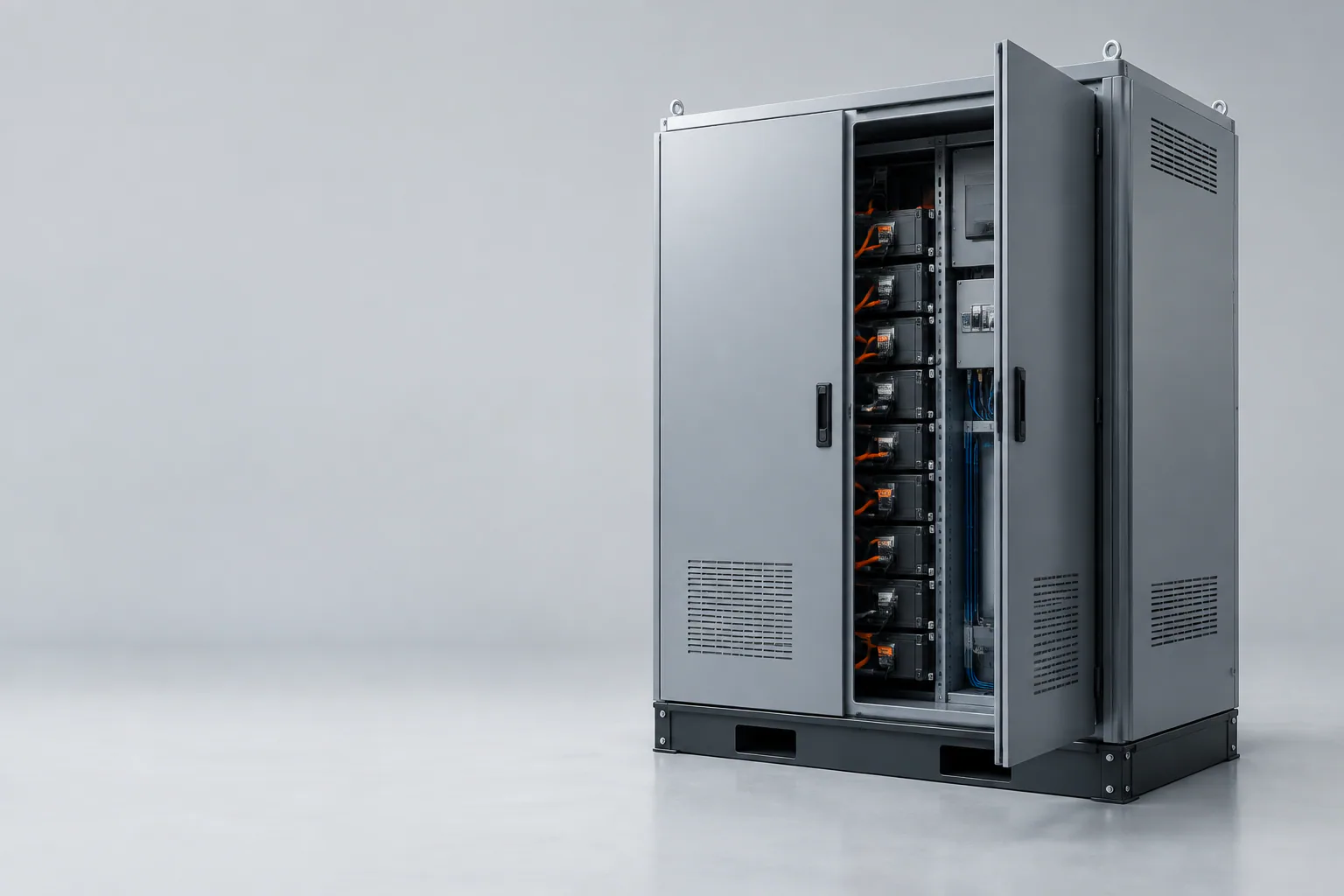

A good battery cabinet enclosure gives the equipment a clear home, a safe cable route and enough room for the people who will install and service it. The design also has to manage heat, support the populated rack and protect the finished assembly in its installation environment. Start with the equipment layout and the site conditions, then build the cabinet around those facts.
This guide is for industrial, UPS, telecom, solar and energy-storage projects. If you are preparing a battery power cabinet or an outdoor battery cabinet, the same first question applies: what needs to fit, what needs to stay accessible and what does the finished enclosure need to handle?
| Application | Main enclosure decision |
|---|---|
| UPS backup | Battery-module access, rack support, rear or side clearance and cable routing |
| Telecom | Outdoor weather protection, thermal control, service access and communications cable entry |
| Solar and energy storage | Heat path, outdoor exposure, base mounting, cable separation and system-scope boundary |
| Industrial backup power | Weight, lifting, maintenance route, corrosion exposure and site interfaces |
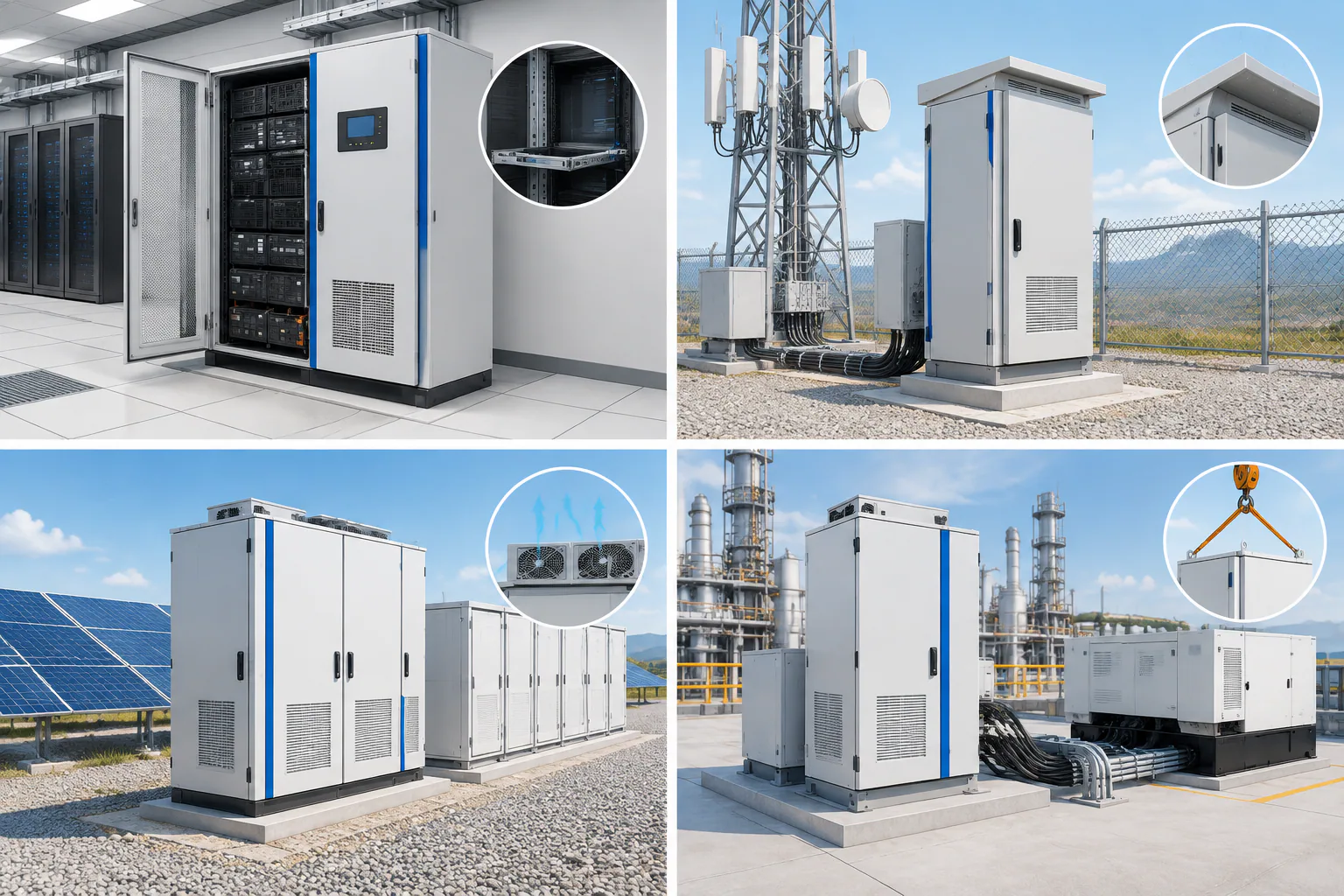
Battery Cabinet vs Standard Electrical Enclosure
A standard enclosure can be a practical starting point when its usable dimensions, mounting features, door opening and permitted modifications fit the equipment. A custom battery cabinet becomes more useful when the project needs heavier supports, separate zones, large cable entries, a different door arrangement or a defined battery-module replacement path. Compare standard and custom electrical enclosures against the actual general arrangement before choosing a route.
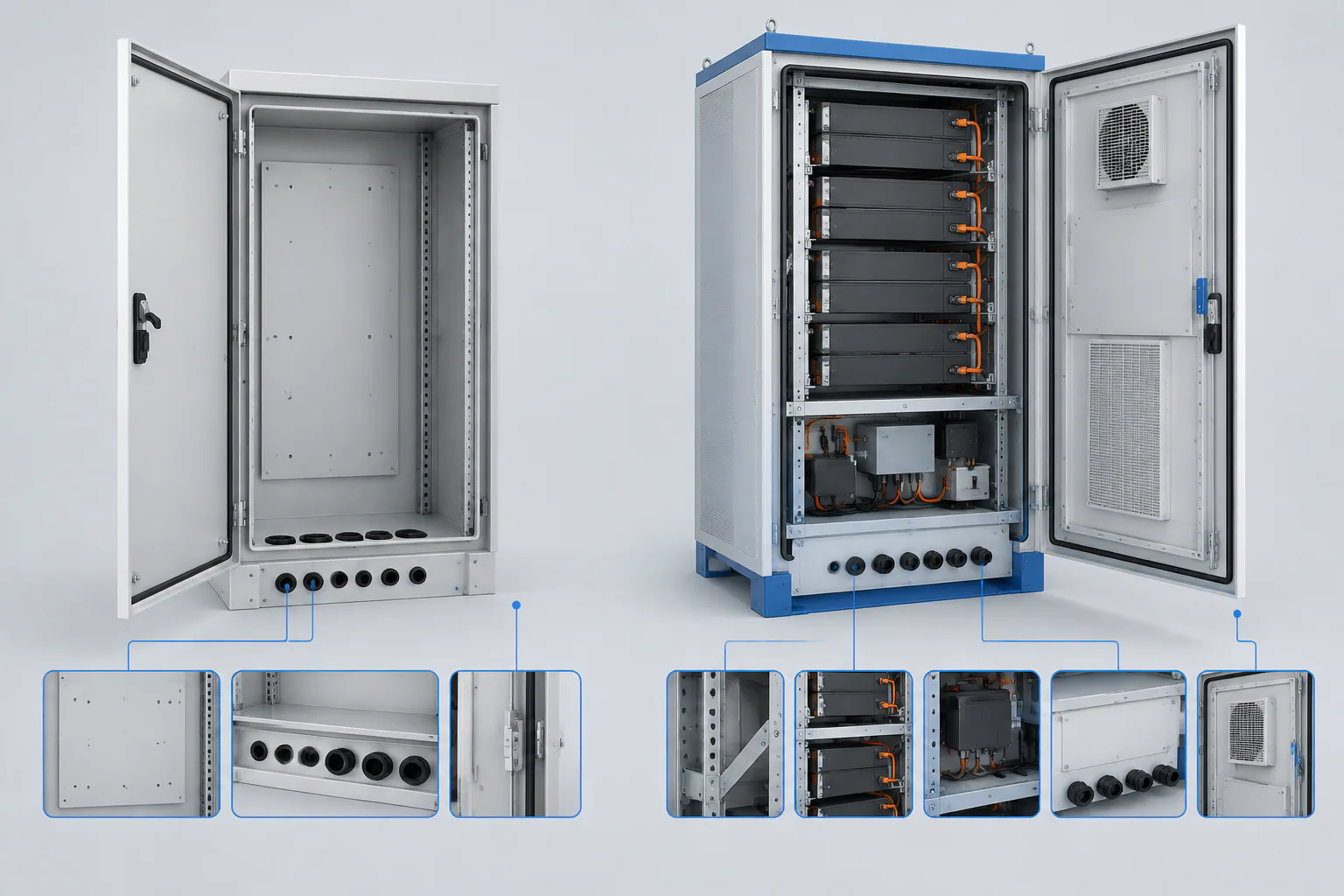
There is one scope question worth answering at the beginning of every RFQ: what does “battery cabinet” mean for this project?
| Requested scope | What it may include | What the project team should define next |
|---|---|---|
| Empty cabinet | Body, doors, partitions, supports and approved openings | Battery system, electrical design, cooling selection and finished-system verification |
| Equipped battery cabinet | Cabinet plus specified rack, modules or selected hardware | Wiring, controls, installation and evaluation of the agreed configuration |
| Integrated energy storage system | Battery equipment, controls and other system functions | System testing, site design, commissioning and applicable approvals |
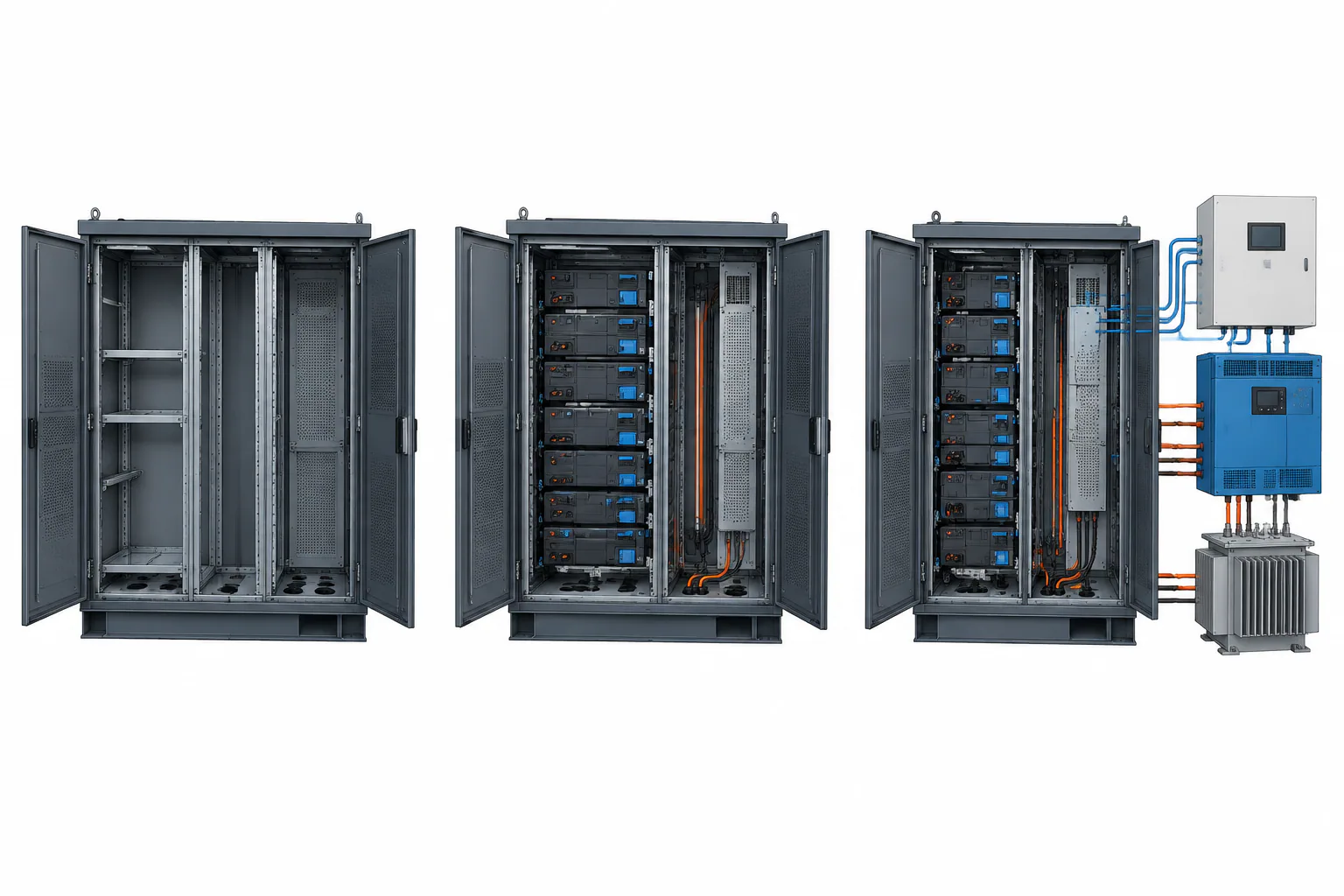
The scope determines the quote, the interfaces and the review work that follows. FN’s energy storage enclosure application page explains the mechanical enclosure scope and the separate system functions that need to be defined by the project team. Decide this early and your supplier conversations become much clearer.
Internal Layout and Maintenance Space
Bring the equipment drawings into the conversation early. Mark each module’s size, mass and mounting points. Show the racks, protective devices, controls and monitoring equipment. Then draw the route a failed module will take when a technician removes it.
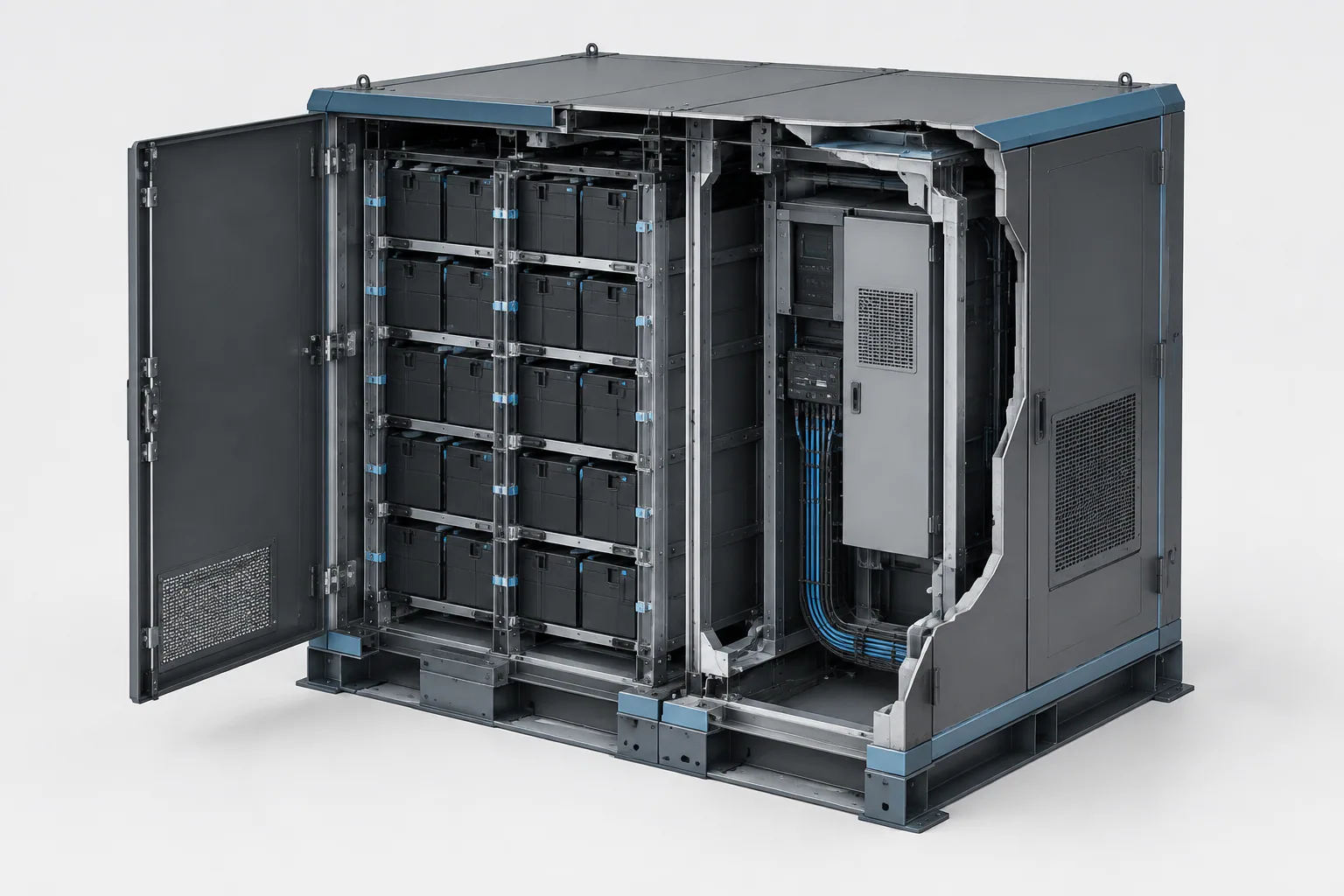
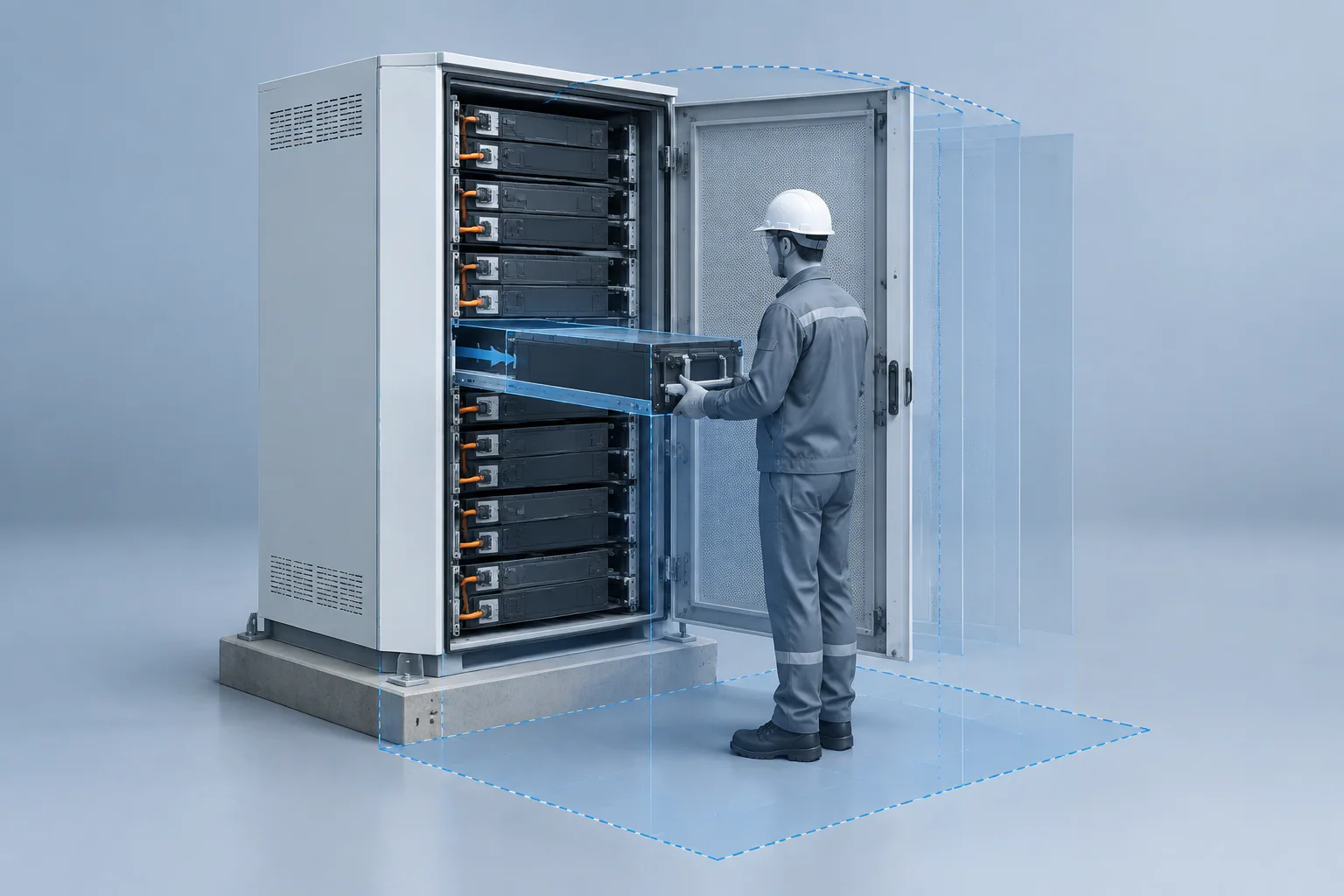
A useful service envelope shows the fully opened door, the technician’s working position and the largest removable component moving past its neighbors. That simple exercise often changes the hinge location, plinth height, removable panels or cabinet depth before fabrication begins.
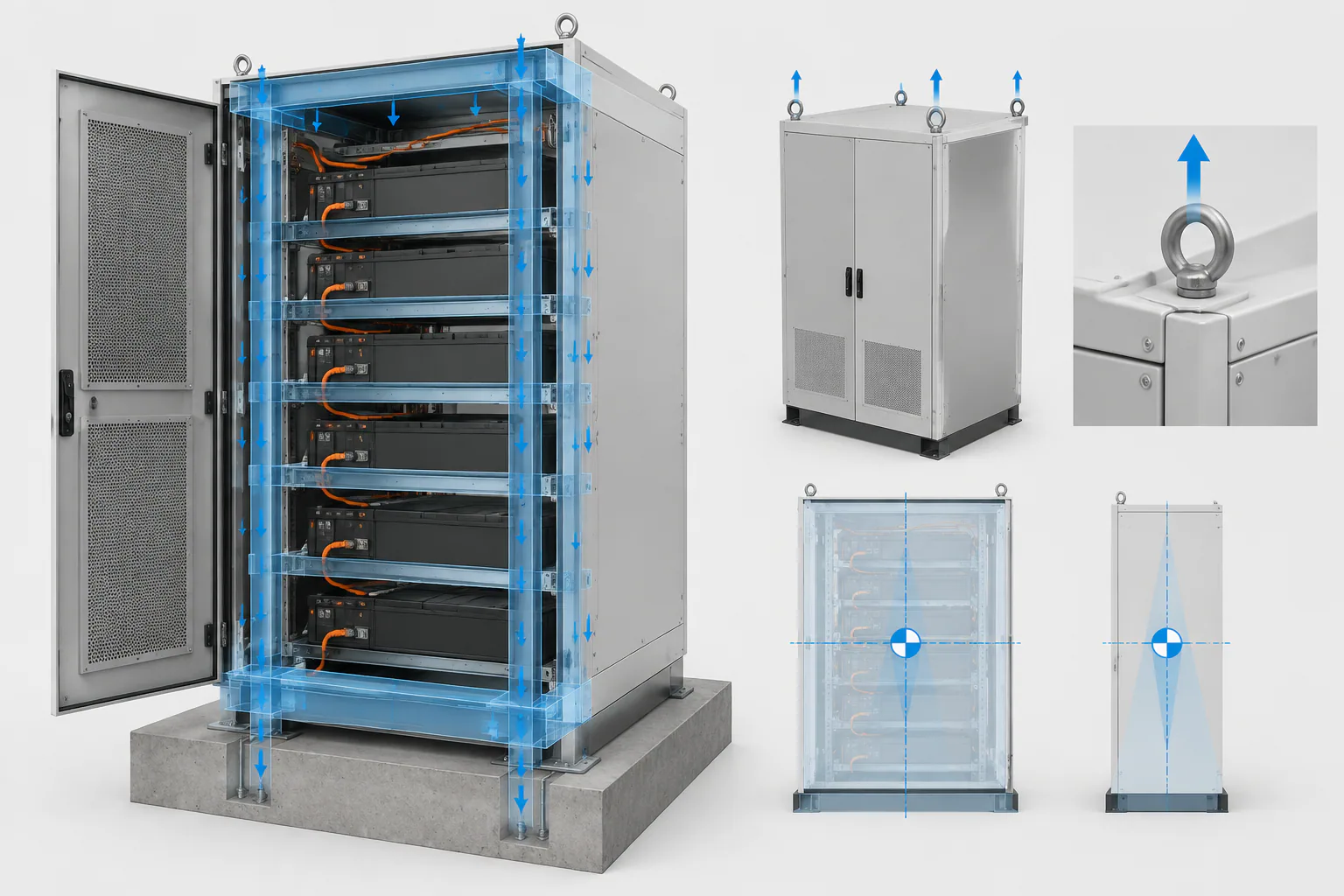
Follow the load path from the populated rack through the cabinet structure into the base and site anchors. Size the support arrangement around the loaded equipment. If the populated cabinet will be lifted or transported, include its gross weight, estimated center of gravity and handling method in the review. The empty body’s weight is only one part of the handling plan.
Clearances come from the selected equipment and cooling scheme. Schneider Electric’s empty battery cabinet installation instructions show why cabinet-specific positioning instructions matter. For a broader layout checklist, see electrical enclosure sizing.
Heat Dissipation and Ventilation
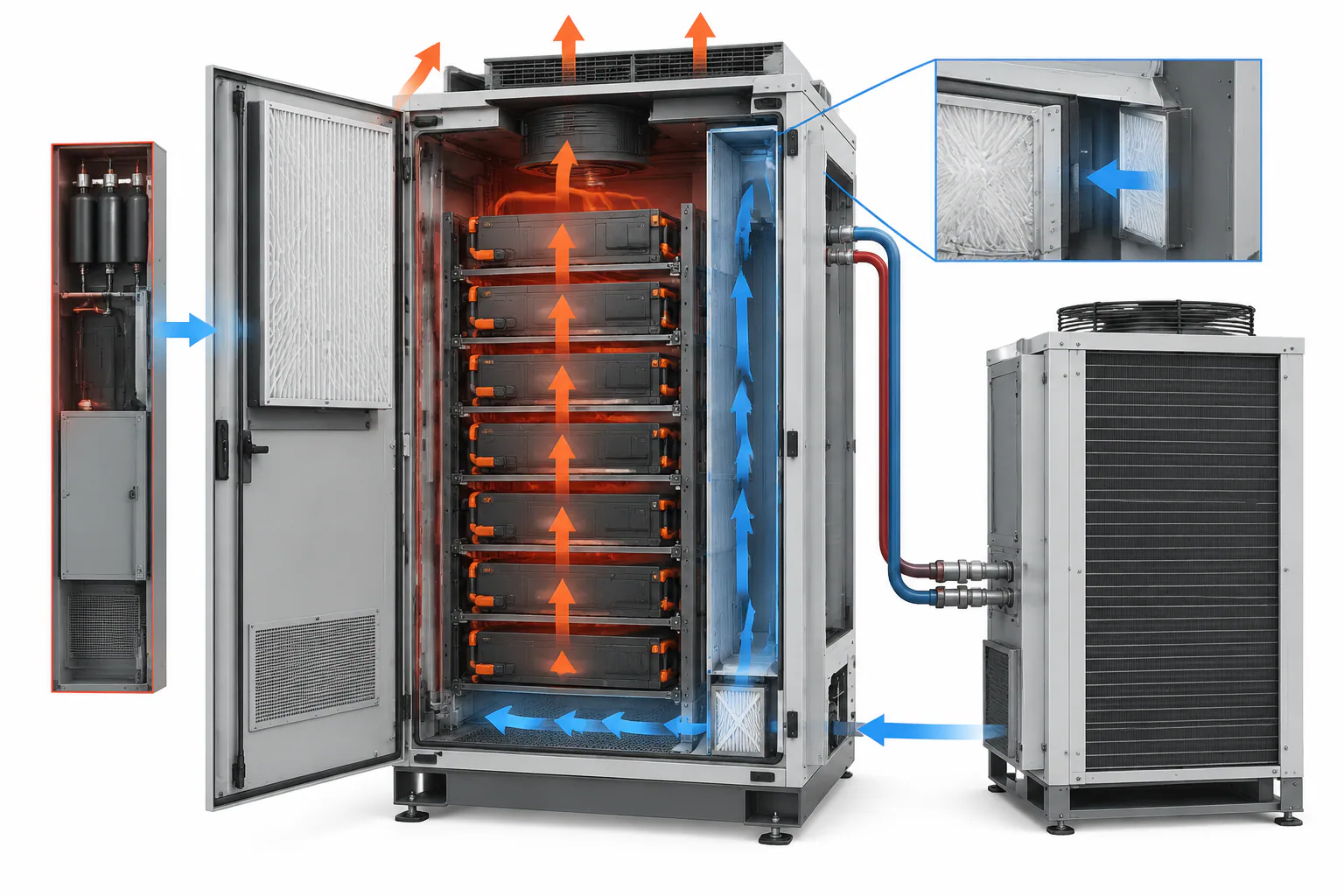
Cooling starts with a heat-load conversation. The system designer should provide expected internal losses, relevant worst-case operating conditions, ambient temperature range, solar exposure and allowable equipment temperatures. With those inputs, the enclosure team can coordinate airflow, cooling-unit openings, filters, seals, condensate handling and service access.
A filtered air path may suit a site where outside air is clean enough, the ambient temperature is below the target internal temperature and filter maintenance is practical. A closed-loop cooling approach may suit a hotter, dirtier or more humid environment. The electrical enclosure cooling guide explains the roles of fans, filters, heaters and air conditioners.
Keep three design conversations separate:
- How will normal operating heat leave the cabinet?
- Does the selected battery chemistry create a gas-management requirement?
- What safety measures apply to a fire or thermal event?
For unsealed batteries, OSHA’s construction rule requires suitable ventilation to diffuse gases and prevent an explosive mixture. For an energy storage system, UL 9540A is a test method used to evaluate thermal-runaway fire propagation. These references give the responsible system team a starting framework; the project-specific thermal and fire review then turns that framework into the final safety approach. OSHA battery and charging rule · UL 9540A test method
Cable Entry and Power Connections
Cable entry is where the cabinet drawing meets the site installation. Mark DC conductors, AC circuits where applicable, controls and communications. Show cable or gland sizes, bend space, landing points, strain relief and the panel that needs to remain removable.
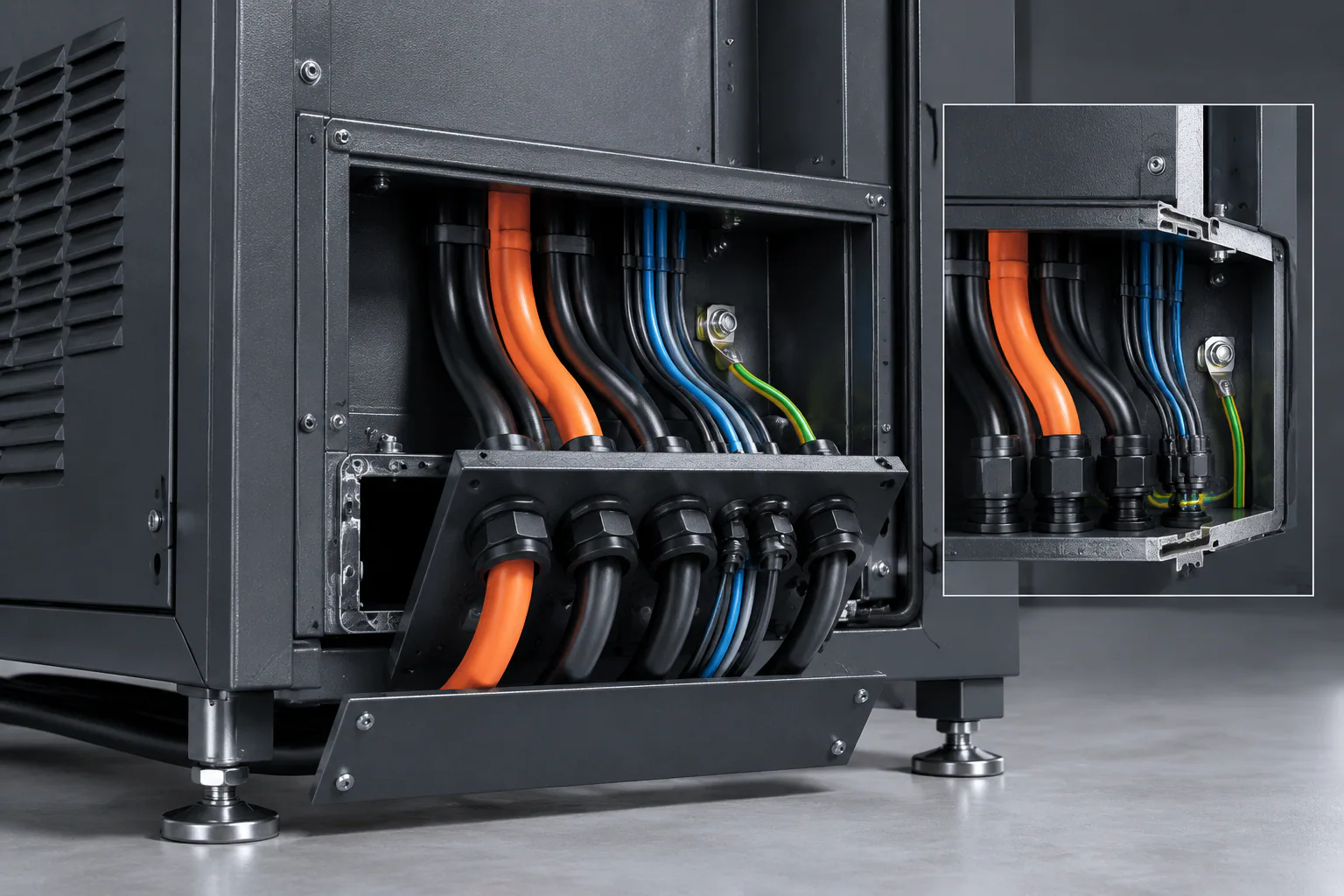
When those routes are clear, the drawing can define gland plates, removable covers, base openings, edge treatment and grounding or bonding provisions. That gives fabrication and installation teams the same reference point. FN’s guide to electrical enclosure cutouts and finished ratings is useful when reviewing how an opening, seal, plate and field cable contribute to the finished enclosure boundary.
Indoor vs Outdoor Battery Cabinets
For an outdoor battery cabinet, the installation environment becomes a primary design input. Rain direction, sun exposure, humidity, overnight cooling, dust, corrosive surroundings and maintenance in poor weather all affect the body and its accessories.
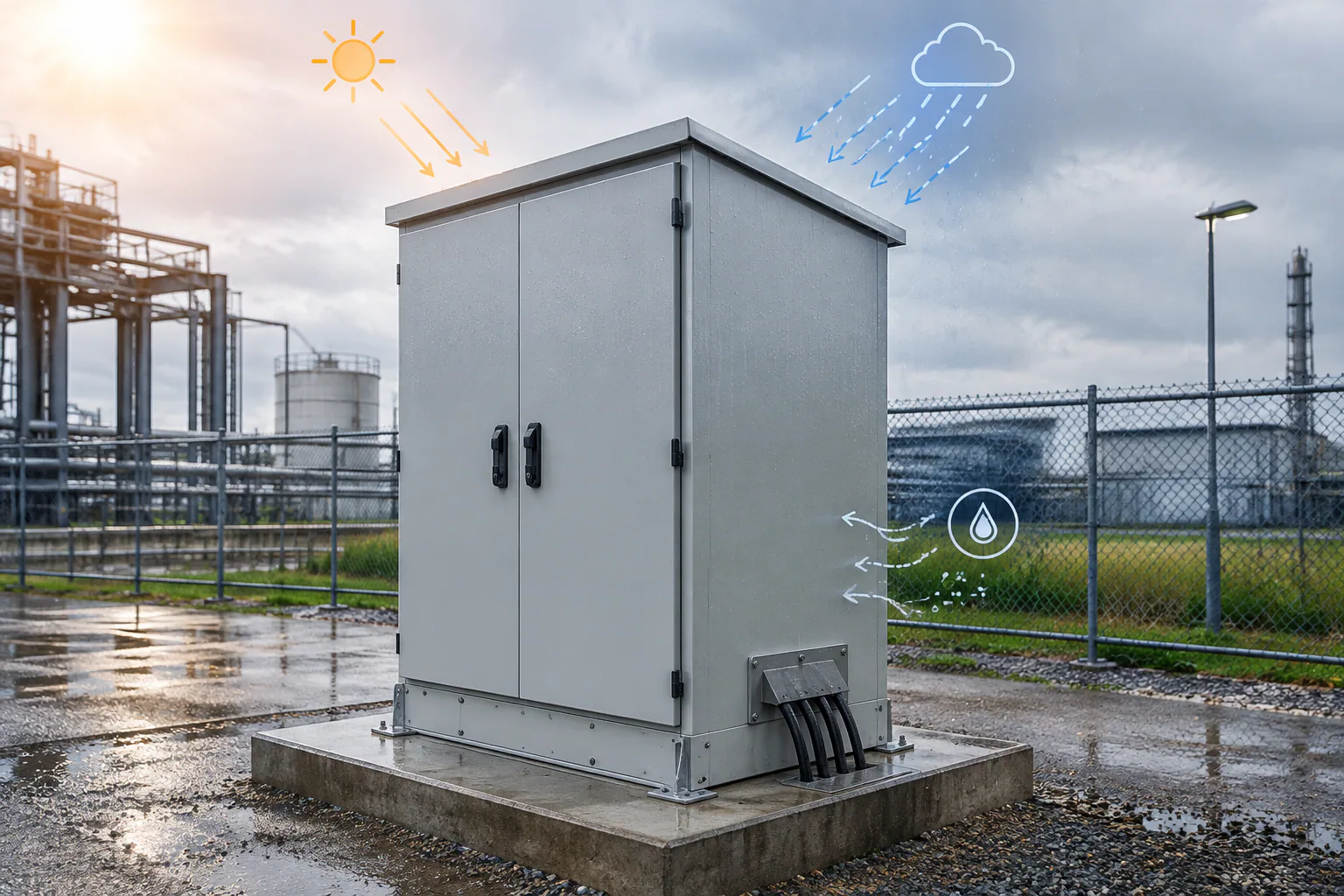
Outdoor review should cover:
- door and gasket details;
- roof, drainage and exposed surfaces;
- cable glands and field penetrations;
- solar heat and internal temperature;
- condensation risk during temperature swings;
- mounting, anchoring and lifting;
- service access after installation.
Select an IP Code or NEMA Type against the specified environment and the documented finished configuration. IEC 60529 provides the IP Code framework for degrees of protection provided by enclosures against access, solid objects and water. Use the outdoor electrical enclosure design checklist with the equipment manual and the site conditions. IEC 60529 publication
Mounting, Access and Service Requirements
The site drawing should show the pad or wall, anchor pattern, door swing, lifting route and clearance from nearby equipment. A cabinet can fit the footprint and still make service awkward, so review the open-door position and the maintenance route on the drawing.
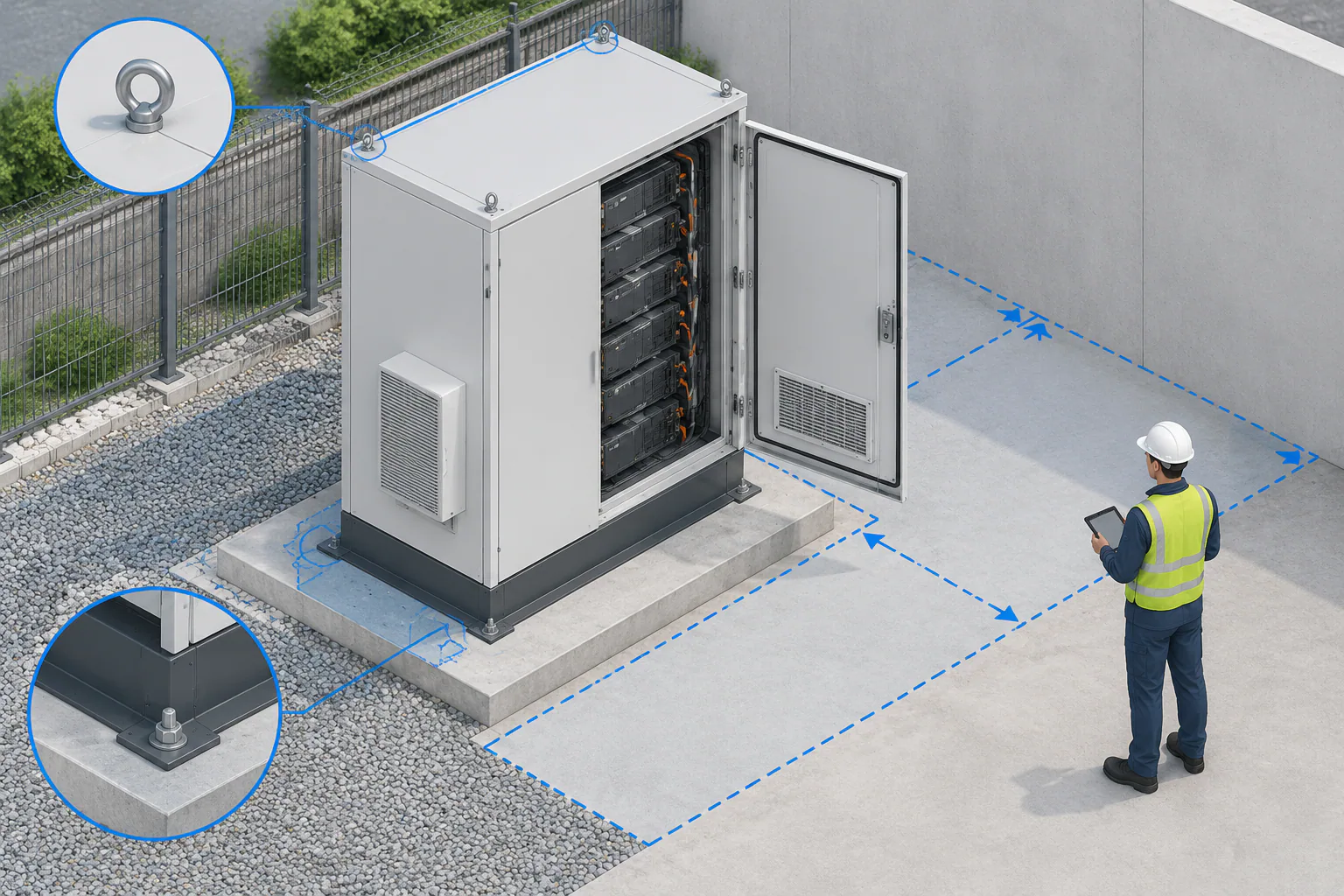
Try a replacement exercise: if the heaviest module needs attention, which panel opens, where does the technician stand, how is the module supported and what has to move first? The answers give the enclosure team practical information for hinge location, plinth height, removable panels and frame design. Qualified personnel should plan electrical isolation and service procedures under the system manufacturer’s instructions.
Empty Cabinet vs Complete Battery System
Put the scope on the quotation. An enclosure supplier can quote an agreed body, doors, partitions, supports and mechanical provisions for cable entry, cooling hardware or other specified interfaces. The selected battery modules, BMS, power conversion, wiring, thermal performance, fire strategy, system testing and commissioning should appear as defined project responsibilities.
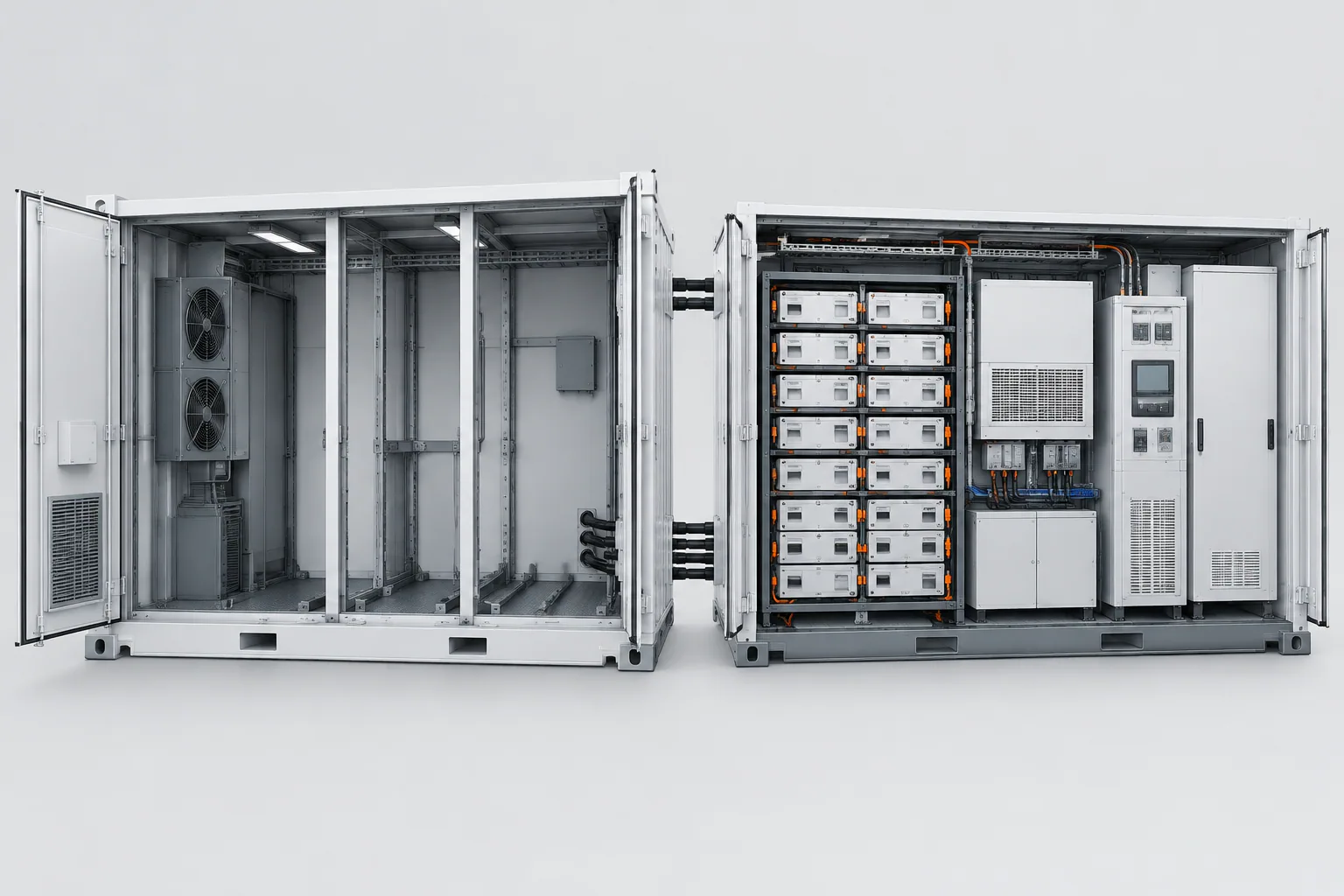
If a project mentions UL 9540, UL 9540A, NFPA 855 or another standard, identify the equipment and installation each requirement applies to. UL 9540 concerns energy storage systems and equipment; UL 9540A is a test method for evaluating thermal-runaway fire propagation in battery energy storage systems. The final certification or test record belongs to the complete configured system and its applicable installation conditions. Check the applicable edition and authority having jurisdiction for the actual project. UL ESS codes and requirements · UL 9540A
What to Include in a Battery Cabinet RFQ
A useful RFQ gives the supplier enough information to review the design and prepare a meaningful quotation. Start with the equipment and the interfaces, then add the site conditions.
The value of a drawing-led FN enclosure review is practical: you can discuss the cabinet body, supports, openings, cable-entry plates and cooling interfaces from the same drawing revision before fabrication. That makes the quotation easier to compare and gives the project team a clear list of open decisions.
| Send this | It helps define |
|---|---|
| Equipment list and general arrangement | Usable envelope and zones inside the cabinet |
| Module or rack drawings, weights and removal direction | Supports, base structure, openings and service space |
| Heat-loss data, ambient range and cooling concept | Airflow or cooling-unit provisions, sealing and maintenance access |
| Power and control cable schedule | Gland plates, bend space, terminations and separation provisions |
| Indoor/outdoor conditions and target IP or NEMA designation | Material, finish, weather details and evidence needed for the finished configuration |
| Foundation or anchor drawing and handling method | Base, lifting features and installation interfaces |
| Scope, quantity, variants and acceptance records | What the supplier delivers and how the first article is checked |

If the equipment list is still changing, start with a feasibility review. Once the interfaces are agreed, freeze the drawing revision used for cutouts, structure, mounting and finish. This gives everyone a clear reference for the next quotation or fabrication step.

Send the battery or power-system layout, heat-load information, dimensions, cable entries and installation environment to FN for enclosure review. If you already know the quantity, material or finish, target protection requirement and drawing revision, include those details as well.
FAQ
Can I use a standard outdoor electrical cabinet for batteries?
It can be a good option when the equipment fits the usable envelope and the structure, access, thermal approach, cable entry and finished protection match the project requirements. Start with the equipment drawing and the outdoor site conditions, then compare a standard route with a custom design.
Does a fan make a battery cabinet safe?
A fan is one part of the design. The project team also needs the battery chemistry, normal heat load, environment and applicable safety requirements so the responsible system designer can select and verify the complete approach.
Does an empty battery cabinet qualify as a certified energy storage system?
An empty enclosure and an evaluated energy storage system are separate deliverables. For a certification or test requirement, request documentation for the actual system configuration and installation conditions.