

Choosing an outdoor EV charger enclosure gets easier when you start with one question: what exactly needs protecting?
A cover or canopy handles direct sun and rain around the user-facing charger. A charger enclosure protects the equipment and cable interfaces. An EVSE or power cabinet houses power electronics, protection devices, communications, or load-balancing equipment.
At FN Enclosure, this is the starting point for a useful enclosure discussion: match the structure to the actual charger, the site, and the way technicians will service it. This checklist applies whether you are specifying an EV charger enclosure, an outdoor EVSE enclosure, or a protective cover. Start with the equipment dimensions, heat load, cable routing, mounting method, and site exposure. That gives the first conversation a clear shape and shows what the quote still needs.
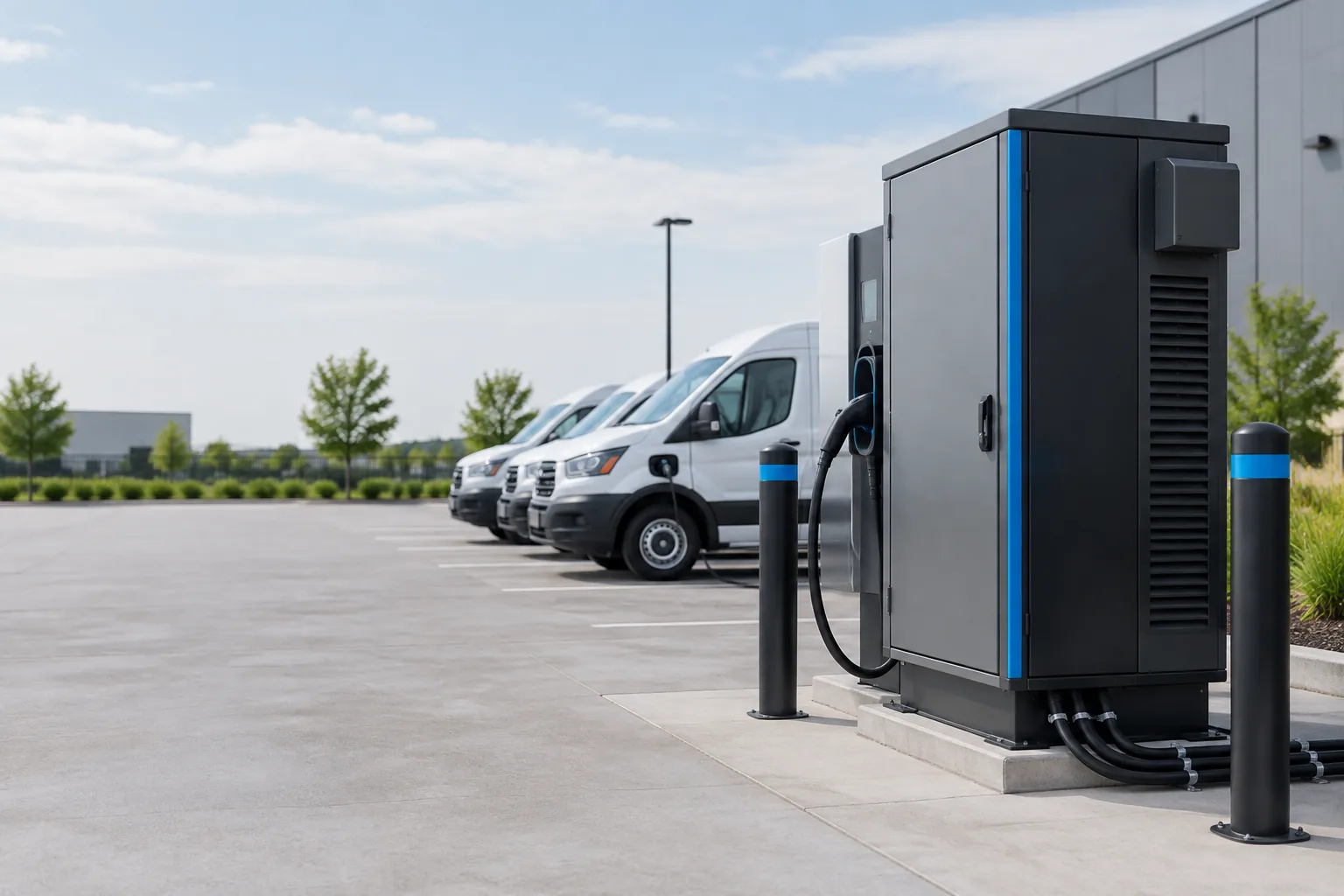
Why EV charging equipment may need a dedicated enclosure
An outdoor-rated charger is only one part of a charging installation. The site may also include:
- the user-facing charger interface;
- power electronics and converters;
- breakers, disconnects, and protection devices;
- communications and load-balancing equipment;
- cable-management hardware;
- service compartments or auxiliary controls.
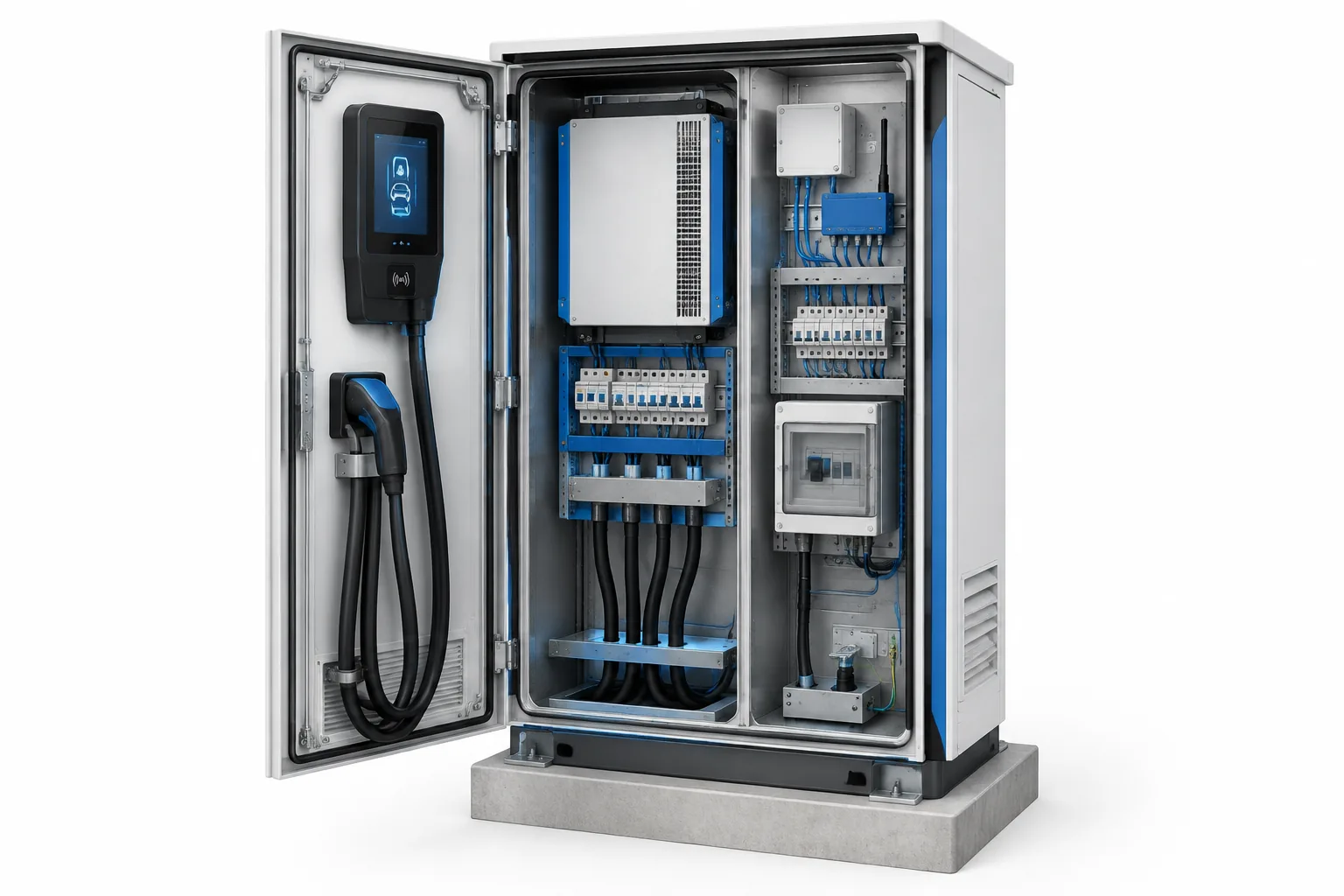
Each part can bring a different requirement for ingress protection, heat dissipation, access, and physical protection. For an EV charging station enclosure, the site layout matters as much as the box dimensions. Starting with the equipment list keeps the conversation practical and gives the quote a clear basis.
For a broader view of outdoor enclosure selection, see Outdoor Electrical Enclosures. The Outdoor Electrical Enclosure Design Checklist covers the site-wide questions in more detail.
Cover, charger enclosure, or EVSE cabinet?
Before discussing IP ratings, decide which type of protection the project needs.
| Option | Main purpose | Questions to answer |
|---|---|---|
| Weather cover or canopy | Reduces direct sun and rain around the user-facing charger | Which sides, cable terminations, and lower entries remain exposed? |
| Charger enclosure | Surrounds the charger or related equipment | What access, cable entry, thermal, and protection requirements apply? |
| EVSE or power cabinet | Houses power electronics, protection, communications, or load-balancing equipment | What internal mounting, separation, cooling, service, and lifting provisions are needed? |
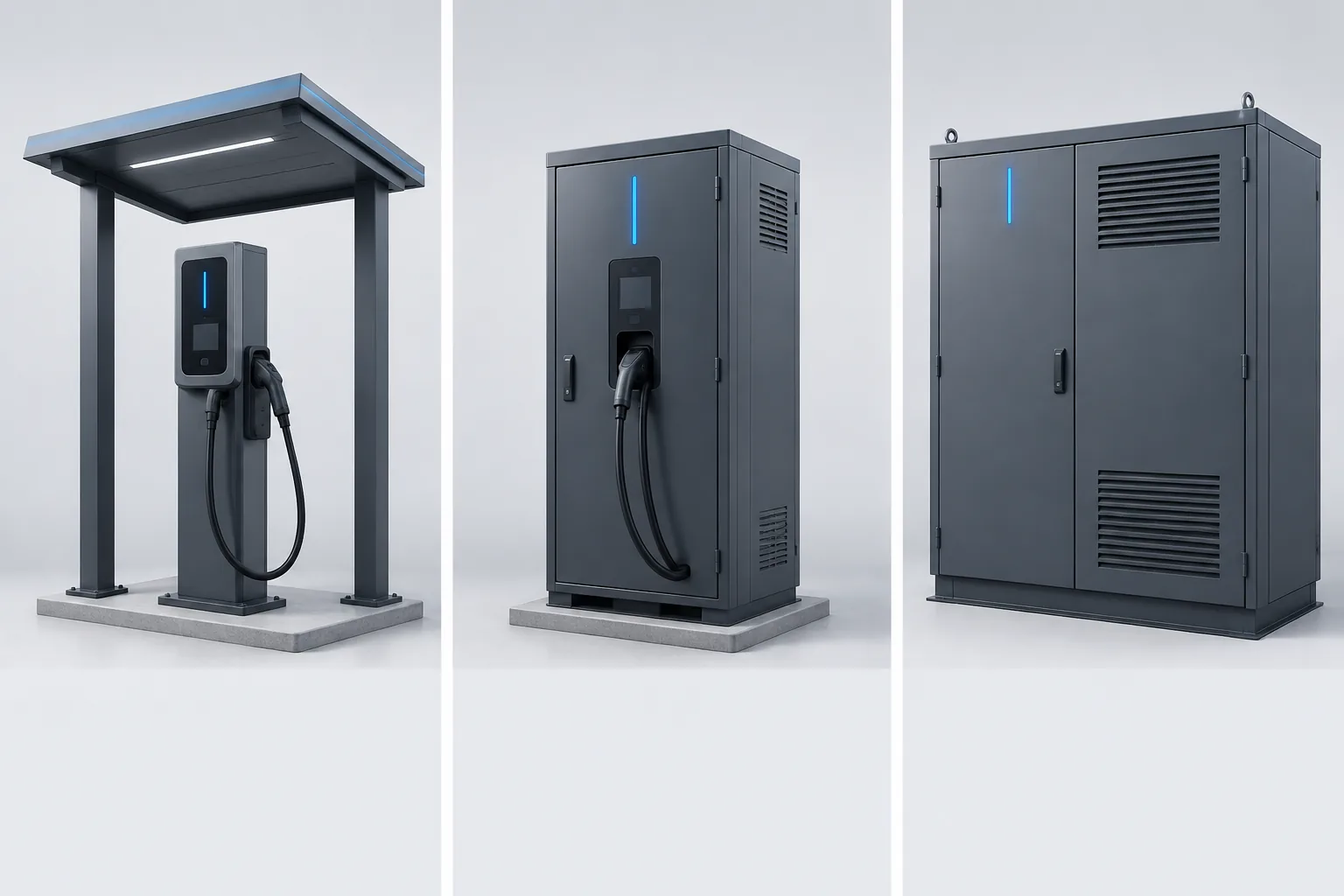
This simple distinction keeps the RFQ focused. A canopy may suit a user-facing charger, while a cabinet may be the better fit for power electronics and protection devices.
A cover may leave the rear cabinet, cable terminations, controls, or lower entry points exposed. A closed cabinet gives the equipment more enclosure space and brings heat, drainage, access, and service into the same design discussion. That is the practical difference behind the phrase “weatherproof EV charger enclosure.”
Indoor and outdoor enclosure requirements are different
“Outdoor” covers a wide range of conditions. A charger beside a covered workplace parking area sees a different mix of heat, water, cleaning, and impact than a charger at a coastal highway site or an exposed fleet depot.
| Site exposure | Enclosure concern | Information to confirm |
|---|---|---|
| Direct rain or wind-driven spray | Water paths through doors, seams, glands, and cable entries | Direction of exposure, drainage, and wash-down method |
| Strong sun and high ambient temperature | Internal temperature rise and solar heat gain | Maximum ambient temperature, duty cycle, and allowable internal temperature |
| Snow, ice, and freeze-thaw cycles | Door operation, blocked drains, brittle seals, and standing water | Winter maintenance and drainage conditions |
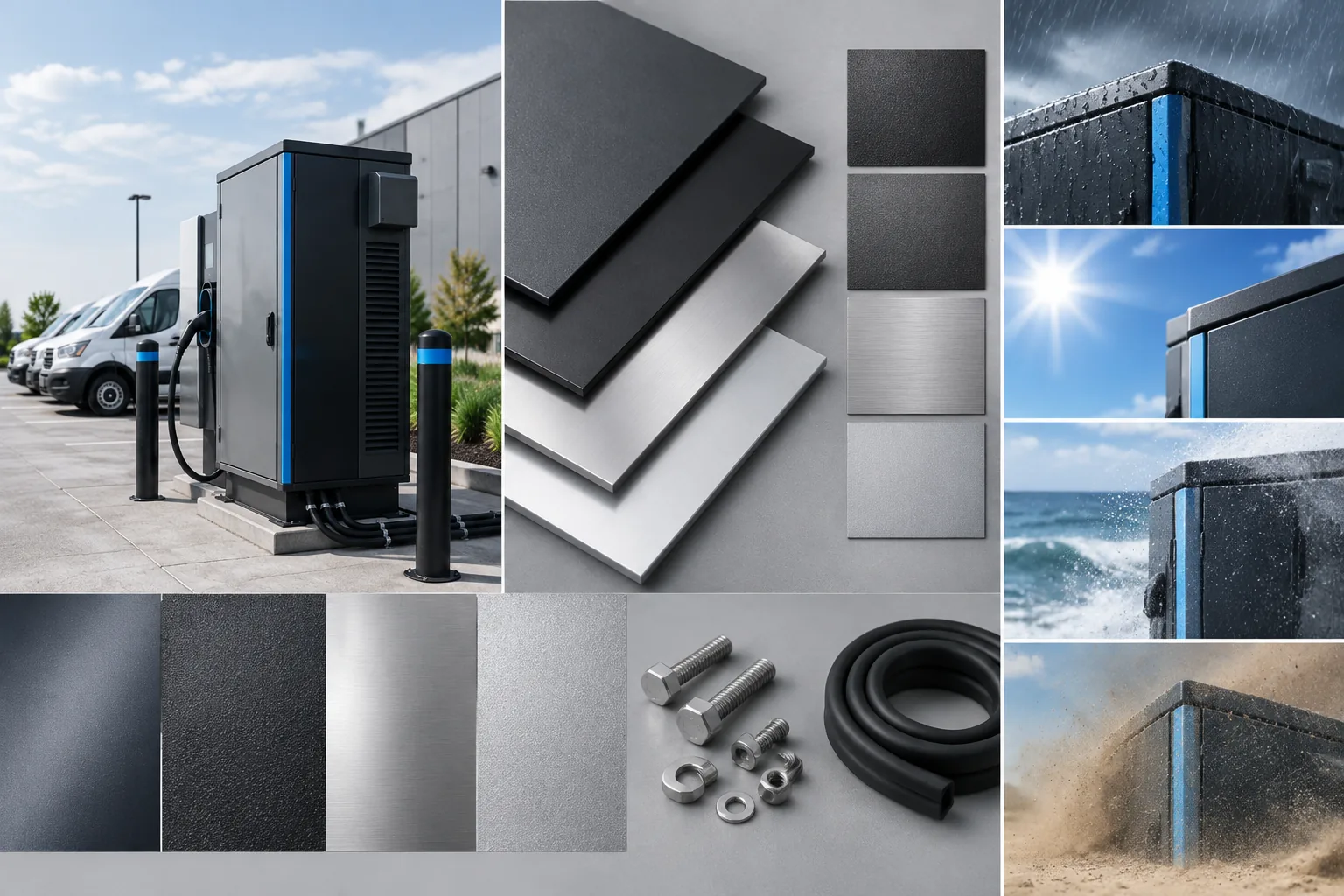
| Salt air or corrosive atmosphere | Material, coating, fasteners, and surface treatment | Coastal exposure, chemicals, and cleaning products |
| Dust, mud, or construction debris | Gasket condition, filters, vents, and maintenance access | Dust source, cleaning schedule, and filter replacement access |
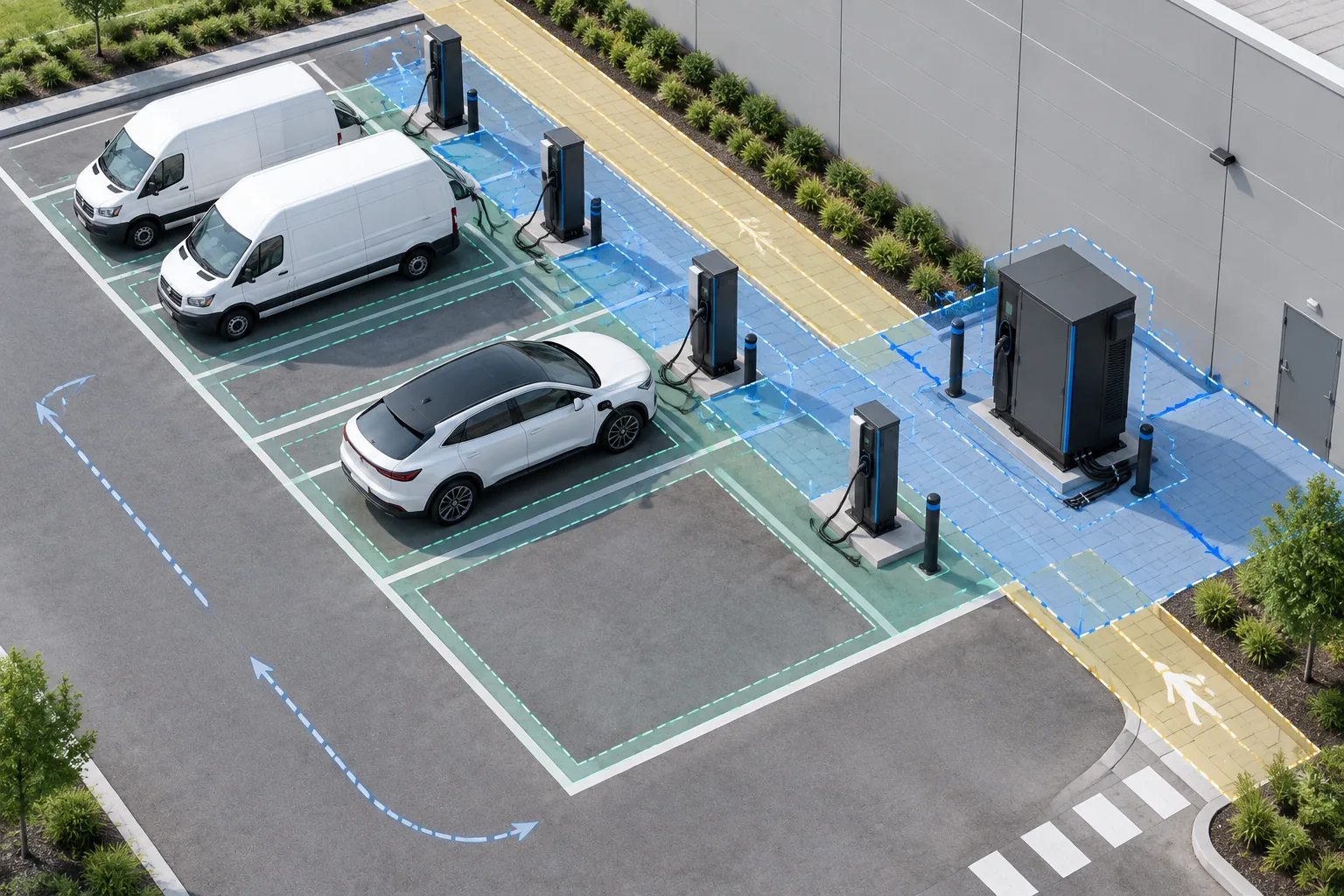
| Vehicle movement or public access | Impact, tampering, lock position, and cable protection | Bollards, parking layout, clearance, and security requirements |
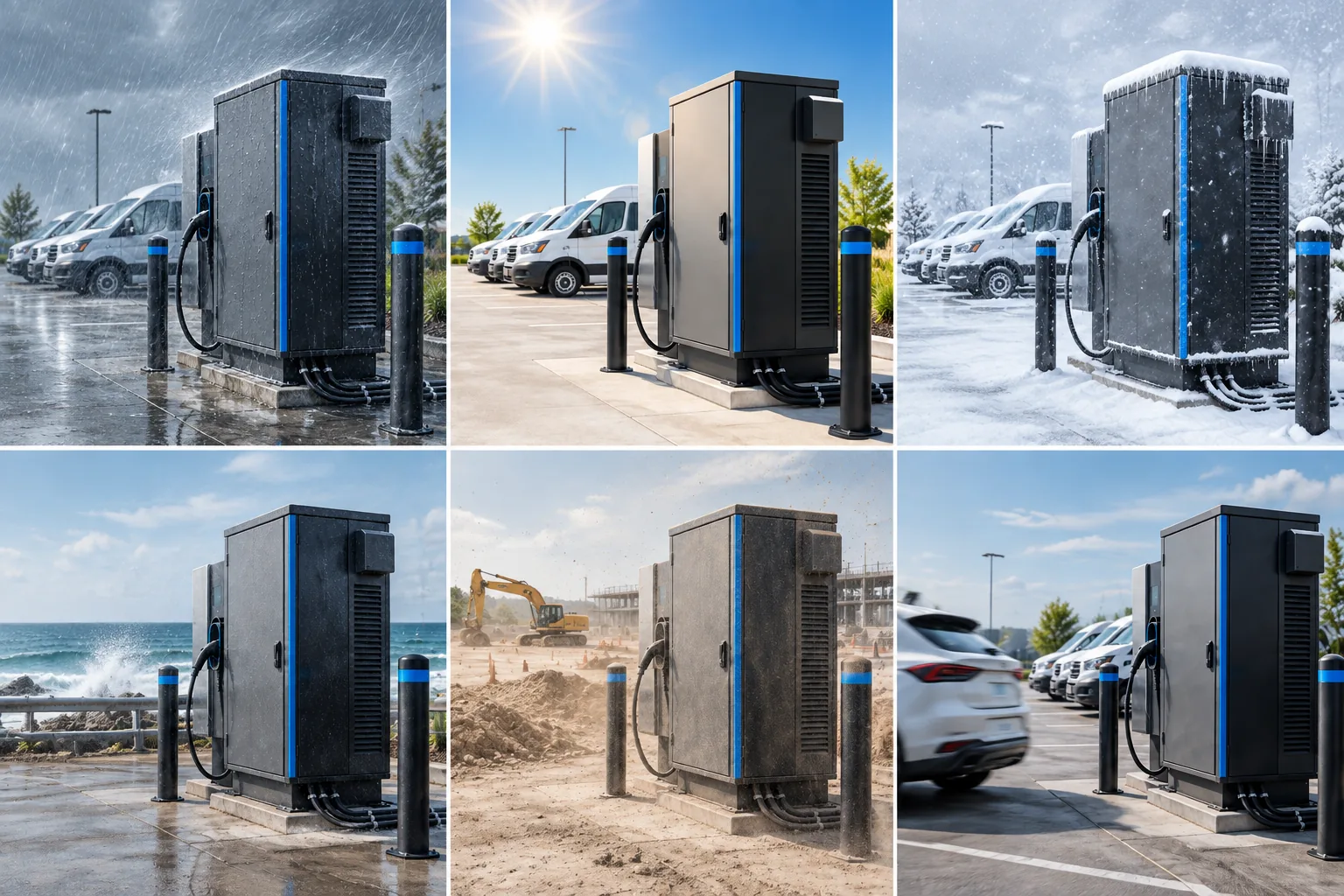
Start with the three conditions most likely to shape the design: water path, heat load, and physical access. Then add salt, snow, dust, or wash-down requirements as the site requires.
IP and NEMA protection requirements
IP and NEMA describe protection in different ways. Select the designation required by the project specification, equipment instructions, local requirements, and actual site exposure.
A practical review starts with these questions:
- Will the enclosure see ordinary rain, wind-driven rain, hose-directed water, or temporary flooding?
- Will the equipment see dust, sand, salt, chemicals, or frequent cleaning?
- Are cable glands, conduit fittings, display openings, vents, and door hardware part of the specified configuration?
- Does the requested rating apply to the complete assembly, including doors, locks, seams, and cable entries?
- Is the buyer specifying an enclosure rating, an EV charger rating, or both?
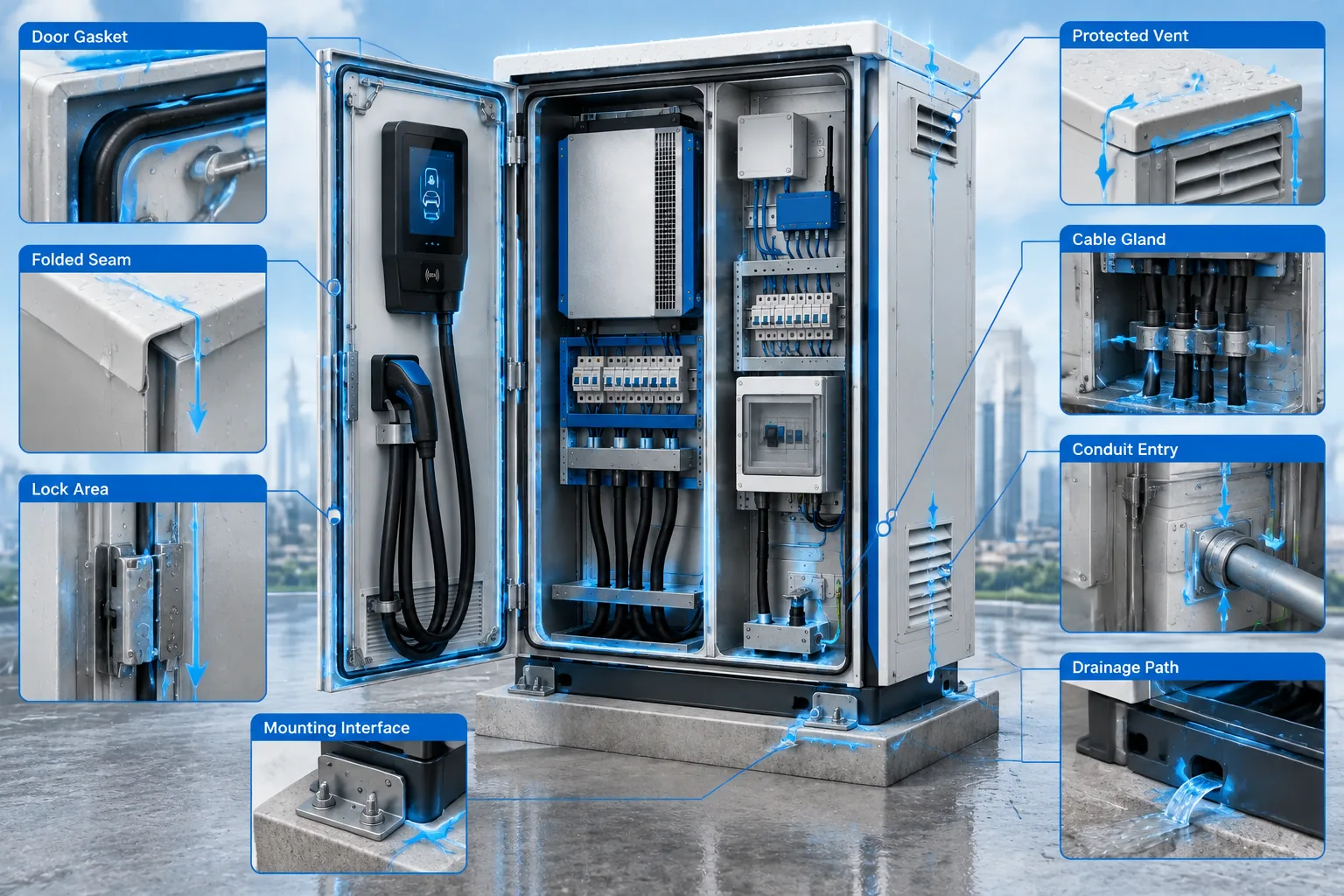
For a project comparing IP65 and IP66 options, connect the rating decision to the actual water exposure and the complete installed configuration. The same review should cover heat dissipation, finish suitability, and technician access.
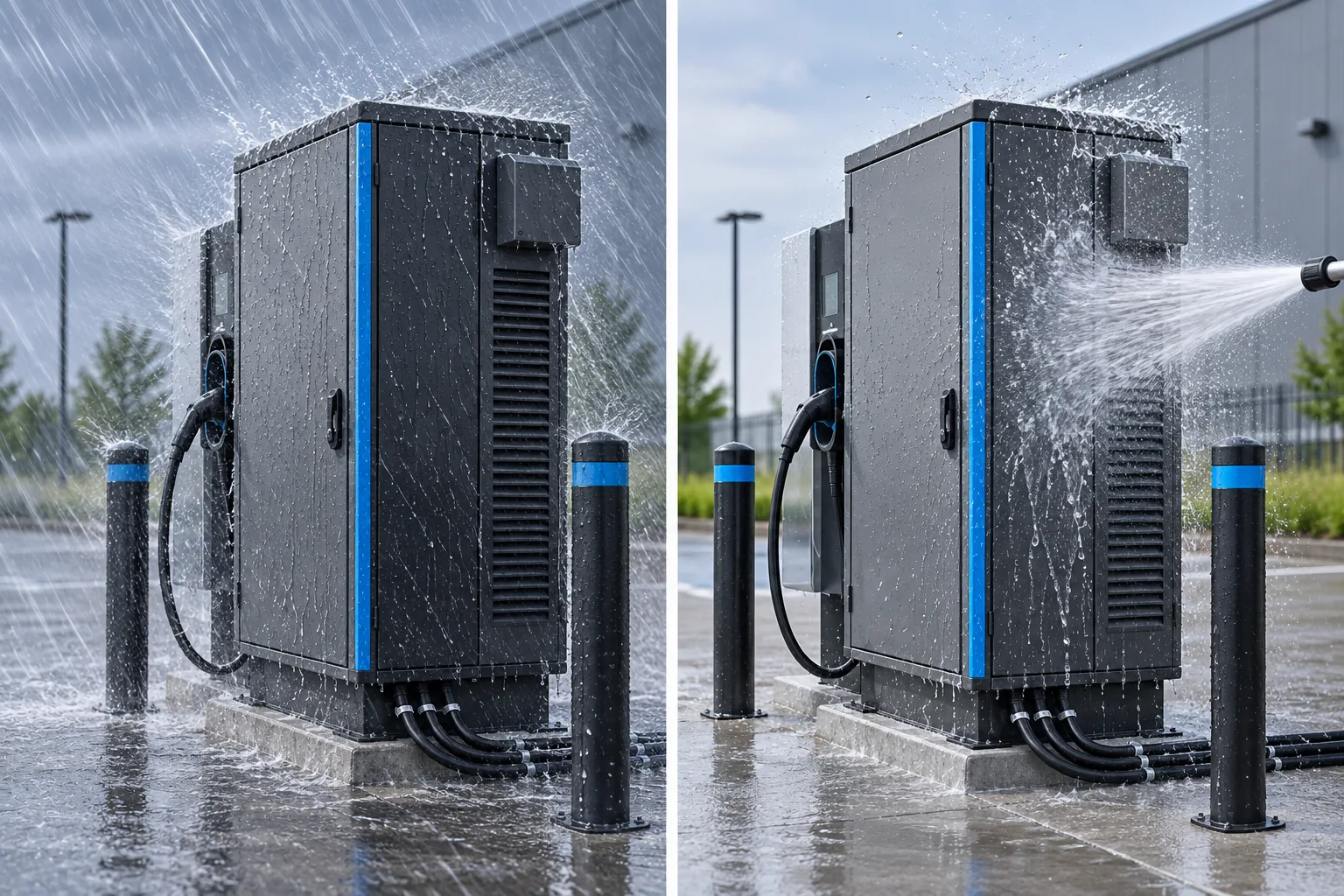
See IP65 Electrical Enclosures and IP66 Electrical Enclosures as separate product references. Keeping the two options separate makes the specification easier to review and avoids an unclear rating discussion.
Heat dissipation and condensation control
EV charging equipment produces heat during operation. As the enclosure becomes more closed, the design team needs a clear plan for moving that heat away from the components.
A sealed enclosure limits uncontrolled air exchange. A ventilated design can support higher heat loads when the site allows protected airflow. Fans, filters, heaters, heat exchangers, and air conditioners each change the maintenance plan and the protection details around the openings.
Review these thermal inputs early:
- continuous and peak electrical load;
- charging duty cycle and expected simultaneous operation;
- maximum outdoor ambient temperature;
- direct solar exposure;
- internal heat from power supplies, converters, breakers, or communications equipment;
- allowable internal temperature for the installed components;
- access for filters, fans, heaters, heat exchangers, or cooling equipment.
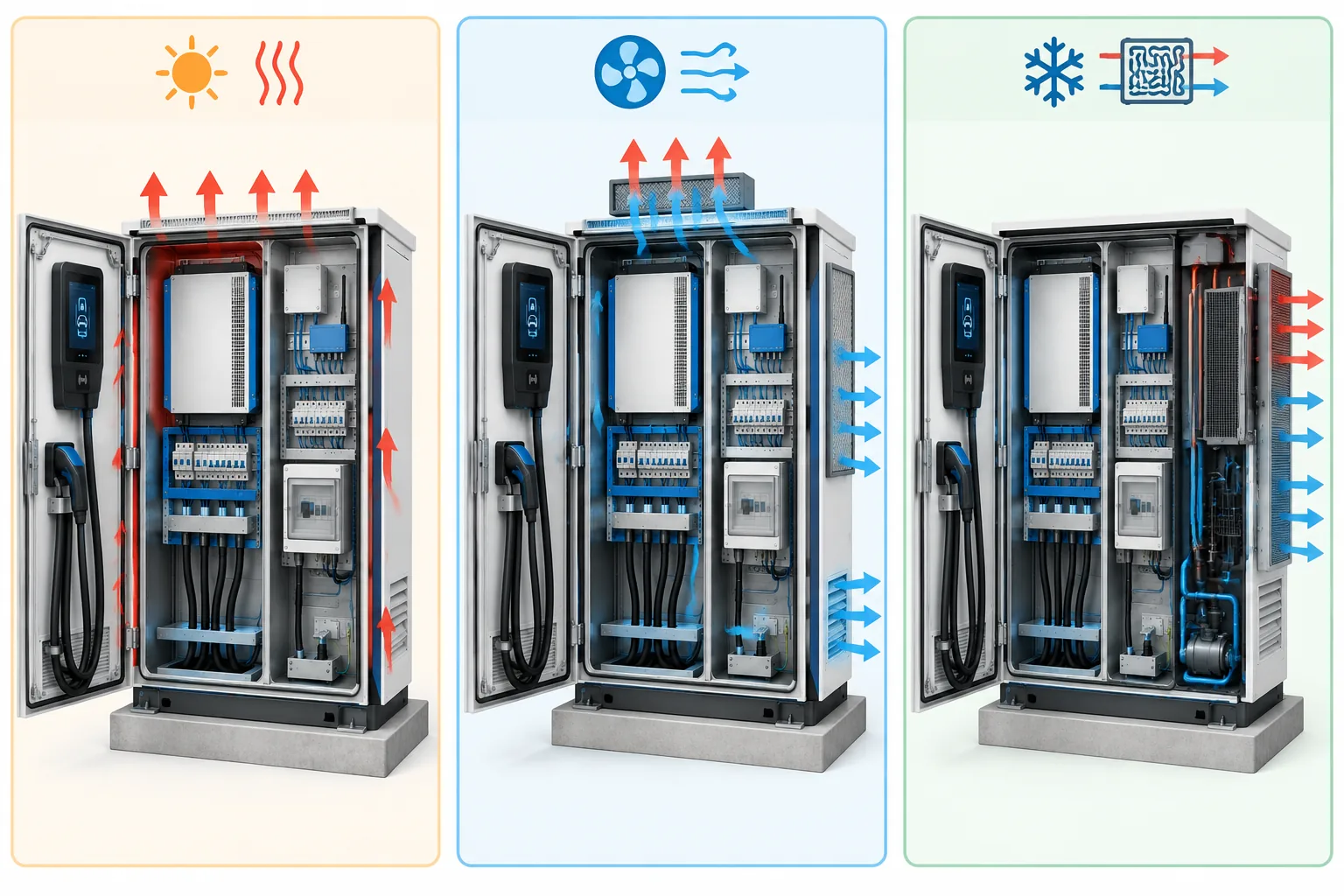
Condensation deserves its own review. Air exchange can help with heat in one installation and bring moisture into another. Heating, pressure equalization, drainage, heat exchange, air conditioning, and filtered ventilation solve different parts of the problem.
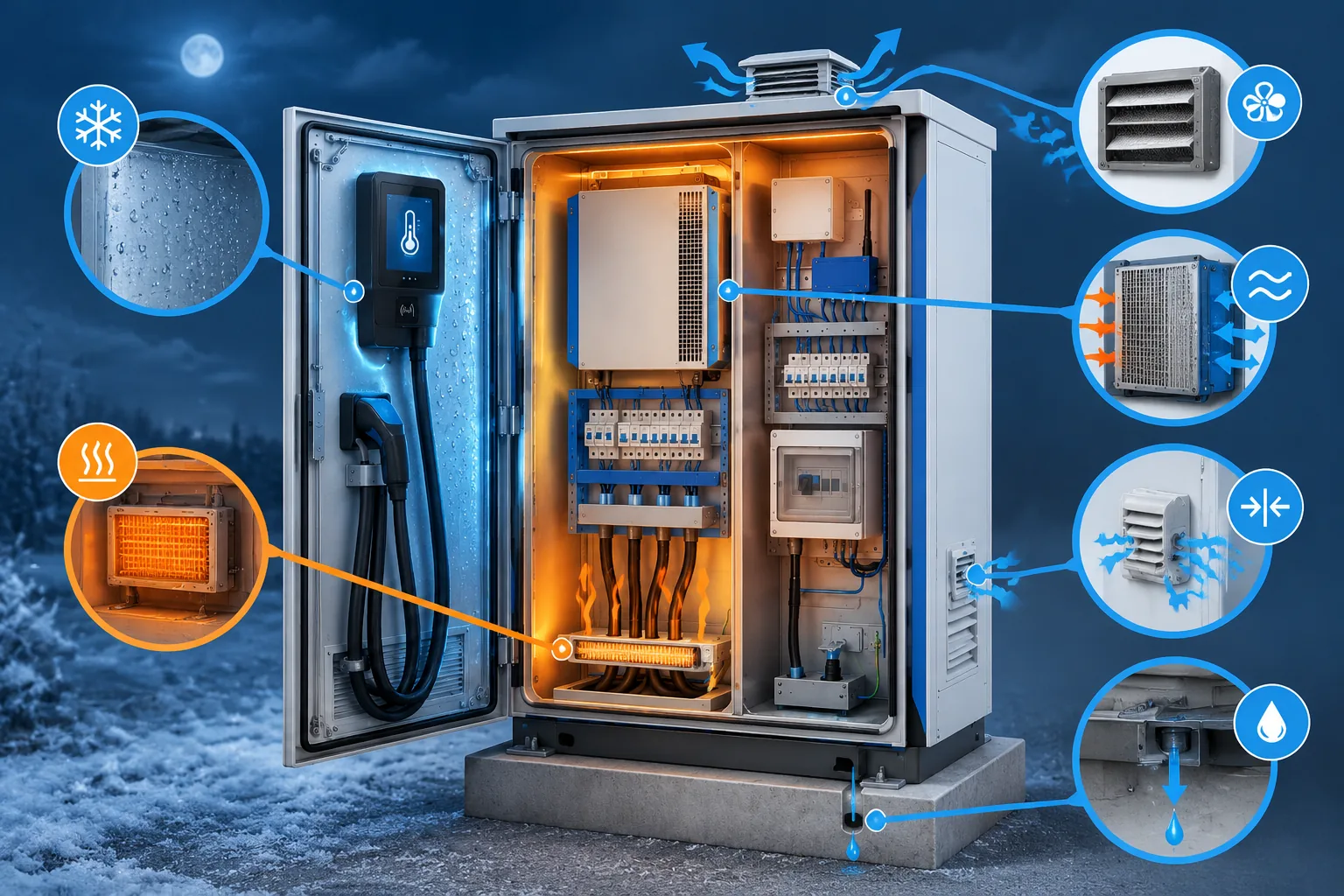
For related design questions, see Electrical Enclosure Cooling and Why Condensation Happens Inside Outdoor Electrical Enclosures.
Cable entry and service access
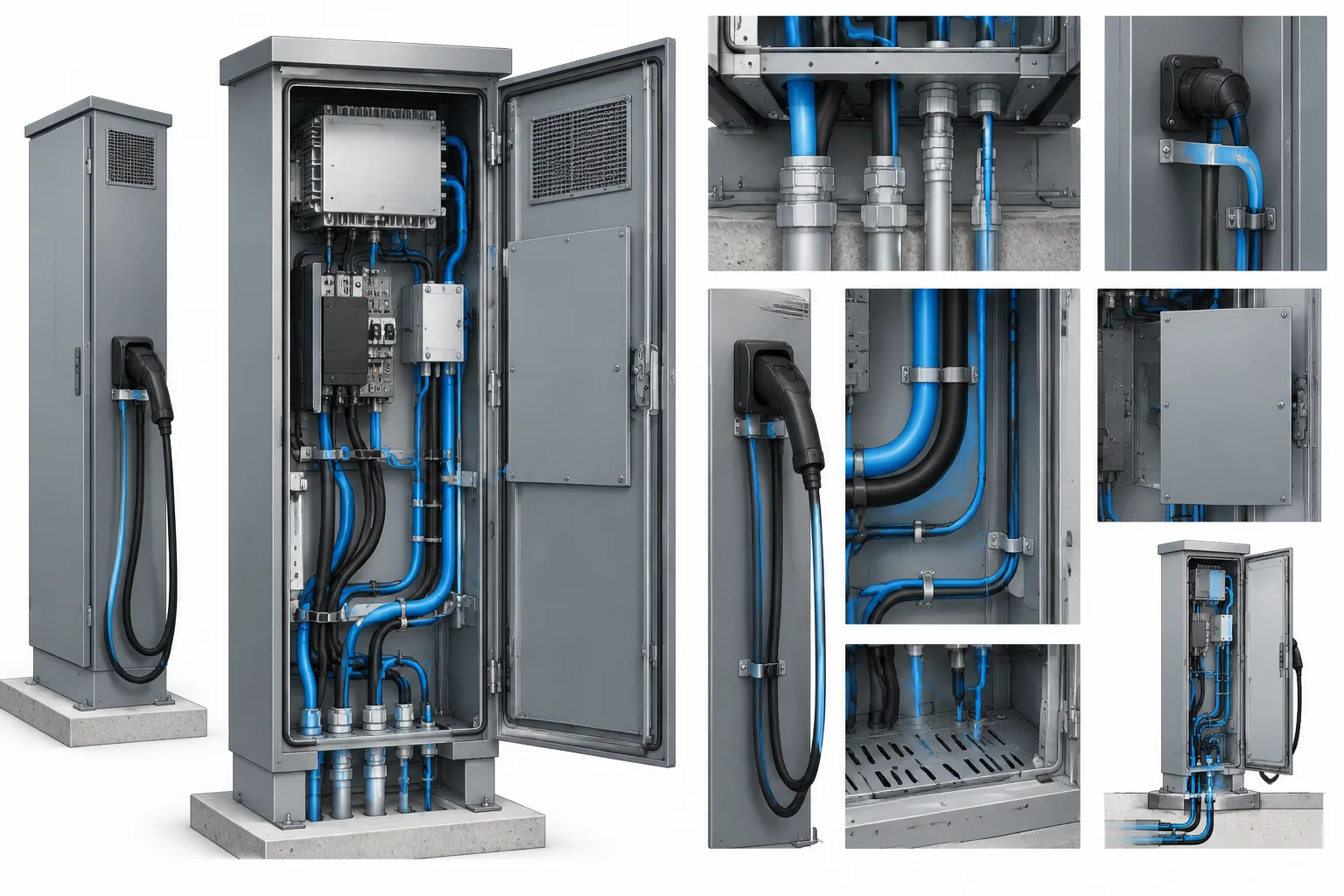
Cable entry is easier to solve when it is part of the first layout discussion. Leave it until the end, and the enclosure may lose the room needed for cable bend radius, glands, conduit fittings, strain relief, separation, and technician movement.
Confirm these points before approving the layout:
- entry direction: bottom, side, rear, or top;
- number and diameter of power, control, and communication cables;
- conduit or gland type;
- cable bend radius and pulling direction;
- drainage or drip-loop requirements;
- separation between high-voltage power and low-voltage communication wiring;
- clearance around breakers, terminals, disconnects, and replaceable parts;
- door swing, removable panels, and technician working space;
- visibility of displays, indicators, emergency controls, and labels;
- protection for the charging cable and connector when they are not in use.
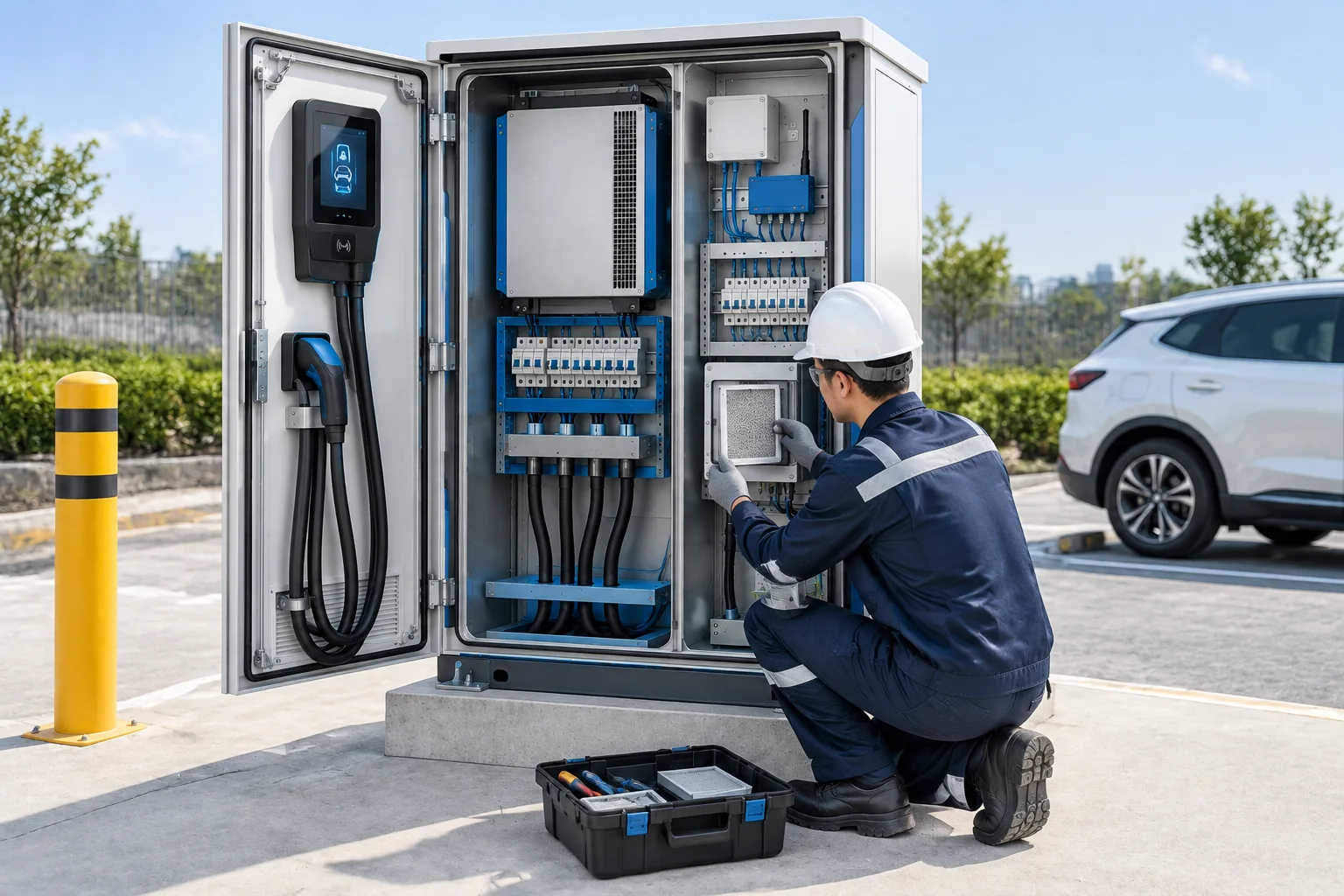
A cabinet can fit on a site plan and still be difficult to service. Check mounting height, nearby walls, bollards, parked vehicles, snow, and pedestrian movement before the layout is finalized.
Wall-mounted, floor-standing, or covered designs?
The mounting method affects the enclosure structure, the installation work, and the service path around the equipment.
| Design | Usually suits | Main questions |
|---|---|---|
| Wall-mounted enclosure | Building walls, workplaces, service rooms, and sheltered parking | Can the wall carry the load? Is rear access available? Can the cable entries be reached after mounting? |
| Floor-standing cabinet | Public sites, fleet depots, power cabinets, and larger equipment sets | What base, anchor, clearance, drainage, and impact protection are required? |
| Pedestal or pole-mounted housing | Distributed charging points and locations with limited wall space | How will vibration, cable pull, impact, and internal heat be managed? |
| Open-sided cover or canopy | Shade, rain reduction, and user-interface protection | Which components remain exposed? Does the cover have a stated enclosure rating? |
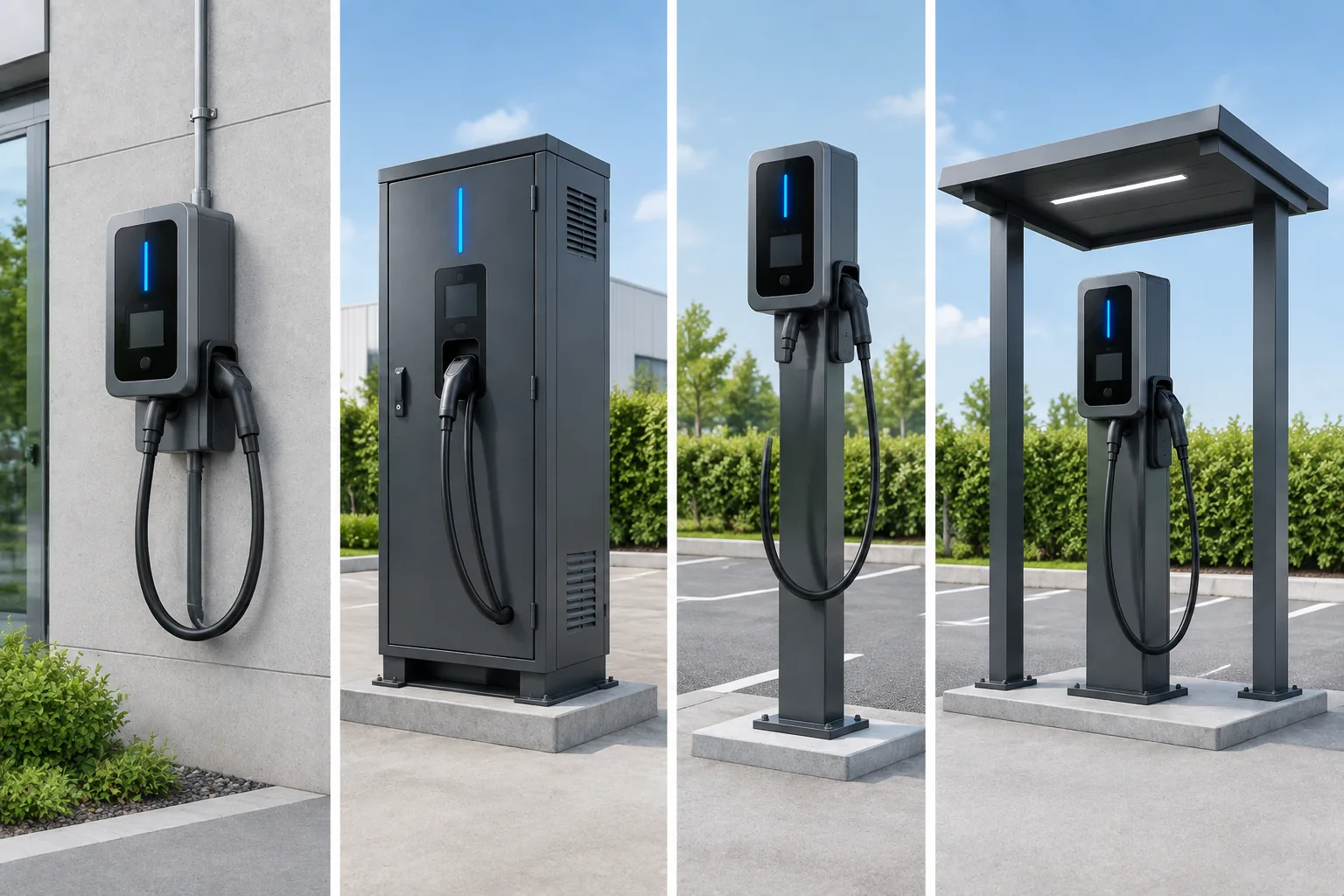
A floor-standing EV charger cabinet may need a plinth, lifting points, removable panels, a defined cable trench, and protection from vehicle impact. A wall-mounted unit may need a rear clearance zone and a mounting plate that can be installed before the equipment is connected.
What to confirm before requesting a quote
The first RFQ package can start with the information you already have. Give the enclosure team a clear starting point, then mark the open decisions for the next review.
Send:
- Charger or equipment make and model, if already selected.
- Overall dimensions, weight, heat-producing components, and required clearances.
- Installation method and available wall, pedestal, plinth, or floor space.
- Cable entry locations, cable sizes, conduit details, and connector storage requirements.
- Environmental exposure: rain, snow, sun, dust, salt air, chemicals, wash-down, flooding, or impact.
- Required IP or NEMA target and the specification that calls for it.
- Material and finish direction, including corrosion or UV concerns.
- Door, lock, panel, display, indicator, and emergency-control requirements.
- Cooling, heating, ventilation, filtration, or condensation-control requirements.
- Quantity, prototype needs, production quantity, destination, packaging, and expected delivery window.
- Drawings, 3D files, site photos, and existing equipment interface drawings.
- Responsibility for testing, approval samples, electrical integration, and final site acceptance.
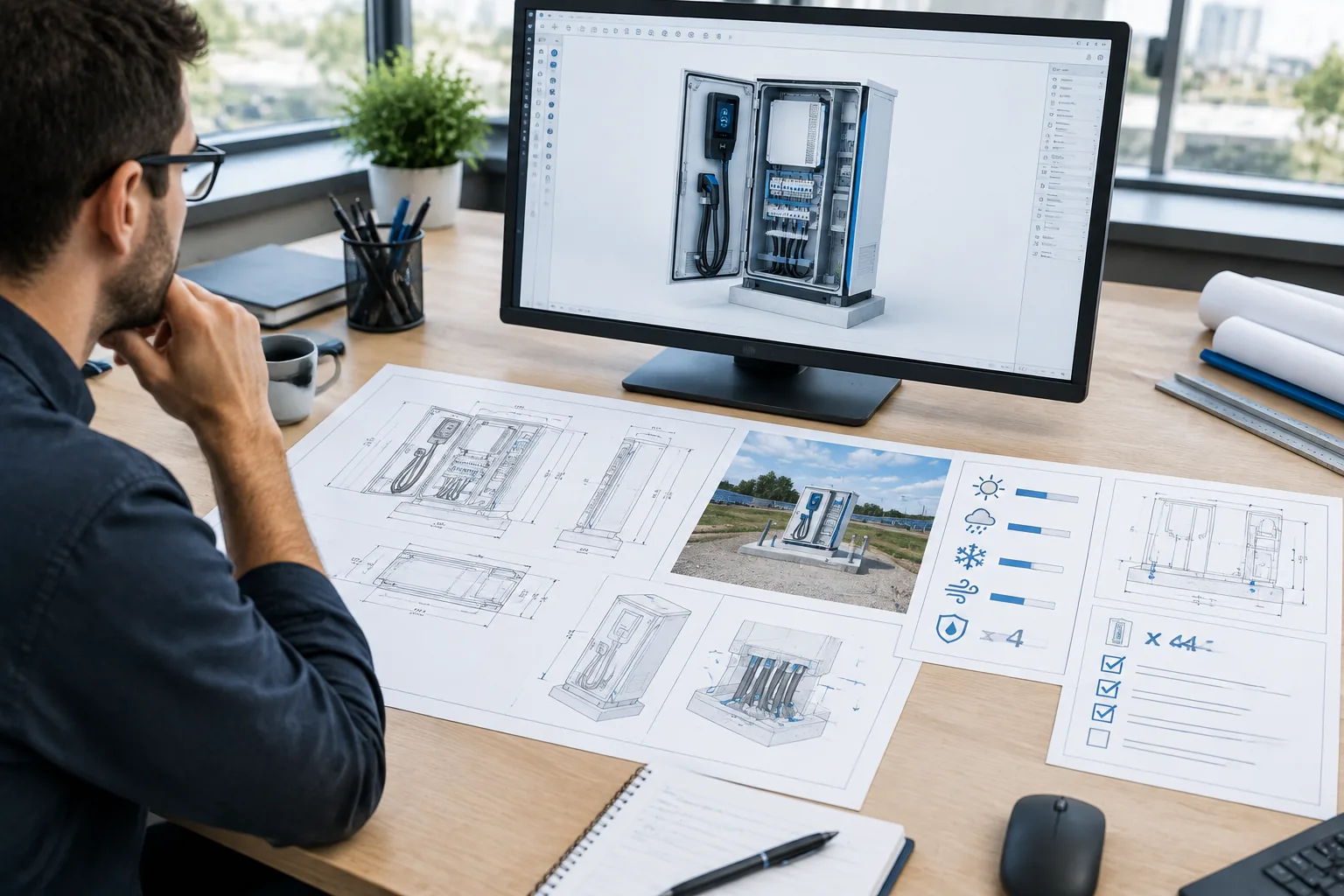
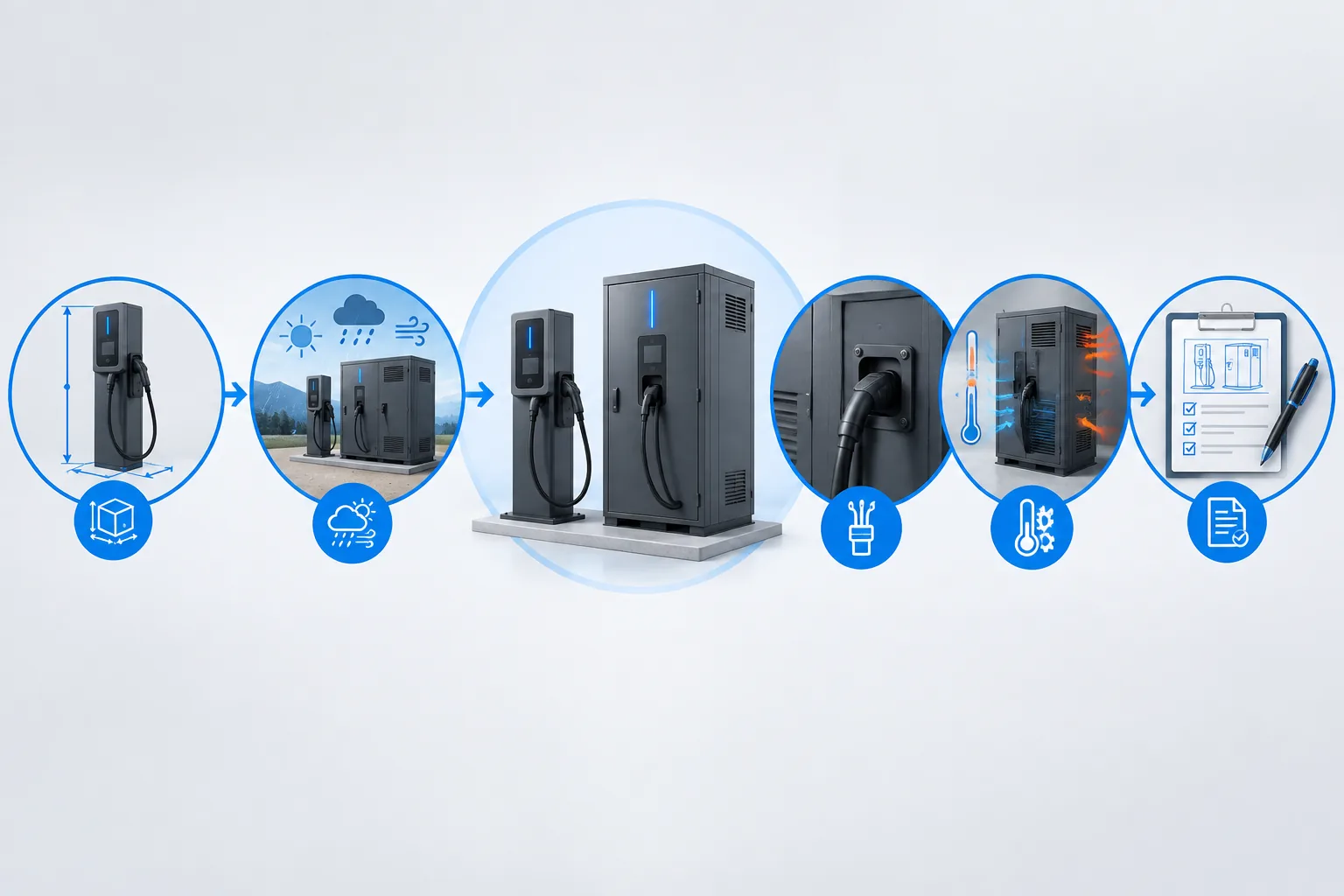
If an item is still open, mark it clearly. When you send these inputs to FN Enclosure, the first review can focus on four practical questions: what the enclosure protects, how it mounts, where the cables enter, and how heat and service access will be handled.
Common mistakes to avoid
Choosing the rating before checking the interfaces
Doors, glands, vents, and cable entries are part of the enclosure configuration. Define those interfaces before finalizing the requested rating.
Keep heat in the first layout discussion
A gasket can control water entry while the internal temperature rises. Put the thermal review beside the first enclosure layout discussion so the enclosure, cooling method, and service plan develop together.
Treating a canopy as a complete enclosure
A roof over the charger may leave the rear cabinet, cable terminations, controls, or lower entry points exposed. Map the protected and exposed areas on the site layout.
Forgetting maintenance space
Leave room for a technician to open the door, remove a filter, replace a component, and work safely around the cabinet.
Using a project story as a specification
A public EV charging project helps explain deployment conditions. Equipment drawings, project specifications, and test documentation are the right sources for an enclosure rating or performance decision.
FAQ
Do EV chargers need an outdoor enclosure?
Some chargers are already designed for outdoor use. Other parts of the charging system may need a separate cover, enclosure, or cabinet. Start by listing the equipment, its exposure, its heat load, and the service access it needs.
Is IP65 enough for an outdoor EV charger enclosure?
IP65 may suit one site and fall short on another. Review the water, dust, cleaning, salt, and flooding exposure together with the complete enclosure configuration, including doors, cable entries, glands, vents, and accessories. Then confirm the required protection level in the project specification.
Should an outdoor charger enclosure be sealed or ventilated?
Choose between sealed and ventilated designs by reviewing heat load, ambient temperature, humidity, ingress requirements, and maintenance access. A sealed design limits uncontrolled air exchange. A ventilated or actively cooled design may suit a higher heat load when the airflow path and maintenance plan are defined.
What information is needed to quote an outdoor EV charger enclosure?
Send the equipment dimensions, installation method, cable entry points, environmental exposure, required IP/NEMA target, material and finish direction, service-access requirements, quantity, drawings, and the expected testing or approval process.
What is the difference between a charger cover and an EVSE cabinet?
A cover reduces direct weather exposure around the user-facing charger. An EVSE cabinet houses electrical equipment and needs a planned approach to ingress protection, cable entry, internal mounting, thermal management, access, and service.
Conclusion
A useful outdoor EV charger enclosure discussion starts with the real equipment and the real site. Once those inputs are clear, the design conversation has somewhere to go: protection level, material and finish, cooling, mounting, cable entry, and service access.
That input-led approach helps the buyer compare the right type of enclosure and gives the quote a practical starting point.
Request an outdoor EV charger enclosure review
Send the equipment dimensions, installation method, cable entry points, site exposure, target protection level, and required quantity. If available, attach 3D files, interface drawings, or site photos. Share the project details through the FN Enclosure contact form.