


A disconnect switch opens an electrical circuit to separate equipment from its power supply. In a typical control panel, you operate it using a handle on the enclosure door or side. The switch may include fuses, or it may work alongside a separate fuse or circuit breaker that provides overcurrent protection.
If you’re specifying one for a panel, you’ll also want to know how it fits: where the handle goes, how the switch mounts, and how much room the cables need. Those details connect the electrical selection to the enclosure drawing.
How does a disconnect switch work?
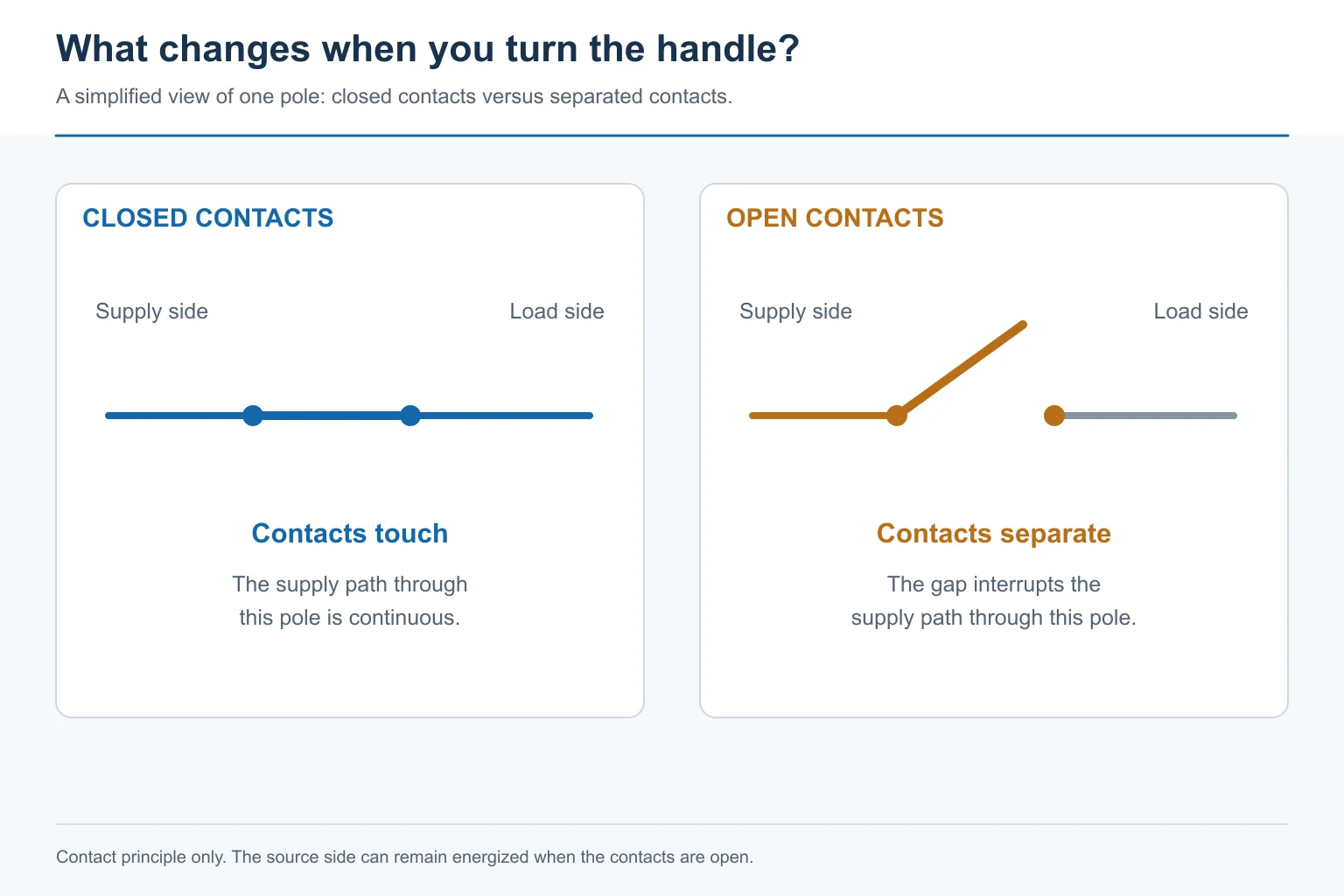
The handle operates a mechanism that opens or closes the switch contacts. With the contacts open, the supply path through those poles is interrupted.
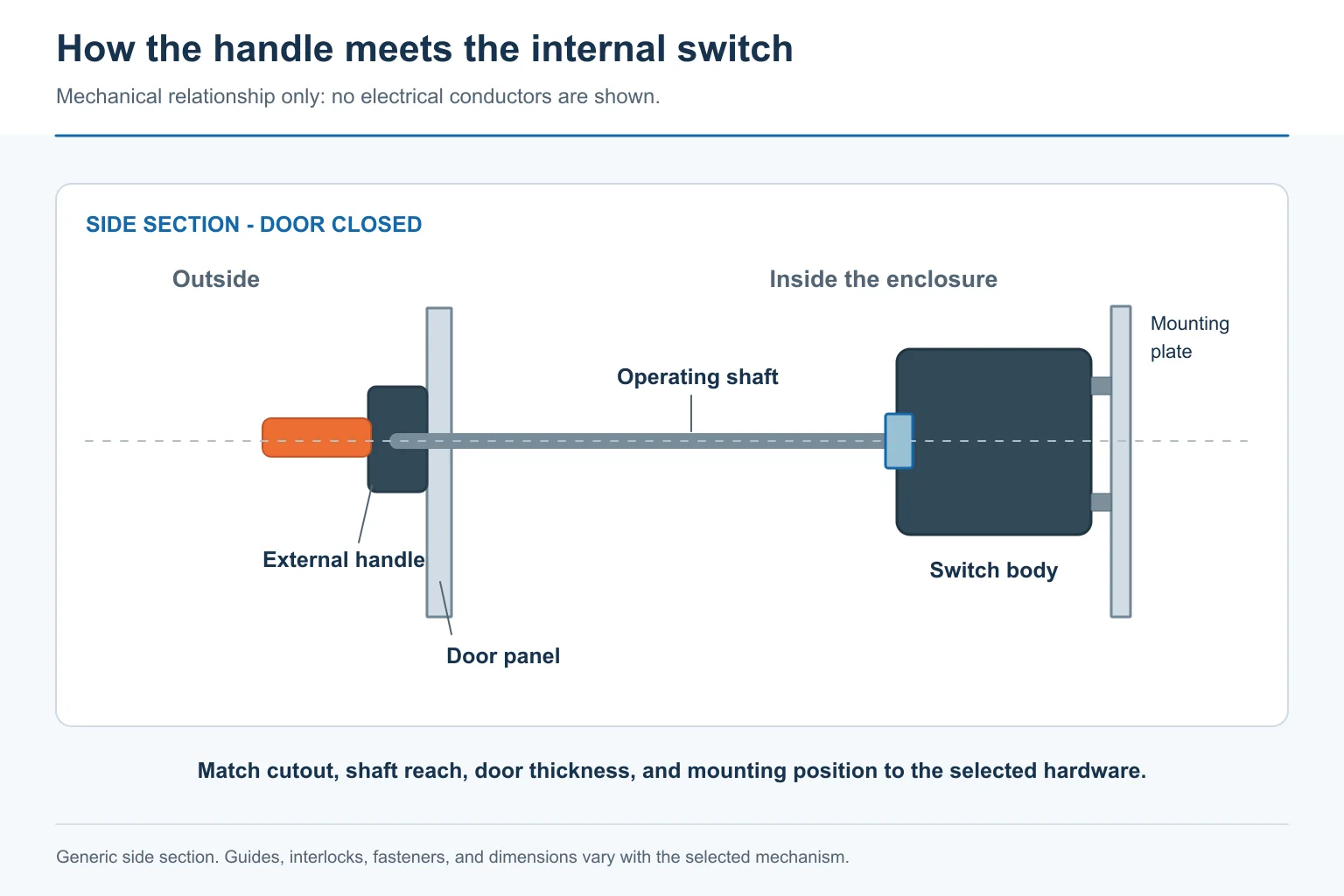
In a door-operated arrangement, a shaft can connect the external handle to a switch mounted inside the enclosure. Other designs mount the switch directly behind the handle. Rockwell Automation’s rotary disconnect specifications show examples of switch bodies, handles, shafts, and mounting options selected to work together.
A compatible door interlock can also link door access to the switch position. The exact arrangement comes from the manufacturer’s instructions, so include the handle and interlock details when you send the switch drawing to your enclosure supplier.
One rating is worth checking early: can the device interrupt the load while it’s running? A load-break-rated switch can perform its specified switching duty. An isolation-only device requires the load to be interrupted elsewhere first.
Disconnect switch vs. circuit breaker
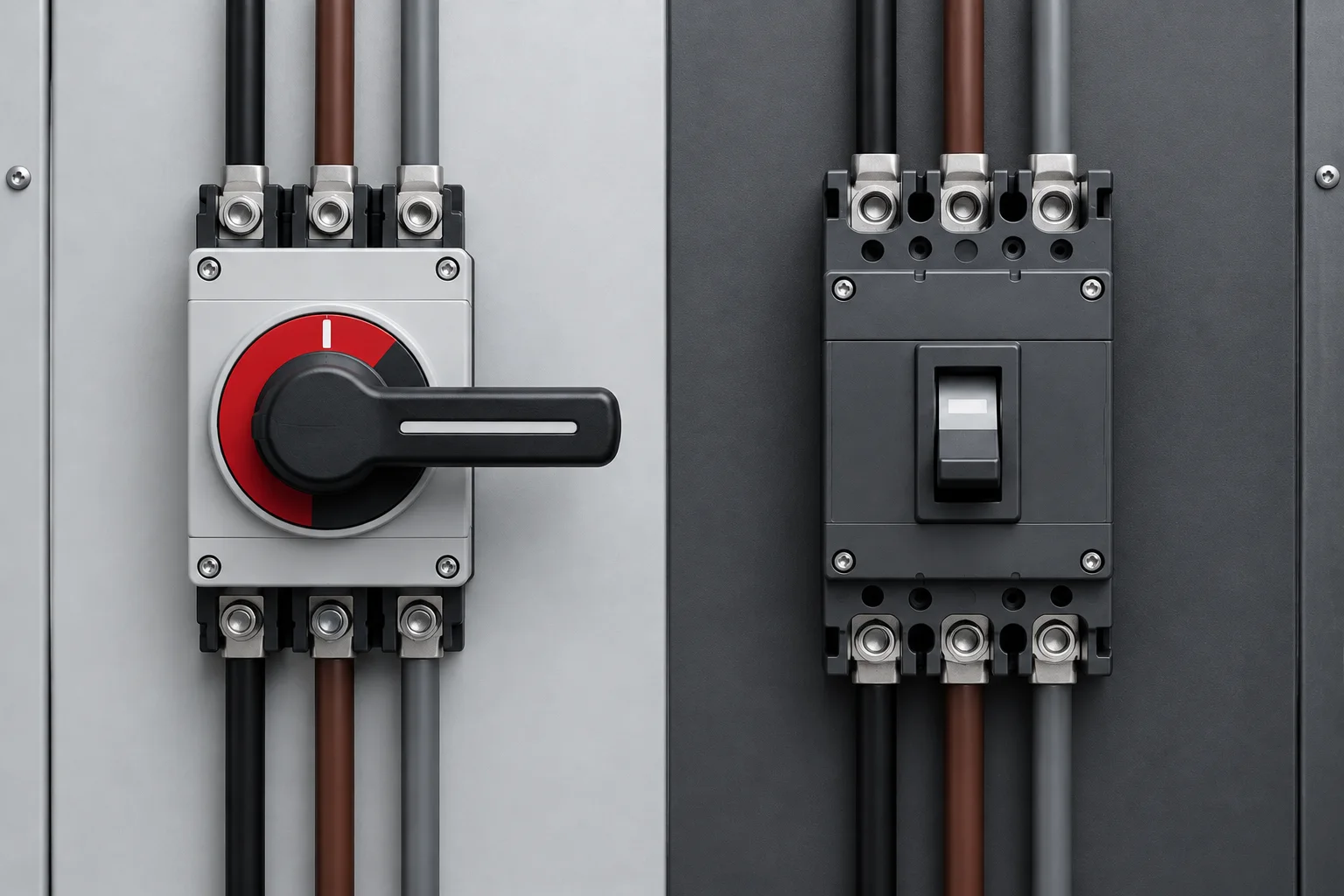
A disconnect switch gives you a deliberate means of opening a circuit. A circuit breaker normally adds automatic operation when it detects an overcurrent condition. A suitably rated breaker can also serve as a disconnecting means, depending on the application.
Here’s a useful way to compare the options:
| Device | What it does | Where overcurrent protection comes from |
|---|---|---|
| Non-fused disconnect | Opens the supply to the connected equipment | A separate protective device in the circuit |
| Fused disconnect | Combines a manually operated switch with fuses | The selected fuses, coordinated with the circuit requirements |
| Circuit breaker | Opens the circuit manually or automatically in response to its protective function | The breaker’s specified trip function |
Your protection scheme will help determine which arrangement fits. UL’s machine-disconnect guidance explains that overcurrent protection can be separate from the machine supply disconnect. For example, a design may use a non-fused main switch with branch-circuit fuses on its load side.
Common types of disconnect switches
Fused and non-fused
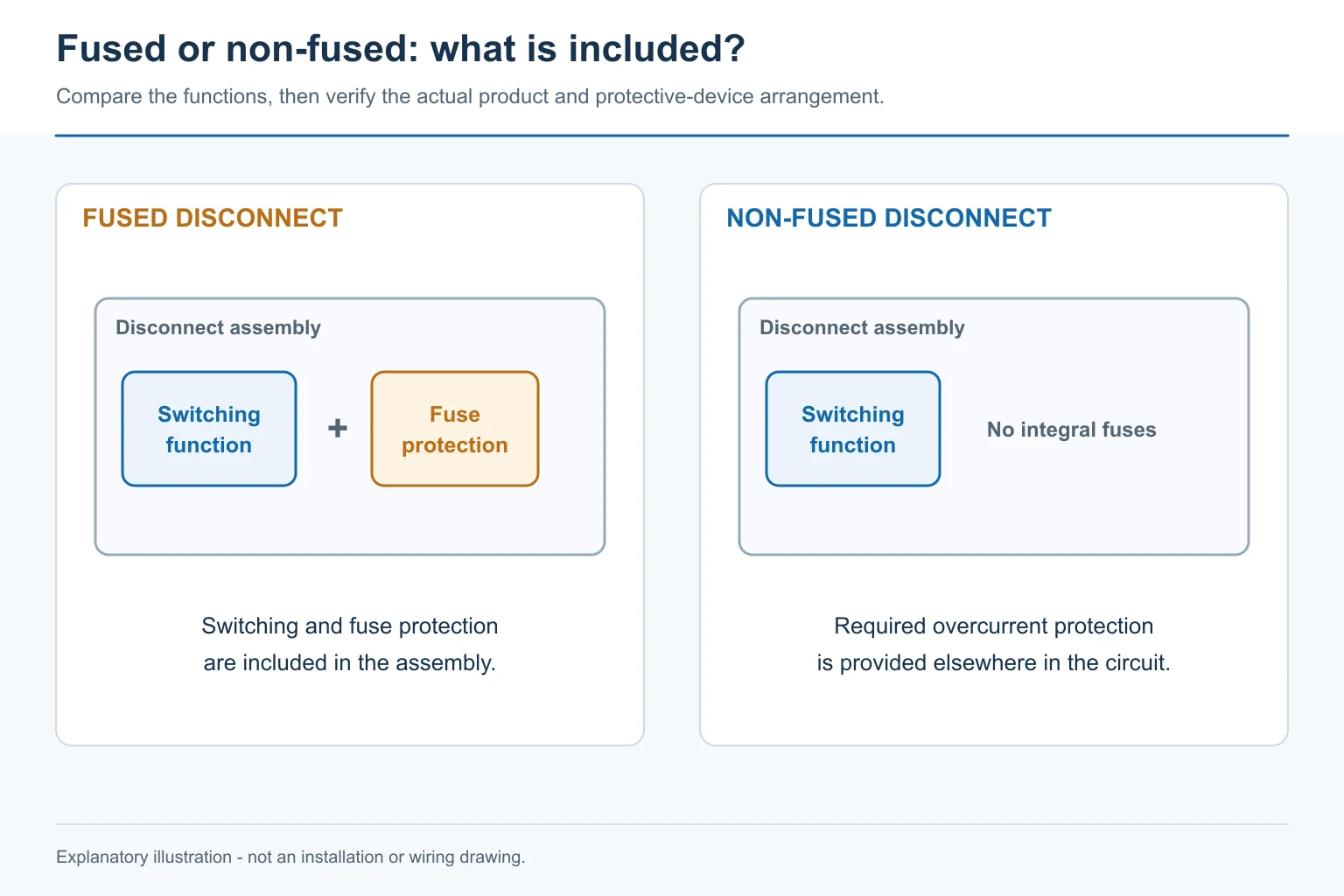
A fused disconnect combines the switching point and fuse holders in one assembly. You select the fuse class and ratings to suit the circuit.
A non-fused disconnect leaves the protection to another device. If that protection is already specified, the enclosure layout can focus on the switch body, terminals, operating mechanism, and required clearances. Both arrangements need enough room for wiring and service access.
AC and DC
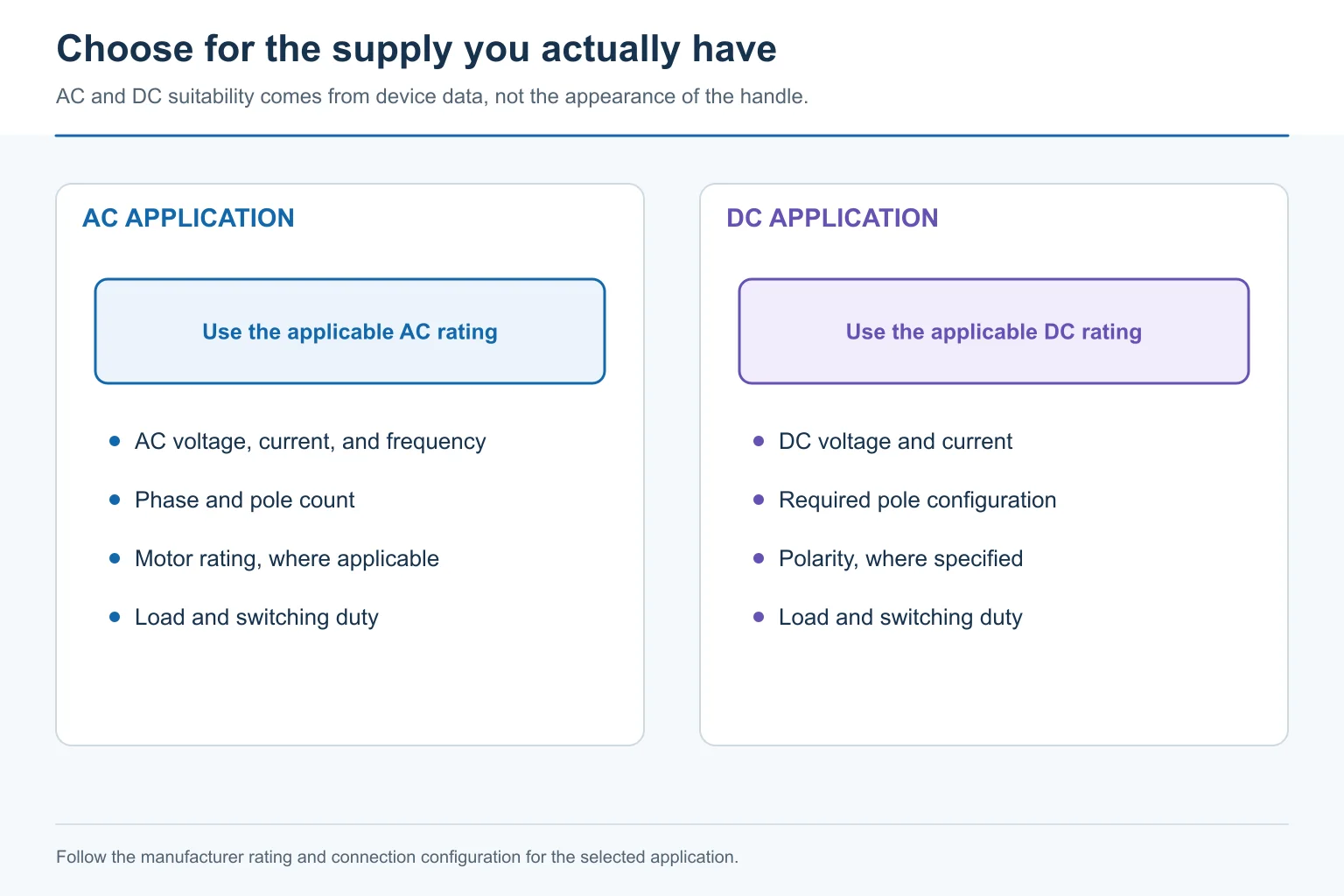
Use the rating for your actual supply. DC switching requires attention to voltage, current, pole arrangement, and, where applicable, polarity. The manufacturer’s connection configuration matters as well as the rating on the front of the device.
The IET’s photovoltaic DC selection guidance explains these distinctions. If your project includes PV, batteries, or another DC source, include the source arrangement in the specification from the start.
Standalone and panel-mounted
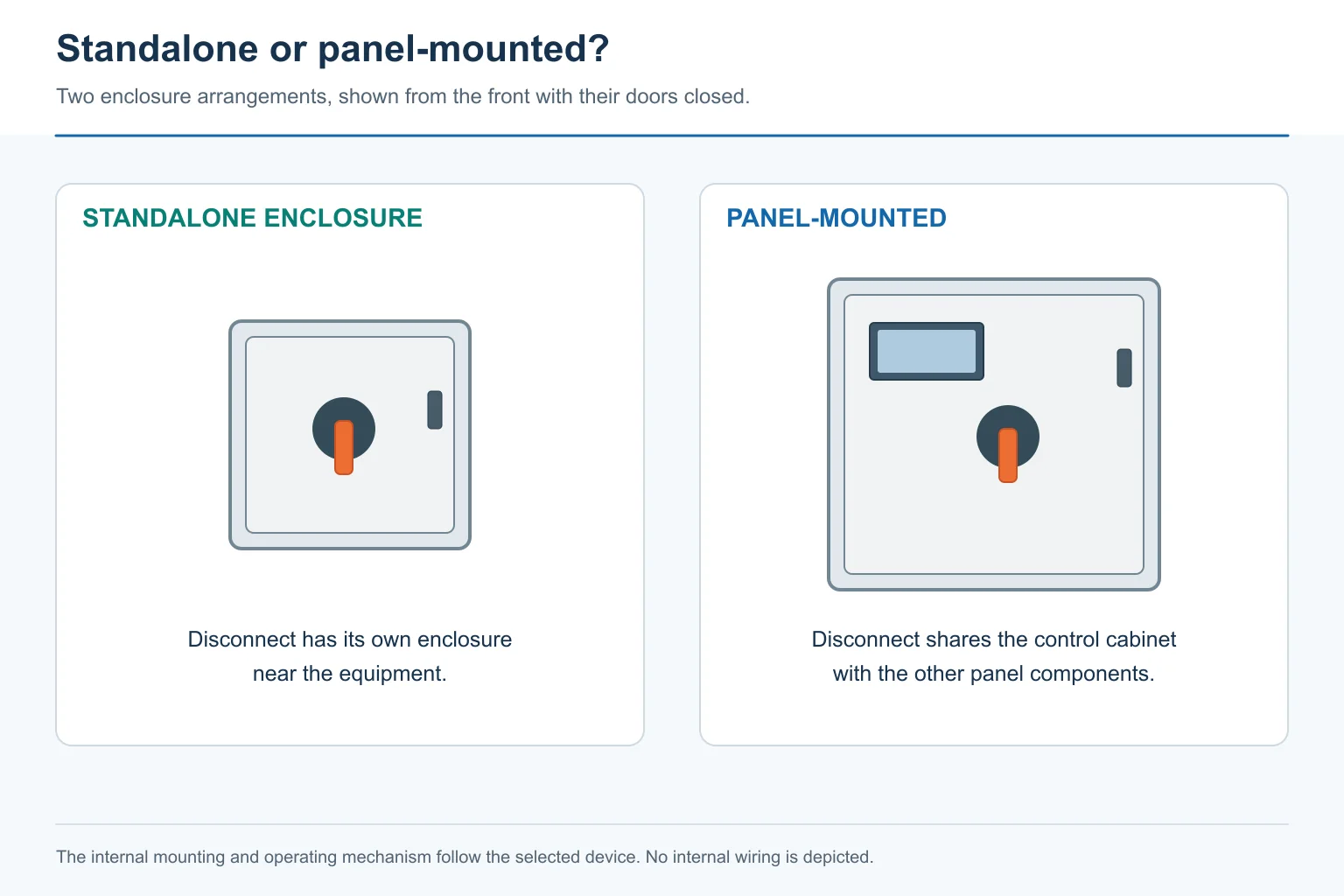
A standalone disconnect has its own enclosure. A panel-mounted version shares the control cabinet with other components and may use an external handle with a shaft or linkage.
For that second arrangement, the handle cutout is only one dimension to resolve. You’ll also need the switch mounting position, shaft reach, door thickness, terminal access, and operating clearance. Hammond’s disconnect selection guide matches enclosures and operating mechanisms to specific devices. Having the exact part numbers makes this review much more useful.
Where are disconnect switches used?
You’ll find them on equipment that needs a defined point for disconnecting its supply:
- HVAC units, fans, pumps, and motors, where service access helps determine the location.
- Industrial machines and control panels, where the disconnect operates the specified machine or panel supply.
- PV and battery systems, where DC ratings and source configuration guide the choice.
- Food-processing and washdown equipment, where moisture, cleaning conditions, and handle usability matter alongside the electrical ratings.
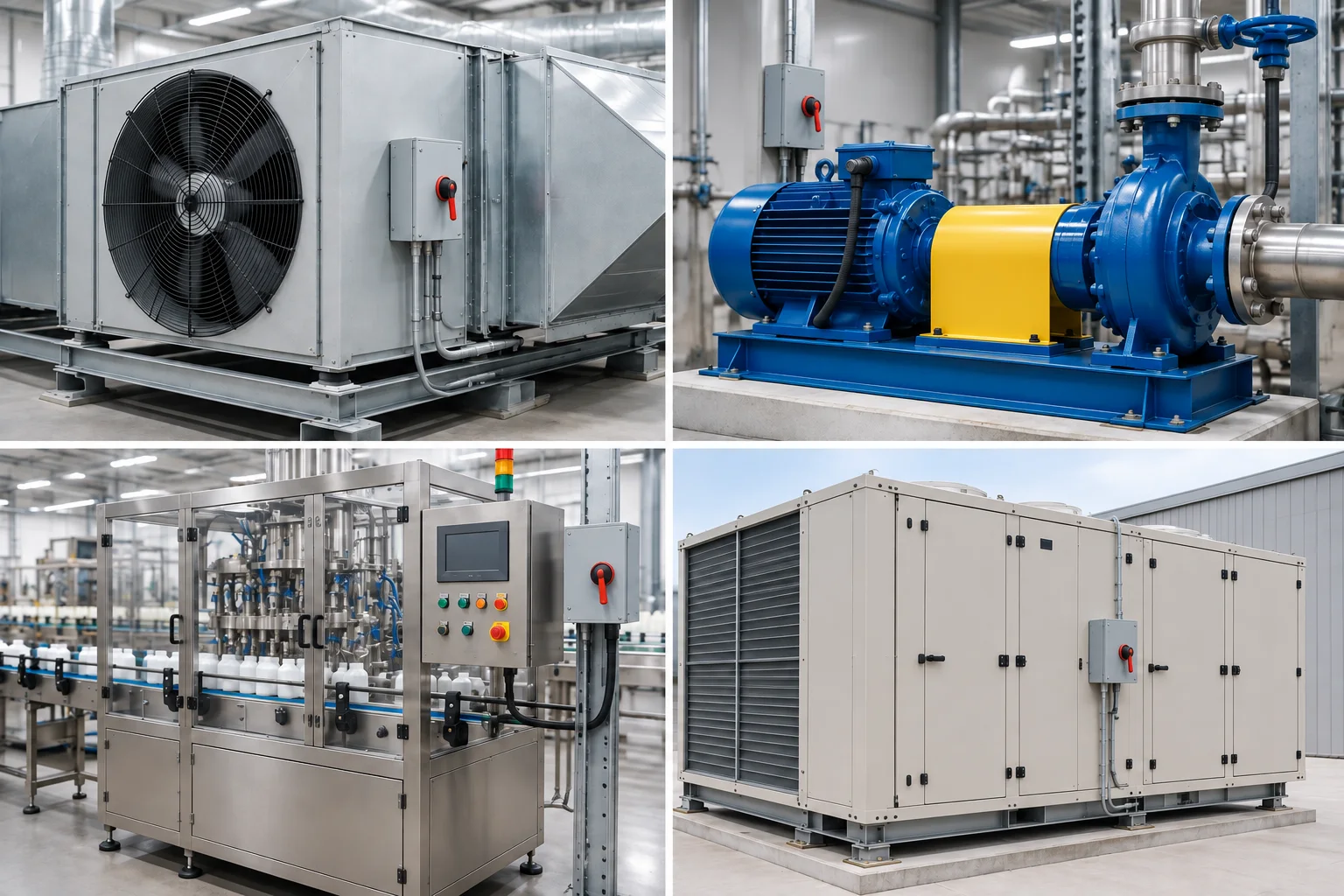
Greenheck’s HVAC selection guide discusses equipment and motor requirements. For a washdown example, Leviton’s Gielow Pickles case study describes water and pickle-juice intrusion during production and cleaning. The project addressed watertight devices and handle grip for wet or gloved hands.
When you describe the environment to a supplier, that level of detail helps. “High-temperature washdown with cleaning chemicals” gives the review team more to work with than “wet location.”

What does OFF mean inside the panel?
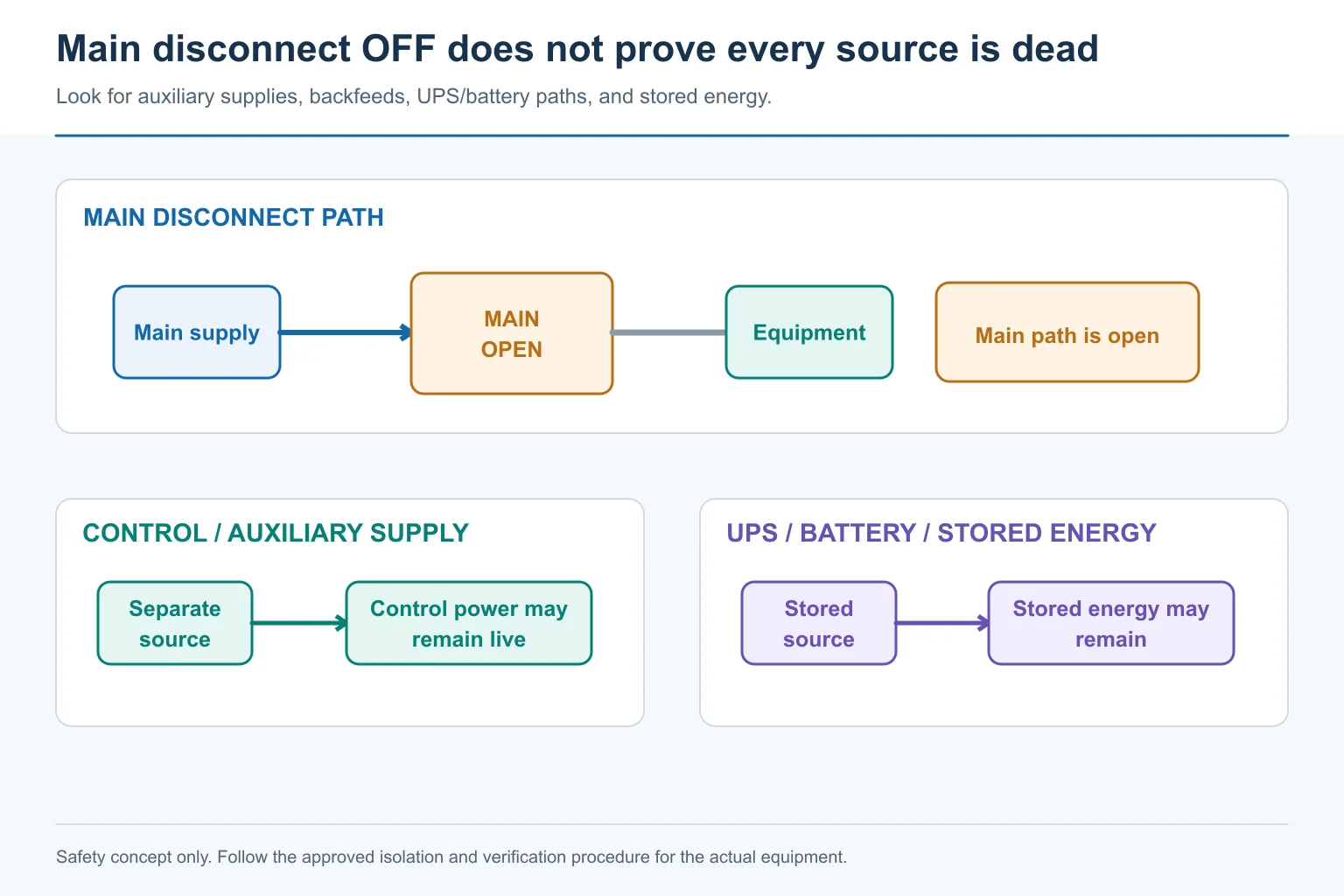
OFF tells you the position of that disconnect. Its incoming terminals can still be live, and a panel may also contain a separate control supply, UPS, battery, or stored energy.
For maintenance, a qualified person must verify the de-energized condition under the applicable electrical safety procedure, including other supplies and possible backfeed. OSHA’s electrical work-practice requirements cover this verification. A push button or selector switch is a control device rather than an energy-isolating device, as described in OSHA’s hazardous-energy standard.
On your drawing, identify the sources and show which circuits the disconnect opens. This gives the panel builder and maintenance team a clear reference.
Questions to ask before specifying a disconnect switch for a control panel
Start with the device’s electrical job, then work outward to the mounting and enclosure. These questions make a useful review sheet for your electrical designer and panel builder.

| What to confirm | What to put in the specification |
|---|---|
| What will it disconnect? | Machine supply, feeder, branch circuit, motor, or local equipment; whether it must open a running load |
| What supply and load will it handle? | AC or DC, voltage, phase, poles, current, motor rating where applicable, and switching duty |
| How is the circuit protected? | Fused or non-fused arrangement, fuse class or breaker details, and the location of the protective device |
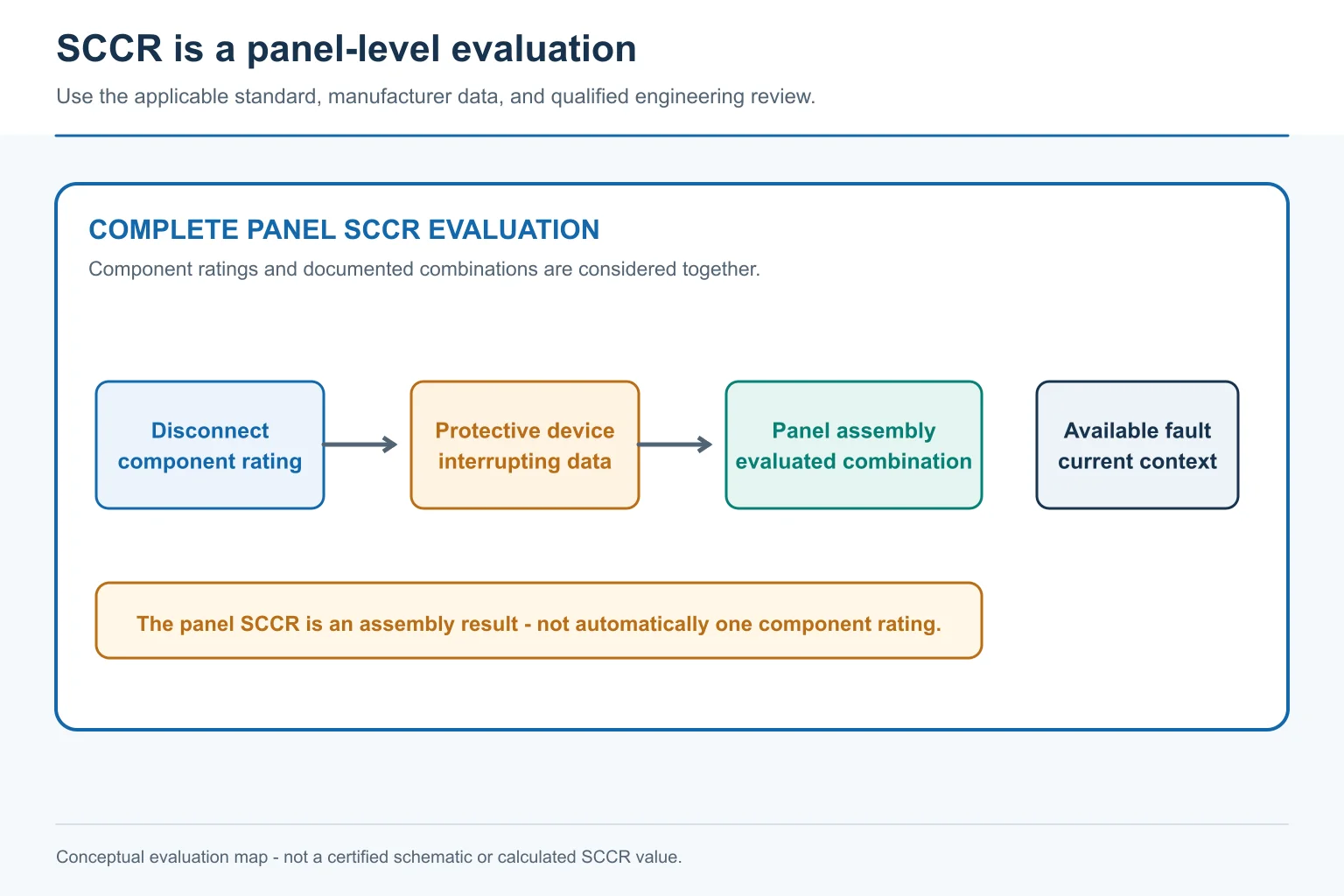
| What fault level applies? | Available fault current and the required short-circuit current rating, or SCCR, of the assembly |
| Which requirements govern the choice? | Installation country, applicable code and equipment standard, device markings, and customer requirements |
| How will people operate and access it? | Handle position, locking provisions, door interlock, and identification of other power sources |
| How does it fit the enclosure? | Device and handle part numbers, mounting layout, shaft dimensions, cutout, wiring space, and door travel |
| What will the enclosure face? | Indoor or outdoor location, dust, moisture, corrosion, washdown conditions, and the specified enclosure protection target |
For SCCR, review the combination and its conditions of use. The interrupting rating of one breaker doesn’t establish the rating of the whole panel. UL’s combination-component guidance is a useful reference for that distinction.
Device markings also affect where a switch belongs in the circuit. Mersen’s UL 98 and UL 508 comparison explains the different application boundaries. Keep the intended circuit position alongside the part number when your electrical designer reviews the selection.
How FN helps you get the enclosure ready for your disconnect
Once you’ve chosen the device, the next question is practical: will the enclosure arrive with the openings and mounting details your team needs?
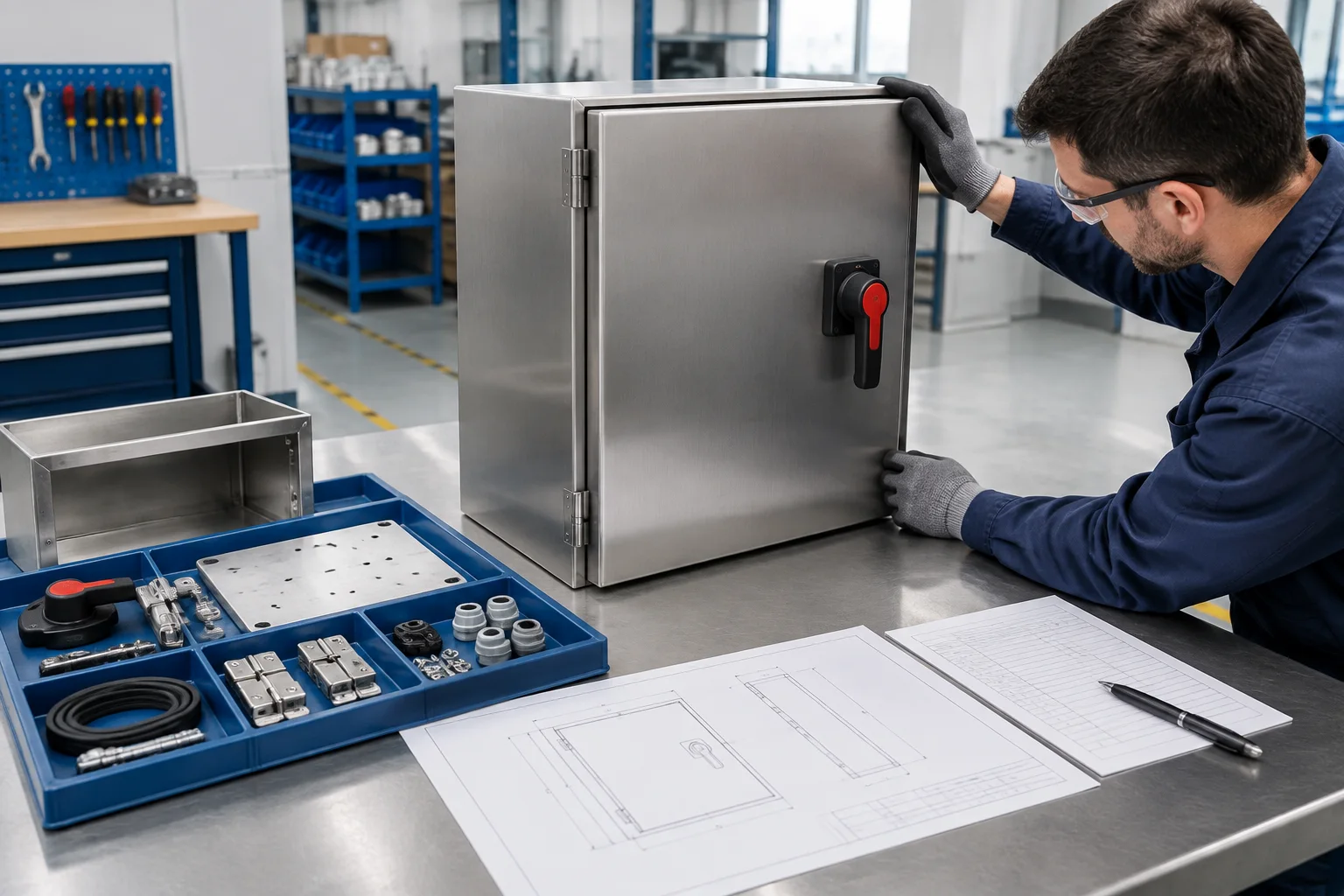
At FN Enclosure, we build custom electrical enclosures from your drawings. We review the cutouts, mounting plate, cable entries, door hardware, and gasket fit before production release. For a disconnect-equipped panel, that review connects your selected hardware to the cabinet your team will assemble.
Your cutouts follow the selected hardware
Send us the switch and handle drawings with your panel layout. We use the approved opening dimensions and mounting references to define the enclosure cutouts and fixing points.
That lets you review the handle position and mounting arrangement on the drawing, while changes are still drawing changes. Include the shaft dimensions and manufacturer-specified clearances so those details can be considered with the door and mounting plate.

You can see whether the layout leaves enough room
The switch body needs space, and so do its cable connections. Our enclosure review covers mounting interfaces, component clearances, cable-entry locations, and service access using the layout you provide.
You can then check whether the enclosure dimensions suit the way your team will route the cables and reach the terminals. Our electrical enclosure sizing guide helps you organize those space requirements before approving the cabinet dimensions.
A first article gives you something physical to approve
For projects that include a first article, we check agreed dimensions, openings, door and hardware fit, gasket details, and finish. You have a physical reference to review before approving the batch.
The approved drawing revision and inspection points then give repeat orders a defined reference. If a handle, opening, or mounting detail changes, the revised drawing records what the next build should follow.
Your quote shows what arrives with the enclosure
We define the enclosure supply with you, including the body, door, mounting plate, cutouts, hardware, and any specified mechanical accessories. The quotation also identifies who supplies the disconnect and who handles wiring, electrical testing, and final assembly.
You can compare quotes against the same parts and responsibilities, rather than trying to work out what each supplier has included. Our guide to electrical enclosures and control panels explains how to separate those items in an RFQ.
FAQ
Is a disconnect switch the same as an isolator?
The terms overlap in everyday use. The product marking tells you whether the device is suitable for isolation, load switching, or both. Use the stated duty and AC or DC configuration when selecting it.
Do I need a separate disconnect if the panel has a circuit breaker?
It depends on whether the breaker is suitable, where it is located, and what the equipment requires. A suitable breaker may provide the disconnecting function. Ask your electrical designer to confirm the arrangement before reserving space for an additional device.
Can I use a non-fused disconnect?
Yes, when the circuit design provides the required overcurrent protection elsewhere and the switch is rated for the application. Include the protective device details with the disconnect specification so both can be reviewed together.
Send us the part number and your layout
For an enclosure quote, send the disconnect and handle part numbers, the available device drawings, and your panel layout. Add the enclosure dimensions, material and finish, installation environment, quantity, and drawing revision.
Still working on the layout? A sketch or PDF can start the conversation. We’ll review the enclosure details and identify what needs to be confirmed before production release.