

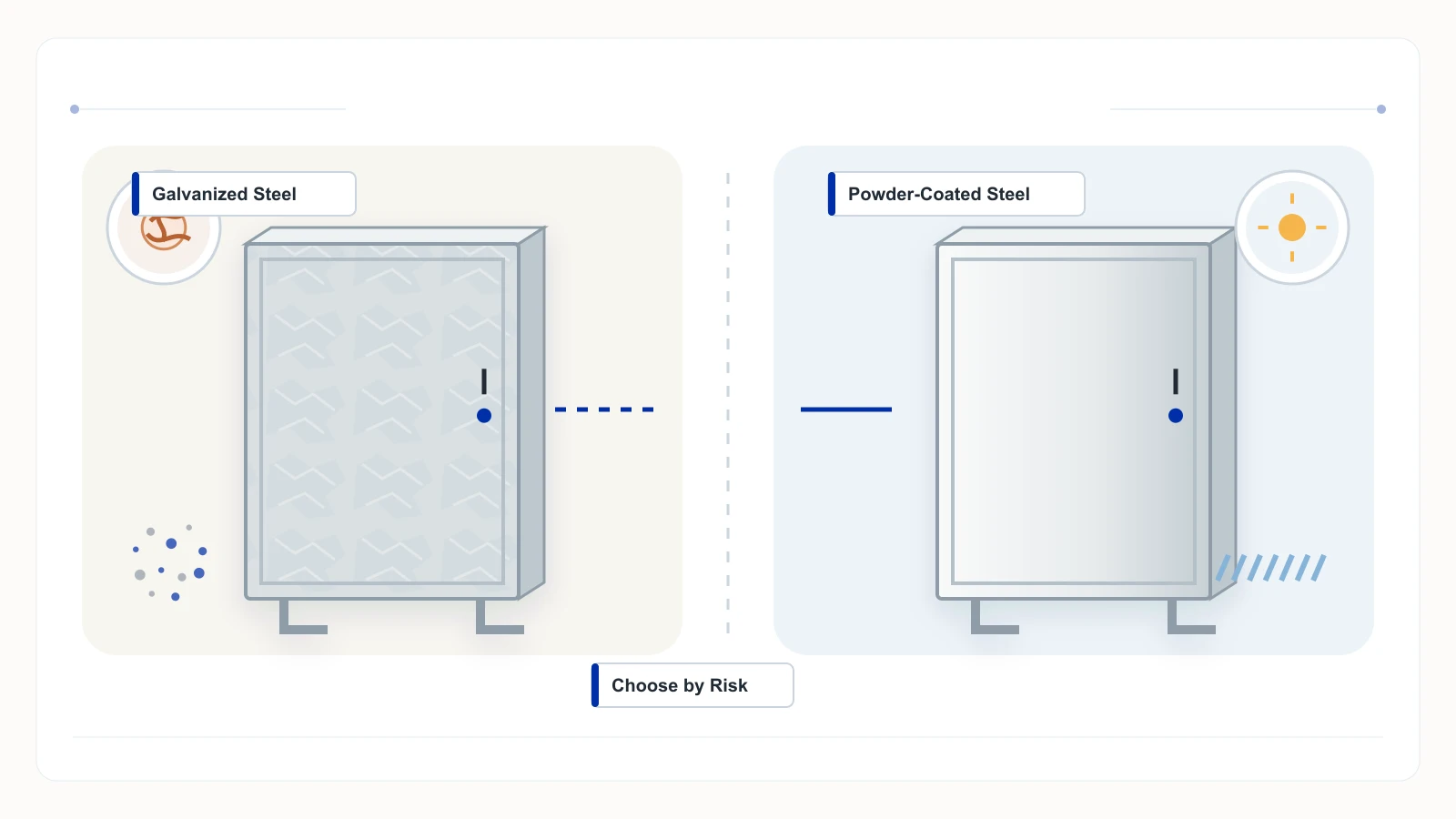
If a quotation says only “galvanized steel” or “powder-coated steel,” it does not tell you enough to choose the enclosure. If you are specifying a galvanized steel electrical enclosure, the same rule applies: define the complete protection system, not just the material name.
The useful question is: what is most likely to fail first at the installation site?
- Choose properly pretreated powder-coated steel when the enclosure is indoors or covered and finish control, appearance, and color matter.
- Consider galvanized steel when handling, abrasion, exposed edges, or moderate outdoor exposure are the main risks.
- Compare a compatible zinc-plus-powder system when you need both a zinc protection layer and a controlled finish.
- Move the discussion to stainless steel or another project-specific system when saltwater, chemical spray, severe washdown, or difficult maintenance access makes coating damage costly.
That is the short answer. The rest of the decision depends on the substrate, surface preparation, edges, welds, hardware, openings, and maintenance plan—not the finish name on the first line of the quote.
Start with the failure mode, not the finish label
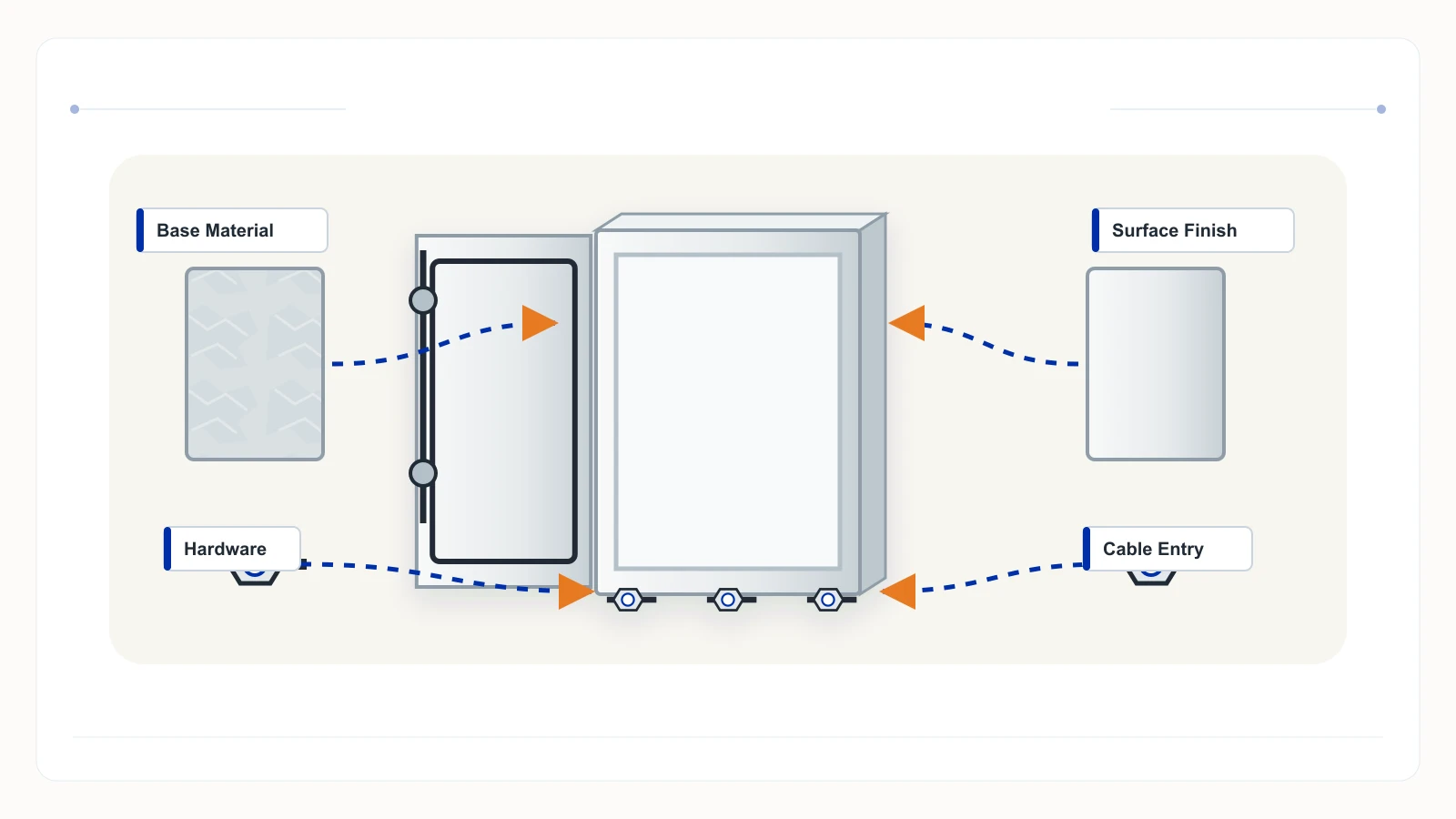
Two enclosures can both be described as “powder-coated steel” and behave very differently in service. They may use different steel substrates, pretreatment steps, coating systems, edge treatments, fasteners, and fabrication routes.
The same is true of “galvanized steel.” The term may refer to continuously galvanized sheet, electrogalvanized sheet, or steel galvanized after fabrication. Those are different production routes. They should not be treated as one interchangeable material.
Before comparing prices, ask what the supplier means by the label:
- What is the base steel and its thickness?
- How was the surface prepared?
- What coating or zinc layer is actually applied?
- How are cut edges, welds, holes, and repaired areas protected?
- Which hardware, gasket, and cable-entry details are included?
- What inspection or process records come with the shipment?
If the answer stops at a color code or a material name, the specification is still incomplete.
Galvanized steel: useful zinc protection, but not a complete enclosure specification
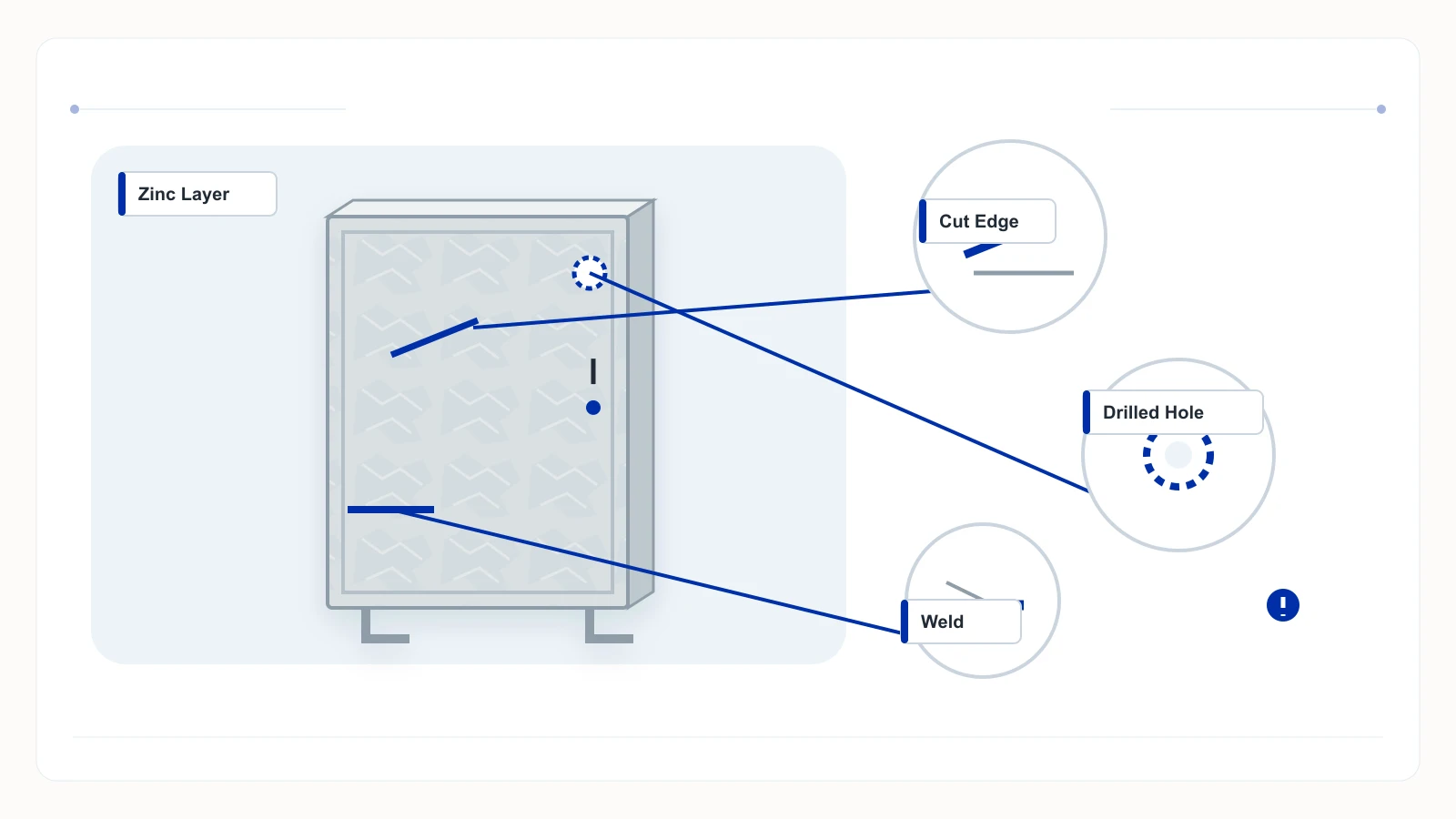
Galvanized steel protects the underlying steel with a zinc layer. The American Galvanizers Association duplex-systems reference is a useful technical reference for the zinc-plus-coating concept and its preparation requirements. That can be useful when the enclosure will be handled, scratched, drilled, or exposed to ordinary outdoor conditions. A damaged area is not automatically equivalent to bare unprotected steel because the zinc layer can provide sacrificial protection in the surrounding area.
That does not make every galvanized enclosure suitable for every outdoor site. The result still depends on the galvanizing route, zinc coverage, edges, weld areas, drilled holes, fasteners, drainage, and the chemicals present at the site.
Galvanized steel is a reasonable starting point when:
- the enclosure is exposed to weather but not aggressive chemical spray;
- handling and abrasion are more likely than continuous washdown;
- the finish is not the main architectural requirement;
- the design needs a practical corrosion-protection layer around fabricated steel; and
- the supplier can explain how cut edges, welds, holes, and field modifications are treated.
It is not a shortcut around engineering review. A galvanized sheet can still be damaged during fabrication. A drilled hole can still become a corrosion site. A dissimilar-metal connection can still create an interface problem. Water can still collect where the enclosure has poor drainage.
Powder-coated steel: controlled finish, dependent on preparation
Powder coating gives the enclosure a controlled decorative and protective finish. It is often attractive for indoor equipment, covered installations, OEM machines, and projects that need a consistent color or appearance.
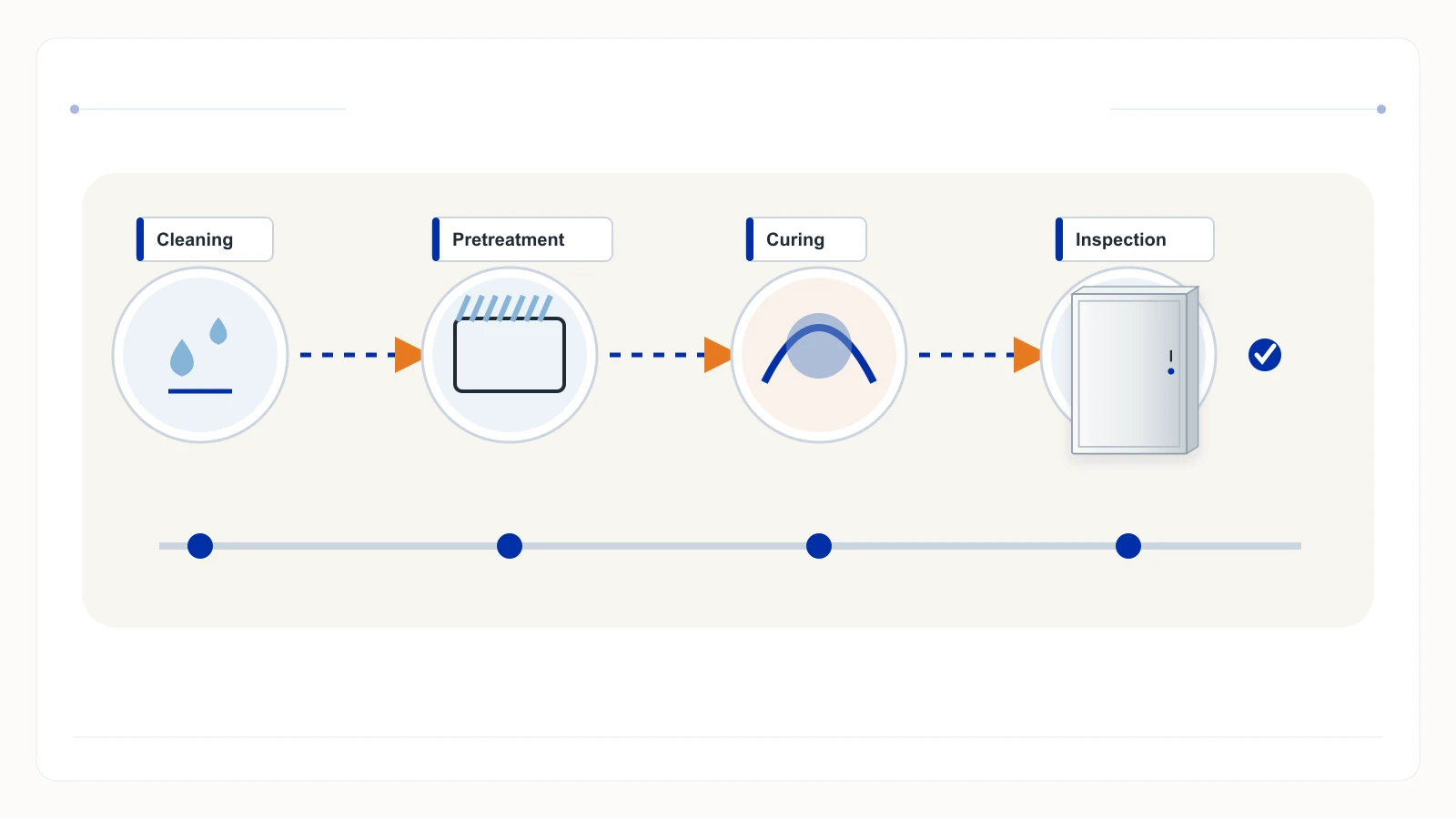
The coating is only as reliable as the system underneath it. Surface cleaning, pretreatment, primer or bonding layer, powder selection, cure conditions, film coverage, edges, welds, and handling all affect the finished result. FN’s separate powder-coated steel pretreatment guide covers that process in more detail.
Powder-coated steel is a reasonable starting point when:
- the enclosure is indoors or protected from direct weather;
- color, appearance, and finish consistency matter to the OEM or end user;
- the site has limited abrasion and no severe chemical exposure;
- the surface-preparation and curing process is defined; and
- the buyer can inspect the finished surface without treating appearance as the only acceptance criterion.
A smooth finish does not prove that the substrate was correctly prepared. It also does not prove that the enclosure will retain its protection after field drilling, welding, grinding, or replacing hardware.
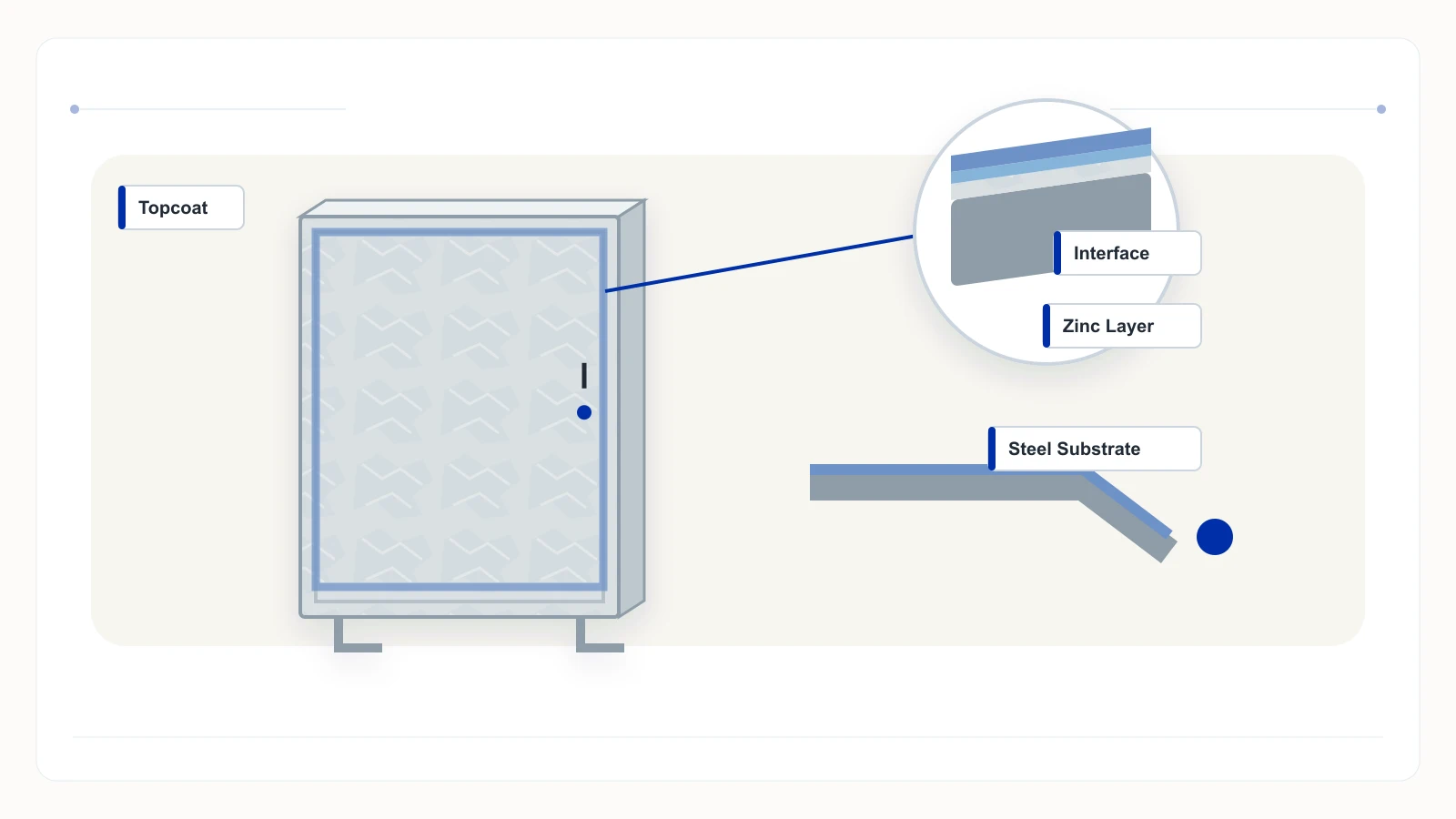
Powder-coated galvanized steel: when a duplex system makes sense
The American Galvanizers Association describes a duplex system as paint or powder coating applied over hot-dip galvanized steel. Surface preparation requirements differ for paint and powder coating; confirm the preparation and coating procedure for the specified substrate.
This option can make sense when the project needs:
- a zinc-based protection layer beneath the finish;
- a controlled external appearance;
- additional protection around a fabricated steel enclosure; and
- a specification that separates substrate, preparation, topcoat, and inspection.
Do not assume that every zinc-coated sheet with a powder finish is the same as a properly specified hot-dip-galvanized duplex system. State the substrate and production route. Ask the coating supplier or fabricator to confirm the preparation method, compatibility, cure requirements, and adhesion expectations.
The word “duplex” should make the quote more specific, not more impressive.
What real project examples can—and cannot—tell you
Published supplier cases are useful because they show the conditions that led to a material decision. They are not independent lifetime guarantees, and they do not prove that the same configuration will work at another site.
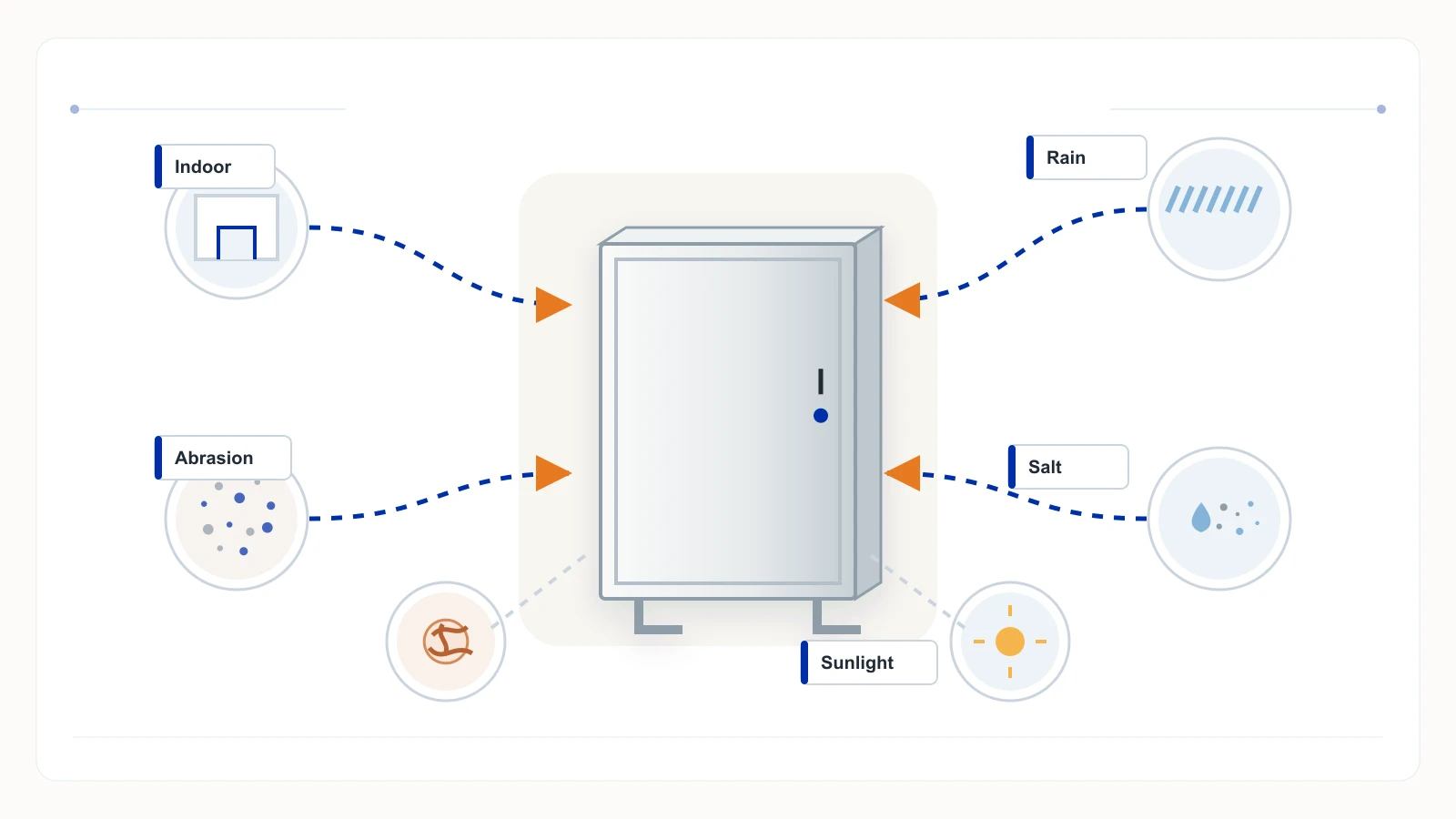
Remote mining: one site can contain several exposure zones
A supplier-published case for a remote iron-ore operation describes a large, dusty site with weather exposure, corrosive processing areas, remote control and communications equipment, internal heat, and occasional washdown. The case lists several enclosure material options, including galvanized steel, powder-coated steel, aluminum, and stainless steel.
The useful lesson is not that one material won. It is that a large site should not automatically receive one finish everywhere. Map the exposure by location. Then specify the material, cooling, openings, hardware, and maintenance approach for each zone.
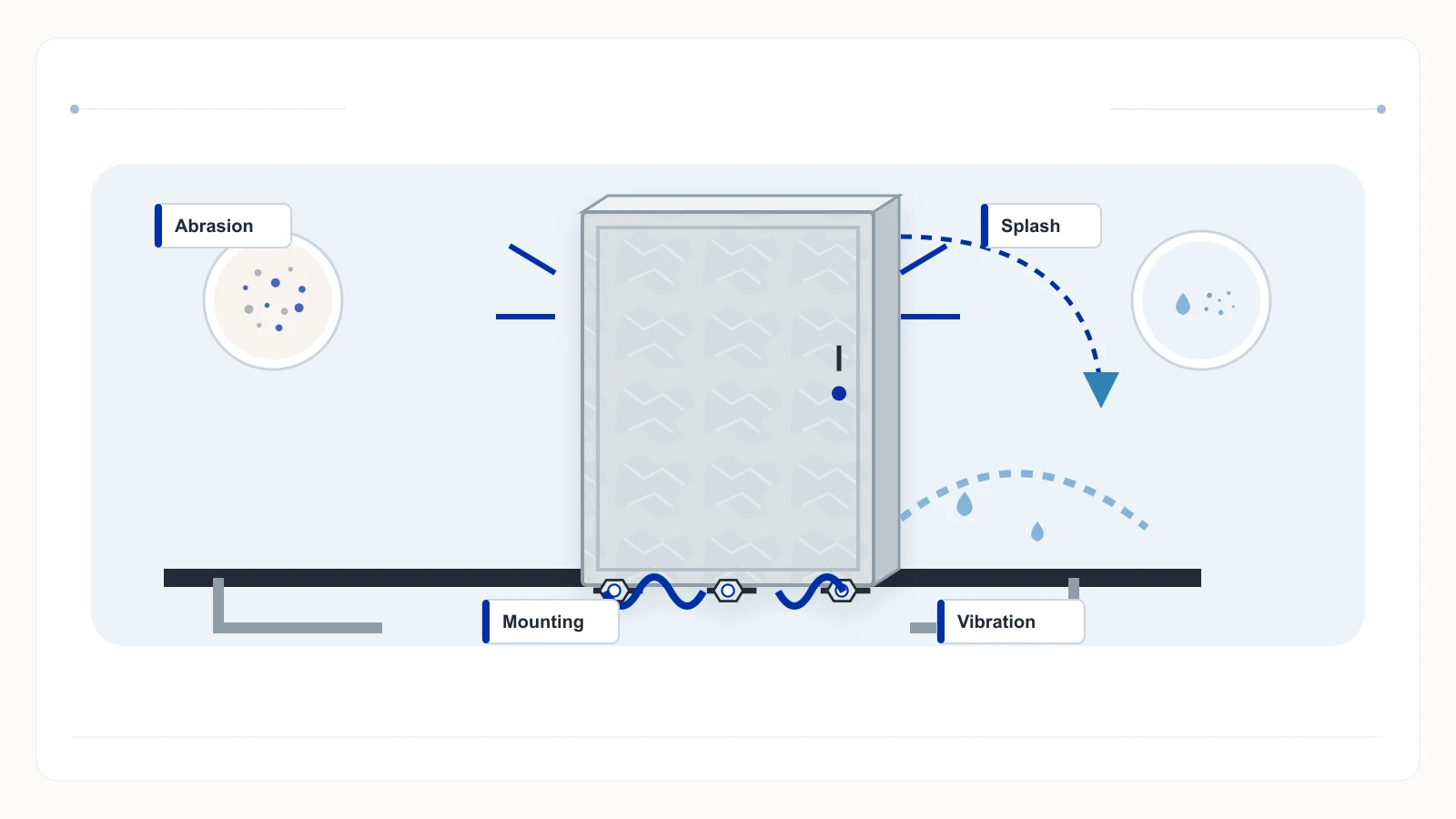
Refuse trucks: abrasion and movement change the question
A Delvalle case for onboard electrical enclosures on garbage trucks lists galvanized and painted or powder-coated steel among the material options. A vehicle enclosure faces handling, vibration, dirt, water, and repeated service access. That is a different problem from a powder-coated cabinet mounted inside a clean electrical room.
The buying lesson is simple: when impact, vibration, and abrasion are part of the environment, compare more than corrosion labels. Review mounting, door load, fasteners, cable entry, repair access, and how the finish will be protected during installation and service.
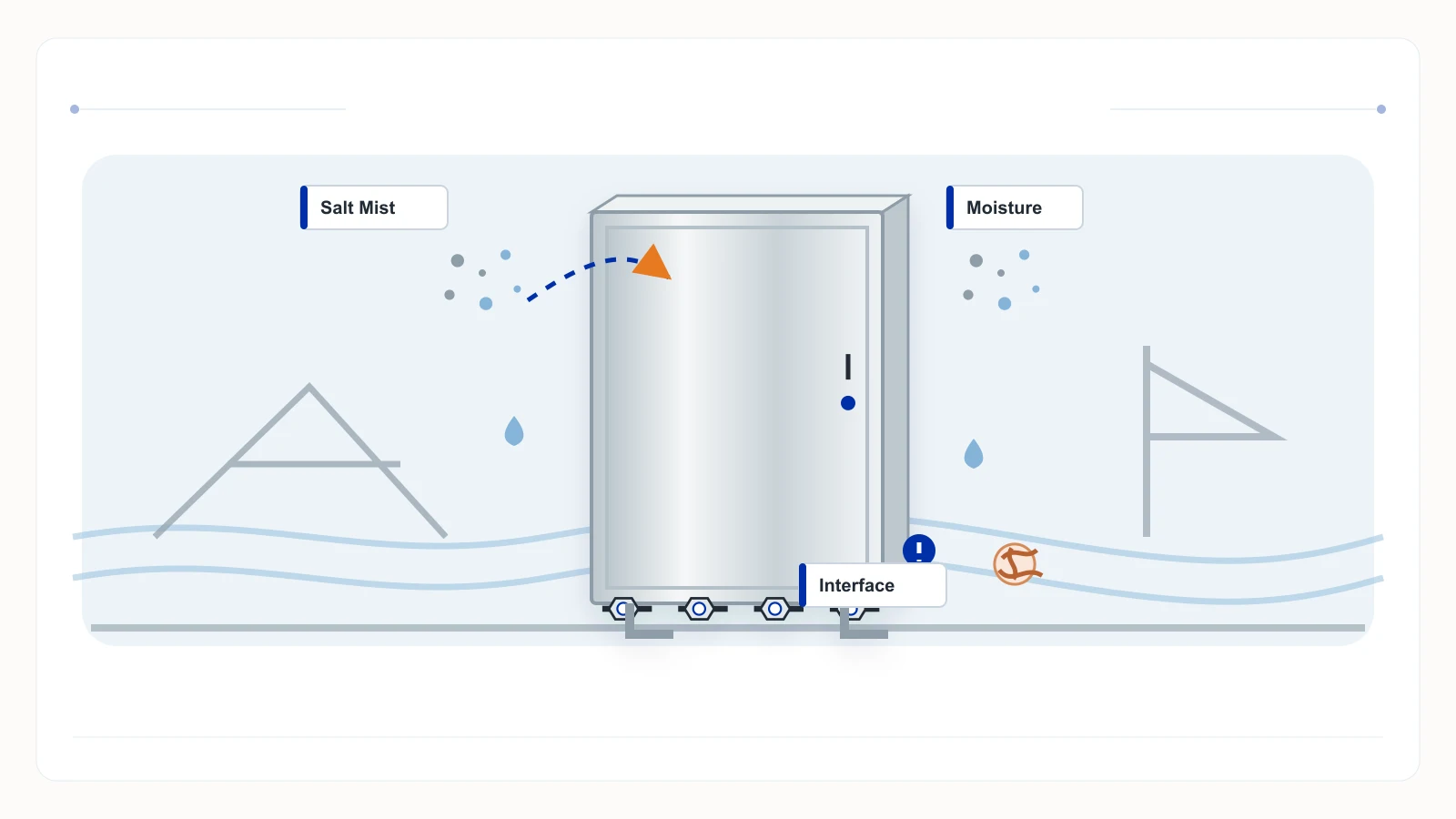
Marine and offshore sites: the coating decision may no longer be the main decision
The case corpus also contains marine, offshore, port, and coastal examples where stainless steel or aluminum is used instead of relying only on a coated carbon-steel system. Those examples do not prove that stainless steel is always required. They show why salt-laden air, moisture, chemicals, difficult access, and the cost of downtime can push a project toward a different material system.
For a coastal or washdown project, read the coastal corrosion guide and compare the full specification. A finish choice made without the exposure map is usually too early.
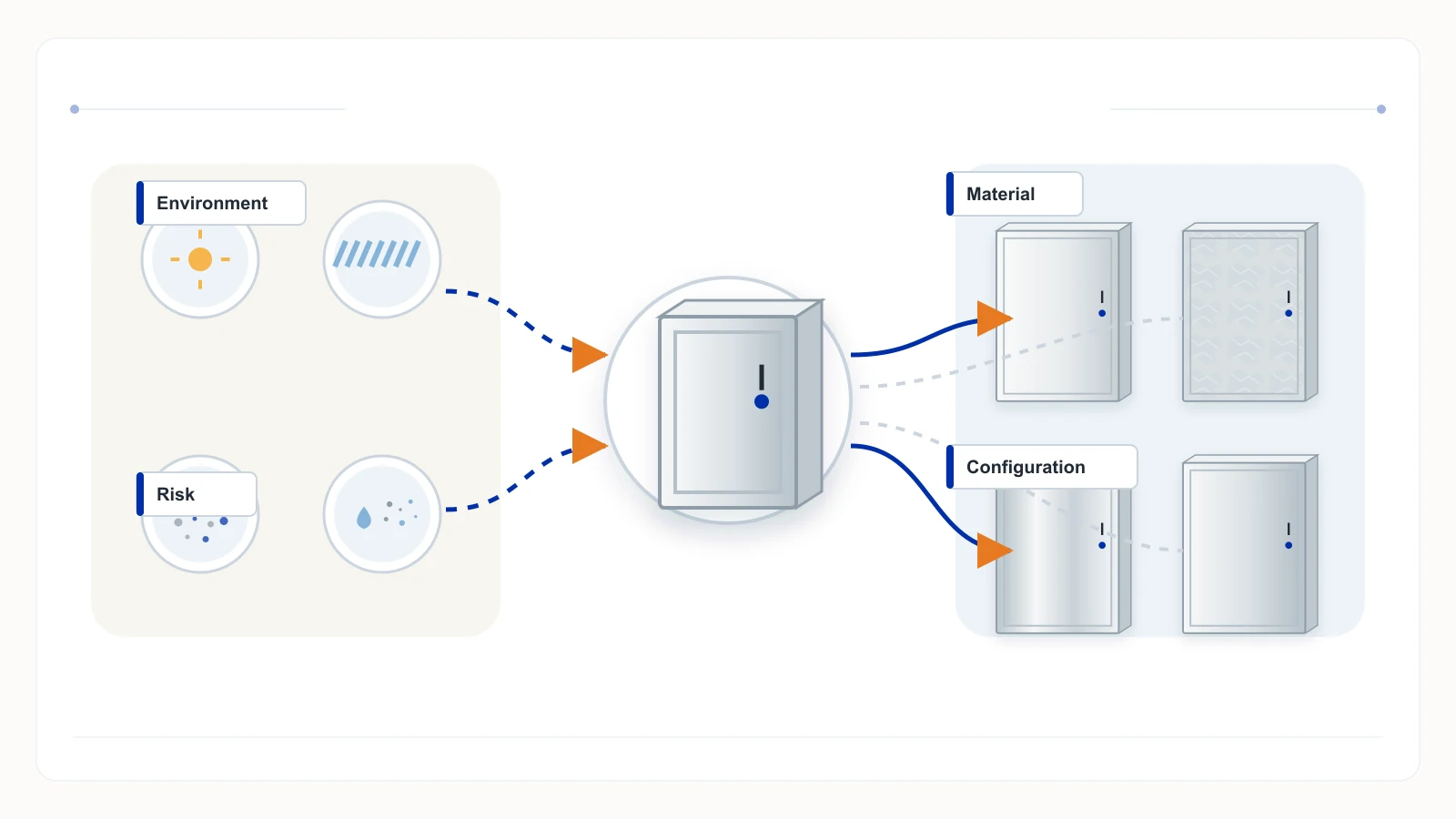
A practical comparison by risk
| Project condition | Starting point to evaluate | What must still be checked |
|---|---|---|
| Indoor electrical room or covered machine | Pretreated powder-coated steel | Pretreatment, cure, finish coverage, grounding and mounting |
| Outdoor cabinet with handling or abrasion | Galvanized steel or a zinc-plus-powder system | Cut edges, welds, holes, fasteners, drainage and field repairs |
| Outdoor project that needs color and controlled appearance | Powder-coated steel or compatible duplex system | Substrate, pretreatment, compatibility, film coverage and inspection |
| Coastal, salt-laden or chemically aggressive site | Stainless steel or a project-specific system | Chlorides/chemicals, gasket, hardware, openings, maintenance and evidence |
| Frequent washdown or hygienic production | Material and geometry selected together | Cleaning chemistry, ledges, seams, door seal, cable entry and access |
| Remote site where replacement is difficult | The system with the lower lifecycle risk, not automatically the lowest quote | Inspection, spare parts, repair method, access and documentation |
This table is a starting point, not a certification statement. The final enclosure rating and corrosion performance belong to the finished configuration and the project conditions.
The details that usually decide the result
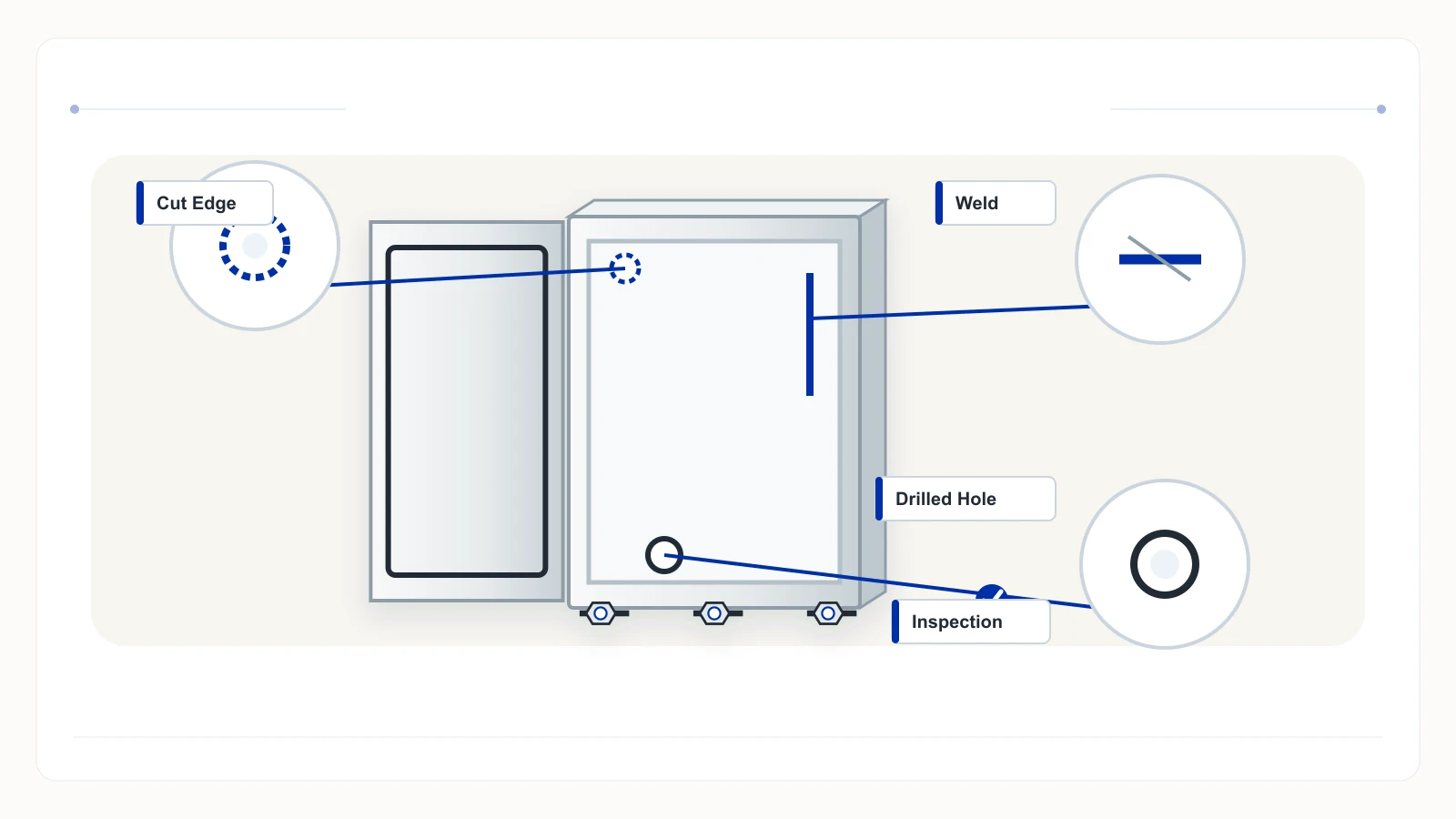
Edges, welds, and drilled holes
Large flat panels are easy to describe. Edges and interfaces are where the specification becomes real. Ask how the supplier handles cut edges, weld discoloration, ground areas, mounting holes, door returns, and any surface damaged during fabrication.
If the field team adds holes after delivery, the original material or coating specification may no longer describe the finished assembly. Decide in advance who approves the modification and how the exposed area is protected.
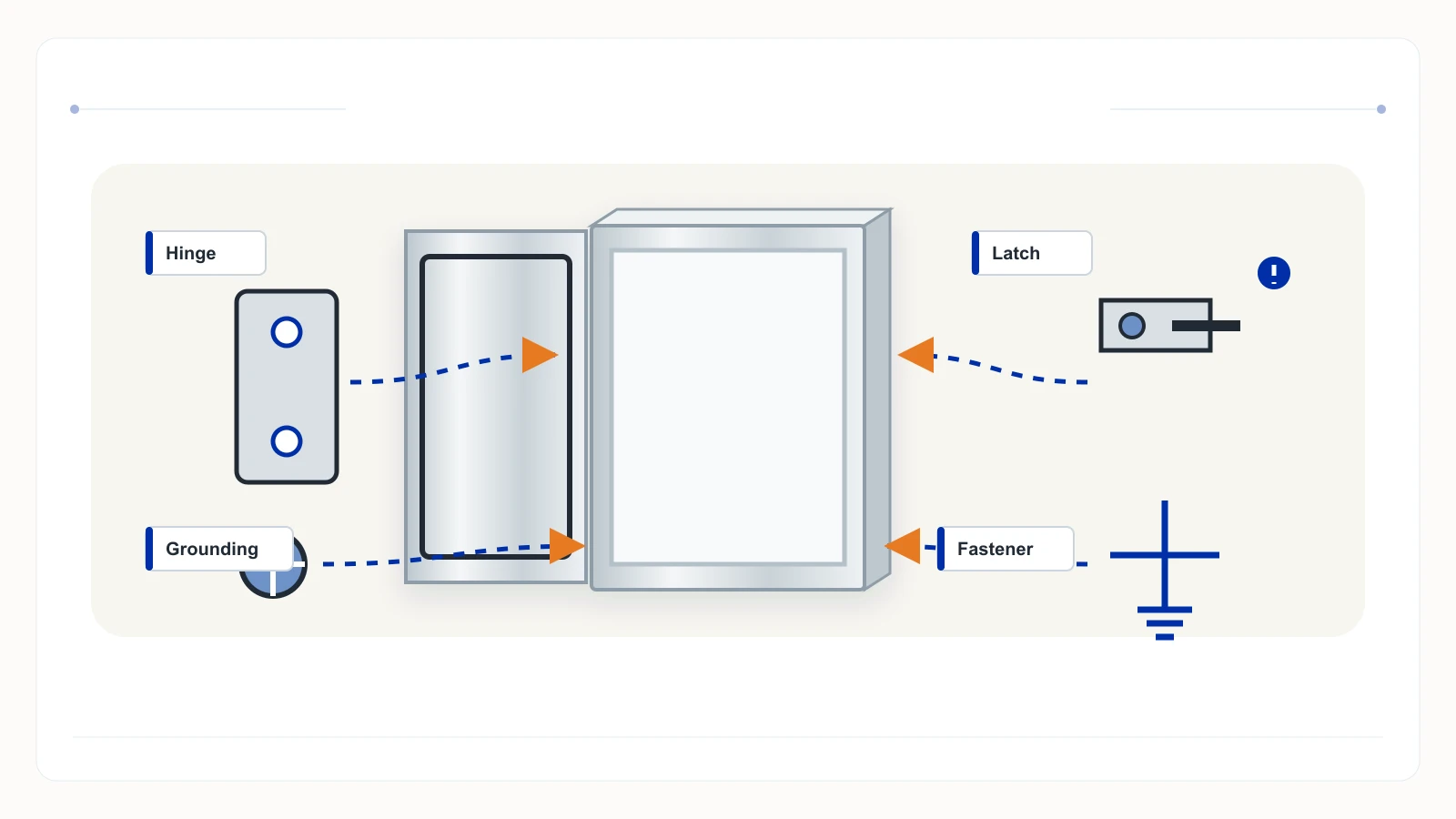
Hardware and mixed-metal interfaces
A coated panel does not isolate every metal interface forever. Fasteners, hinges, locks, mounting brackets, gland plates, and bonding points should be reviewed with the exposure in mind. Avoid treating hardware as an afterthought just because the enclosure body has a corrosion-resistant finish.
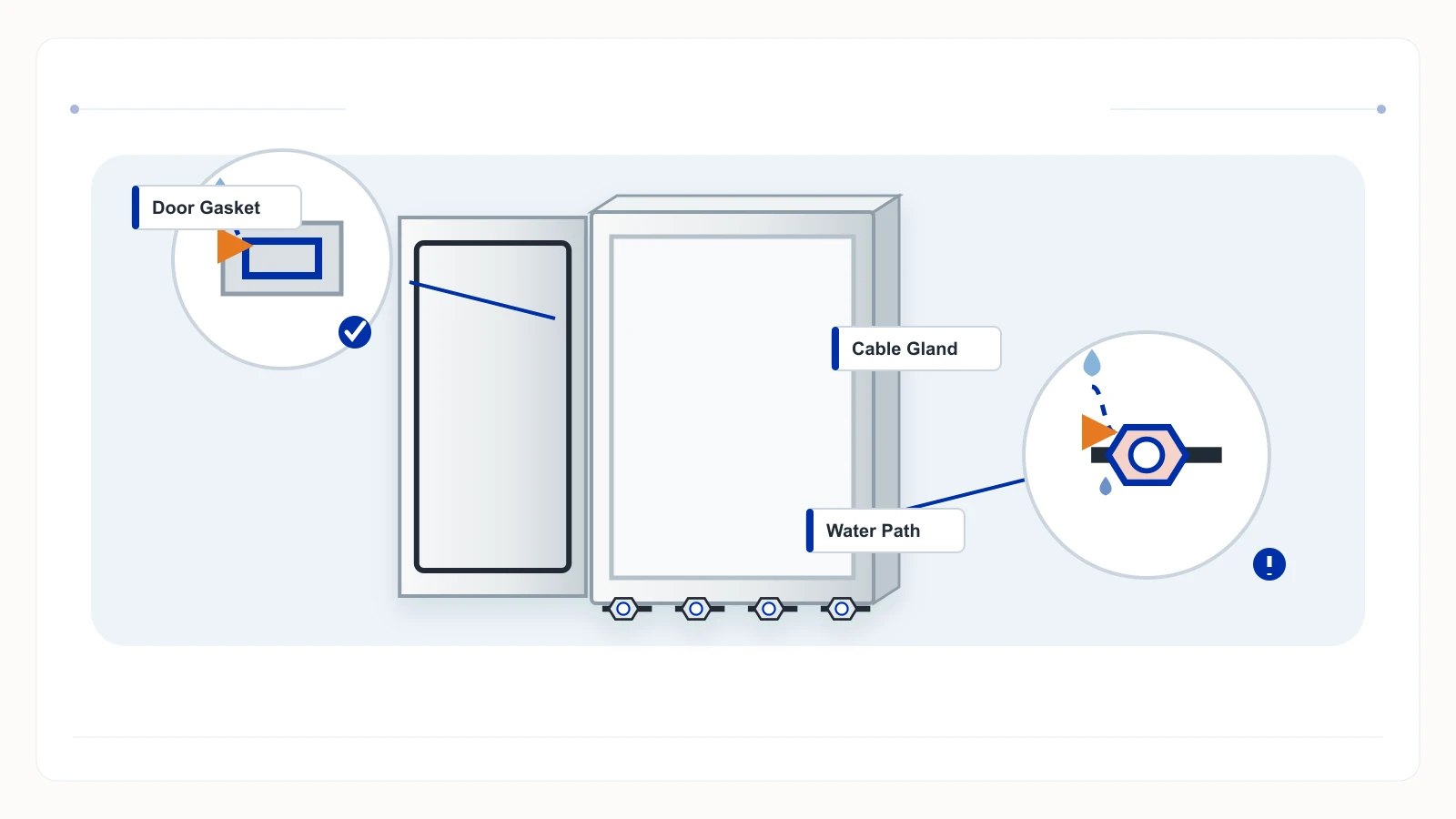
Gaskets and cable entries
A material choice cannot compensate for a poor door seal or an uncontrolled cable entry. Review gasket compression, gasket material, door alignment, gland plates, cable glands, drain or pressure-equalization details, and the direction from which water can reach the enclosure.
For this part of the design, see Cable Glands & Gland Plates: Prevent Water Ingress. The question is not simply whether the empty box has a rating. It is whether the installed openings and accessories match the required finished assembly.
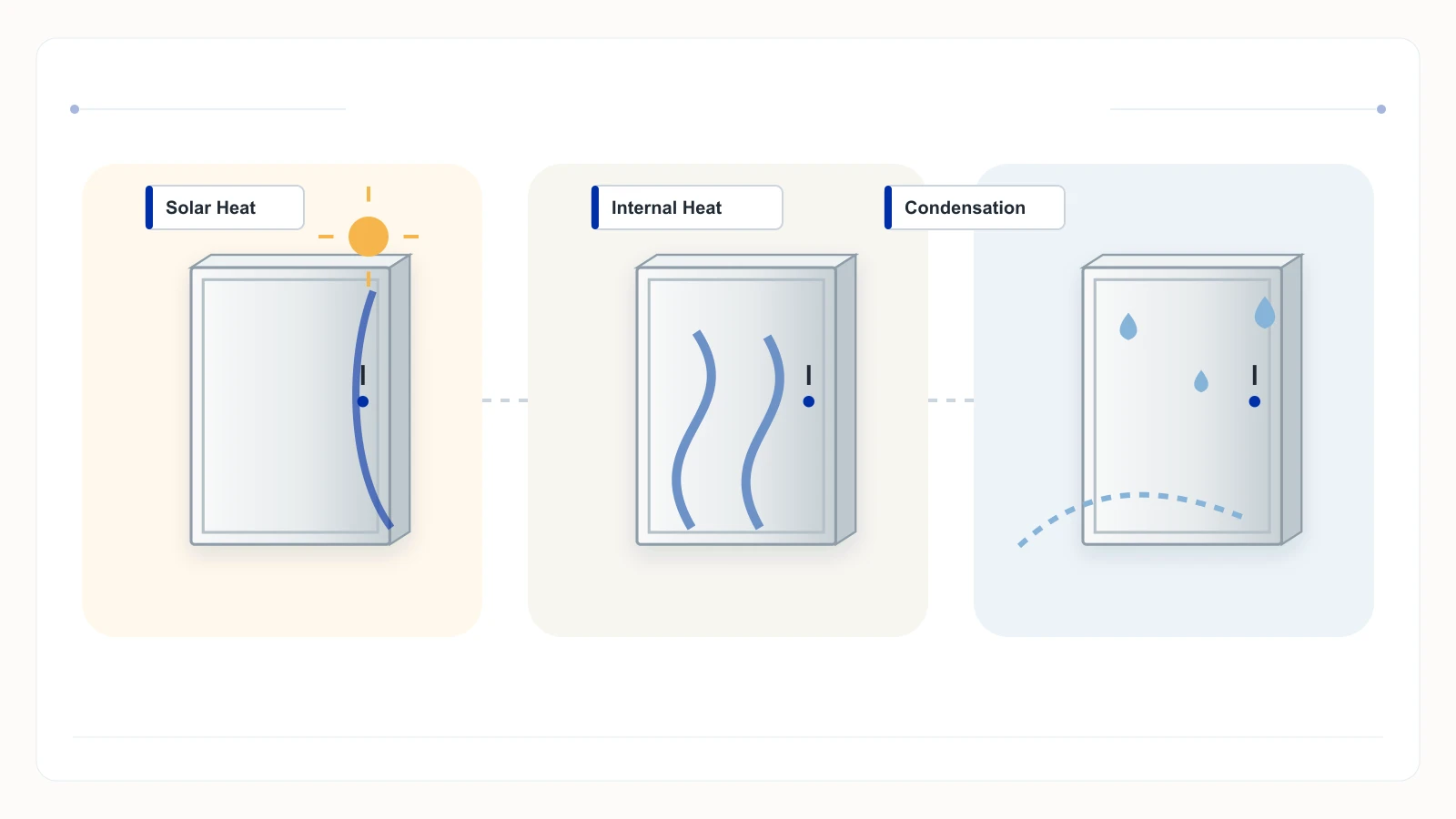
Heat, condensation, and sunlight
A coating decision does not solve internal heat or condensation. A sealed outdoor cabinet can still collect moisture during temperature cycles, and internal components can still generate heat. If the enclosure needs a fan, filter, heater, breather, heat exchanger, or air conditioner, include that requirement before freezing the material choice.
Use the outdoor enclosure checklist and the cooling guide for those separate decisions.
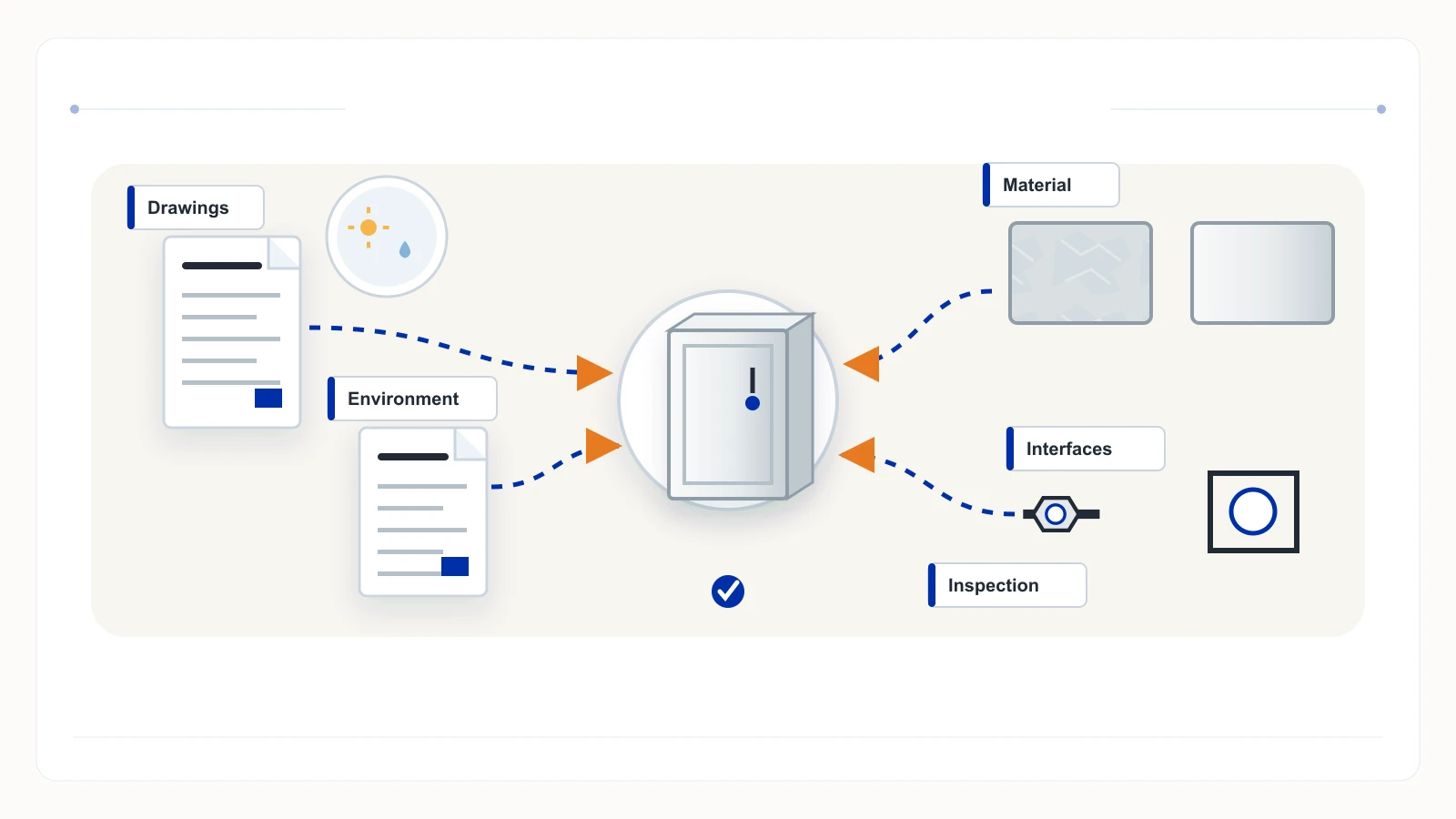
What to put in the RFQ
Do not write only “powder-coated steel electrical enclosure.” Give the supplier enough information to select and quote the system:
- installation location and indoor/outdoor condition;
- rain, salt, chemicals, washdown, dust, UV, vibration, and temperature exposure;
- enclosure dimensions, sheet thickness, door arrangement, and mounting method;
- base material and galvanizing route, if galvanized steel is proposed;
- pretreatment, primer, powder system, color, and cure requirements;
- treatment of edges, welds, holes, repaired areas, and field modifications;
- gasket, hinges, locks, fasteners, gland plate, cable glands, and bonding points;
- required IP rating or NEMA enclosure type, if applicable;
- heat load and any cooling or condensation-control accessories;
- inspection photos, dimensional checks, coating-process records, or test evidence;
- quantity, drawing revision, sample or first-article requirements; and
- packaging and protection requirements for transport and site installation.
The more specific the inputs, the less likely it is that two suppliers are quoting different protection systems under the same finish label.
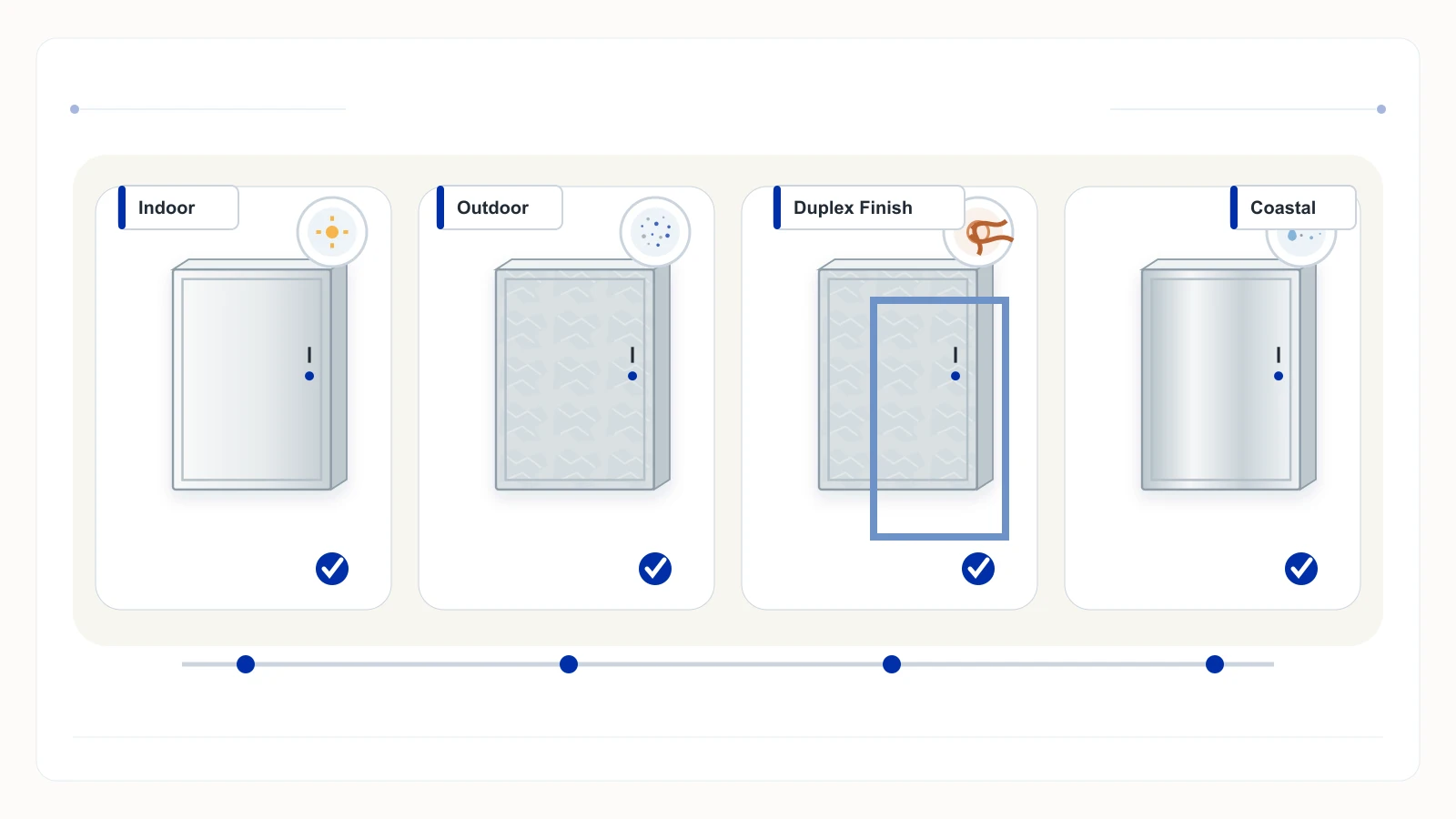
So, which one should you choose?
Choose powder-coated steel when the project is controlled enough for pretreatment, finish consistency, and appearance to matter more than abrasion or exposed-edge risk.
Choose galvanized steel when the project needs a zinc-based protection layer and the main risks include handling, scratches, and ordinary outdoor exposure.
Choose a compatible duplex system when you need both zinc protection and a controlled topcoat, and the supplier can define the substrate, preparation, compatibility, and inspection.
Choose stainless steel or another project-specific system when saltwater, chemicals, severe washdown, or difficult maintenance access makes a coating failure too expensive to tolerate. If you are comparing 304 and 316, use the 304 vs 316 stainless steel enclosure guide rather than treating stainless steel as one material.
The safest answer is not “galvanized is better” or “powder coating is better.” It is: choose the material and finish system that addresses the first credible failure mode, then specify the complete finished enclosure around it.
If you are preparing an enclosure RFQ, send the drawing, installation environment, exposure details, openings, material preference, quantity, and required documentation. That gives the supplier something concrete to review instead of forcing a decision from a finish name alone.
Frequently asked questions
Is galvanized steel better than powder-coated steel for electrical enclosures?
Not universally. Galvanized steel can be a useful starting point when scratches, handling, and moderate outdoor exposure are important. Powder-coated steel can be a useful starting point when appearance and finish control matter. Severe salt, chemicals, or washdown may require stainless steel or another project-specific system.
Can galvanized steel be powder coated?
Yes, but the quote should identify the galvanized substrate and the preparation and coating procedure. Hot-dip-galvanized steel with a compatible topcoat is commonly described as a duplex system. Do not assume that every zinc-coated sheet follows the same preparation route.
Does a powder-coated enclosure automatically resist corrosion?
No. Corrosion resistance depends on the substrate, preparation, coating system, film coverage, edges, welds, hardware, openings, and exposure. A color or smooth surface is not enough evidence.
Should every outdoor enclosure be galvanized?
No. Outdoor exposure can mean ordinary rain, UV, salt-laden air, chemical spray, washdown, dust, temperature cycling, or vibration. The material decision should follow the actual exposure and the consequences of maintenance or replacement.
Does NEMA or IP rating prove the coating system will last?
No. NEMA and IP terminology describes enclosure protection characteristics within their respective standards and test boundaries. It does not replace a material, coating, fabrication, or maintenance specification. Review the official NEMA enclosure type definitions separately from the corrosion-protection system.