

If you are comparing a junction box vs electrical enclosure, start with the job the box has to do.
A junction box is usually a compact enclosure for joining, branching, or terminating conductors. An electrical enclosure is the broader housing term. It can hold terminals, controls, power components, instrumentation, or a complete internal assembly.
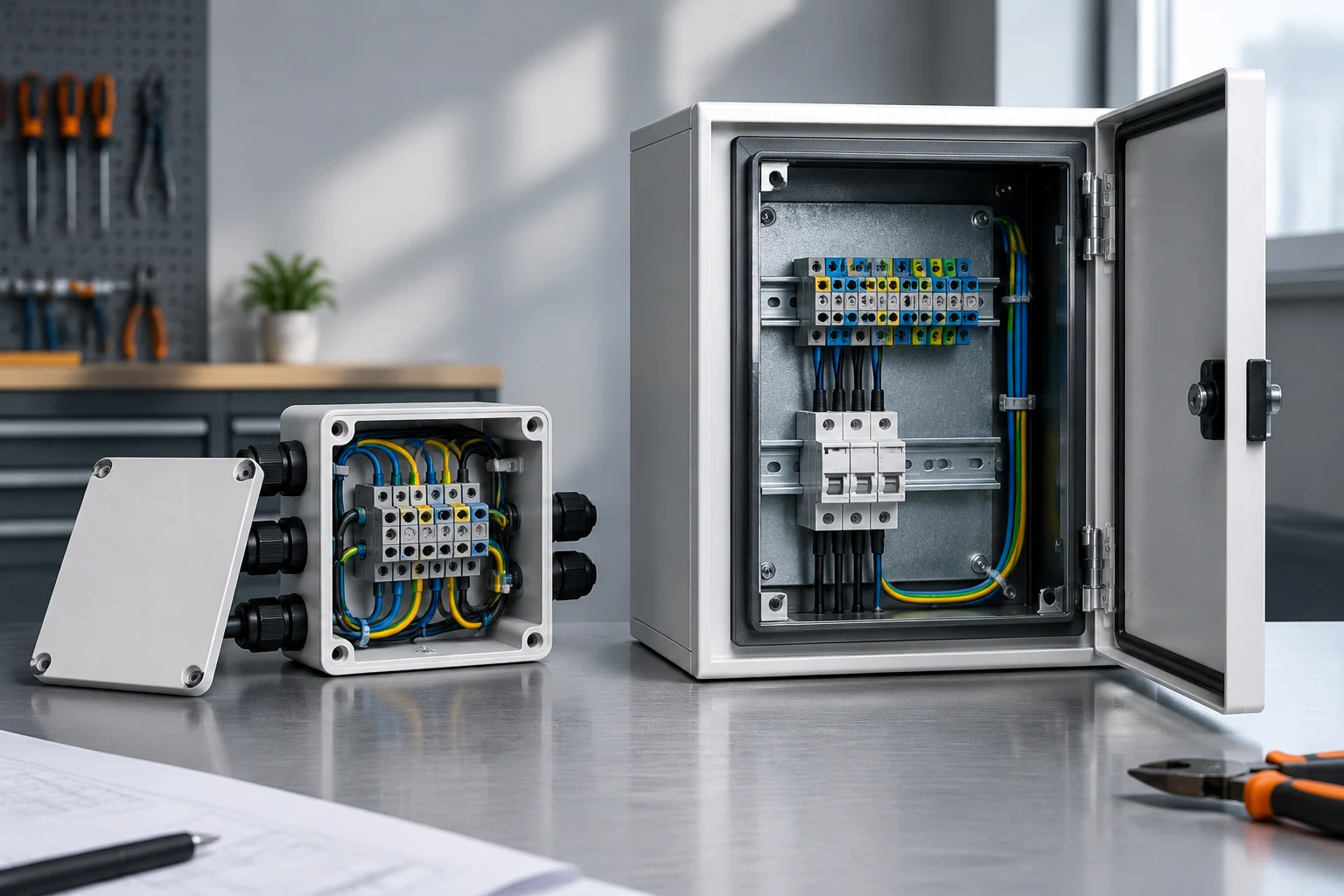
Here is the quick way to decide:
- Choose a junction box when the project centers on cable connections, terminal points, or small branch circuits.
- Choose a larger electrical enclosure when the box also needs to hold equipment, a mounting plate, DIN rail, heat-management components, or wiring that technicians will service regularly.
- For either option, size the usable space, cable entries, mounting method, environmental protection, and maintenance access together.
That last point is where many projects are won or lost. A box can match the outside dimensions on a drawing and still be difficult to wire, close, inspect, or maintain.
Junction box vs electrical enclosure: quick comparison
| Selection question | Junction box | Electrical enclosure |
|---|---|---|
| Main job | Join, branch, terminate, or protect conductors | Protect and organize terminals, controls, power equipment, instruments, or assemblies |
| Typical internal hardware | Terminal blocks, connectors, splices, grounding points, or small DIN-rail items | Mounting plate, DIN rail, breakers, controls, terminals, power supplies, or customer-supplied equipment |
| Space requirement | Driven mainly by cable routing, terminal clearance, and cover access | Sized around equipment, wiring space, heat, service loops, and future access |
| Cable entry | Often the main design decision | Part of a larger layout that may include gland plates, conduit hubs, and several entry zones |
| Mounting | Wall, machine, skid, pole, or drawing-defined mounting around the connection point | Wall, floor, rack, skid, or equipment integration with a door, backplate, and working clearance |
| Access | Removable cover or compact hinged cover | Hinged door, removable cover, lock, backplate, inspection window, or another service arrangement |
| Common installation | Field wiring, machine wiring, branch connections, sensors, and terminal points | Control systems, power distribution, automation, telecom, energy, and industrial equipment |
| Custom work | Cutouts, terminal layout, cover, mounting, and unusual proportions | Internal layout, doors, mounting plates, ventilation, cable entry, finish, and assembly scope |
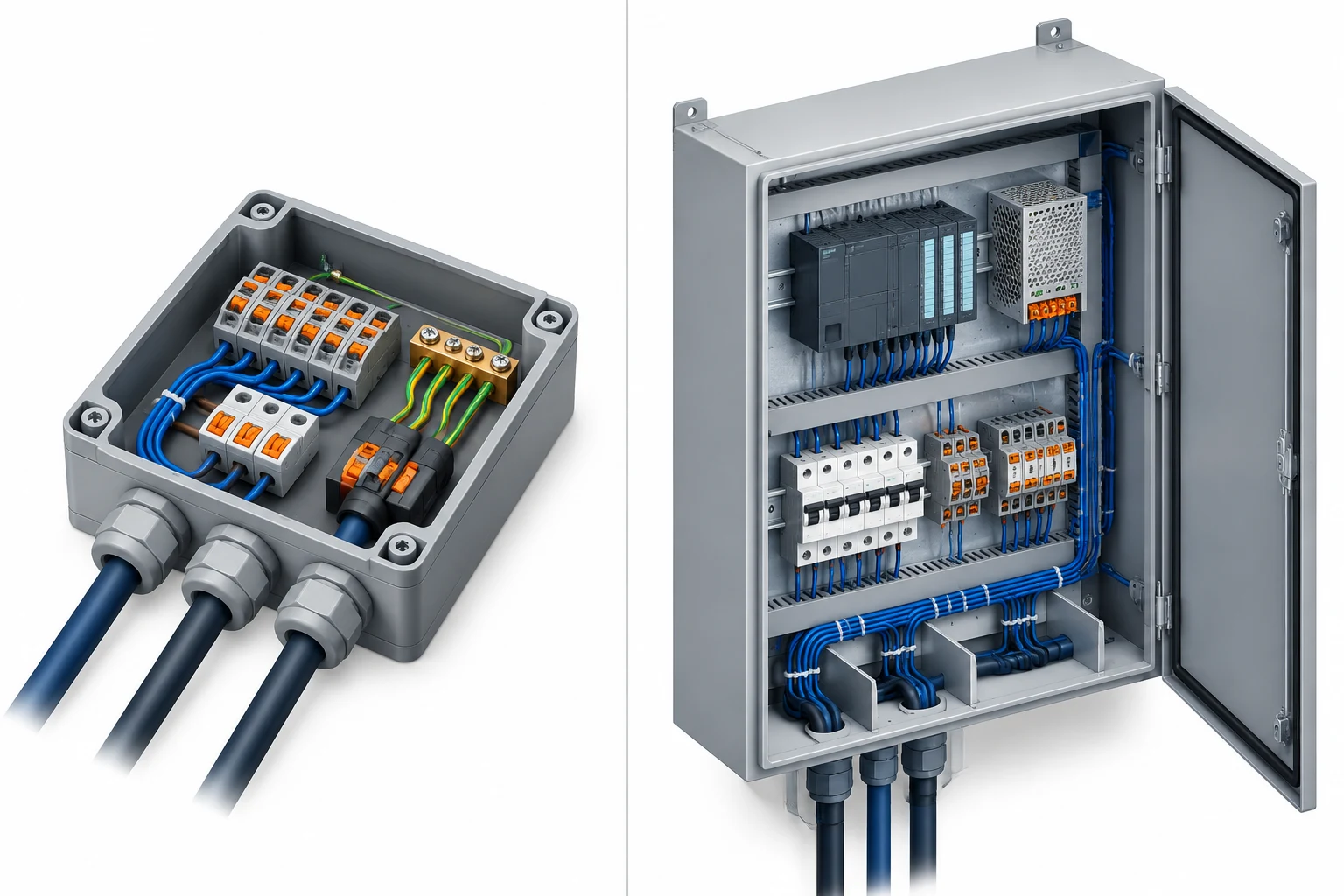
Think of a junction box as a focused connection point. Think of an electrical enclosure as a housing that gives equipment room to work and people room to service it.
What is a junction box?
A junction box gives conductors a protected place to meet, split, terminate, or continue to another part of a system. Inside, you may find terminal blocks, connectors, grounding points, splices, or a small DIN-rail arrangement.
Typical uses include:
- Field wiring between sensors and a control system
- Branch connections in a machine or skid
- Terminal points in outdoor equipment
- Cable transitions between fixed and moving sections
- Small power or signal distribution points
- Serviceable connection points in industrial equipment
The outside dimensions are only the beginning. The box also needs enough depth for the conductors to bend, enough room around the terminals and glands, and enough cover clearance for a person to install and inspect the wiring.
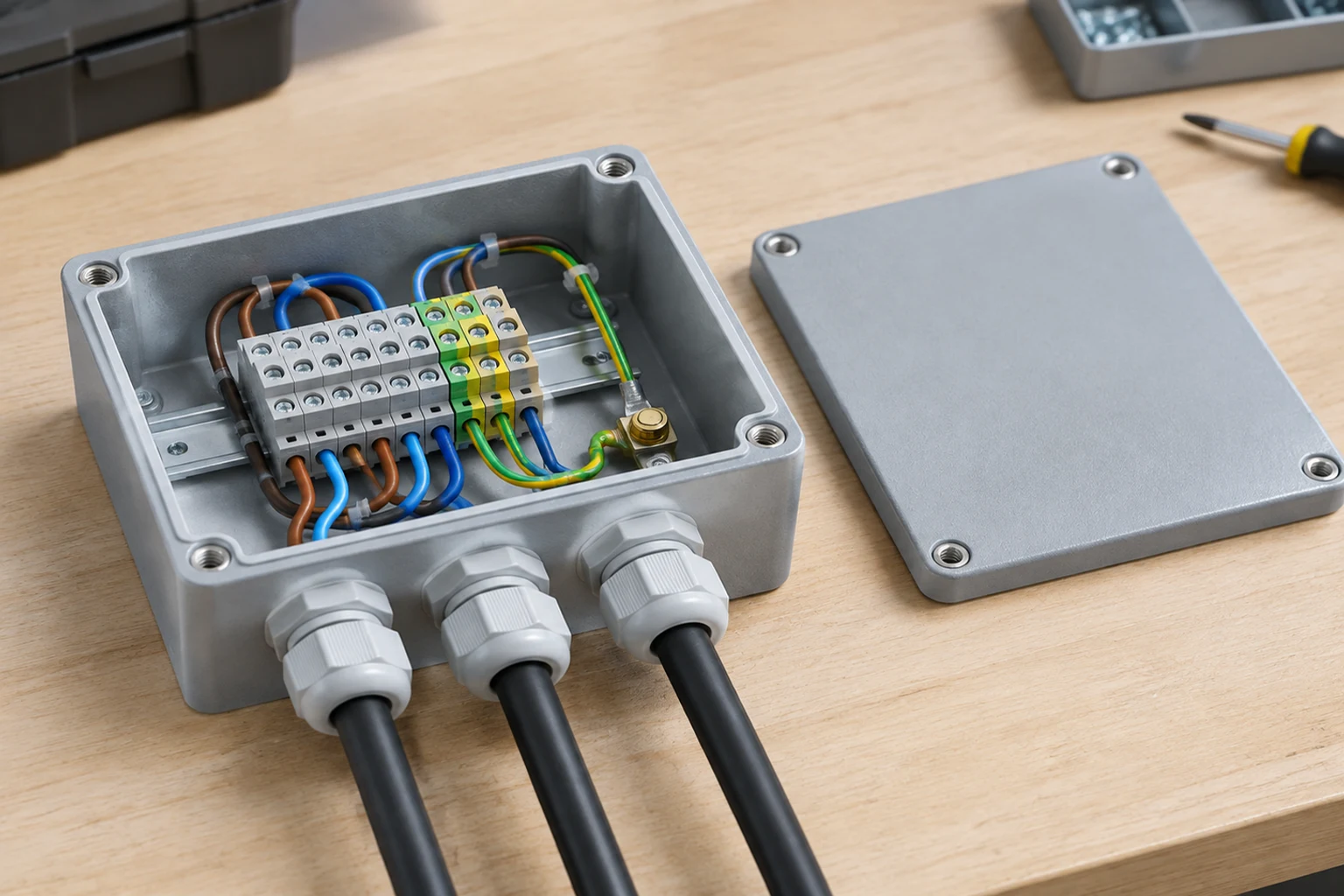
That is why a compact junction box can still require careful engineering. In an industrial junction box, cable retention, vibration, corrosion, sealing, grounding, and service access may all affect the final layout.
What is an electrical enclosure?
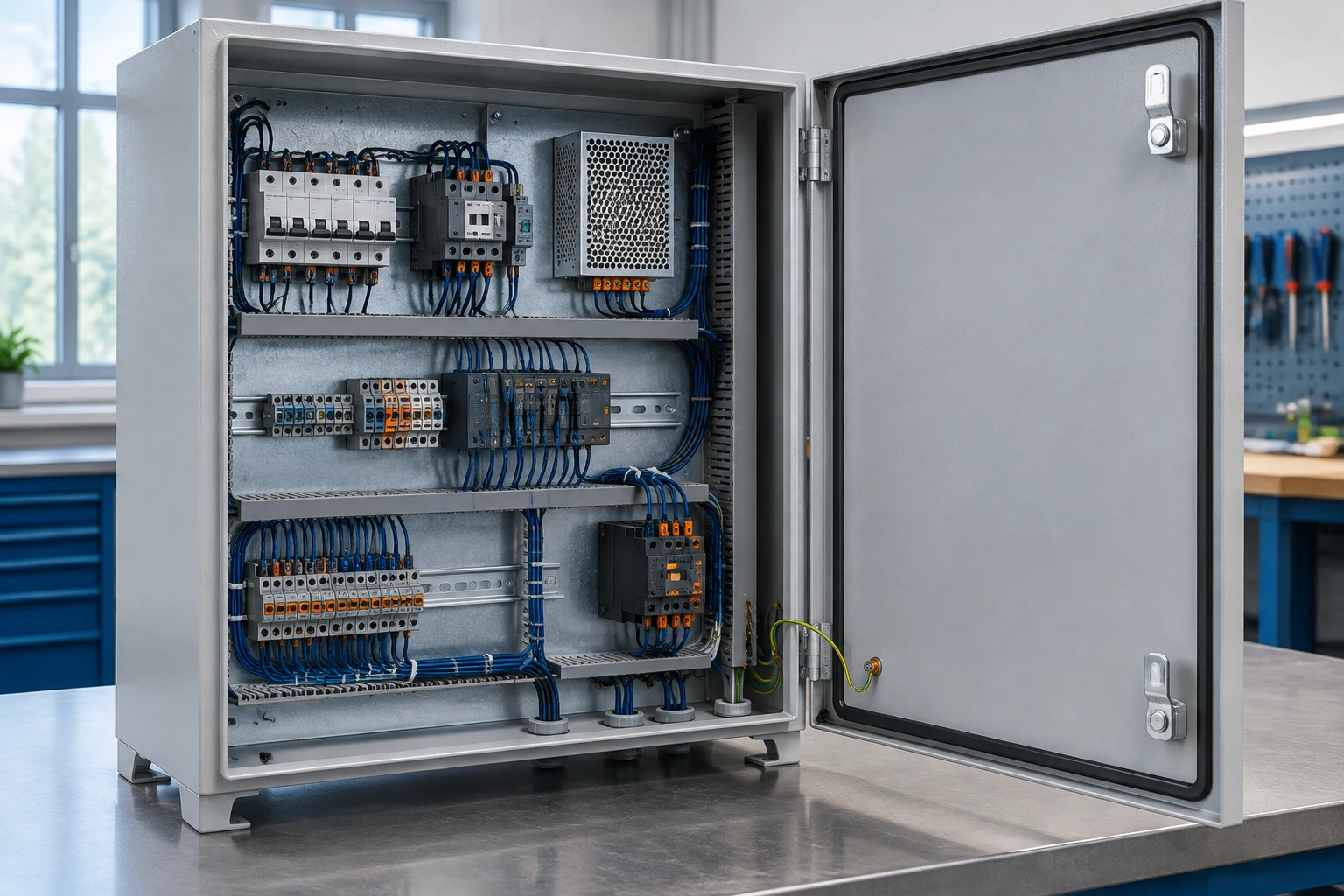
An electrical enclosure protects electrical or electronic equipment. The equipment might be a small terminal assembly, a group of controls, a power distribution arrangement, or a larger industrial automation system.
Compared with a simple junction box, an electrical enclosure is more likely to include:
- A mounting plate or DIN rail system
- More terminal and wire-bending space
- Circuit protection, controls, relays, power supplies, or drives
- A hinged door, lock, handle, or inspection window
- Cable glands, conduit hubs, gland plates, and defined entry zones
- Ventilation, heating, cooling, or condensation control
- Room for service, modification, or future expansion
The important question is what you expect the enclosure to contain and how people will use it after installation. An empty box, a modified enclosure, an enclosure with fitted hardware, and a wired or tested panel are different supply scopes. Put that difference in the quotation from the beginning.
The differences that affect a purchase decision
1. Start with the electrical job
Ask one simple question: is this box mainly protecting a connection, or will it house equipment?
If the answer is connection, branching, or termination, a junction box may give you the cleanest and most practical layout. If the box must support controls, power equipment, several terminal groups, or regular service work, a larger electrical enclosure gives the project more usable room.
The product name matters less than the function. Define the function first, then choose the form.
2. Size the usable internal space
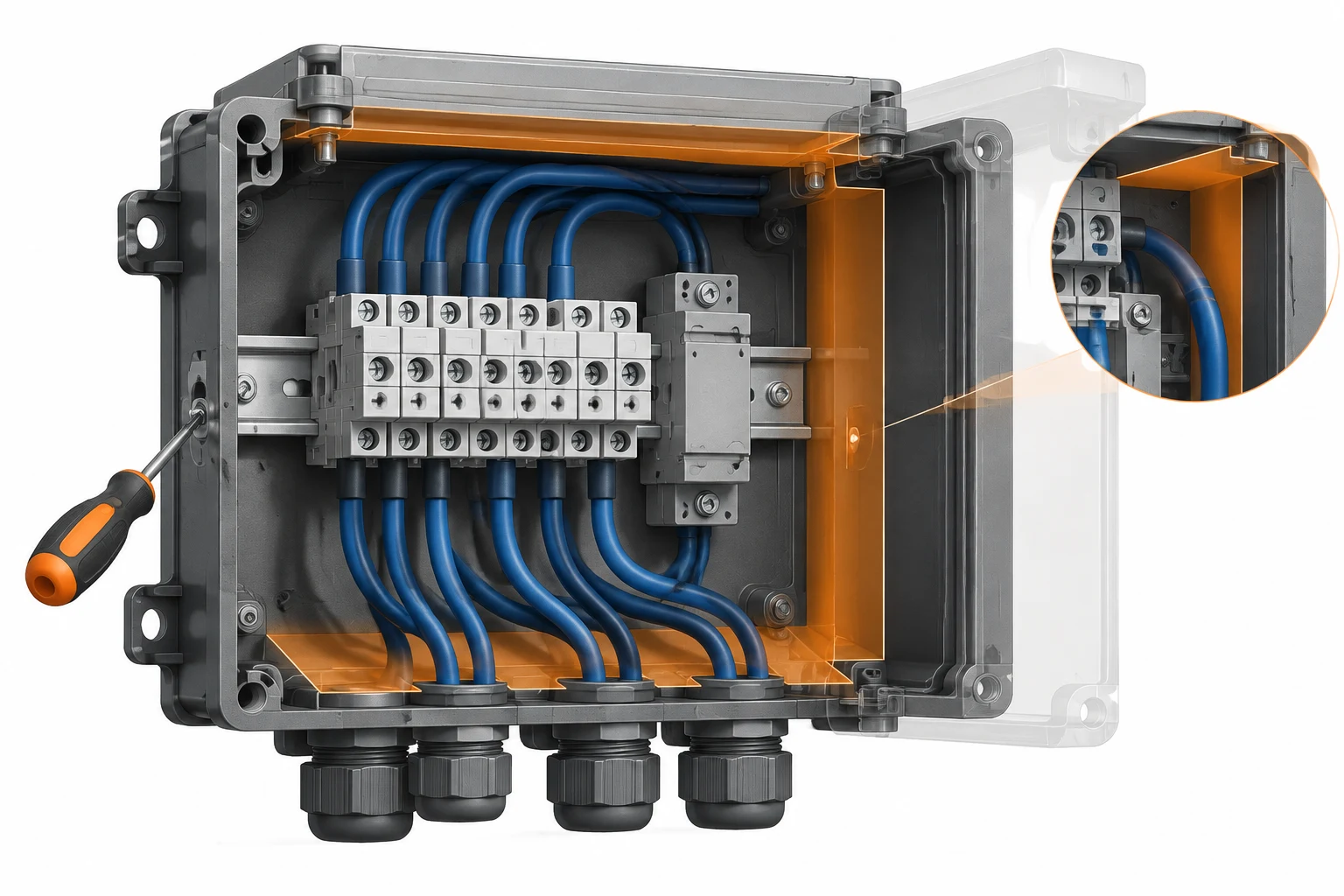
A drawing should show more than length, width, and height. Include:
- Usable internal depth
- Terminal and component height
- Wire-bending space
- Gland or connector clearance
- Cover and door swing clearance
- Mounting points and fastener access
- Space for labels, grounding, and inspection
This is where a box that looked large enough on paper can become tight during installation. If the cover cannot be removed without disturbing the wiring, or a technician cannot reach the terminal screws, the working space is too small for the job.
3. Plan cable entry before fabrication
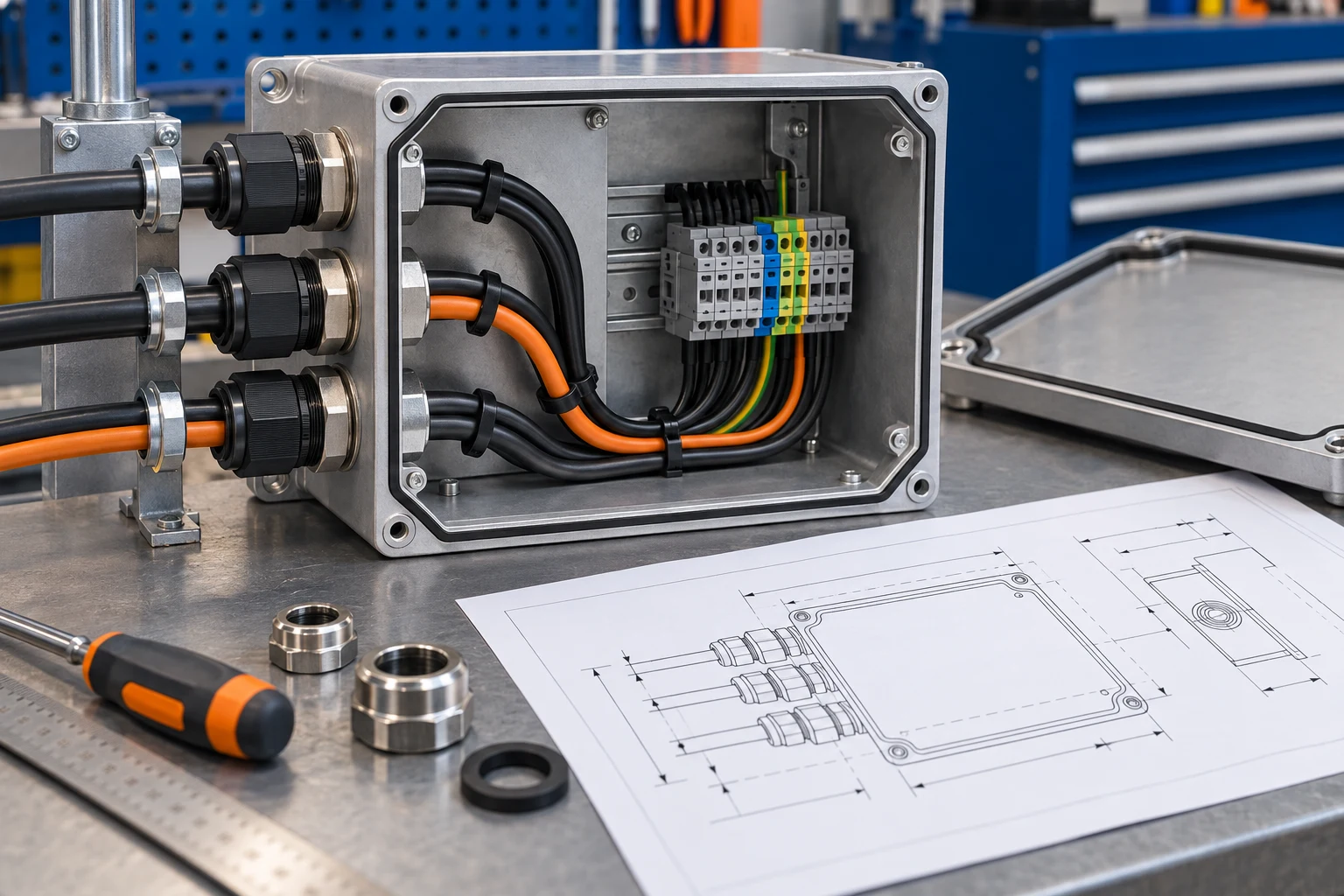
Cable entry often sets the direction of the whole design. Your RFQ should show the cable or connector type, gland or conduit schedule, hole size, entry direction, edge distance, sealing method, and any limits on field drilling.
A late hole can take away terminal clearance, interfere with a mounting plate, weaken an edge, or leave too little room to tighten the connector. Planned openings give the supplier something concrete to quote and inspect.
A cable and terminal sketch does not need to be complicated. Show where the cables enter, where the conductors bend, where the terminals sit, and how the cover or door opens.
4. Plan mounting and maintenance together
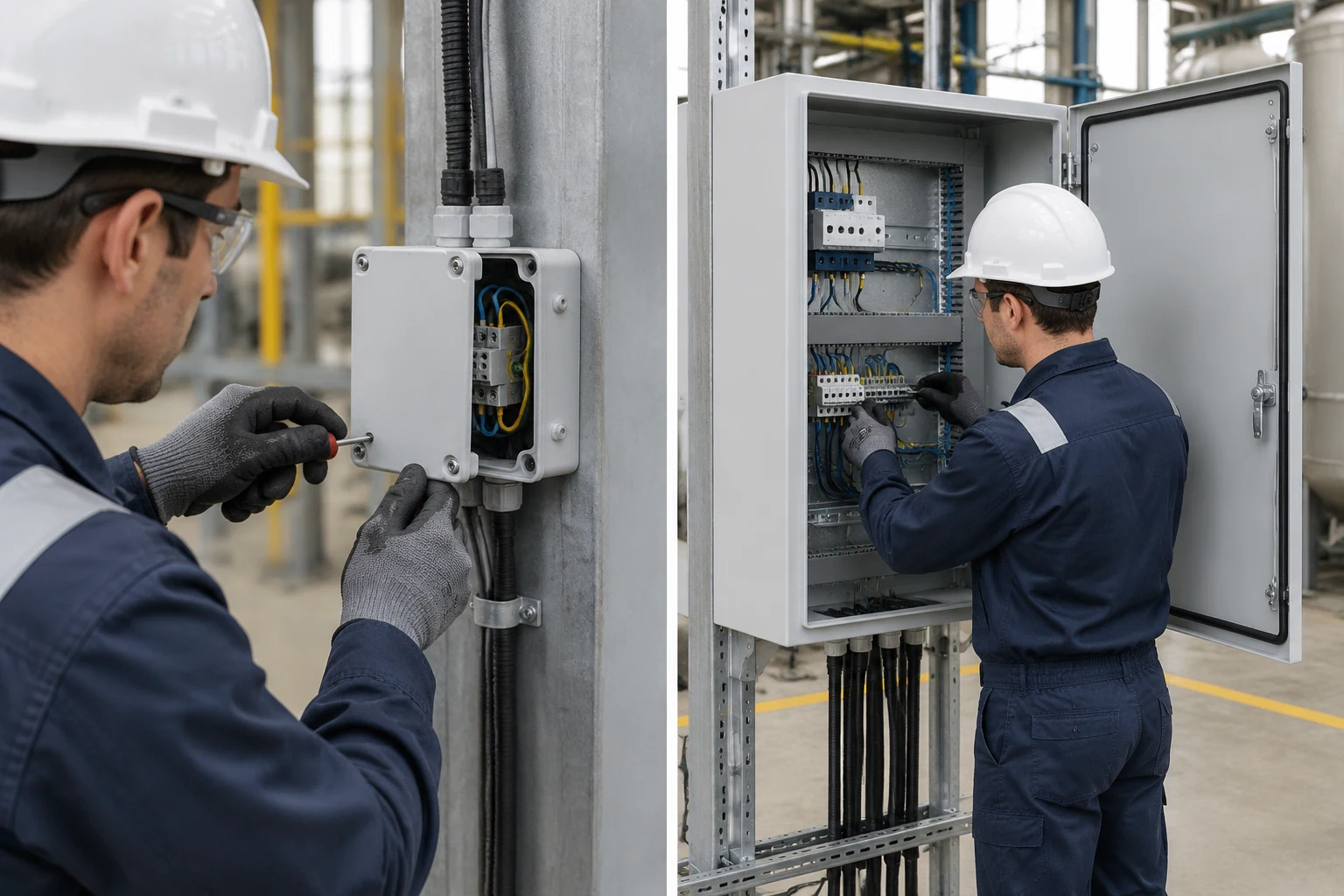
A junction box with a screw cover can work well when access is occasional and the contents are simple. A hinged enclosure is easier to work on when technicians need to inspect terminals, replace components, read labels, or make controlled changes.
Mounting location matters too. A door that opens into a wall, walkway, machine, or adjacent cabinet can turn a good enclosure into an awkward installation.
Before you select the box, ask:
- Where will it be mounted?
- Can an installer reach the fasteners and cable entries?
- Can the cover or door open fully?
- Can the cover come off without pulling the cable?
- Can the terminals be reached after the enclosure is mounted?
These details take only a few minutes to show on a drawing. They can save much more time during installation.
5. Match the IP or NEMA requirement to the finished configuration
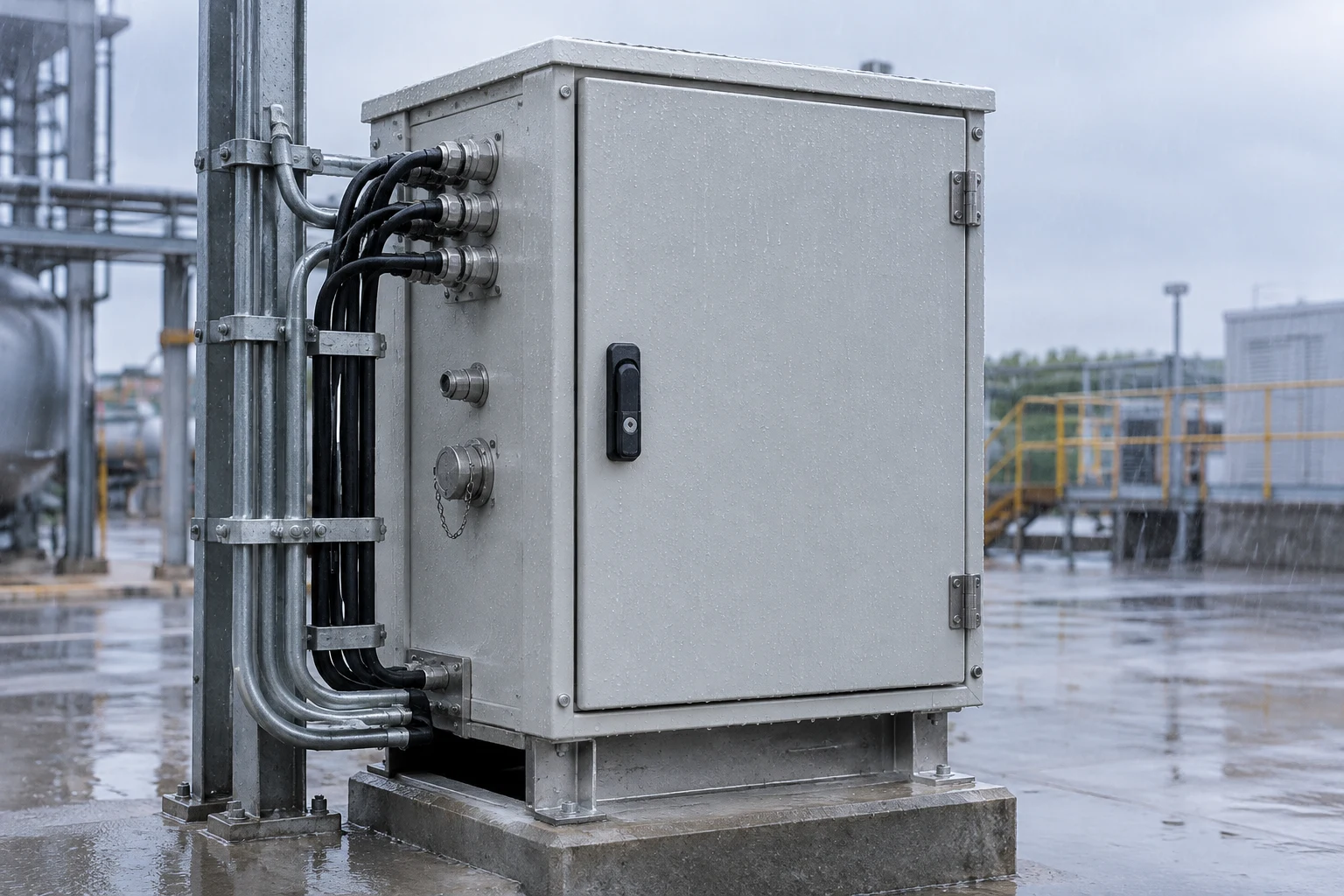
If you are searching for an IP rated junction box, look at the complete installed arrangement. The enclosure shell is one part of the protection boundary. Glands, conduit hubs, plugs, seams, gaskets, covers, doors, fasteners, and field modifications all matter.
IP ratings are defined under IEC 60529. NEMA enclosure types come from a different classification system. Use the system named in your project specification and confirm how the completed configuration will be checked.
For projects that need a defined route, FN’s IP66 electrical enclosures and NEMA Type 4X electrical enclosures are useful product routes to review alongside the drawing and environment.
When you specify the rating, review the shell, openings, entry hardware, seals, and installation method as one design.
6. Choose the material around the environment
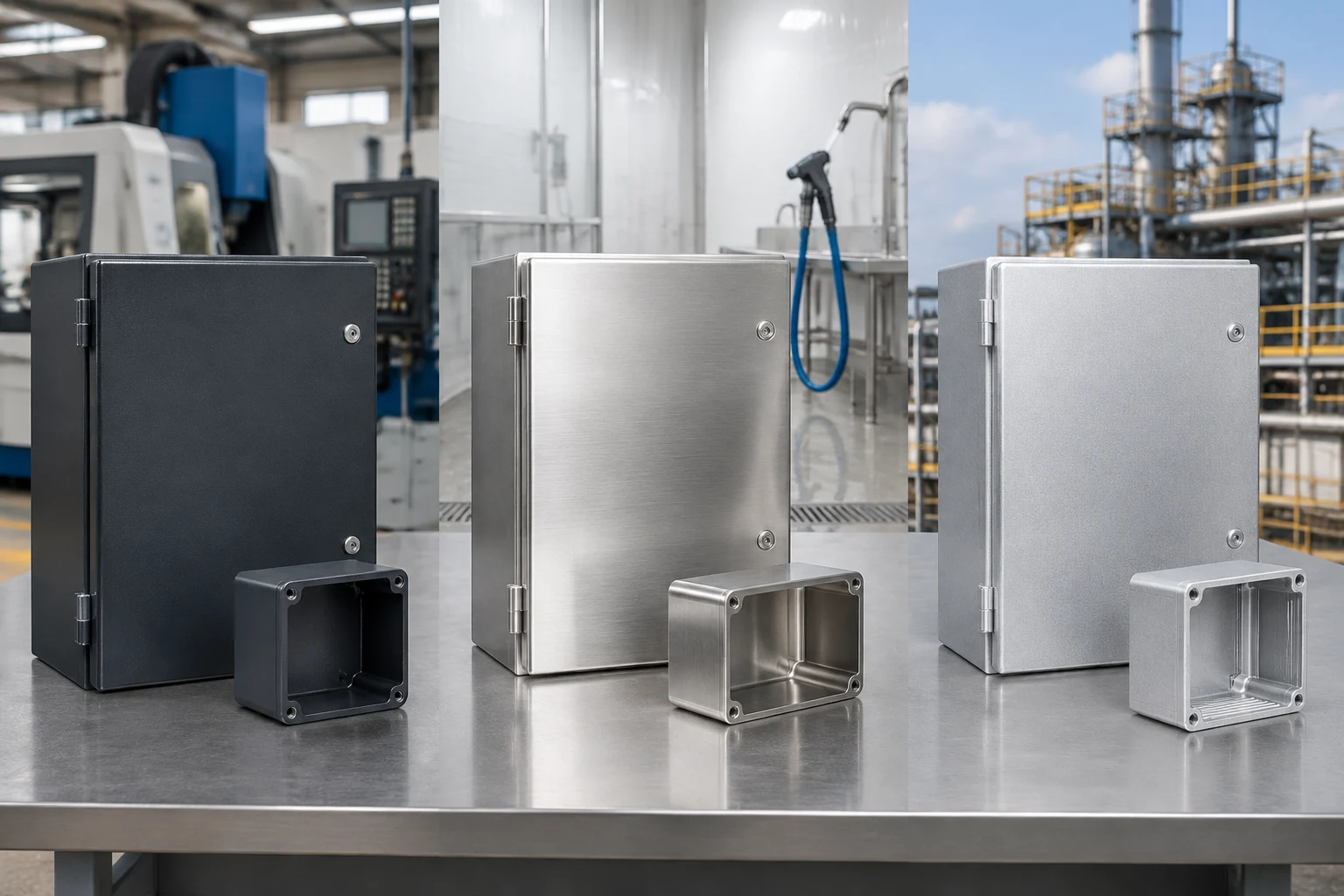
Material selection starts with exposure. Common routes include carbon steel, galvanized steel, stainless steel, aluminum, plastic, or a material specified on the drawing.
Consider:
- Outdoor rain, dust, and sunlight
- Salt air or marine exposure
- Washdown and cleaning chemicals
- Corrosion at cutouts, seams, and fasteners
- Weight and handling limits
- Finish and appearance
- Heat generated by the equipment inside
- Grounding and bonding requirements
Stainless steel is a strong route when corrosion exposure, cleaning, or finish requirements call for it. FN’s stainless steel electrical enclosures provide one material route to compare. The right choice still depends on the grade, surface treatment, hardware, openings, gasket, and installation environment.
7. Define the custom work and the quote boundary

A standard enclosure is often the quickest choice when the dimensions, entry positions, mounting method, and internal layout are common. A custom junction box makes more sense when the project has unusual proportions, fixed cable positions, a defined terminal layout, special cover access, or repeat-order drawing control.
Before you ask for a price, define what is included:
| RFQ item | What to provide |
|---|---|
| Drawing | Dimensioned drawing or sketch, including usable internal space |
| Cable entry | Cable, gland, conduit, connector model, hole size, and entry direction |
| Internal layout | Terminals, DIN rail, mounting plate, grounding points, labels, and wire-bending space |
| Material and finish | Material grade, coating, visible finish, and environment |
| Cover or door | Screw cover or hinged cover, opening direction, lock, gasket, and service access |
| Protection target | IP or NEMA target, installation environment, and required evidence |
| Quantity | Prototype, first article, batch quantity, and repeat-order expectations |
| Supply boundary | Empty box, fitted hardware, customer-supplied parts, BOM items, wiring, inspection, and packaging |
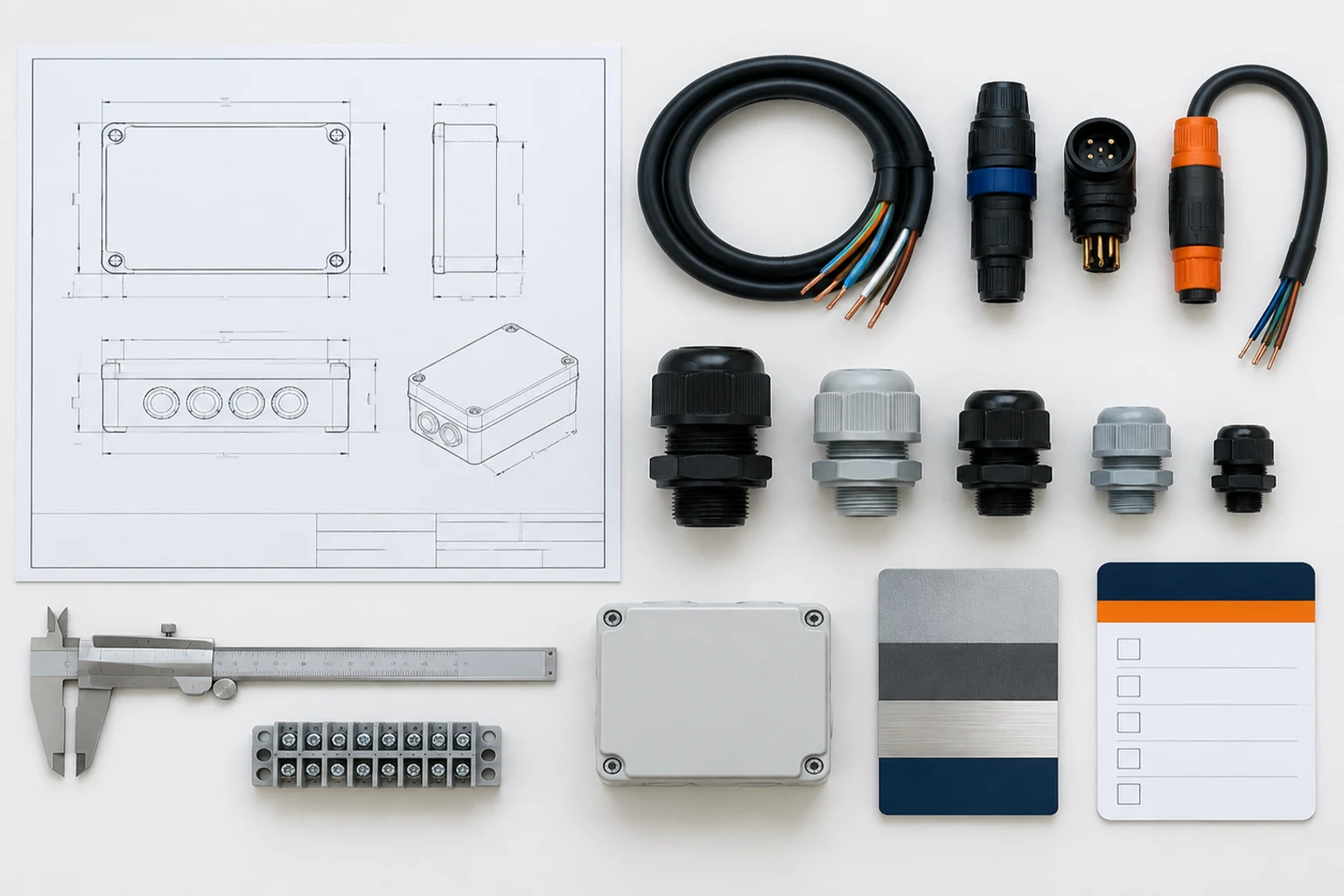
This is where a drawing-based supplier can make your job easier. At FN, we look at the cable route, entry hardware, terminal space, cover access, mounting envelope, material route, and supply boundary together. You can specify an empty box, fitted hardware, customer-supplied parts, or a defined electrical scope separately.
That gives you a quote tied to the box you actually need, and it makes supplier comparisons much easier.

See FN’s custom junction boxes for a drawing-based route covering cable entry, terminal clearance, cover closure, mounting, grounding, and service access.
When should you choose a junction box?
A junction box is usually the right fit when most of these points are true:
- The main job is joining, branching, or terminating conductors.
- The internal hardware is limited to terminals, connectors, grounding, or small DIN-rail items.
- A removable cover or compact hinged cover gives enough access.
- Cable entry and conductor bending fit within a defined usable space.
- There is no need for a large backplate, heat-management system, or major future expansion.
- The project can be described with a clear enclosure drawing and cable-entry schedule.
That covers many machine-wiring, sensor, field-connection, and terminal-point applications. The box may be compact, but the drawing still needs to be specific.
When is a larger electrical enclosure the better choice?
Move to a larger electrical enclosure when the project needs more than a connection point. Common signs include:
- Multiple terminal groups with separate cable-entry zones
- A mounting plate for electrical components
- PLCs, power supplies, breakers, relays, drives, or control hardware
- Heat dissipation, heaters, fans, or condensation control
- A hinged door, lock, inspection window, or frequent maintenance access
- Space for expansion, spare terminals, or future wiring
- Separation between power, control, signal, and communication wiring
- A documented assembly boundary or customer-supplied BOM
If several of these apply, the larger enclosure usually gives the installer and maintenance team a better working arrangement.
A practical selection sequence
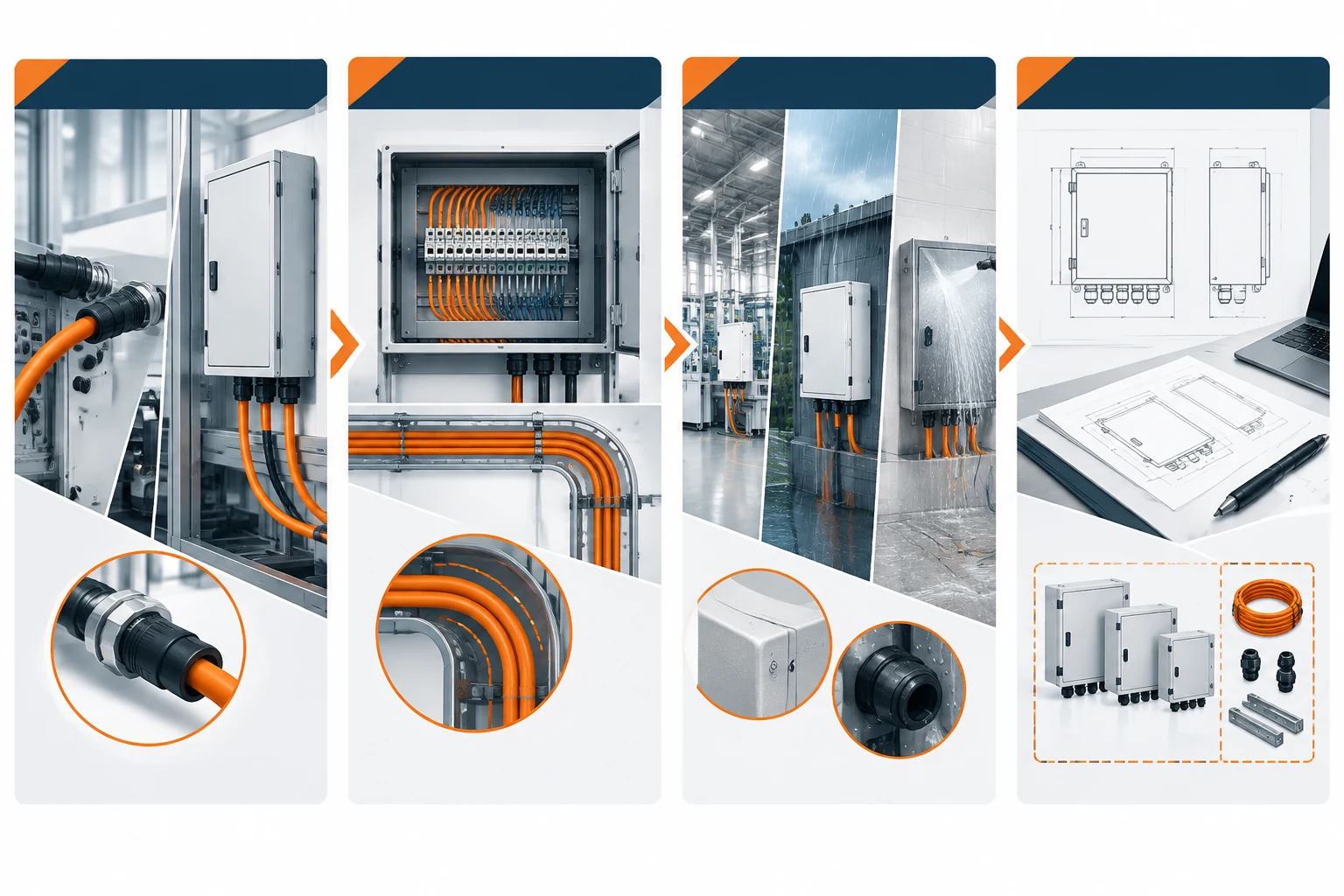
Here is a simple sequence to use before choosing a product family:
- Define the function. Is the enclosure mainly for joining conductors, or will it house controls and equipment?
- Map the conductor path. Show entry points, bend radius, terminals, grounding, and cover access.
- Check the environment. Record indoor or outdoor installation, water, dust, salt, chemicals, temperature, vibration, and cleaning method.
- Set the protection target. Choose the applicable IP or NEMA requirement and define how the completed configuration will be checked.
- Choose the material and construction. Consider corrosion, weight, finish, seams, gasket path, fasteners, and grounding.
- Define the service model. Decide whether a removable cover is enough or whether the project needs a hinged door, lock, mounting plate, or more working room.
- Freeze the supply boundary. State what is included in the box, what is customer-supplied, and whether wiring or testing is part of the order.
- Send the drawing and quantity. Include the revision, first-article requirement, inspection points, packaging, and destination.
When these points are clear, you can compare supplier quotations on the same basis instead of comparing two different scopes under the same product name.
Common mistakes to avoid
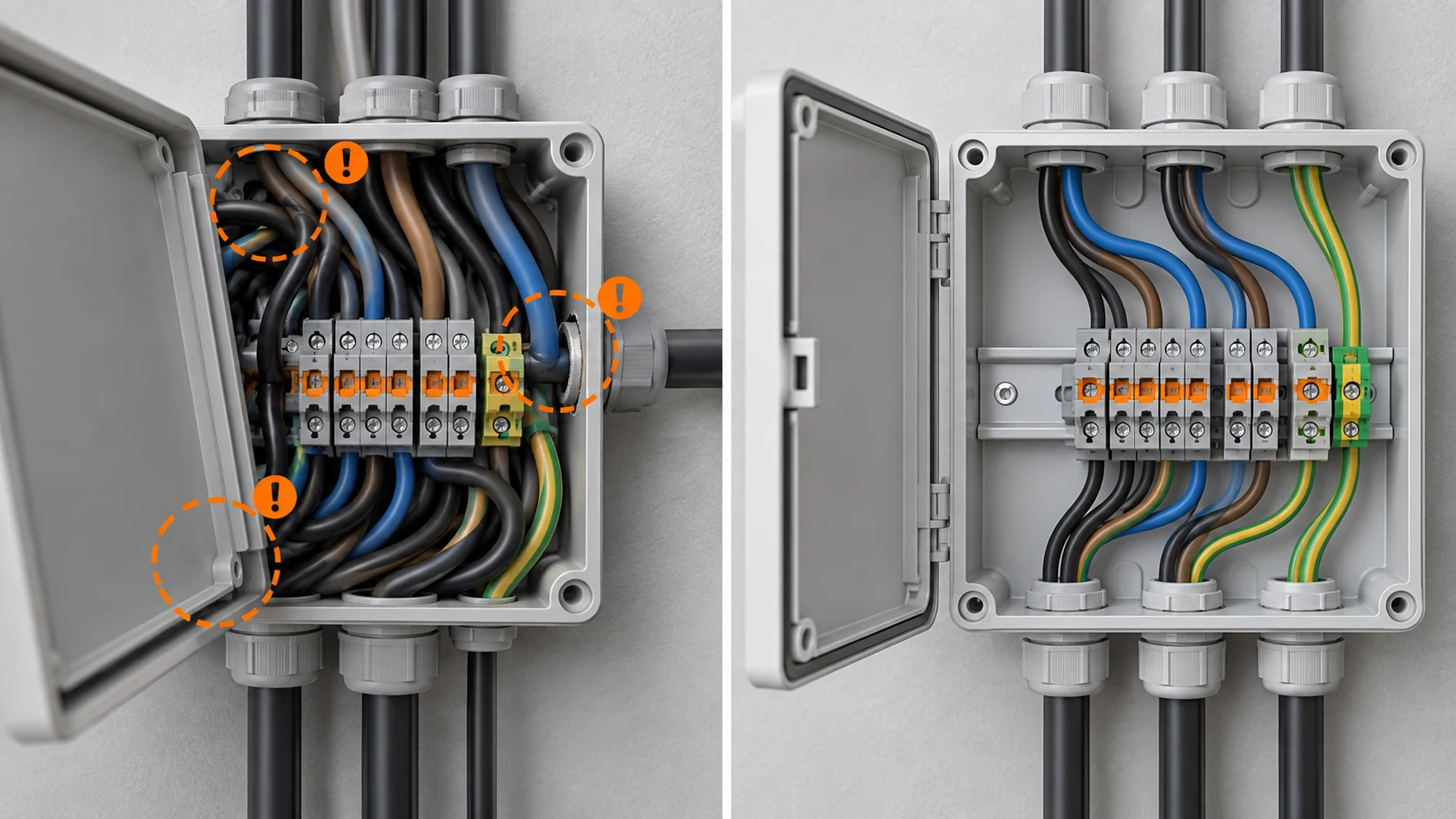
Choosing by outside dimensions alone
Outside dimensions do not show usable depth, wire-bending clearance, gland space, or cover access. Put those details on the drawing.
Adding cable holes after delivery
Field drilling changes the edge treatment, sealing, corrosion protection, and finished rating boundary. Plan the openings with the supplier when the entry hardware is known.
Treating IP and NEMA as the same rating system
They use different classification methods. Use the system named in the project specification and confirm the finished configuration.
Leaving the internal layout until after the box is ordered
Terminal height, DIN rail position, mounting plate clearance, and cable direction can change the box size. Show the layout early.
Mixing enclosure supply with electrical assembly supply
List an empty box, modified enclosure, enclosure with fitted hardware, and wired or tested panel as separate supply scopes.
Assuming the material name settles the decision
Material is one part of the selection. Exposure, finish, hardware, openings, gasket, and maintenance all belong in the same review.
FAQ
Is a junction box the same as an electrical enclosure?
In practical project language, a junction box describes a more specific connection role. An electrical enclosure is the wider housing term and may contain terminals, controls, power components, instrumentation, or a complete assembly. Some products fit both descriptions.
Can a junction box be used outdoors?
Yes. Start with the outdoor environment, then coordinate the material, gasket, cover, cable entries, plugs, fasteners, mounting method, drainage or condensation risks, and the required IP or NEMA target.
What is the difference between a junction box and a terminal box?
A terminal box is usually organized around terminal blocks or connection terminals. A junction box describes the wider connection function and may contain terminals, connectors, grounding points, or splices. The project terminology and internal layout decide which term is most useful.
Does the enclosure rating include the cable glands?
The finished protection boundary includes the enclosure openings and the components used to close or seal them. Review the glands, conduit entries, plugs, covers, gaskets, and any field modifications together with the enclosure shell.
What should I send for a custom junction box quotation?
Send a dimensioned drawing or sketch, usable internal space, cable and connector schedule, entry positions, terminal or DIN-rail layout, material and finish, installation environment, target IP or NEMA level, quantity, first-article requirements, and the required supply boundary. A cable and terminal sketch is often more useful than outside dimensions alone.
Conclusion
The practical difference between a junction box and an electrical enclosure comes down to the job, the space inside, and the way the box will be used after installation.
Choose a junction box for a defined connection or termination task. Choose a larger electrical enclosure when the project needs internal equipment, a mounting system, more service space, heat management, or room for expansion.
If you are preparing a drawing for quotation, start with the cable route and usable internal space. Then add the environment, protection target, material, cover access, quantity, and supply boundary. Send your enclosure dimensions, cable-entry layout, IP/NEMA target, and quantity for review.