
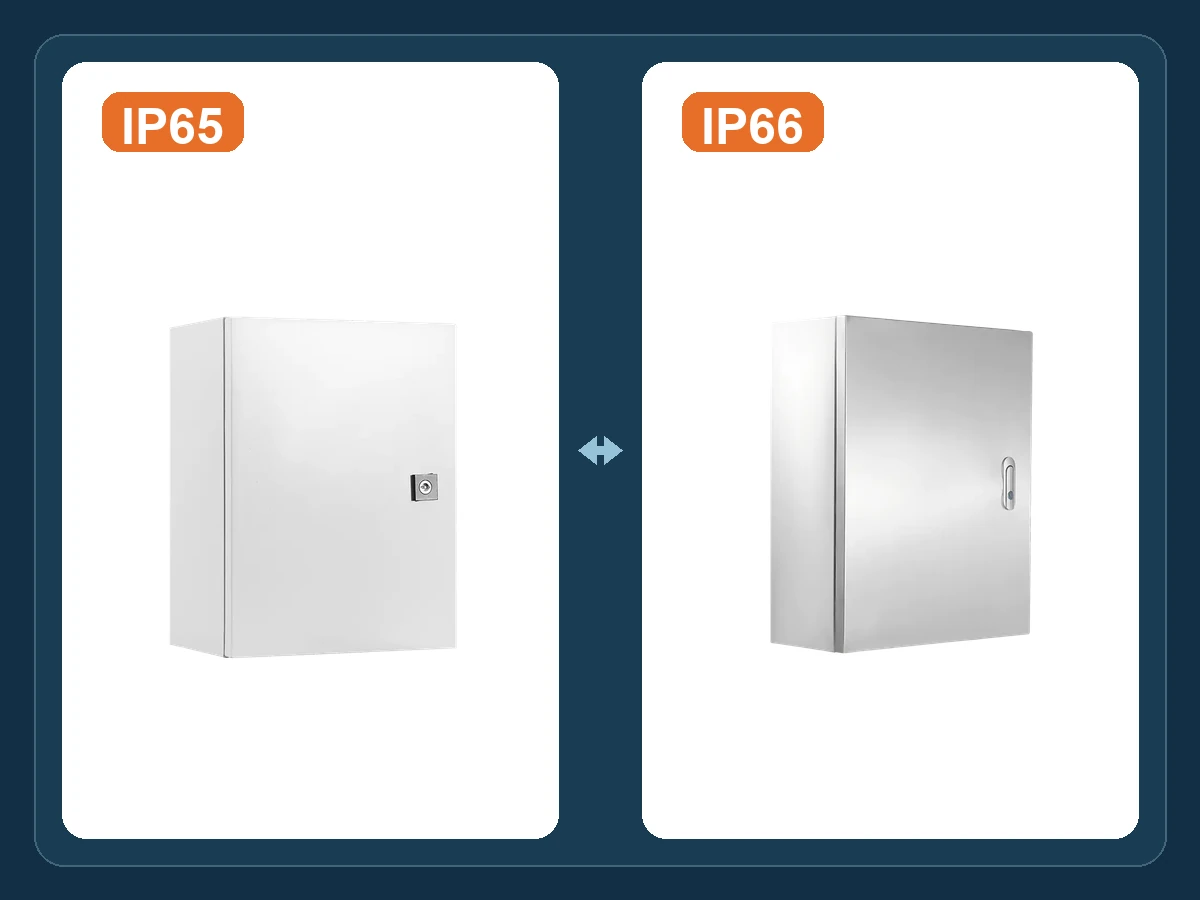

Short answer: Start with IP65 when the real exposure is dust, rain, splashing, or ordinary water spray. Move to IP66 when direct, forceful water jets are part of normal operation, cleaning, or the customer specification.
Do not use IP66 as a shortcut for “safer outdoors.” It does not cover immersion, corrosion, condensation, overheating, or a badly sealed cable entry.
The rating belongs to the finished assembly, not the empty box. One field-drilled hole, lower-rated fan, or poorly fitted cable gland can become the real water path.
IP65 vs IP66 at a Glance
Question | IP65 | IP66 |
|---|---|---|
| Dust protection | Dust-tight | Dust-tight |
| Water protection | Water jets | More powerful water jets |
| Sensible starting point | Rain, splashing, ordinary spray, sheltered industrial areas | Direct hose spray, exposed process areas, more demanding washdown conditions |
| Main engineering concern | Keep the door seal and cable entries consistent | Control every sealing point under a stronger water load |
| Does it cover immersion? | No | No |
| Does it prove corrosion or chemical resistance? | No | No |
| Best buying question | Is IP65 enough for the actual water exposure? | Can the finished configuration, including every opening and accessory, support IP66? |
If you are already comparing product formats, review the IP65 electrical enclosures and IP66 electrical enclosures. The selection logic below still applies after custom cut-outs and accessories are added.
How This Guide Makes the Decision
This guide starts with the IEC 60529 distinction between water jets and more powerful water jets. It then checks the finished enclosure at the points most likely to break the protection target: the gasket, door alignment, latches, cable entries, cut-outs, and ventilation components. A target IP rating is not presented as certification unless the quoted configuration is supported by the required evidence.
The five FN cases below are anonymized summaries of similar customer projects. Customer names, exact locations, and identifying process details have been generalized for confidentiality. The engineering decisions, outcomes, and stated verification scope are retained.
What the Two Ratings Actually Mean
The IP code comes from IEC 60529, the standard for degrees of protection provided by enclosures.
In both IP65 and IP66, the first digit is 6. That means the enclosure is dust-tight. The difference sits in the second digit:
- IP65: protection against water jets.
- IP66: protection against more powerful water jets.
That is the whole rating difference. IP66 does not automatically mean thicker steel, better corrosion resistance, safer thermal performance, or a longer service life. Those are separate design decisions.
IPX5 vs IPX6: What the Test Difference Changes
IPX5 and IPX6 are water-ingress classifications under IEC 60529. In the public ISO 17025 laboratory guidance reviewed for this article, IPX5 uses a 6.3 mm nozzle at 12.5 L/min, while IPX6 uses a 12.5 mm nozzle at 100 L/min. The reported nozzle distance is 2.5–3 m and the minimum exposure is three minutes.
| Test element | IPX5 | IPX6 | Buyer implication |
|---|---|---|---|
| Nozzle internal diameter | 6.3 mm | 12.5 mm | IPX6 uses the larger nozzle and higher water volume. |
| Water flow | 12.5 L/min | 100 L/min | IPX6 applies a more demanding water-jet condition. |
| Nozzle-to-enclosure distance | 2.5–3 m | 2.5–3 m | The test distance is controlled; it is not an arbitrary pressure-washer distance. |
| Minimum exposure reported by the laboratory source | At least 3 minutes | At least 3 minutes | The applicable setup and tested configuration must be documented. |
| Direction | All practicable directions | All practicable directions | Door seams, glands, cut-outs, windows, and accessories matter. |
Choose IP65 When Water Exposure Is Ordinary
IP65 is normally the better-value choice when:
- the enclosure faces rain, splashing, dust, or occasional cleaning spray;
- it sits under a canopy or in a partly sheltered outdoor position;
- no direct, forceful hose stream is part of normal operation or cleaning;
- the project specification calls for IP65;
- cable entries, door seals, and accessories can be controlled as a complete assembly.
An IP65 enclosure can work outdoors. The word “outdoor” alone does not force the decision to IP66. A cabinet under a roof may face less water than an indoor machine installed beside a washdown line.
FN Customer Case : IP65 for a Sheltered Outdoor Control Cabinet
A customer asked FN for an outdoor control cabinet and initially specified IP66 because the unit would stand outside. The actual site description showed dust, rain, and occasional maintenance spray. The cabinet was installed beneath a canopy, and no direct washdown stream reached the door.
FN reviewed the roof runoff, cable-entry orientation, door-gasket compression, material and finish, and every installed device. The project remained at IP65 because the defined exposure did not require the more demanding IPX6 water-jet condition.
Result: the customer avoided an unnecessary rating upgrade. The final IP65 requirement was tied to the agreed mounting position, factory-controlled openings, and finished enclosure configuration.
Verification scope: the enclosure rating was reviewed against the completed opening and accessory schedule, not the empty cabinet alone.
Choose IP66 When Forceful Jets Are a Real Requirement
Move to IP66 when:
- direct hose spray is expected during normal cleaning;
- the enclosure is mounted where process water can strike the door and cable entries;
- the customer specification explicitly requires IP66;
- water ingress would cause costly downtime and the extra protection is backed by appropriate design and evidence;
- the complete assembly can maintain the target rating after windows, controls, glands, vents, and other accessories are added.
IP66 is not blanket approval for any pressure washer, hot-water jet, or chemical wash. If cleaning is unusually aggressive, define the pressure, temperature, chemicals, distance, direction, and duration separately.
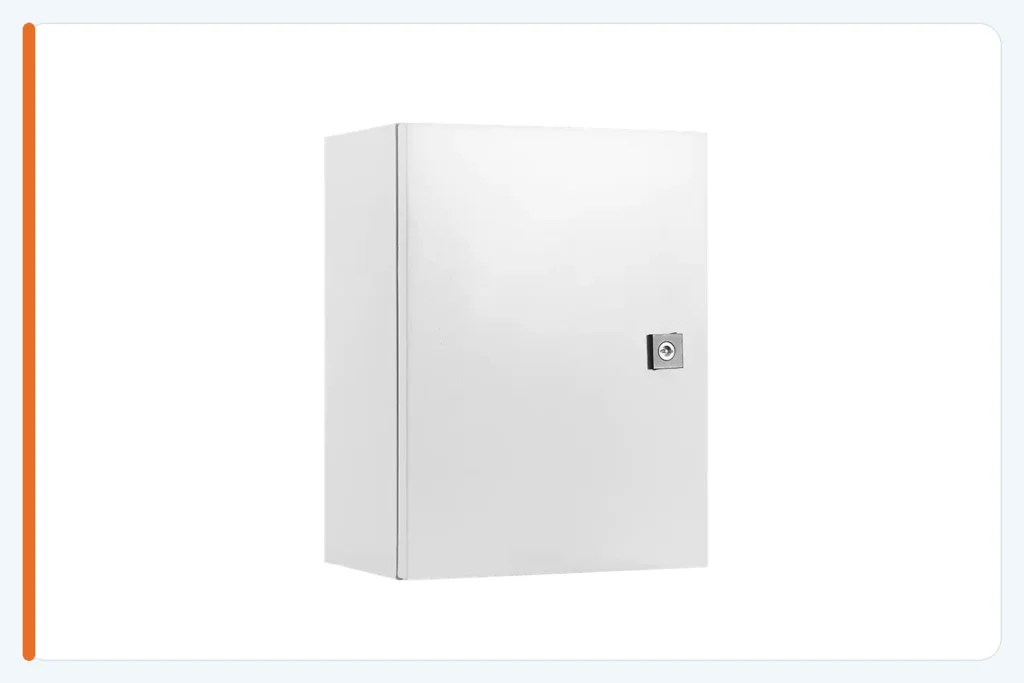
FN Customer Case : IP66 for Direct Washdown Exposure
A customer needed an FN enclosure beside equipment that was rinsed after each operating shift. The water stream could strike the latch side of the door and the lower cable-entry area. In this case, “harsh environment” was not the deciding phrase; the repeated, directed washdown exposure was.
FN confirmed the water direction, cleaning frequency, temperature and chemical conditions, and the location of the glands, operator interface, and door hardware. The project moved to an IP66 target because the normal cleaning process created a stronger water-jet requirement than ordinary rain or spray.
Result: the washdown condition was carried into the door, gland, HMI, and cable-entry specification instead of being applied only to the empty box.
Verification scope: the agreed water-ingress verification covered the finished enclosure configuration defined for the project.
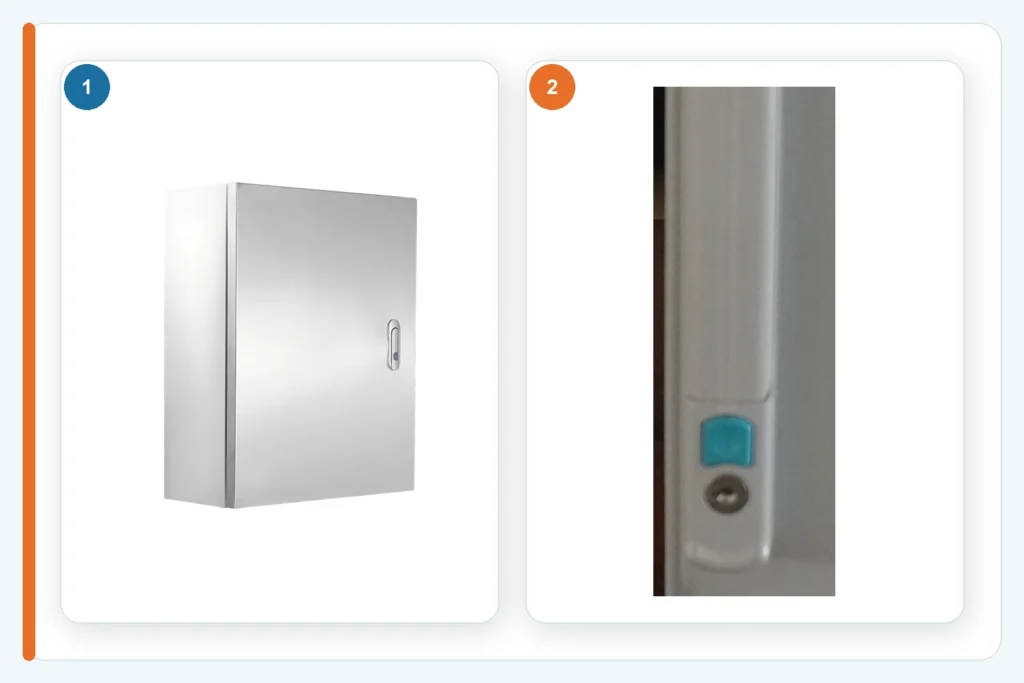
The Rating Is Won or Lost at the Openings
Water rarely enters through the middle of a solid metal panel. It enters where parts meet, move, or were added later.
FN Customer Case : A Lower-Rated Opening Changed the Assembly Review
A customer sent FN a layout based on an IP66 wall-mounted enclosure. The door included an HMI and viewing window, while the side panel carried a fan-and-filter unit. Two cable-entry holes were also planned for site installation. The base enclosure was specified as IP66, but one installed opening had a lower protection level and the field-drilled entries were not yet controlled.
FN treated IP66 as the target for the complete assembly. The lower-rated opening was removed from the final arrangement, the cooling approach was revised, and the cable-entry holes were moved into the controlled factory scope with defined glands and sealing hardware.
Result: the weakest opening no longer determined the enclosure protection. The released drawing matched the final accessory and cable-entry schedule.
Verification scope: the review and supporting evidence applied to the finished configuration after the cut-outs and accessories were fixed.
1. Door Gasket
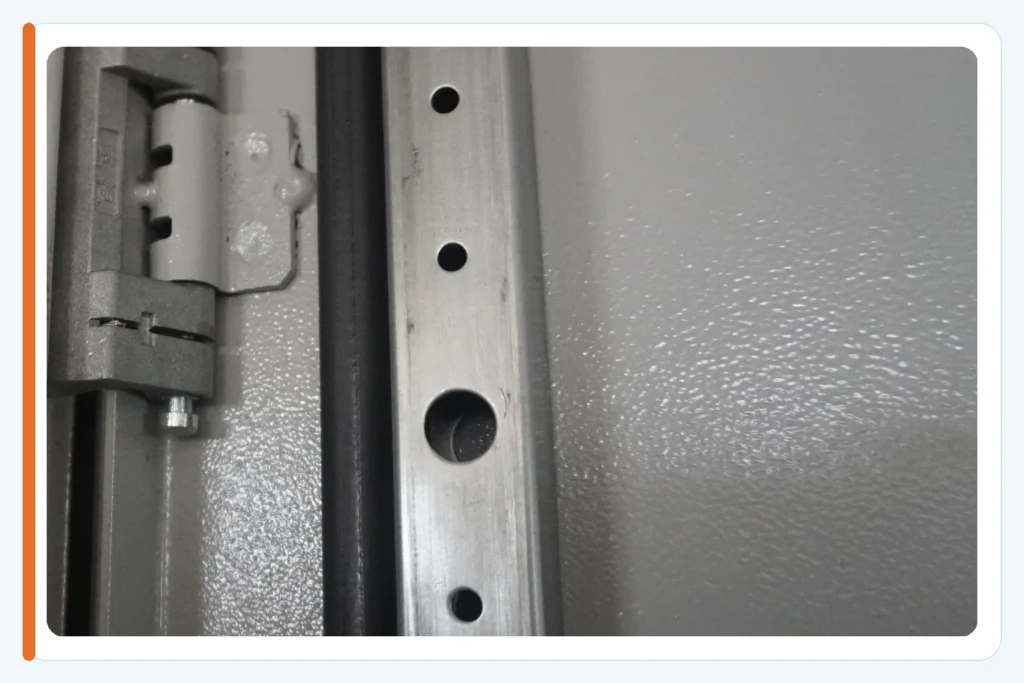
The gasket must form a continuous seal around the opening. Check the corner joints, material, cross-section, compression range, and how evenly the door presses against it. A gasket can look substantial and still leak if one corner is stretched or one edge barely touches the flange.
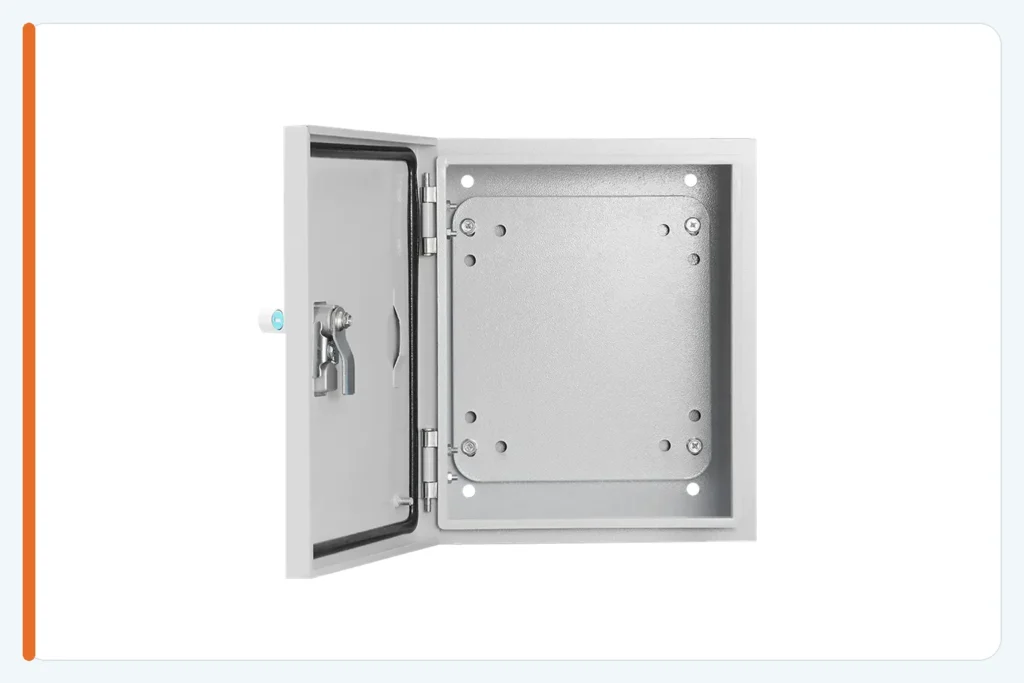
2. Door Flatness, Hinges, and Latches
A large door can flex. Poor hinge alignment or too few latching points can leave one section of the gasket under-compressed. IP66 therefore depends less on a bold label and more on door stiffness, latch position, hinge alignment, and a consistent door gap.
3. Cable Entries and Field Drilling
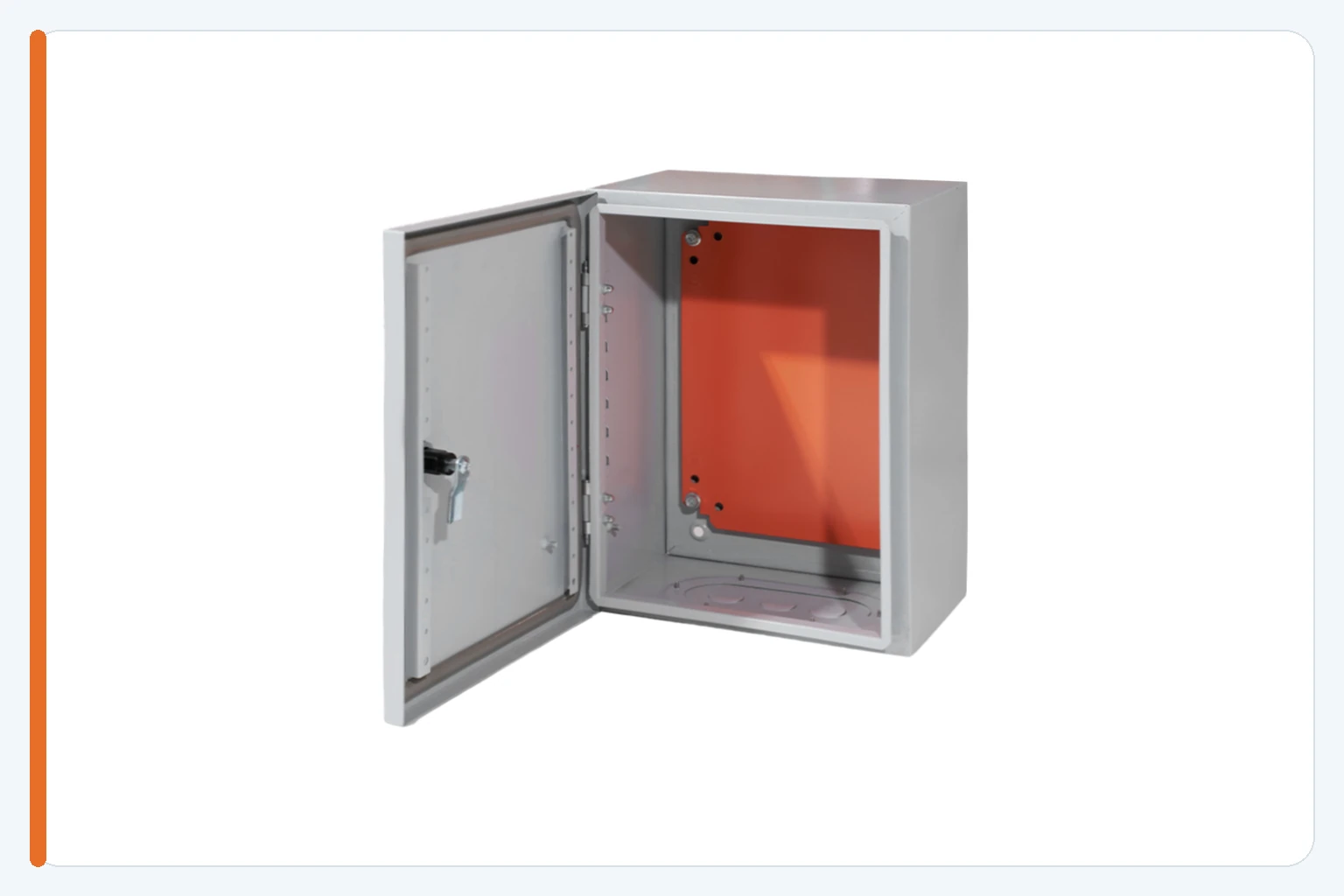
A sealed cabinet can lose its protection as soon as an oversized hole, loose gland, missing washer, or unsealed mounting screw is added.
If drilling happens on site, the installer becomes part of the sealing process.
4. Windows, Push Buttons, Fans, and Filters
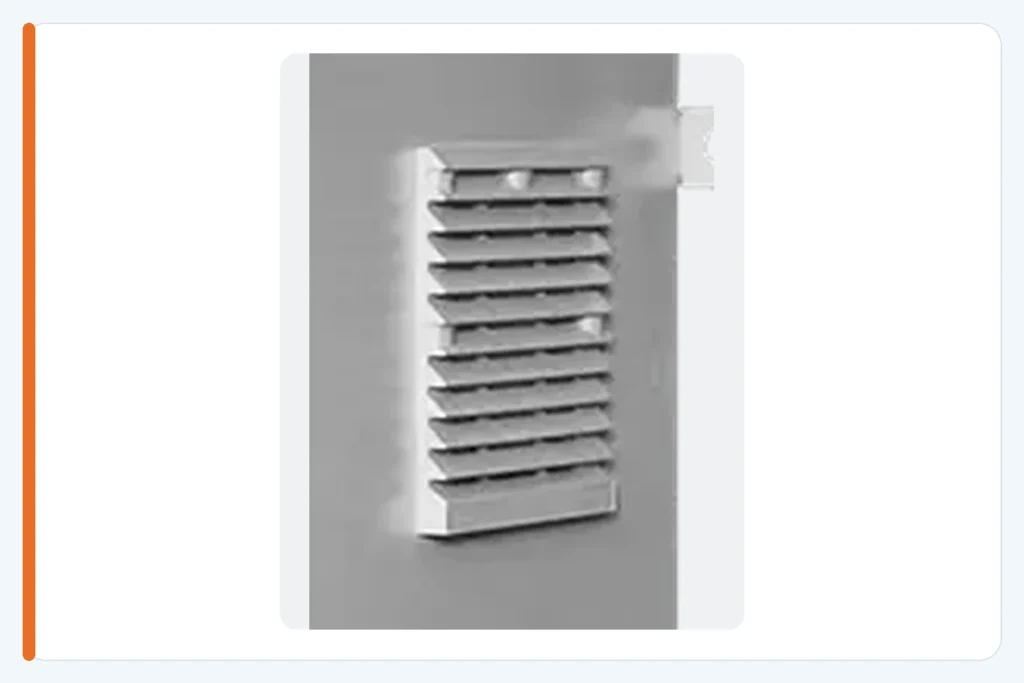
Every added component needs its own protection check. An IP66 cabinet fitted with a lower-rated fan-and-filter opening should not be treated as an IP66 finished assembly.
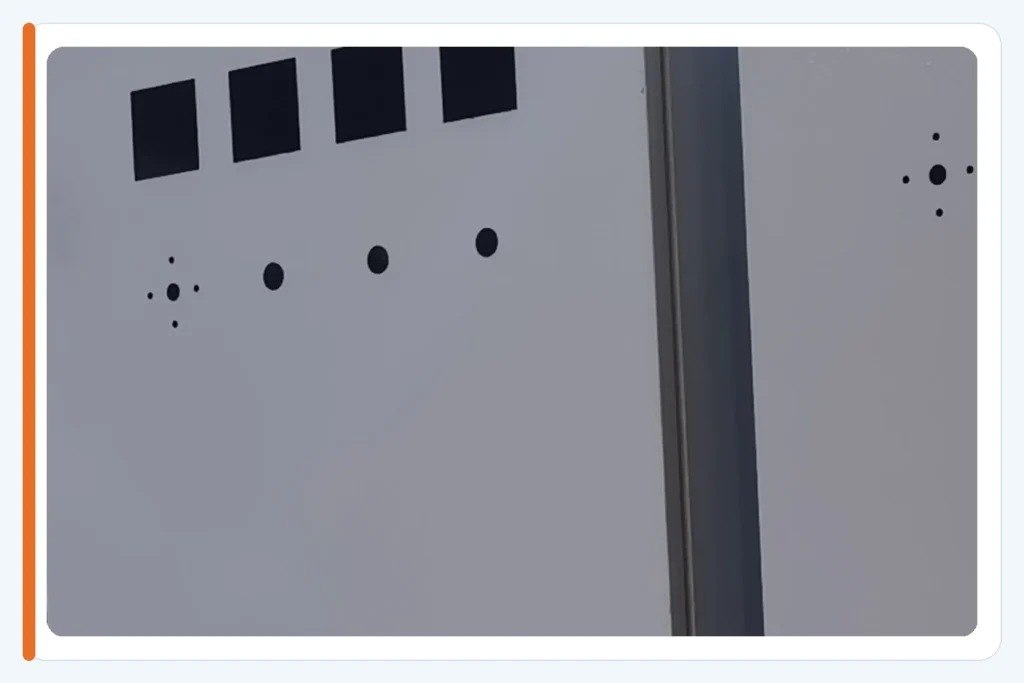
Cooling also changes the decision. A tightly sealed enclosure blocks water and dust, but it also blocks free airflow. If heat cannot leave through the enclosure surface, review the thermal load and electrical enclosure cooling methods instead of cutting a vent into the box after installation.
5. Seams, Plugs, and Mounting Holes
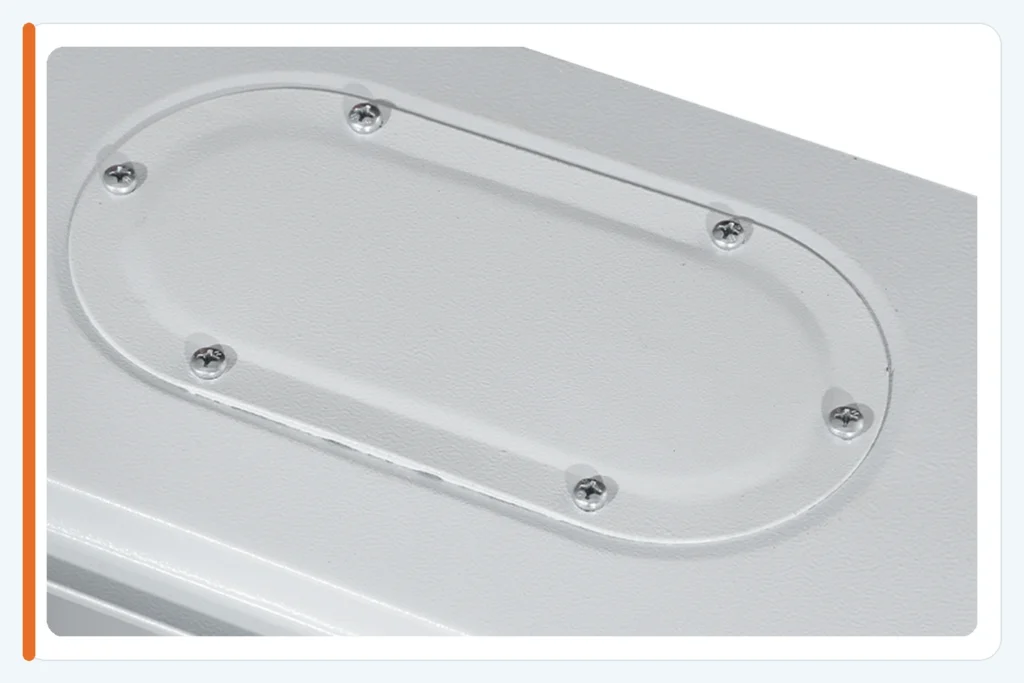
Welded corners, removable gland plates, drain plugs, roof seams, and external mounting holes all create possible paths for water. Put these details on the drawing. Do not leave them to improvisation during installation.
What IP65 and IP66 Do Not Tell You
An IP rating answers a narrow question about ingress protection. It does not settle the rest of the enclosure specification.
Risk | Why IP65 or IP66 Is Not Enough |
|---|---|
| Immersion or standing water | IP65 and IP66 are jet-protection ratings, not immersion ratings. |
| Corrosion | Material grade, pretreatment, coating, weld treatment, and exposure environment control corrosion performance. |
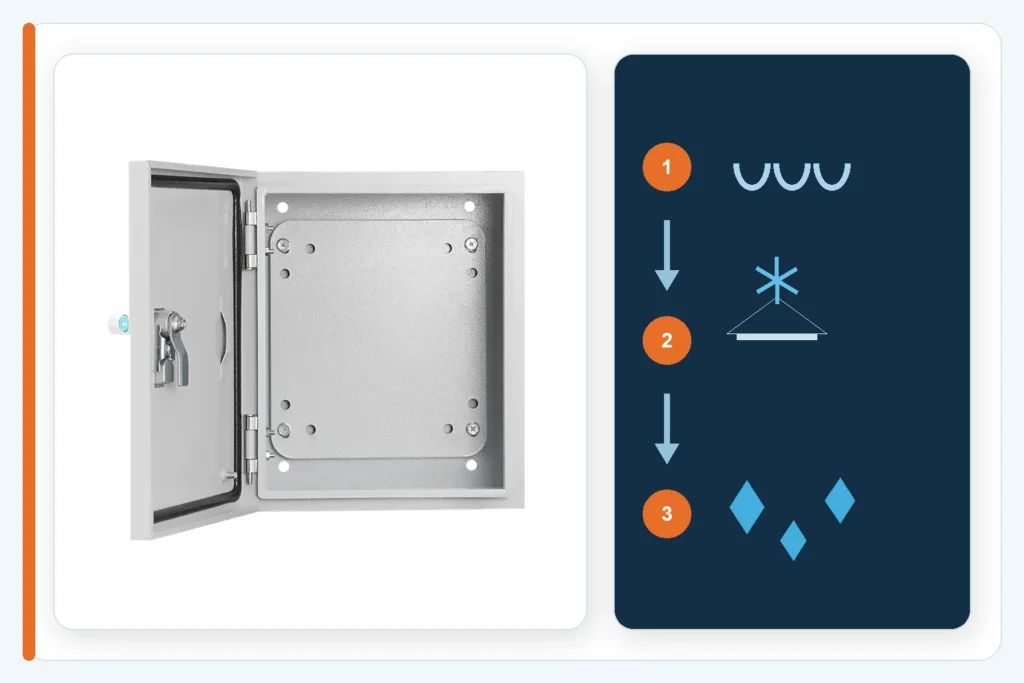
| Condensation | A sealed enclosure can still collect moisture from trapped humid air, wet cables, or temperature cycling. |
| Heat | Higher sealing can reduce natural ventilation. Internal heat load still needs a thermal review. |
| UV, oil, or chemicals | Gaskets, windows, coatings, and plastics need material-specific compatibility checks. |
| Impact or vandalism | Mechanical impact resistance is a separate requirement. |
| Certification or compliance | A design target, an internal inspection, a test report, and third-party certification are different forms of evidence. Ask which one applies. |
FN Customer Case : Condensation Inside a Sealed Outdoor Cabinet
An outdoor FN cabinet contained control and power-conversion equipment. It warmed during operation and cooled after shutdown. The door seal showed no obvious external water path, yet moisture appeared on the inside roof during humid temperature cycles.
FN separated external ingress from internal condensation and heat rejection. The ingress target remained unchanged, while pressure equalization and thermal-condensation measures were handled as separate parts of the enclosure design.
Result: the project addressed the internal moisture mechanism without using a higher IP number as a substitute for condensation or thermal control.
Verification scope: the enclosure review distinguished external water protection from internal temperature, humidity, and operating-cycle checks.
Before You Put IP66 on the Drawing: Five Checks
- Define the water source. Is it rain and splash, or a direct, forceful jet?
- Describe the cleaning method. Record pressure, temperature, chemicals, distance, direction, frequency, and duration when they matter.
- List every opening. Include glands, windows, push buttons, vents, fans, filters, removable plates, drains, and mounting holes.
- Confirm the final installation. Note which holes and accessories will be installed in the factory and which will be added on site.
- Match the evidence to the requirement. Ask whether the quotation covers a design target, inspection records, a test report, or third-party certification.
If step one only reveals rain and ordinary spray, start with IP65. If direct forceful jets are part of the real operating condition, evaluate IP66. If the cleaning method exceeds ordinary jet exposure, stop using the two-digit comparison as a shortcut and define the requirement in full.
FN Customer Case : Matching IP66 Evidence to the Finished Configuration
A customer requested IP66 evidence for an FN enclosure after a gland plate, door-mounted HMI, viewing window, and cooling component had been added. The available base-enclosure documentation did not, by itself, describe every part of the completed assembly.
FN separated the design target from the evidence deliverable. The final drawing, installed components, sealing interfaces, and permitted modifications were fixed before the documentation scope was confirmed.
Result: the evidence package was matched to the configuration being supplied rather than presented as a general claim covering every possible modification.
Verification scope: the project documents identified whether the deliverable was controlled design evidence, inspection records, a test report, or certification for the agreed configuration.
IP65 vs IP66 RFQ Checklist
Use this checklist before RFQ, before drawing approval, before field drilling, and before washdown planning.
A supplier cannot make a sound IP65 vs IP66 recommendation from the rating alone. Confirm these details:
- ☐ Installation photo or a clear description of the surrounding area.
- ☐ Enclosure size and wall-, floor-, pole-, or machine-mounted arrangement.
- ☐ Material and finish requirement.
- ☐ Water source, direction, frequency, and cleaning method.
- ☐ Door quantity, hinge side, latch type, viewing windows, and operator controls.
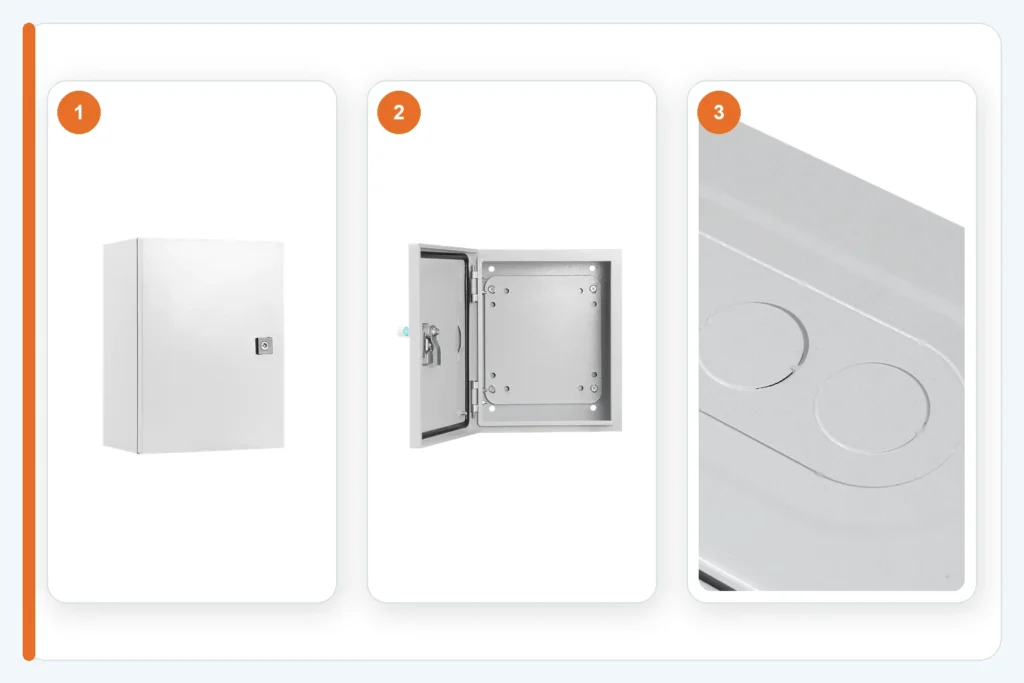
- ☐ Cable-entry drawing with hole sizes and gland types.
- ☐ Ventilation, cooling, heater, thermostat, or condensation-control requirements.
- ☐ Factory-installed parts versus field-installed parts.
- ☐ Required drawings, inspection photos, material documents, test reports, or certification.
For broader project inputs, use our electrical enclosure selection guide. If the cabinet will be exposed outdoors, also review the outdoor electrical enclosure options. For more detail on the door seal, see our guide to foam gasket compression and aging.
FAQ
Is IP66 better than IP65?
Only when stronger water-jet protection is relevant. Both ratings are dust-tight. If the enclosure only faces rain and ordinary spray, IP66 may add cost and complexity without solving a real problem.
Can an IP65 electrical enclosure be used outdoors?
Yes, when the actual exposure fits IP65 and the installed glands, door hardware, cut-outs, and accessories preserve the enclosure’s protection. Outdoor suitability also depends on corrosion, UV, temperature, and condensation, which the IP code does not cover.
Does IP66 mean waterproof?
No. IP66 addresses powerful water jets. It does not mean the enclosure can be submerged or exposed to every pressure-washing condition.
Can an enclosure with fans or filters still meet IP66?
Only if the complete ventilation system and its installation support the target protection level. A lower-rated opening becomes the weak point.
Can I drill cable-entry holes on site?
Yes, but the hole size, gland, washer, tightening, coating repair, and installation quality all affect ingress protection. The original cabinet specification does not guarantee the modified assembly.
What should I ask a supplier to prove?
Ask what supports the stated rating for the quoted configuration. Depending on the project, that may be drawing controls, component specifications, inspection records, a test report, or third-party certification. Do not treat these as interchangeable.
What is the biggest weak point in an IP65 or IP66 enclosure?
Common weak points include the door gasket, lock compression, cable glands, cut-outs, windows, vents, and any holes added after delivery.