


Electrical enclosures face constant threats. Moisture attacks metal surfaces. Salt air accelerates rust formation. Chemical fumes corrode protective layers. Consequently, your equipment suffers premature failure. However, protection coatings solve these problems effectively. These protection coatings create barriers between metal and environment. This guide examines three popular protection coatings. You will learn their differences. You will choose the right protection coating for your project.
What Are Protection Coatings?
Protection coatings are specialized layers applied to metal surfaces. These corrosion protection coatings prevent oxidation and rust. They block moisture contact. They resist chemical attacks. Moreover, corrosion protection coatings extend equipment lifespan significantly.
The basic principle of protection coatings is simple. A protective layer seals the metal substrate. Oxygen cannot reach the surface. Water cannot penetrate the barrier. Therefore, protection coatings prevent corrosion reactions. This protection matters especially for outdoor installations. Consequently, protection coatings become essential for electrical enclosures.

Method 1: Powder Coating as Protective Coatings
How Powder Coating Works
Powder coating represents one effective protective coatings option. Manufacturers spray dry powder particles onto grounded metal. The powder sticks through electrostatic attraction. Then, the coated part enters an oven. Heat melts the powder into a smooth film. Consequently, these protective coatings form a uniform layer across the surface.
Advantages of Powder Coating
Powder coating offers multiple benefits as protective coatings. First, it provides excellent UV resistance. The color stays vibrant for years. Second, powder coating creates thick protective layers. Typical thickness reaches 60-120 micrometers. Third, these protective coatings resist chipping and scratching effectively. Moreover, the finish looks professional and attractive. Therefore, many choose powder coating for visible installations.
Additionally, powder coating contains no solvents. Therefore, it releases minimal volatile organic compounds (VOCs). This makes it environmentally friendly. The process also achieves high material utilization. Unused powder gets collected and reused. Consequently, these protective coatings generate minimal waste.

Limitations of Powder Coating
However, powder coating has drawbacks. The initial equipment cost is high. You need a spray booth and curing oven. Furthermore, color changes require thorough cleaning. This increases downtime between batches. Additionally, very thick protective coatings may crack under impact.
The process also struggles with complex geometries. Recessed areas may receive thin coverage. Therefore, manufacturers must design parts carefully. They need to ensure proper powder access to all surfaces.

Best Applications for Powder Coating
Powder coating suits indoor installations well. It also works for outdoor units in mild climates. Architectural applications benefit from its aesthetic appeal. Moreover, electrical boxes in clean environments use powder coating effectively. These protective coatings excel when appearance matters significantly.
Method 2: Galvanizing as Protective Coatings
How Galvanizing Works
Galvanizing represents another effective protective coatings option. This method applies zinc to steel surfaces. The most common approach is hot-dip galvanizing. Manufacturers clean the steel thoroughly. Then, they immerse it in molten zinc bath. The zinc temperature reaches approximately 450°C. Consequently, these protective coatings form a metallurgical bond between zinc and steel.
The process creates multiple layers. The outer layer is pure zinc. Inner layers contain zinc-iron alloys. Therefore, these protective coatings provide dual protection. They act as a barrier. They also offer cathodic protection. If the coating gets scratched, zinc corrodes first. This sacrifices itself to protect the underlying steel.
Advantages of Galvanizing
Galvanizing delivers exceptional durability as protective coatings. The coating lasts 50 years or more in rural environments. Even in harsh conditions, it provides 20-25 years of protection. Moreover, galvanized surfaces resist mechanical damage well. The zinc-iron alloy layers are harder than the steel substrate itself. Therefore, these protective coatings withstand rough handling.
Additionally, galvanizing covers all surfaces completely. The immersion process reaches every nook and cranny. Therefore, no areas remain unprotected. This includes internal surfaces of hollow structures. The process also requires minimal maintenance afterward.

Limitations of Galvanizing
However, galvanizing has constraints. The process only works with steel and iron. You cannot galvanize aluminum or stainless steel. Furthermore, very large parts may exceed bath sizes. This limits the maximum dimensions you can treat. Additionally, the coating appearance is not as smooth as powder coating.
The process also generates significant fumes. Therefore, proper ventilation is essential. Moreover, the molten zinc poses safety hazards. Workers need specialized protective equipment. Consequently, operational costs include safety measures.

Best Applications for Galvanizing
Galvanizing excels in harsh environments as protective coatings. Coastal installations benefit greatly from its protection. Industrial areas with chemical exposure also suit galvanized equipment. Moreover, infrastructure projects prefer galvanizing for long-term durability. These protective coatings work best when maintenance access is limited.
Method 3: Zinc-Rich Primer as Protective Coatings
How Zinc-Rich Primer Works
Zinc-rich primer represents the third protective coatings option. These coatings contain high concentrations of zinc dust. The zinc content typically exceeds 80% by weight. Manufacturers apply the primer through spraying or brushing. As the solvent evaporates, zinc particles remain embedded in the binder. Consequently, the dried film conducts electricity.
This conductivity enables cathodic protection. Similar to galvanizing, zinc corrodes preferentially. Therefore, it protects the steel substrate. The binder holds zinc particles in place. It also provides additional barrier protection. However, the mechanism differs from pure barrier coatings.
Advantages of Zinc-Rich Primer
Zinc-rich primer offers flexibility as protective coatings. You can apply it on-site without specialized equipment. Therefore, it suits field applications perfectly. Moreover, you can touch up damaged areas easily. This eliminates the need for complete recoating. Additionally, the primer works with various topcoats
The application process is straightforward. Surface preparation requires standard blasting or grinding. Then, workers apply the primer using conventional methods. Consequently, training requirements stay minimal. Furthermore, the primer adheres well to properly prepared surfaces.

Limitations of Zinc-Rich Primer
However, zinc-rich primer has drawbacks. The coating thickness is limited. Typical dry film thickness reaches only 75-100 micrometers. Therefore, it provides less barrier protection than thicker coatings. Moreover, the primer alone is not sufficient for long-term protection. You need a topcoat system.
The application conditions matter significantly. High humidity affects curing. Low temperatures slow down the process. Furthermore, surface preparation is critical. Any contamination reduces adhesion. Consequently, poor preparation leads to premature failure.

Best Applications for Zinc-Rich Primer
Zinc-rich primer suits maintenance work well as protective coatings. You can apply it to existing structures without disassembly. Therefore, it saves time and labor costs. Moreover, it works for complex shapes that cannot fit in galvanizing baths. Additionally, the primer serves as an excellent base for topcoat systems in moderate environments.
Comparative Analysis of Protective Coatings
Cost Comparison
Cost varies significantly among protective coatings. Powder coating requires high initial investment. However, per-unit costs decrease with volume. Galvanizing costs more for small batches. But it becomes economical for large quantities. Zinc-rich primer has the lowest equipment cost. Therefore, it suits small projects and maintenance work.
Durability Comparison
Durability depends on environment and coating thickness. Galvanizing typically lasts longest in harsh conditions. The metallurgical bond provides superior adhesion. Powder coating offers excellent resistance in moderate environments. However, it may chip under severe impact. Zinc-rich primer provides good protection with proper topcoat. But it requires more frequent maintenance than other protective coatings.
Appearance Comparison
Appearance matters for visible installations. Powder coating provides the smoothest finish. You can choose from hundreds of colors. The result looks professional and attractive. Galvanizing produces a spangled pattern. Some consider this industrial-looking. Others appreciate the metallic appearance. Zinc-rich primer has a matte gray finish. Therefore, you must apply a topcoat for aesthetic purposes.
Environmental Impact
Environmental considerations influence protective coatings selection. Powder coating contains no solvents. Therefore, it releases minimal VOCs. The process also generates little waste. Galvanizing uses molten zinc at high temperatures. This consumes significant energy. However, zinc itself is recyclable. Zinc-rich primer contains solvents. Consequently, it releases VOCs during application. But modern formulations reduce these emissions substantially.

Selection Criteria for Protective Coatings
Consider Your Environment
Environment determines the best protective coatings. Coastal areas require superior corrosion resistance. Therefore, galvanizing often proves best. Industrial settings with chemical exposure also benefit from galvanizing. Indoor installations in clean environments suit powder coating well. Moreover, architectural applications prefer powder coating for appearance. For moderate conditions with maintenance access, zinc-rich primer works adequately.
Evaluate Your Budget
Budget constraints affect protective coatings choice. Large projects with high volumes favor powder coating. The per-unit cost drops significantly. Small batches or one-off jobs suit zinc-rich primer better. You avoid expensive setup costs. Galvanizing falls in the middle range. However, consider lifecycle costs too. A more expensive method may save money long-term through reduced maintenance.
Assess Maintenance Capabilities
Maintenance access influences protective coatings decision. Remote locations with limited access benefit from galvanizing. The coating lasts decades without attention. Facilities with regular maintenance schedules can use zinc-rich primer. You touch up damage during routine inspections. Powder coating requires careful handling to avoid chips. Therefore, consider your maintenance resources before choosing.
Check Size Limitations
Part size may limit protective coatings options. Galvanizing baths have maximum dimensions. Very large enclosures cannot fit. Powder coating booths also have size constraints. However, you can build larger booths customarily. Zinc-rich primer has no size limitations. You apply it regardless of part dimensions. Therefore, oversized projects often require field-applied coatings.

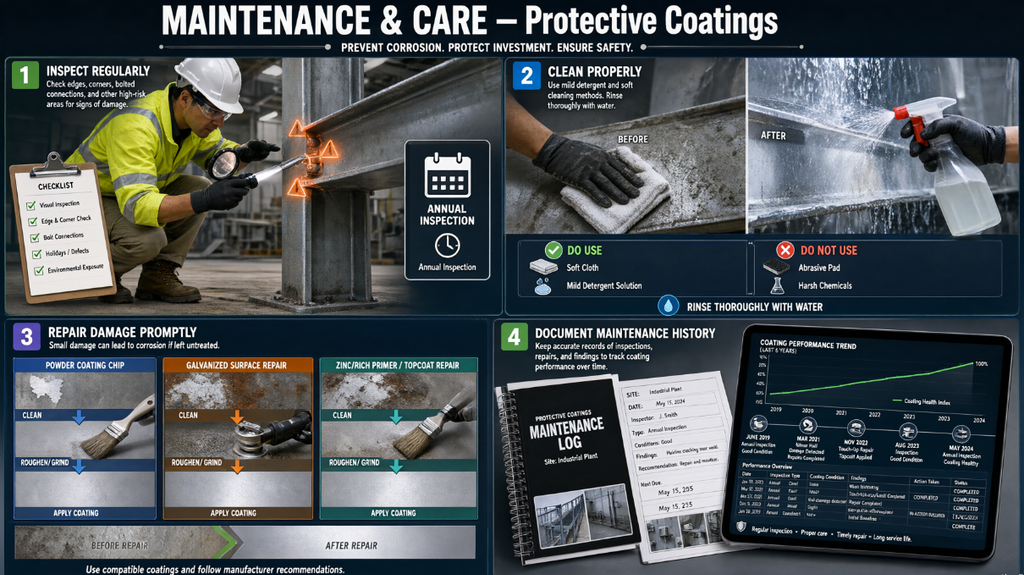
Maintenance and Care of Protective Coatings
Inspect Regularly
All protective coatings require periodic inspection. Check for damage, chips, or corrosion spots. Pay attention to edges and corners first. These areas experience the most stress. Moreover, inspect connection points and hardware. Small problems caught early prevent major repairs. Therefore, schedule inspections at least annually.
Clean Properly
Keep coated surfaces clean. Remove dirt, debris, and chemical residues. Use mild detergents and soft cloths. Avoid abrasive cleaners that damage the coating. Furthermore, rinse thoroughly after cleaning. Residual cleaners may attack the protective layer. Consequently, proper cleaning extends protective coatings life significantly.
Repair Damage Promptly
Address coating damage immediately. Small chips expose metal to corrosion. Touch up damaged areas with matching materials. For powder coating, use compatible repair paint. For galvanizing, apply zinc-rich paint. For zinc-rich primer, add more primer and topcoat. Moreover, follow proper surface preparation before repair. Therefore, clean and roughen the damaged area first.
Document Maintenance History
Keep records of all maintenance activities. Note inspection dates and findings. Document repair locations and materials used. Moreover, track coating performance over time. This data helps predict future maintenance needs. Additionally, it supports warranty claims if applicable. Consequently, good records optimize your protective coatings maintenance program.
We specify the finish and salt-spray test on your quote — see custom electrical enclosures.
Conclusion
Choosing the right protective coatings depends on your environment, budget, and performance needs. Powder coating delivers excellent appearance and UV resistance. Galvanizing provides superior long-term durability for harsh conditions. Zinc-rich primer offers flexibility for field application and maintenance work. All three methods require proper surface preparation to achieve optimal adhesion and protection. Invest wisely in protective coatings to extend equipment life and reduce maintenance costs.