
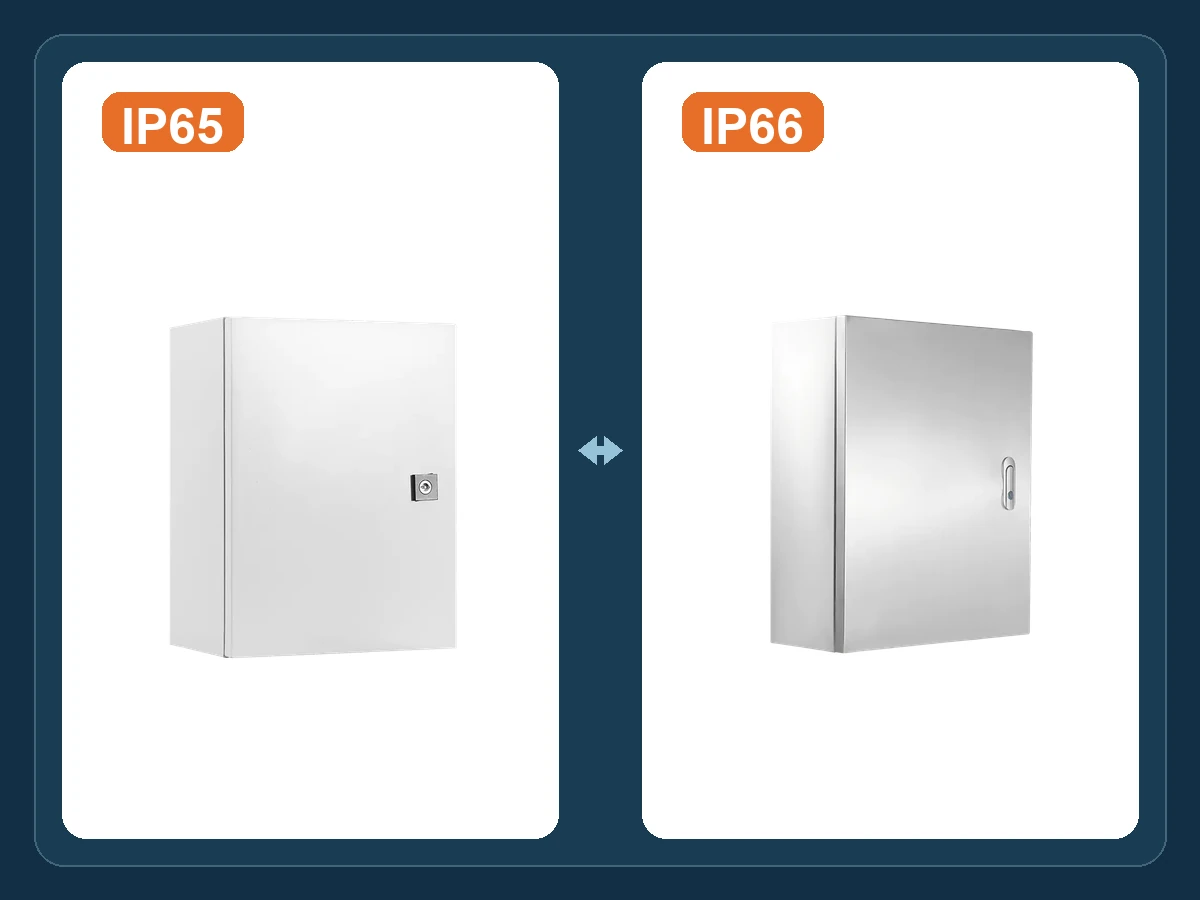

Trying to choose between IP65 and IP66? Start with the water that will actually hit the enclosure. Then check every gasket, gland, vent, window, latch, and field modification on the finished assembly.
Short answer: Choose IP65 for dust, rain, splash, and ordinary spray. Evaluate IP66 when direct, forceful water jets are part of normal use, cleaning, or the project requirement.
It is tempting to treat 66 as “safer outdoors.” Don’t. IP66 does not address immersion, corrosion, condensation, heat, or a poorly sealed cable entry.
Exposure first. Finished assembly second. Evidence third.Rain, splash, ordinary spray
Start with IP65.Direct, forceful water jets
Evaluate IP66.Immersion, hot wash, chemicals
Define the requirement separately.Every project
Verify the fitted enclosure, not the empty box.
Keep this guide open at five decision points: RFQ, drawing approval, field drilling, accessory selection, and washdown planning.
IP65 vs IP66 at a Glance
| Question | IP65 | IP66 |
|---|---|---|
| Dust protection | Dust-tight | Dust-tight |
| Water protection | Water jets | More powerful water jets |
| Sensible starting point | Rain, splashing, ordinary spray, sheltered industrial areas | Direct hose spray, exposed process areas, more demanding washdown conditions |
| Main engineering concern | Keep the door seal and cable entries consistent | Control every sealing point under a stronger water load |
| Does it cover immersion? | No | No |
| Does it prove corrosion or chemical resistance? | No | No |
| Best buying question | Is IP65 enough for the actual water exposure? | Can the finished configuration, including every opening and accessory, support IP66? |
The Three-Step Decision: Exposure, Finished Assembly, Evidence
If you remember one sequence, use this one. First, ask what water will actually hit the enclosure. Next, inspect the finished boundary—gaskets, door alignment, latches, glands, cut-outs, windows, vents, fans, filters, plugs, and field work. Then ask what evidence supports that exact configuration.
If you are still defining size, material, cooling, mounting, and accessories, use the electrical enclosure selection guide before fixing the IP rating.
Before we go further, one boundary matters. The five examples below come from public sources. They are not FN projects, and they do not prove FN product performance. Each story is here for one engineering lesson; image rights remain listed in the manifest.
How to Compare IP65 and IP66 Fairly: Do Not Compare Unequal Enclosures
Here is where comparisons often go wrong. One enclosure is wet, another is dry, and someone declares a winner. But if the gasket, latch pattern, openings, mounting position, or spray condition changed, the test answered a different question.
A useful comparison is much less dramatic. Hold the enclosure, openings, mounting position, water source, distance, direction, duration, and inspection method steady. Change one thing.
| Comparison item | What should be held constant or recorded | Why it matters |
|---|---|---|
| Base enclosure | Material, dimensions, door construction, hinges, seams, mounting orientation | A different body or door can change stiffness, runoff and the water path. |
| Gasket | Material, profile, joint, age, condition and compression target | A gasket cannot be compared separately from how evenly it is compressed. |
| Locking | Latch type, number of locking points, adjustment and tightening or torque requirements | Uneven locking can create a local gap even when the gasket material is identical. |
| Openings and interfaces | Cable glands, gland plates, blanking plugs, windows, HMIs, fans, filters and vents | The lowest-performing or incorrectly installed interface can become the actual ingress path. |
| Water exposure | Nozzle or water source, pressure or flow, distance, angle, direction, temperature and duration | Rain, ordinary spray, powerful jets, washdown and immersion are different conditions. |
| Result inspection | Internal dry condition, absorbent paper or indicators, opening time and traced ingress location | “Looks dry” is not a repeatable acceptance criterion. |
Fair comparison rule: same enclosure basis, same water exposure, same inspection method. One variable changes at a time.
Suppose you want to check gasket compression. Keep the cut-outs, glands, spray distance, direction, and exposure time unchanged. Compare correct compression with an under-compressed gasket, then follow the water path. “Wet” or “dry” tells you what happened. The entry path tells you why.
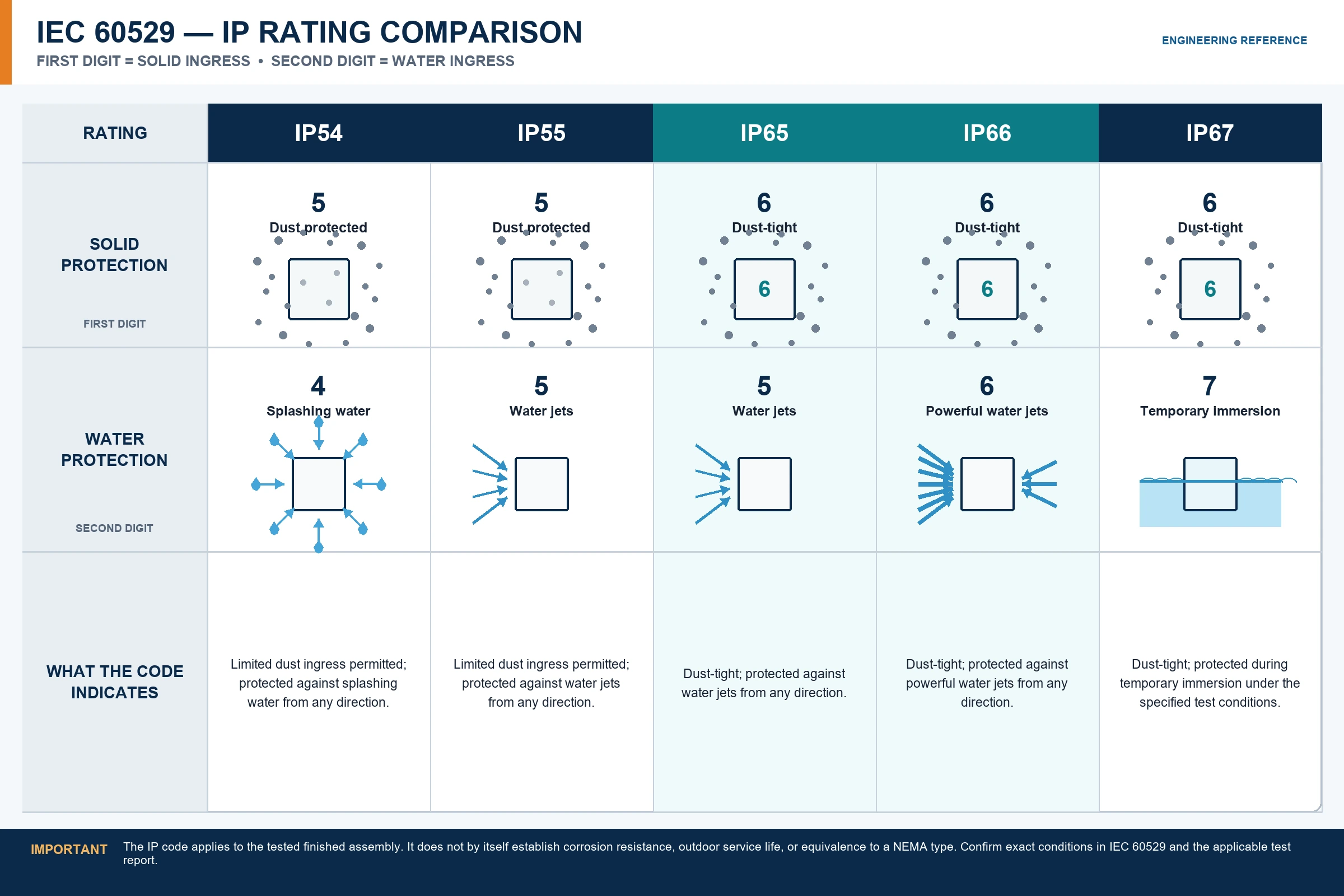
What the Two Ratings Actually Mean
The IP code comes from IEC 60529, which defines how enclosures protect against solids and water.
Both IP65 and IP66 begin with 6, so both are dust-tight. Where does the difference begin? With the second digit:
IP65: protection against water jets.
IP66: protection against more powerful water jets.
That is the whole difference in the code. IP66 does not quietly add thicker steel, better corrosion resistance, lower internal temperature, or longer service life. If the project needs those things, write them into the specification.
IPX5 vs IPX6: What the Test Difference Changes
The test values show why the second digit matters. Under IEC 60529, the working table uses 6.3 mm at 12.5 L/min for IPX5 and 12.5 mm at 100 L/min for IPX6, from 2.5–3 m for at least three minutes. Use these figures as a comparison guide, not as a substitute for the licensed standard or the test report for the quoted configuration.
| Test element | IPX5 | IPX6 | Buyer implication |
|---|---|---|---|
| Nozzle internal diameter | 6.3 mm | 12.5 mm | IPX6 uses the larger nozzle and higher water volume. |
| Water flow | 12.5 L/min | 100 L/min | IPX6 applies a more demanding water-jet condition. |
| Nozzle-to-enclosure distance | 2.5–3 m | 2.5–3 m | The test distance is controlled; it is not an arbitrary pressure-washer distance. |
| Minimum exposure reported by the laboratory source | At least 3 minutes | At least 3 minutes | The applicable setup and tested configuration must be documented. |
| Direction | All practicable directions | All practicable directions | Door seams, glands, cut-outs, windows, and accessories matter. |
Choose IP65 When Water Exposure Is Ordinary
IP65 is usually enough when:
- the enclosure faces rain, splashing, dust, or occasional cleaning spray;
- it sits under a canopy or in a partly sheltered outdoor position;
- no direct, forceful hose stream is part of normal operation or cleaning;
- the project specification calls for IP65;
- cable entries, door seals, and accessories can be controlled as a complete assembly.
Here is a simpler way to think about “outdoor.” A cabinet under a canopy may see less water than an indoor machine beside a washdown line. So yes, an IP65 enclosure can work outdoors when the exposure fits. “Outdoor” tells you where the box sits; it does not tell you how water hits it.
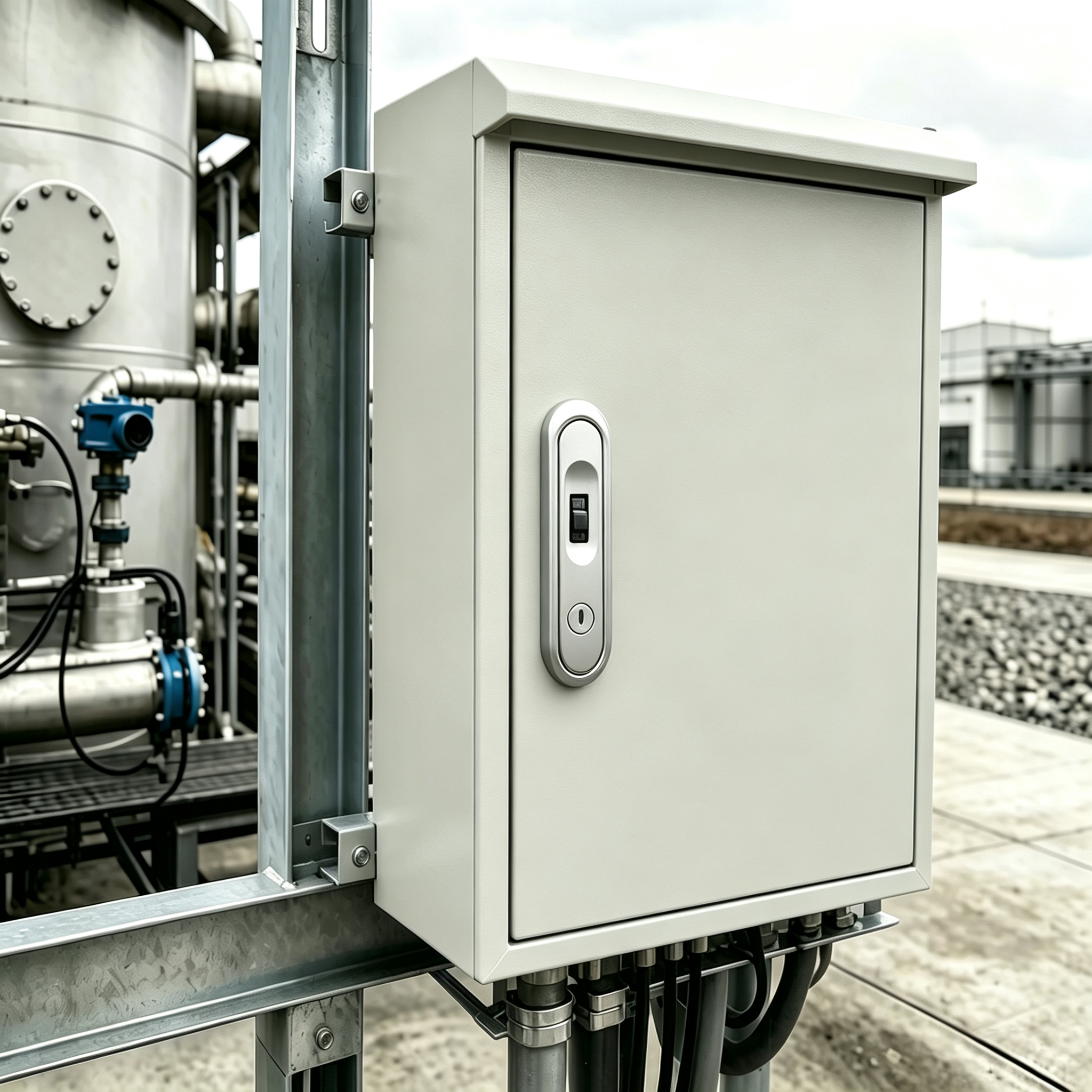
If this matches your site, compare the available IP65 electrical enclosures. For other installation patterns, check the electrical enclosure application directory.
Case: An IPX7 Housing Still Failed in Wind-Driven Heavy Rain
The case shows why that distinction matters. IPX7-rated housings were installed high on telecom towers. During the first year, typhoons and forceful rain hit the equipment. Several units came back from the field completely full of water.
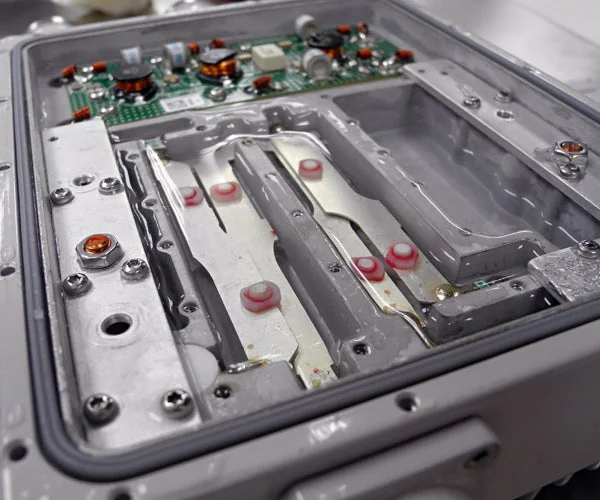
At first glance, IPX7 sounded reassuring. The problem was that the field exposure was not an immersion test. Water crossed the vent membrane and adhesive interface under the dynamic pressure of wind-driven rain.
The case study points to a different target: IPX5 or IPX6 jet protection, followed by a redesign of the vent and adhesive interface around the real exposure.
Lesson for IP65 vs IP66: A higher digit is not a safety margin for the wrong exposure. Start with the water source and test condition.
Choose IP66 When Forceful Jets Are a Real Requirement
IP66 earns its place when:
- direct hose spray is expected during normal cleaning;
- the enclosure is mounted where process water can strike the door and cable entries;
- the customer specification explicitly requires IP66;
- water ingress would cause costly downtime and the extra protection is backed by appropriate design and evidence;
- the complete assembly can maintain the target rating after windows, controls, glands, vents, and other accessories are added.
Even then, there is a boundary. IP66 is not blanket approval for every pressure washer, hot-water jet, or chemical wash. If the cleaning is harsher than the standard jet condition, state the pressure, temperature, chemicals, distance, direction, and duration.
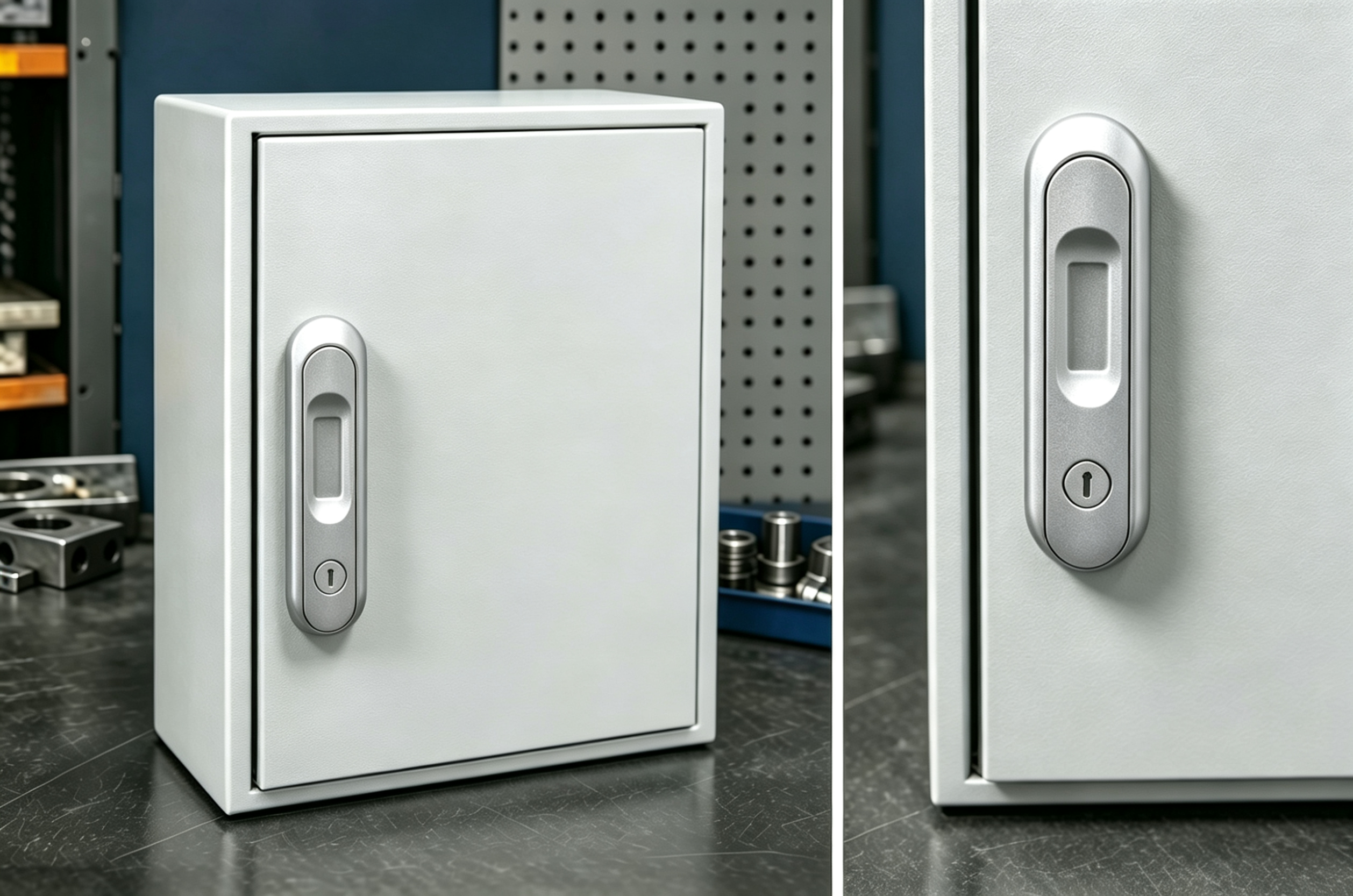
If forceful jets are part of the real requirement, review the IP66 electrical enclosures—then confirm that every fitted interface supports the same target.
Case: Six Outdoor Enclosures Under a Direct Hose Stream
Now move from wind-driven rain to a direct hose stream. In 2011, a UL firefighter-safety program tested six Type 3R photovoltaic enclosures—three disconnect switches and three combiner boxes. Five had no door gasket; one combiner box had a hinged, gasketed door.
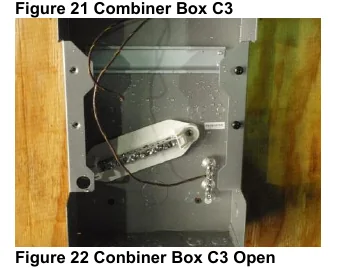
The setup was specific: each sample stood vertically, with no conduit fittings installed and no knockouts removed. Pond water struck the enclosure from 20 ft (6.1 m) through a 1 in smooth-bore nozzle at 25 psi for 2.5 minutes, initially at 1000 VDC.
Then the water reached live parts in all six samples. Two combiner boxes flowed almost immediately. The gasketed sample showed only droplets. The Type 3R rain evaluation did not answer the direct-hose question.
Lesson for IP65 vs IP66: “Outdoor,” “rain rated,” and “direct hose exposure” are not the same story. Record pressure, distance, nozzle, direction, duration, temperature, and chemicals before choosing IP66.
Source and boundary: Firefighter Safety and Photovoltaic Installations Research Project, UL, 2011, Section 6.2, pp. 35–39. Type 3R and IEC IP codes are not direct equivalents; this case shows an exposure mismatch, not an IP66 certification result.FN Engineering Takeaway: “Outdoor,” “rain rated,” and “direct hose exposure” are different conditions. Record the water setup before comparing results.
The Rating Is Won or Lost at the Openings
If you are looking for a leak, do not stare at the middle of the steel panel. Look where parts meet, move, or were added later.
Case: Cable-Transit Configuration Broke the Water-Tight Boundary
The case takes us to a different kind of boundary. A December 15, 2005 safety alert reported preliminary evidence of water moving between access spaces through failed multiple cable transits.
The detail that matters is small: blank-block positions inside the molded sealing system. Power and instrumentation cables passed through those watertight bulkhead interfaces, and the reported failures appeared where blank blocks filled unused spaces.
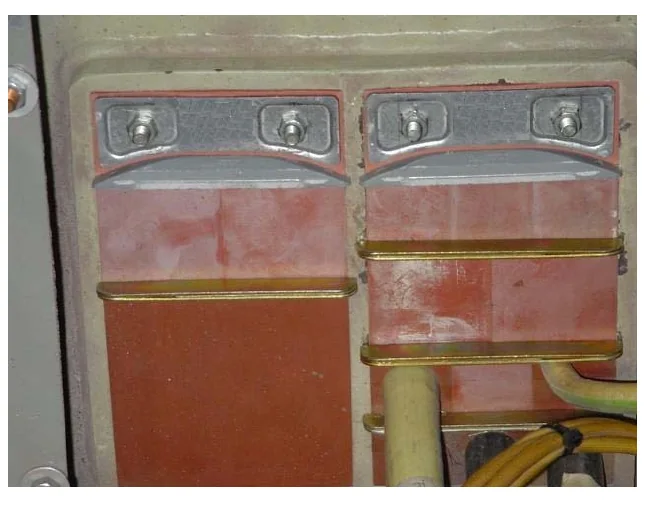
The alert did not pretend the cause was settled. It listed three possibilities: incorrect installation, the wrong installation procedure, or a pressure rating that did not match the installed configuration.
That is the practical point for an enclosure buyer. Glands, entry plates, blanking plugs, windows, fans, filters, and field holes all become part of the protection boundary. The empty-box rating does not automatically follow the modified assembly.
1. Door Gasket
Look closely at the gasket. It has to touch and compress around the entire opening—not just most of it. One stretched corner or lightly touching edge can become the path that matters.
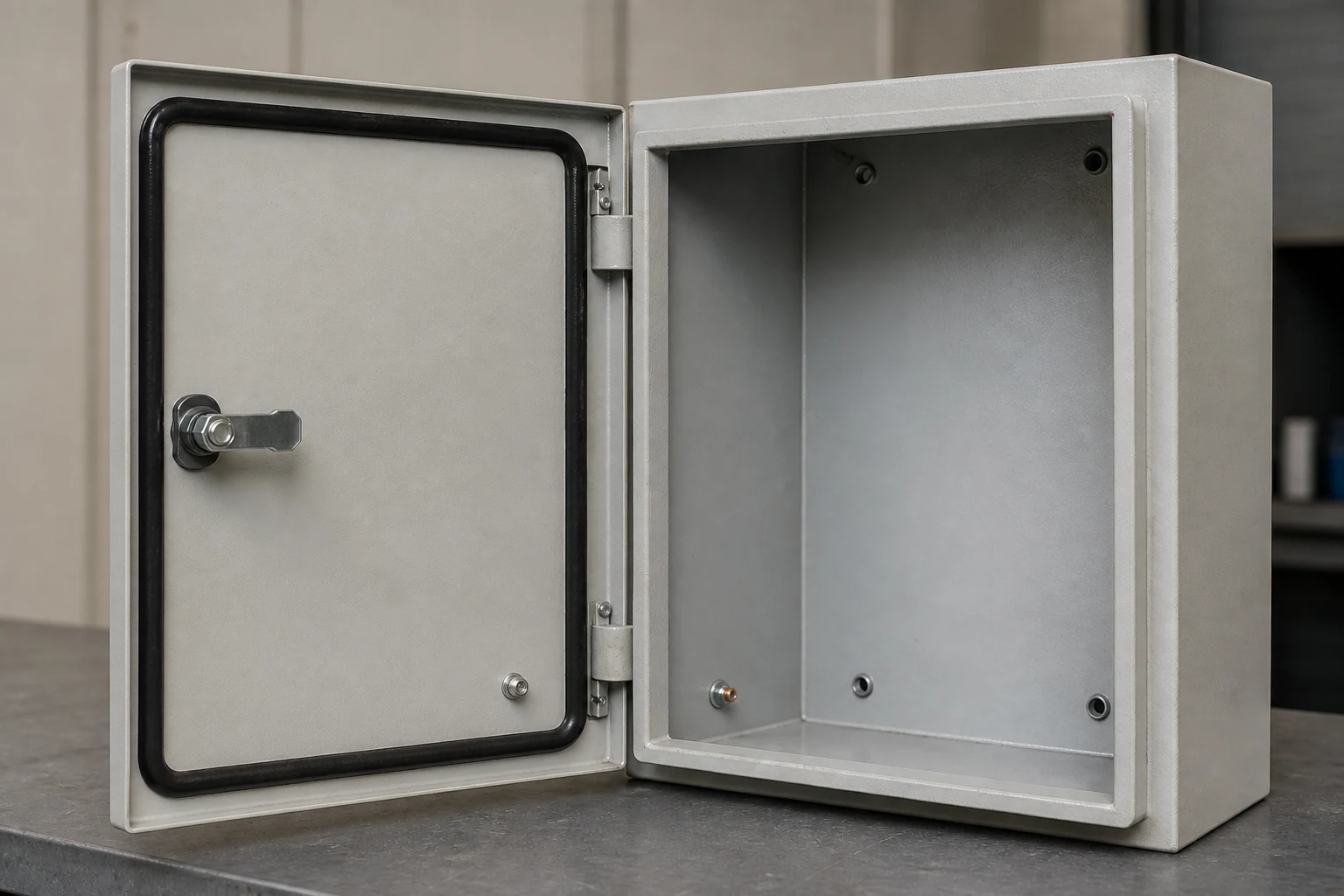
For compression range, corner joints, aging, and material behavior, see foam gasket compression and aging.
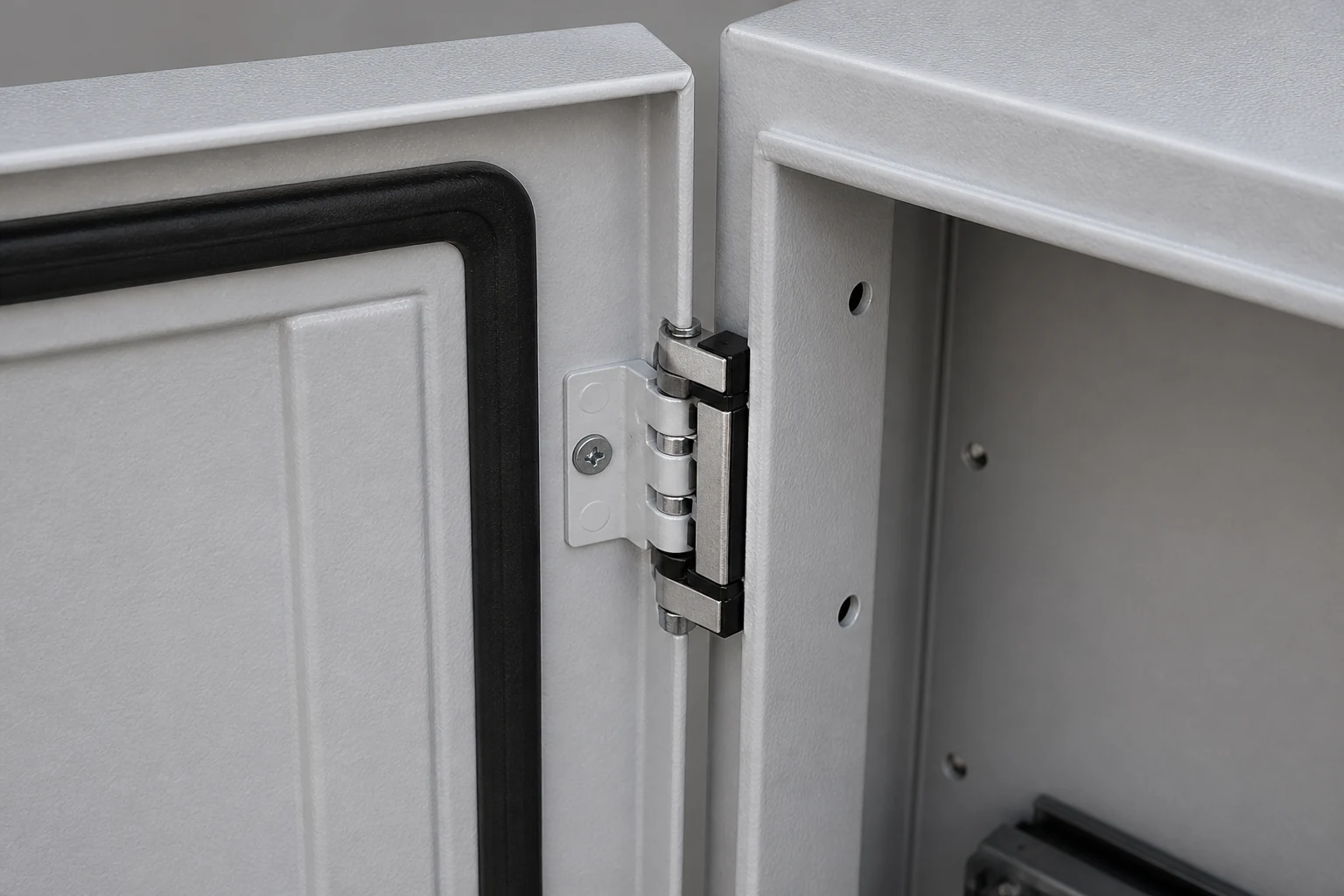
2. Door Flatness, Hinges, and Latches
Large doors flex. If a hinge is misaligned or the latch spacing is too wide, one section of gasket may barely compress. In that moment, the label on the door matters less than stiffness, alignment, and an even gap.
3. Cable Entries and Field Drilling
The same is true at the cable entries. One oversized hole, loose gland, missing washer, or unsealed mounting screw can undo the rest of the sealing work. If the hole is drilled on site, the installer becomes part of the protection system.
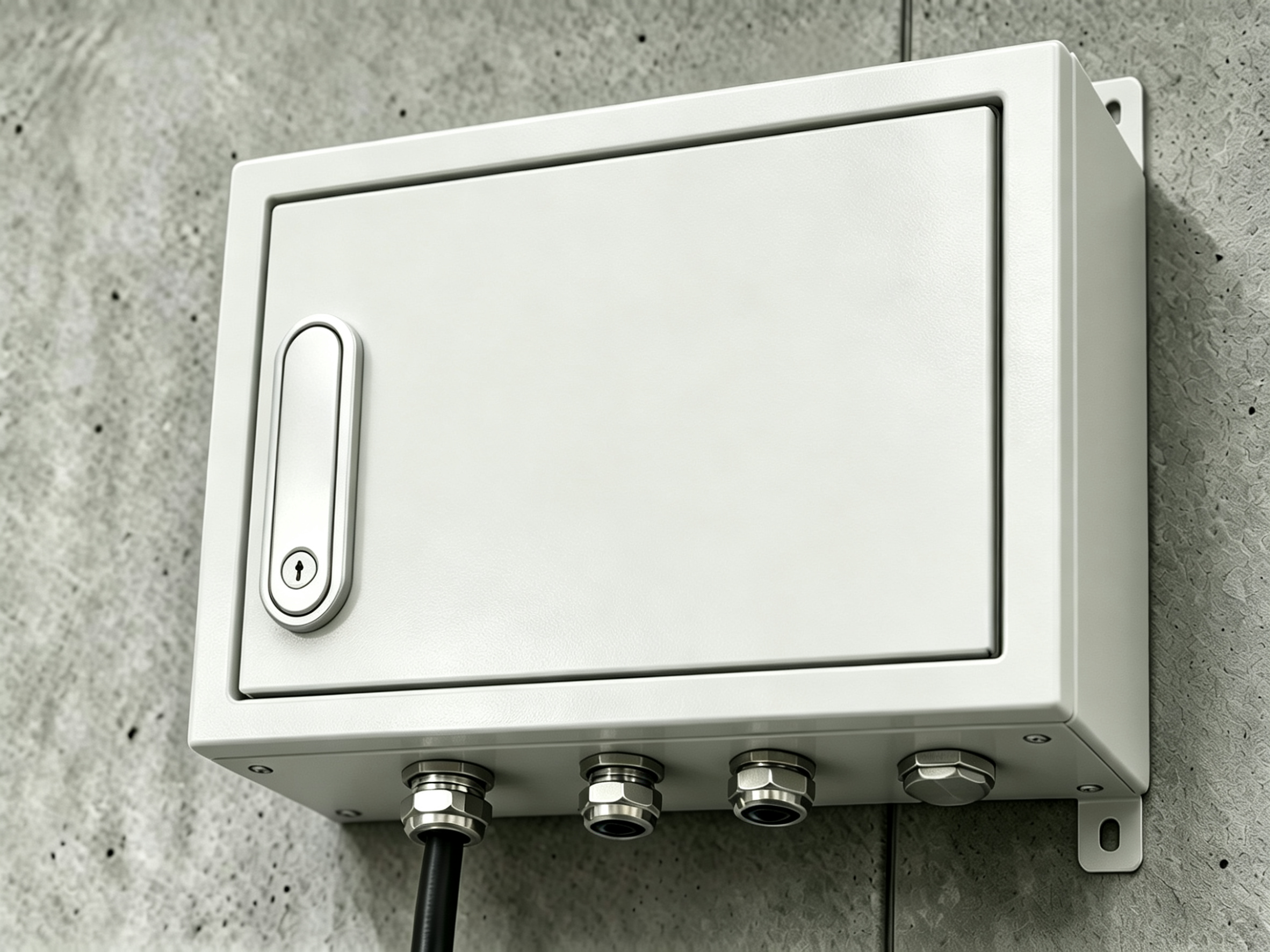
For gland sizing, entry plates, thread seals, spare holes, and cable routing, read cable glands and gland plates.
4. Windows, Push Buttons, Fans, and Filters
Now add a window, push button, fan, or filter. Each one creates a new interface to check. A lower-rated fan or filter can become the water path in an otherwise IP66 cabinet.
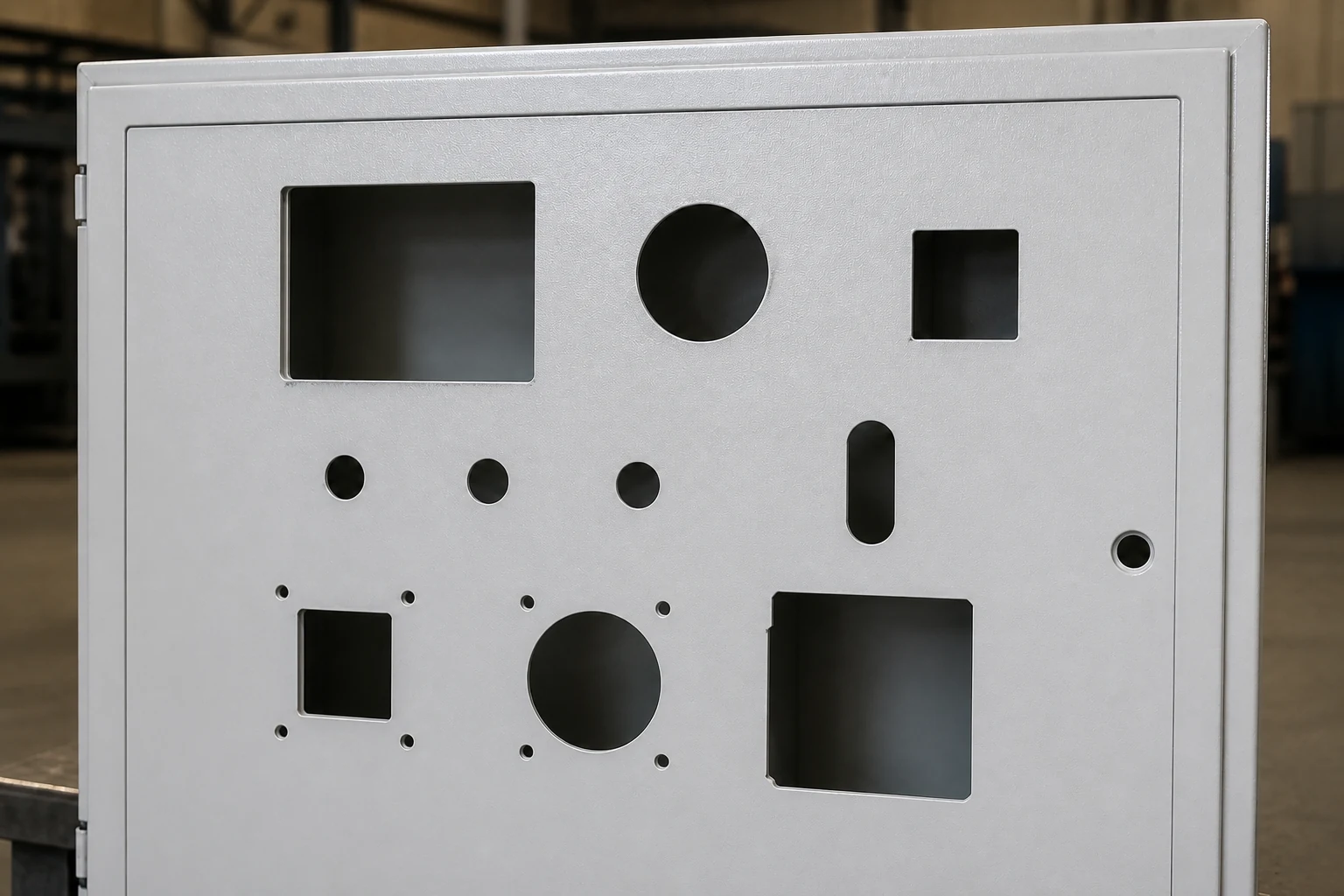
There is also a trade-off: sealing blocks dust and water, but it blocks free airflow too. If the enclosure cannot shed the heat through its surface, review the thermal load and electrical enclosure cooling methods before cutting a vent into the finished box.
5. Seams, Plugs, and Mounting Holes
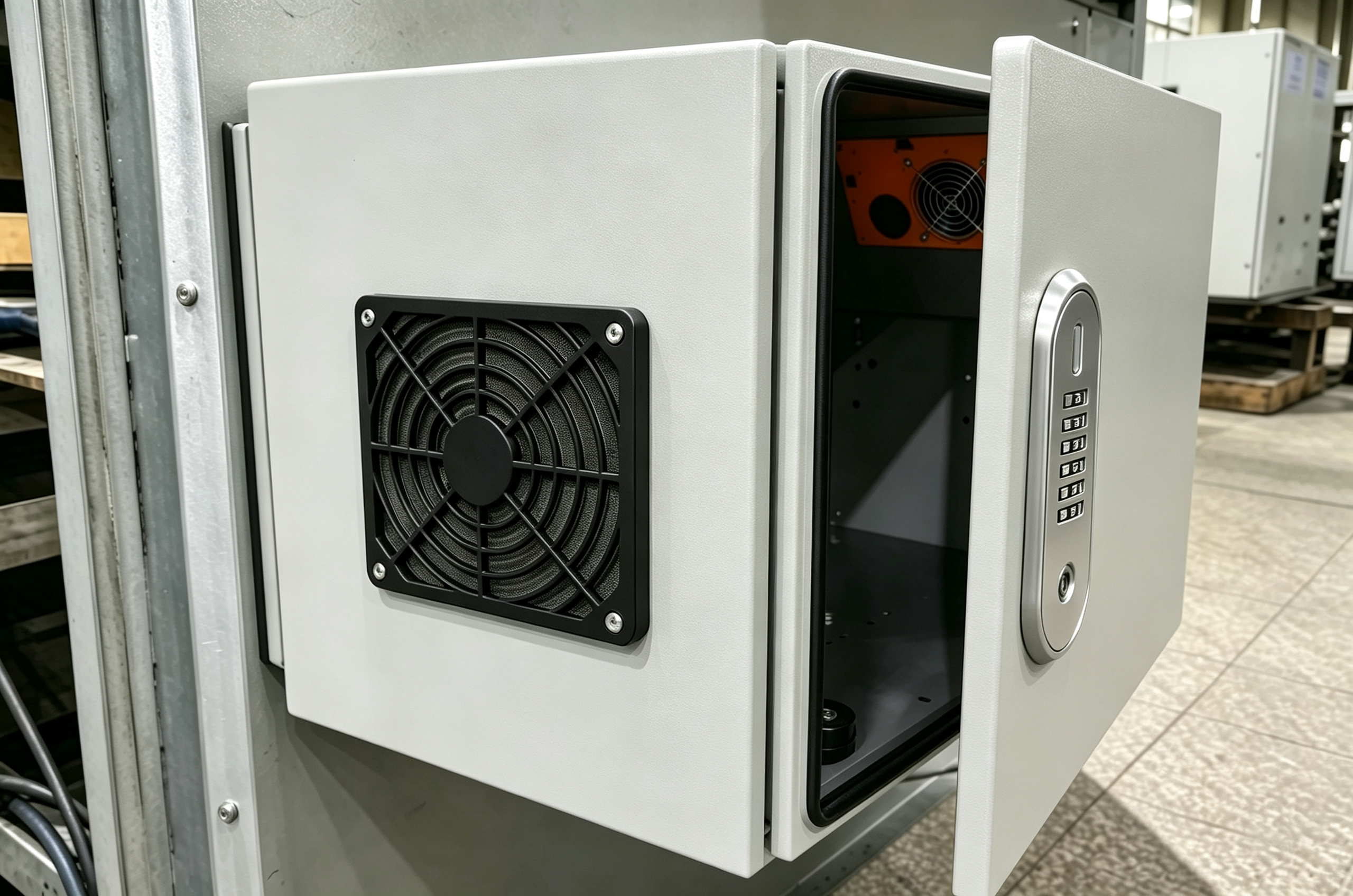
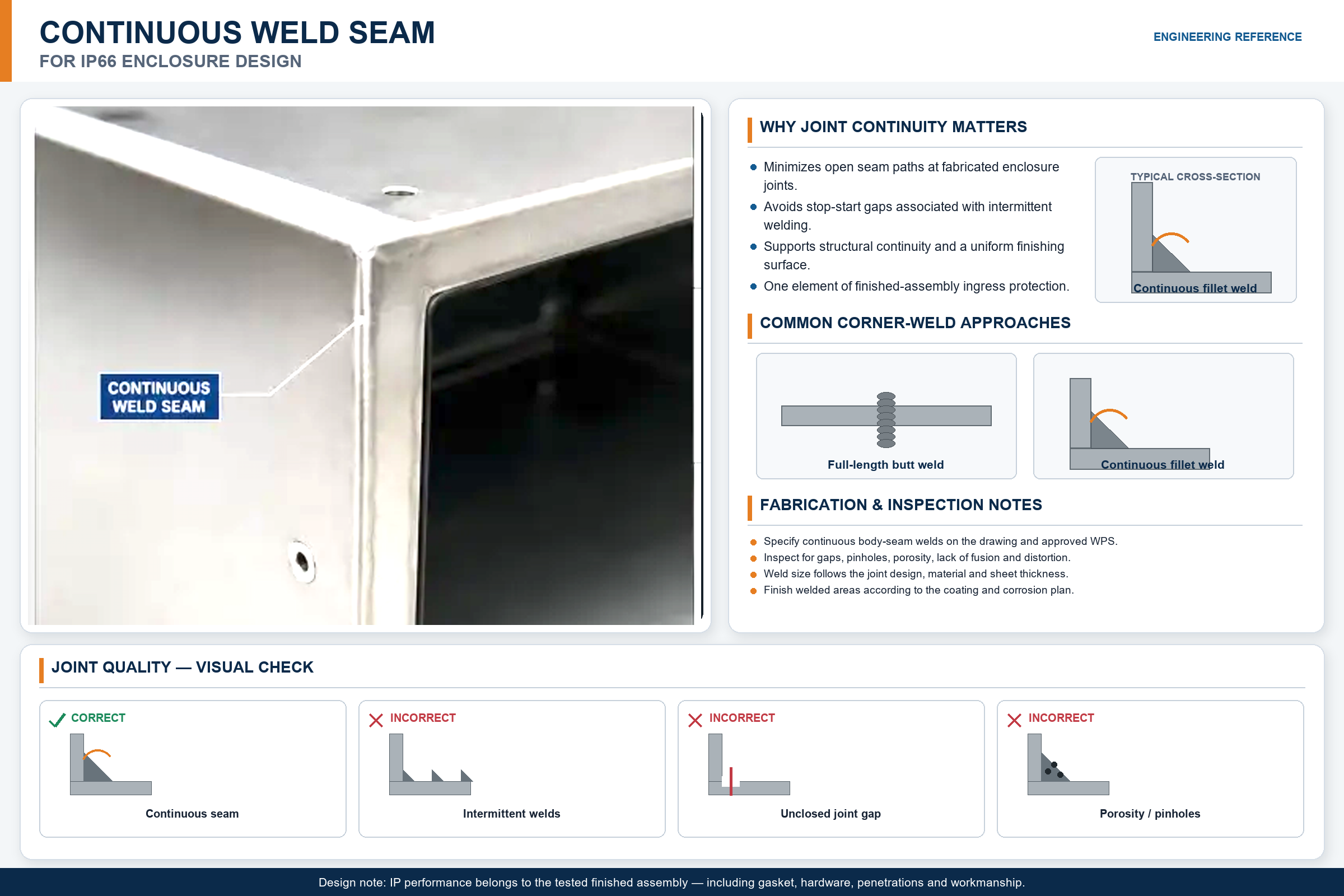
Finally, check the quiet details: welded corners, gland plates, drain plugs, roof seams, and mounting holes. Put every seal on the drawing. Do not leave these decisions to whoever has the drill on site.
Public Forensic Case: Gasket Compression Failed When Bolt Torque Was Below Specification
One final public case shows why bolt torque belongs in the sealing review. Two rooftop busway explosions occurred at public-transit operations facilities about one week apart. The owner de-energized the rooftop busway system and commissioned a forensic investigation.
On the roof, they found pooled water. Inside the elbow assemblies, they found more water, moisture on insulated busbars, corrosion consistent with prolonged exposure, and uneven butyl sealant.
Now connect those observations to the joint. Through-tie bolt torque was below the manufacturer’s specified range. Those bolts compressed the gaskets, so low torque meant less sealing pressure.
The investigation attributed the losses to water entering inadequately tightened or sealed elbow joints. The public case says the rooftop busway approach was abandoned in favor of a redesigned power-distribution approach.
This is why a gasket specification is not finished-assembly evidence. Flatness, locking points, compression, torque, sealant, cut-outs, and accessories all have to match the configuration being reviewed or tested.
Source and boundary: Envista Forensics case study, May 20, 2026. The public summary does not include the complete torque records or forensic file.

FN Engineering Takeaway: A gasket specification is not sealing evidence by itself. Compression uniformity, fastener torque, sealant application, structure, and installed interfaces must match the reviewed configuration.
What IP65 and IP66 Do Not Tell You
By this point, the pattern should be clear. An IP rating answers one question: ingress. It does not choose the material, coating, thermal design, condensation control, or service life for you.
|
Risk |
Why IP65 or IP66 Is Not Enough |
|---|---|
| Immersion or standing water | IP65 and IP66 are jet-protection ratings, not immersion ratings. |
| Corrosion | Material grade, pretreatment, coating, weld treatment, and exposure environment control corrosion performance. |
| Condensation | A sealed enclosure can still collect moisture from trapped humid air, wet cables, or temperature cycling. |
| Heat | Higher sealing can reduce natural ventilation. Internal heat load still needs a thermal review. |
| UV, oil, or chemicals | Gaskets, windows, coatings, and plastics need material-specific compatibility checks. |
| Impact or vandalism | Mechanical impact resistance is a separate requirement. |
| Certification or compliance | A design target, an internal inspection, a test report, and third-party certification are different forms of evidence. Ask which one applies. |
Case: Pressure Cycling Drew Water Vapor Into a Sealed Router Housing
Not every wet interior begins with a spray. In a GORE case study, an outdoor-router manufacturer reported leakage, corrosion, and electronic-performance problems during the first year of installation.
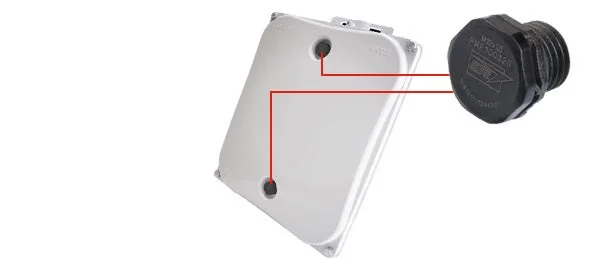
What changed inside the housing? Fast temperature swings created a pressure difference and internal vacuum. The vacuum loaded the seals and drew water vapor inside. The vapor then condensed around the electronics, with no drainage path.
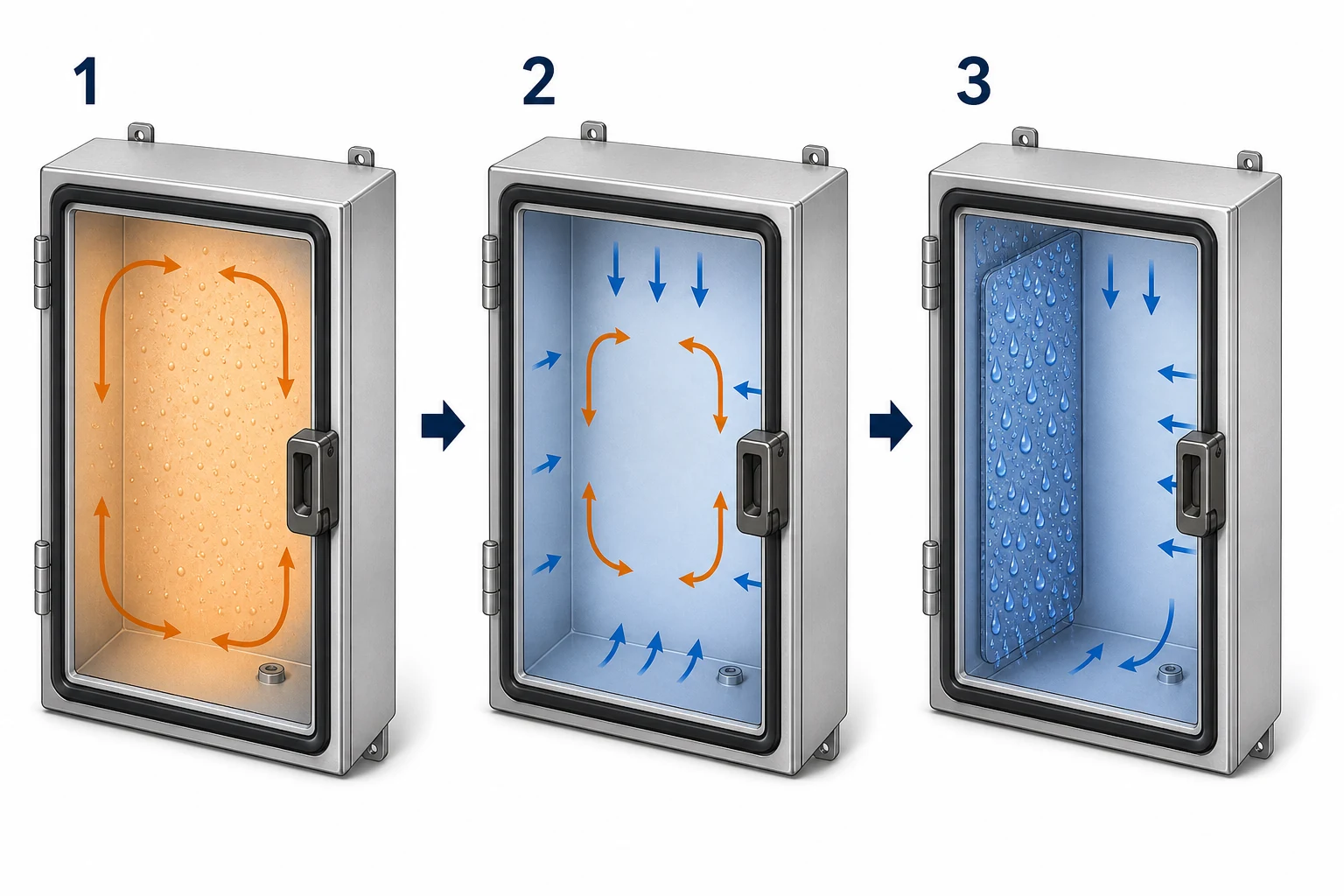
That is why stronger seals alone were not the answer. The design needed pressure equalization and contaminant protection as separate requirements.
So, if you find water inside a cabinet, do not jump straight to a higher IP rating. Check direct ingress, pressure cycling, condensation, cable wicking, drainage, and interface defects first.
Before You Put IP66 on the Drawing: Five Checks
Define the water source. What will actually hit the enclosure—rain and splash, or a direct, forceful jet?
Describe the cleaning method. If pressure, temperature, chemicals, distance, direction, frequency, or duration matter, write them down.
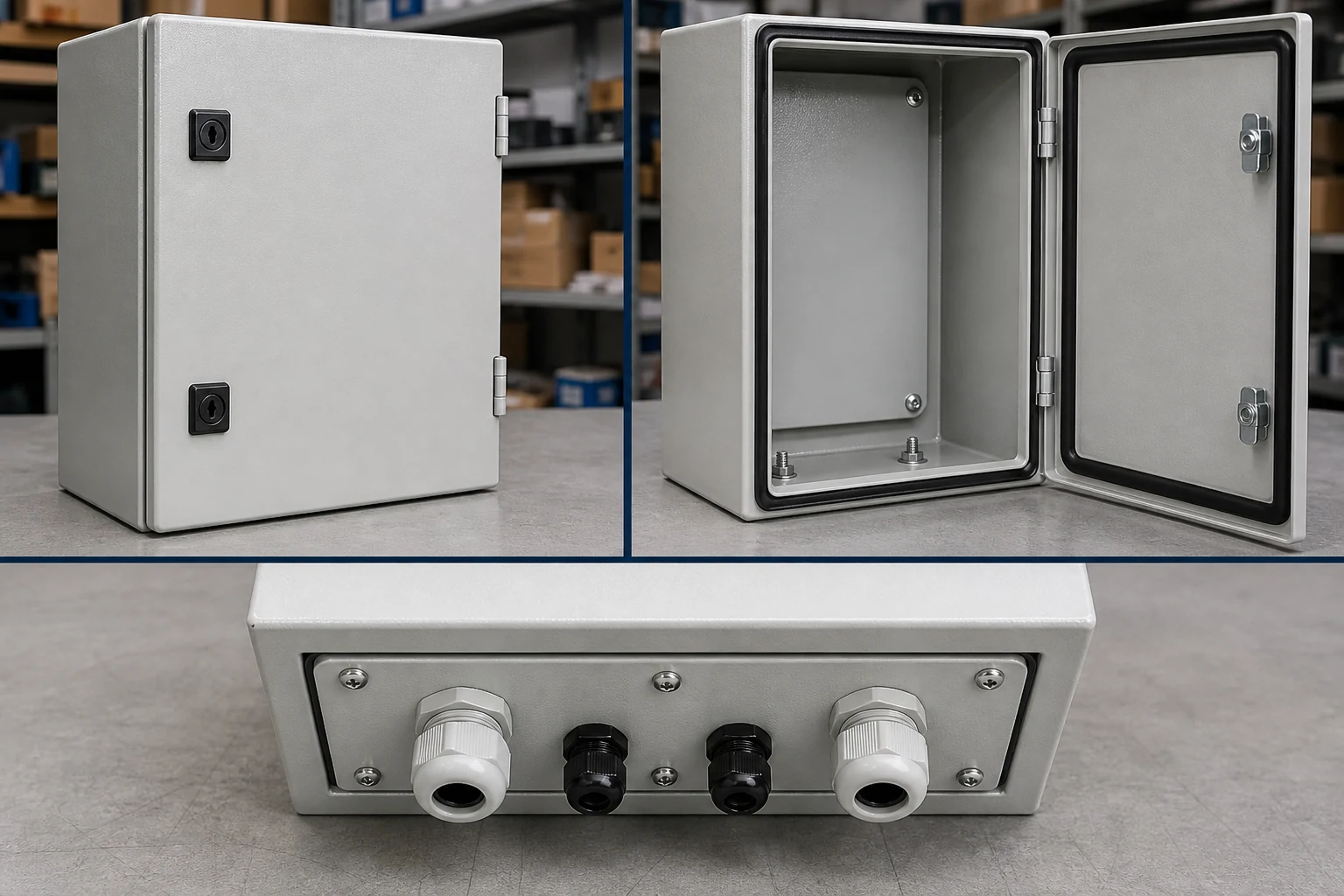
List every opening. Include glands, windows, push buttons, vents, fans, filters, removable plates, drains, and mounting holes.
Confirm the final installation. Which holes and accessories are factory-installed, and which will be added on site?
Match the evidence to the requirement. Does the quotation offer a design target, inspection records, a test report, or third-party certification?
If your answers describe rain and ordinary spray, start with IP65. If they describe direct, forceful jets, evaluate IP66. If cleaning uses hotter water, higher pressure, chemicals, or a shorter spray distance, stop using the two-digit comparison and write the full requirement.
IP65 vs IP66 RFQ Checklist
Before you request a quote, pause at five points: RFQ, drawing approval, accessory selection, field drilling, and washdown planning.
Here is the honest version: no supplier can make a sound IP65 vs IP66 recommendation from the rating alone. Send these inputs:
- ☐ Installation photo or a clear description of the surrounding area.
- ☐ Enclosure size and wall-, floor-, pole-, or machine-mounted arrangement.
- ☐ Material and finish requirement.
- ☐ Water source, direction, frequency, and cleaning method.
- ☐ Door quantity, hinge side, latch type, viewing windows, and operator controls.
- ☐ Cable-entry drawing with hole sizes and gland types.
- ☐ Ventilation, cooling, heater, thermostat, or condensation-control requirements.
- ☐ Factory-installed parts versus field-installed parts.
- ☐ Required drawings, inspection photos, material documents, test reports, or certification.
Need a configuration review before quotation?
Send the installation environment, enclosure size, cleaning method, cable-entry drawing, openings, accessories, and required evidence. That gives FN enough information to review the configuration before quotation. It is still a configuration review—not certification or a performance guarantee.
Send Your Enclosure Requirements
FAQ
Is IP66 better than IP65?
Sometimes. If direct, forceful jets are part of the real exposure, IP66 makes sense. If the enclosure only faces rain and ordinary spray, it may add cost without solving the problem.
Can an IP65 electrical enclosure be used outdoors?
Yes—but only when the exposure fits IP65 and the installed glands, hardware, cut-outs, and accessories preserve it. Corrosion, UV, temperature, and condensation still need separate decisions.
Does IP66 mean waterproof?
No. Think of IP66 as protection against powerful water jets, not as a promise of protection under water or against every pressure washer.
Can fans, filters, or field-drilled holes preserve IP66?
They can—but only when each interface and its installation support the target level. A lower-rated fan, filter, gland, or window can become the weak point. So can an oversized hole, missing washer, or damaged coating.
What should I ask a supplier to prove?
Ask one simple question: “What evidence supports the rating on this quoted configuration?” The answer may be controlled drawings, component specifications, inspection records, a test report, or third-party certification. Those are different levels of evidence, not interchangeable labels.